What Are The Big 3 Memorials In DC?
The big 3 memorials in DC are the Lincoln Memorial, the Washington Monument and the Jefferson Memorial on most visitor lists, though lists differ. Here is what each one is, how they connect by bike, and what to check before you go.
The big 3 memorials in DC, on the lists most visitors follow, are the Lincoln Memorial, the Washington Monument and the Jefferson Memorial. Lincoln anchors the west end of the National Mall, the Washington Monument stands at its center, and Jefferson sits across the Tidal Basin to the south. Together they form a compact loop you can cover in a few hours.
Each of the three is iconic in a different way: Lincoln for the chamber and the inscription, the Washington Monument for sheer height, Jefferson for the panorama across the water. They also sit close enough together that seeing all three is a single outing rather than a multi-day project, which is exactly why guided loops cluster here.
But lists differ, and honesty matters here. Plenty of visitors would swap in the World War II Memorial, which sits directly between Lincoln and the Washington Monument and which most routes pass anyway. Others count the Martin Luther King Jr. Memorial, or the Franklin Delano Roosevelt Memorial just beside it, or the Vietnam Veterans Memorial wall. Treat it as the common answer, not the only one.
By bike, the three connect neatly. Bicycles are welcome in National Mall and Memorial Parks, the park is open 24 hours a day, and bicycle parking sits near each major memorial, per the National Park Service's bicycling information page. Riding inside the memorials themselves is not permitted; you walk the bike through the World War II and FDR memorials, or lock it up before entering.
If you want the full monument-by-monument breakdown with every stop along the Mall, the companion piece on the National Mall monuments bike route maps the whole sequence, including the memorials just outside the big 3.
One closure to flag before anything else: the Lincoln Memorial Reflecting Pool, its adjacent walkways and the grass medians are closed until Friday 20 November 2026 at 11:59 p.m. for repairs, per the park service public notice. The memorial itself remains the memorial; the pool in front of it is the part under work. Check the notice before you go, since the closure has been extended more than once during 2026.
Why The Lincoln Memorial Anchors The West End
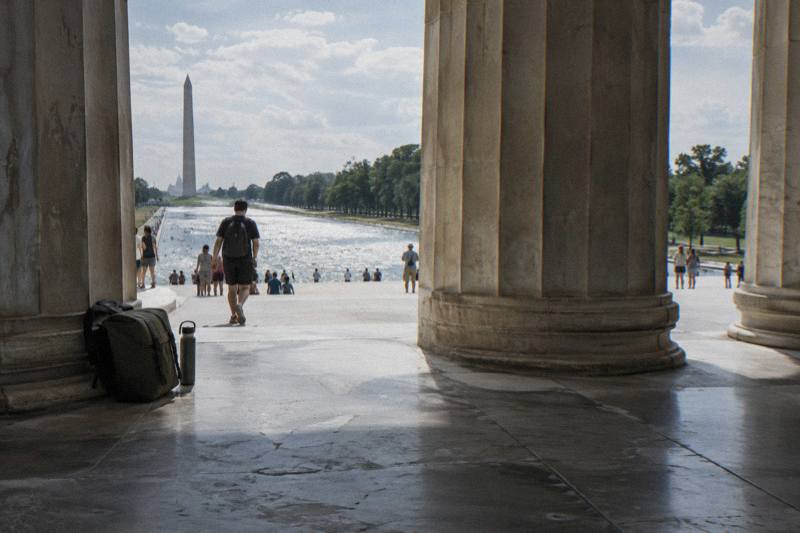
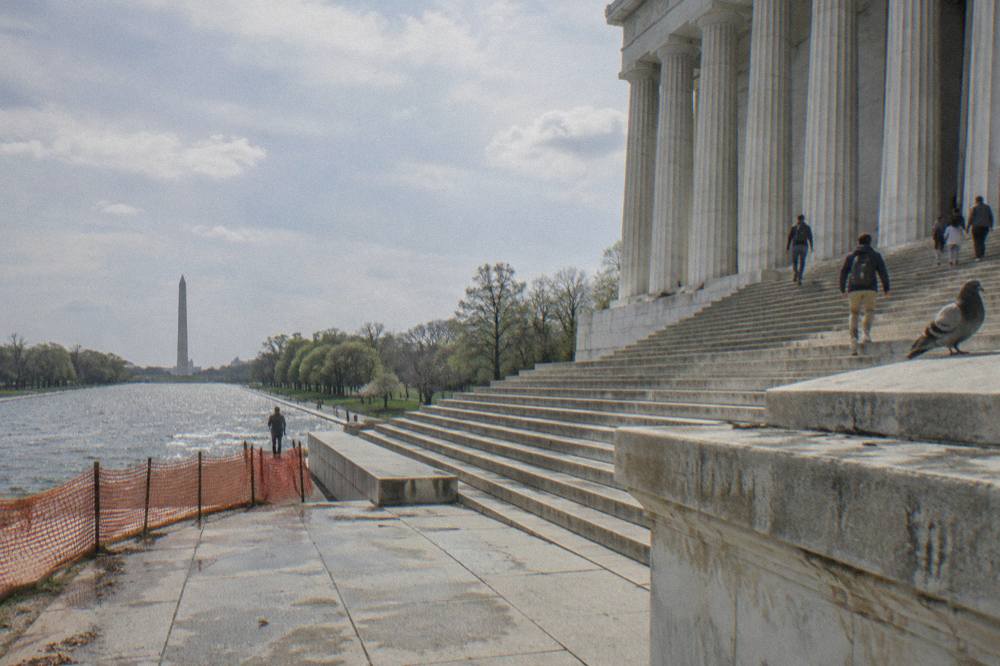
The Lincoln Memorial is the western anchor of the big 3 and, for most visitors, the emotional centerpiece of the Mall. A Greek-temple structure ringed by columns facing a long reflecting pool, it holds Daniel Chester French's seated Lincoln statue above inscriptions of the Gettysburg Address and the Second Inaugural. Tour routes almost always save it for last, or start with it early to beat crowds.
The building sits at the west end of the National Mall, directly across the Reflecting Pool from the World War II Memorial and the Washington Monument beyond it. That geometry is what makes the big 3 work as a loop: from Lincoln's steps you can see the monument you are heading toward next, and from the monument's grounds you look straight back at Lincoln. The view in both directions is the single most photographed axis in the city.
For cyclists, Lincoln is a lock-up-and-walk stop. Riding inside the memorial is not permitted, and bicycle parking is provided near the major memorials, so the standard pattern is to secure the bike, climb the steps, and spend time in the chamber. The Reflecting Pool closure through 20 November 2026 changes the foreground of the classic photo: the walkways and grass medians around the pool are part of the closed area, so plan for a modified approach and check the park service notice linked above before setting expectations for the picture.
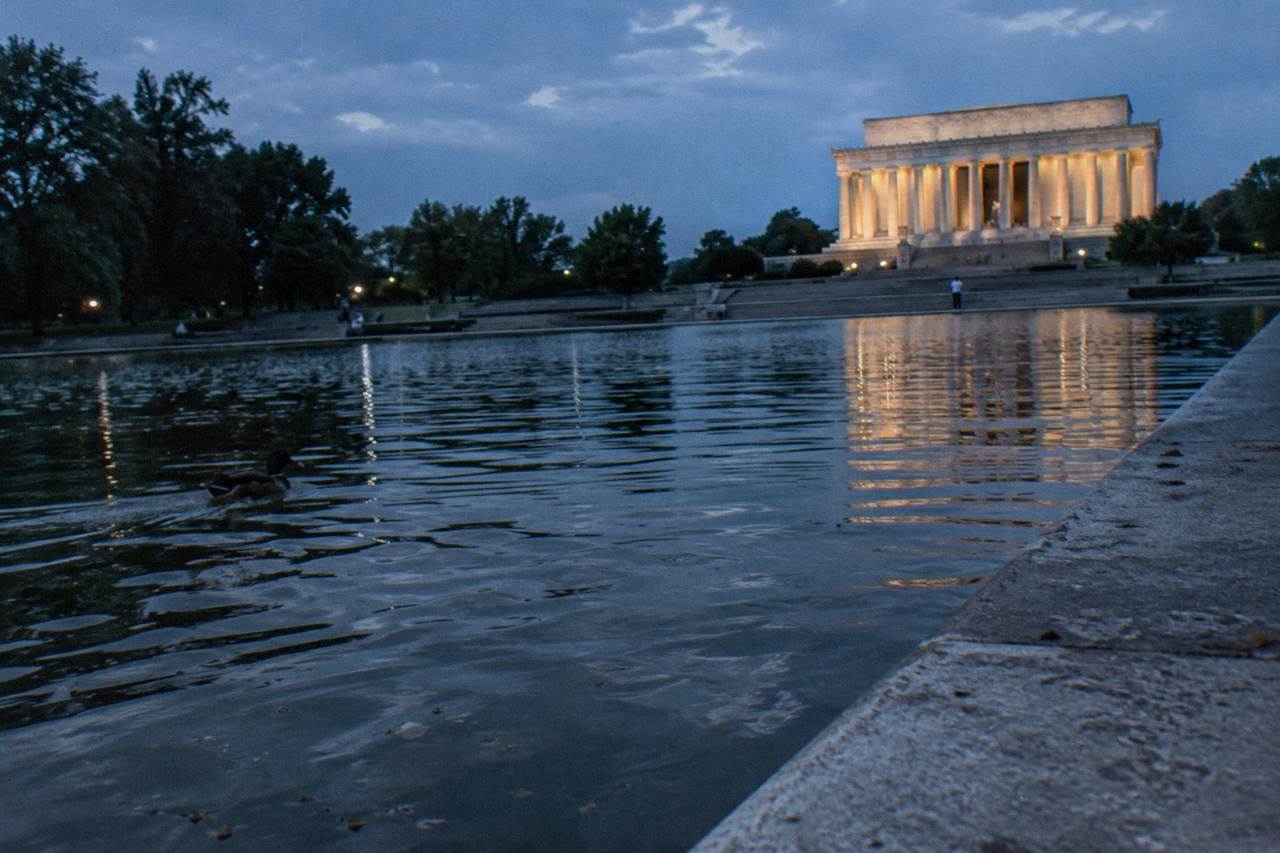
Timing matters more than most guides admit. The chamber faces east, which means morning light comes from behind the monument and the statue reads as a silhouette; late afternoon and evening light fall on Lincoln's face directly. Evening brings another layer entirely, when the memorial is lit and the crowds thin. That after-dark version of the big 3 is popular enough that dedicated night rides exist, and the night ride past the DC monuments after dark covers what changes once the sun goes down.
What the Lincoln Memorial adds to a bike loop that a walking tour cannot match is simple: position.
The Washington Monument And Its Height
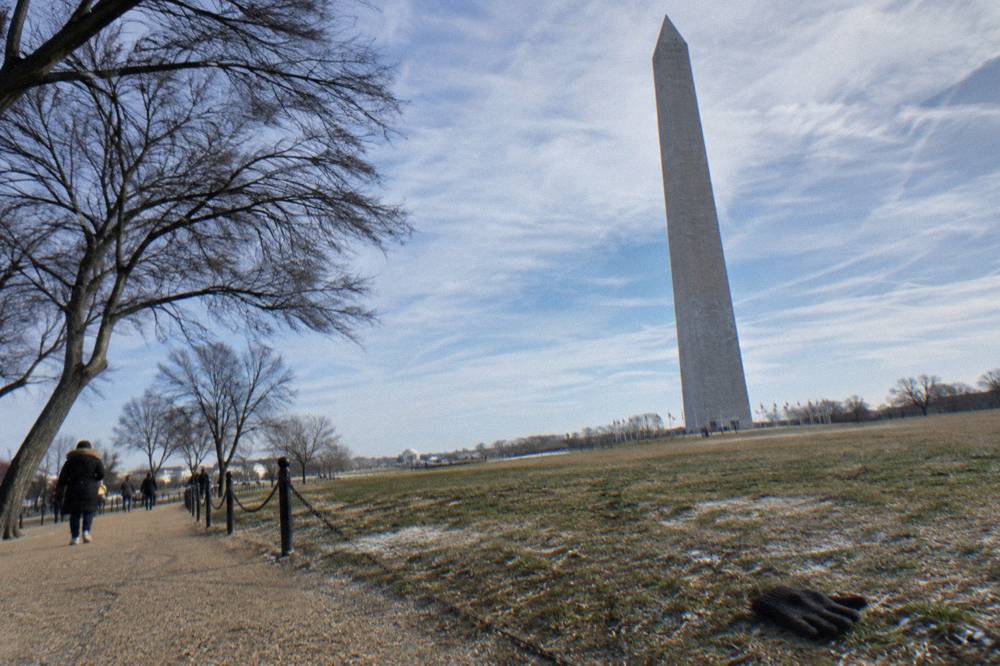
The Washington Monument is the tall one, and it is impossible to miss: 555 feet 5 1/8 inches from base to tip, per the National Park Service, standing at the center of the Mall between the Capitol and Lincoln. It is an obelisk rather than a chamber memorial, so the visit is about the exterior, the grounds and the view from the top if tickets allow.
The height figure is worth stating exactly because it is one of the few verified hard numbers in this whole discussion. The monument rises 555 feet 5 1/8 inches and measures 55 feet wide at the base, facts confirmed on the park service's monument FAQ page. For scale: from its grounds, the Lincoln Memorial sits in one direction and the Capitol in the other, with the monument functioning as the hinge of the big 3 loop.
Two practical notes shape a visit right now. First, the Washington Monument Grounds west side is closed through 23 January 2027 for turf rehabilitation, per the park service closure notice; the north and south turf areas closed for the same project have already reopened. Second, riding to the monument is easy and parking a bike is expected, since bicycles are welcome throughout the park with parking near the major memorials. What you cannot do is ride across the memorial grounds' closed sections, so approach from the open sides.
The monument is also where most big-3 lists and most itineraries put the middle stop, and that sequencing works well by bike. You arrive from Lincoln along the Mall's flat path, stop on the open grounds for the upward view and the two-direction axis photos, then continue on toward the Tidal Basin and Jefferson. A loop of the three memorials is a ride of gentle, mostly flat paths the whole way, which is part of why the format suits visitors who would not call themselves cyclists.
For anyone weighing whether an e-bike changes the experience on this terrain, the comparison piece on e-bike or regular bike for seeing DC breaks down where the motor helps and where it does not. On the big 3 loop specifically, the honest answer is that the terrain is forgiving either way, and the choice comes down to comfort, distance for the day and how much else you plan to bolt onto the ride.
Jefferson Memorial Across The Tidal Basin
It faces the water rather than the Mall's main axis, and that position gives it the quietest setting of the three. The approach by bike runs along the basin's ring path, one of the most pleasant stretches of pavement in the city.
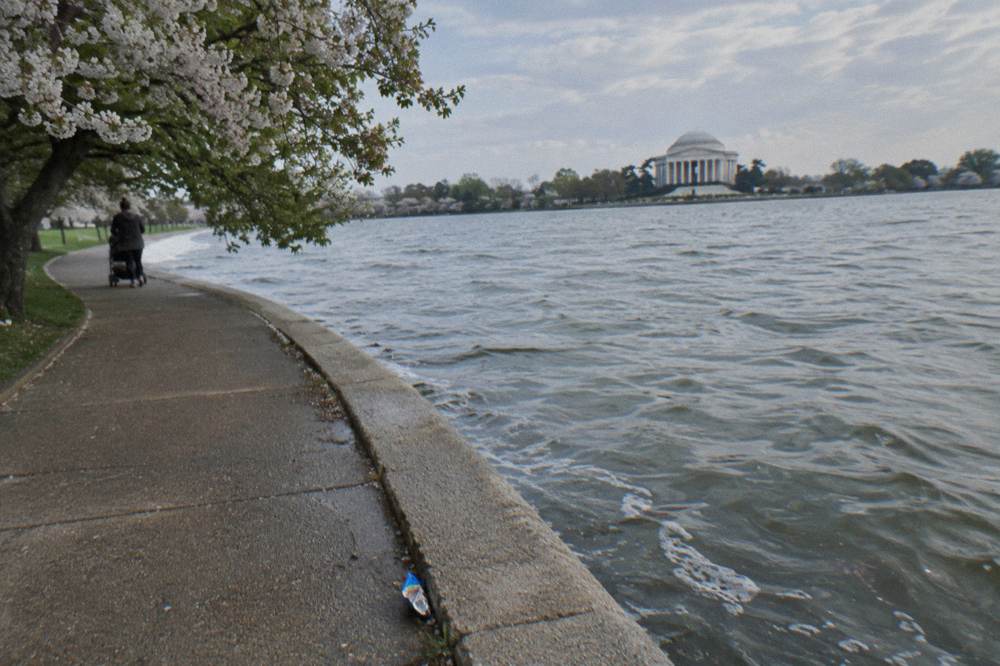
Inside, a standing Jefferson statue is ringed by excerpts from the Declaration of Independence and his other writings. Outside, the view back across the water takes in the Washington Monument and, in season, the cherry trees that line the basin. Those trees matter to the big 3 itinerary more than most visitors expect: the Tidal Basin ring is the city's cherry blossom heartland, and during the bloom window the Jefferson approach becomes the single most crowded stretch of pavement in Washington.
The blossom timing is a moving target. The 2026 peak bloom was reached on 26 March 2026, when 70% of the Yoshino trees around the basin were open, and the typical window runs from the last week of March into the first week of April, per the park service Bloom Watch page. No forecast for 2027 had been published as of late October 2026, since those forecasts normally arrive in late February or early March. The 2027 National Cherry Blossom Festival runs 20 March to 11 April 2027. Never plan around a promised bloom date; plan around the window and check Bloom Watch as it approaches. The deeper planning detail sits in the guides on cherry blossom season by bike and peak bloom dates and timing.
One piece of recent history shapes the basin loop: the Tidal Basin seawall reconstruction, whose first phase finished early and under budget, kept the project area and its paths closed through the 2026 festival season, with reopening expected shortly after once landscape stabilization and new tree planting wrapped up. No major ongoing construction closures were reported in the 2026 sources, but the seawall work is recent enough that checking current path status before a ride around the basin is simply good practice.
For riders, Jefferson is another lock-up stop: bikes stay outside, you walk the colonnade, and the ring path continues from the memorial around the full basin. Combining the basin loop with the big 3 turns the outing from three points into a proper circuit, and that circuit is exactly what the e-bike Tidal Basin ride below was built around.
How The Lists Differ Beyond The Big 3
There is no official big 3. The Lincoln, Washington Monument and Jefferson grouping is the common visitor answer, but plenty of lists swap in the World War II Memorial, which sits directly on the route between the first two, or the Martin Luther King Jr. and FDR memorials beside the Tidal Basin near Jefferson.
The World War II Memorial has the strongest claim to a fourth slot. It occupies the Mall's cross-axis directly between Lincoln and the Washington Monument, so any big 3 loop passes its fountain and its two Atlantic and Pacific arches whether you counted it or not. It is also the memorial you walk your bike through rather than around, one of only two where that instruction applies, which makes it structurally part of the ride in a way the others are not.
The Martin Luther King Jr. Memorial and the Franklin Delano Roosevelt Memorial sit along the Tidal Basin's northwest edge, minutes from Jefferson, and the FDR memorial is the other walk-the-bike-through site. The Vietnam Veterans Memorial wall, with the Korean War Veterans Memorial beside it, sits just north of Lincoln, close enough that most riders pass the entrance on the way in. In practice, a single afternoon loop can take in the big 3 plus four or five of these neighbors without much extra distance, because the whole memorial core is compressed into a walkable, rideable corner of the city.
Which memorials a guided ride actually covers varies by operator and by format, so the reliable move is checking the booking page for the stop list of the specific tour and date you are considering. The listing names what each ride includes: bike and helmet, or e-bike, or nothing beyond the guide, and the stop lists differ meaningfully between the 2-hour and 3-hour formats. Where a detail is not stated, ask the operator or check the booking page rather than assuming.
The table below places the big 3 and their closest neighbors in the order you meet them on a standard west-to-east-to-south loop.
| Stop | Position on the loop | Bike access at the site |
|---|---|---|
| Lincoln Memorial | West anchor, start or finish | Lock up; no riding inside |
| Vietnam and Korean War memorials | Just northeast of Lincoln | Lock up before entering |
| World War II Memorial | Center cross-axis, between Lincoln and the Monument | Walk the bike through |
| Washington Monument grounds | Center of the Mall | Lock up near the grounds |
| Martin Luther King Jr. and FDR memorials | Northwest edge of the Tidal Basin | Walk the bike through FDR |
| Jefferson Memorial | South side of the Tidal Basin | Lock up; ring path continues |
That ordering is why the big 3 framing is genuinely useful despite being unofficial: it gives first-time visitors a spine, and everything else attaches to it naturally. Visitors with more time, or an interest in a specific conflict or figure, build outward from the same loop.
Seeing All Three In One Guided Ride
A guided 3-hour monuments ride links the big 3 with the surrounding memorials in a single loop, with a guide, a bike and a helmet included per the listing, which removes the two friction points of doing it alone: finding the parking at each stop and knowing which paths connect which memorials. The meeting point and current price sit on the booking page, and free-cancellation terms are worth checking when you book.
The related ride on this page, the 3-Hour Monuments Bike Ride, is the classic format for exactly this itinerary. That commentary is the part self-guided riders miss most: the big 3 each carry stories, inscriptions and design arguments that a guide makes legible in a way a plaque does not.
The e-bike variant of the same monuments loop swaps the bike for a motor-assisted one, and the listing offers both options on its 3-hour format, so the choice happens at booking rather than on the street. On flat Mall terrain the motor matters less for effort and more for extending the day: riders who add the Tidal Basin circuit, or the monuments beyond the core, arrive at Jefferson with legs left over. The electric comparison guide linked above goes deeper on that trade.
A night version of the monuments ride runs the same core in the evening, when the memorials are lit and the Mall quiets down, and the monuments are lit at night per the Capital Bikeshare operator's own National Mall riding notes. Sunset in late October and early November falls around 6 p.m., so a ride that starts in the last daylight hour crosses into the lit-monument stretch quickly.
Between the day, e-bike and night formats, the decision is less about which memorials you see, since all three formats center on the same core, and more about when you want to see them and how much pedal assistance you want underneath you.
When To Ride The Big 3 Loop
Spring and fall are the best windows for the big 3 loop, and the climate record backs it up. April averages a high of 68 degrees and October 69.4, while the summer months of June, July and August average highs from 85.1 to 89.6, and winter highs sit in the mid-40s. Cherry blossom season adds crowds as well as blossoms; weekday mornings trade color for quiet.
Those figures come from the NOAA 1991 to 2020 climate normals recorded at Washington Reagan National Airport, and they describe long-term averages, not a forecast for any given day. The practical reading is straightforward. April through May and September through October combine comfortable riding temperatures with the longest useful daylight. July and August are rideable but hot, with July averaging a high of 89.6 and August 87.8, and the biking DC in summer heat guide covers the adjustments that make those months work. Winter is far from off the table, since highs in the mid-40s and relatively low rainfall make a brisk loop entirely reasonable with the right layers, a topic the weather and cold ride guide handles in full.
| Month | Avg high (F) | Avg low (F) | Rain days | Read for the big 3 loop |
|---|---|---|---|---|
| January | 44.8 | 30.1 | 5.7 | Cold but dry-ish; quiet memorials |
| February | 48.3 | 31.8 | 5.4 | Similar; thin crowds |
| March | 56.5 | 38.6 | 6.5 | Blossom watch begins late month |
| April | 68.0 | 48.4 | 6.4 | Prime riding; peak crowds in bloom window |
| May | 76.5 | 58.0 | 7.3 | Comfortable; more rain days |
| June | 85.1 | 67.5 | 6.5 | Warm; ride early |
| July | 89.6 | 72.4 | 6.7 | Hot; early or evening |
| August | 87.8 | 71.0 | 5.6 | Hot; night format shines |
| September | 80.7 | 64.1 | 5.8 | Warm days, cooler evenings |
| October | 69.4 | 52.2 | 4.9 | Driest common month; excellent |
| November | 58.2 | 41.6 | 5.0 | Cool, quiet, short days |
| December | 48.8 | 34.5 | 6.4 | Cold; monuments lit early |
Two timing notes sit outside the climate table. The blossom window, late March into early April, is the most beautiful and most congested stretch of the year around the Tidal Basin, and the festival dates for 2027 run 20 March to 11 April. And event closures are a recurring feature of the Mall rather than an anomaly: the 2026 summer brought extensive temporary closures around Independence Day and the America 250 events, and October 2026 saw nighttime road closures near the Tidal Basin for bridge work. The park service posts public notices for each, and a minute on the current notices page the day before your ride is the cheapest insurance available.
For families weighing whether the loop suits kids, the family bike rides in DC with kids guide covers the flat paths, the private family formats and the helmet law in one place. The short version: DC requires a helmet for anyone under 16 riding on a public roadway or path, and the guided rides include helmets per their listings, which handles the requirement for younger riders.
Common Questions About The Big 3 Memorials In DC
What Are The Big 3 Memorials In Dc?
The common answer is the Lincoln Memorial, the Washington Monument and the Jefferson Memorial. Lists differ, though: many visitors count the World War II Memorial, which sits directly between the first two, and the Martin Luther King Jr. or FDR memorials near Jefferson have equal claims. There is no official designation.
Can You See All Three Big Memorials In One Day?
Yes, comfortably. On your own, allow a relaxed half day including time inside each memorial.
Is The Reflecting Pool Open Right Now?
The Lincoln Memorial Reflecting Pool, its adjacent walkways and grass medians are closed until Friday 20 November 2026 at 11:59 p.m. for repairs. The closure has been extended more than once, so check the park service notice before your visit.
Can You Ride A Bike To The Memorials?
Yes. Bicycles are welcome in National Mall and Memorial Parks, the park is open 24 hours, and bicycle parking sits near each major memorial. Riding inside the memorials is not permitted; you walk the bike through the World War II and FDR memorials.
Is A Guided Ride Or Self-Guided Better For The Big 3?
A guided ride adds a guide's commentary, a provided bike and helmet, and a route that already accounts for which paths connect which memorials. Self-guided costs less and moves at your pace. Riders who want the story behind the inscriptions usually get more from a guide.
When Is The Best Time Of Year For The Big 3 Loop?
April through May and September through October, based on NOAA climate normals: average highs in the 60s and low 70s with manageable rainfall. Cherry blossom season in late March to early April is beautiful but crowded, and summer highs averaging 85.1 to 89.6 favor early morning or evening rides.