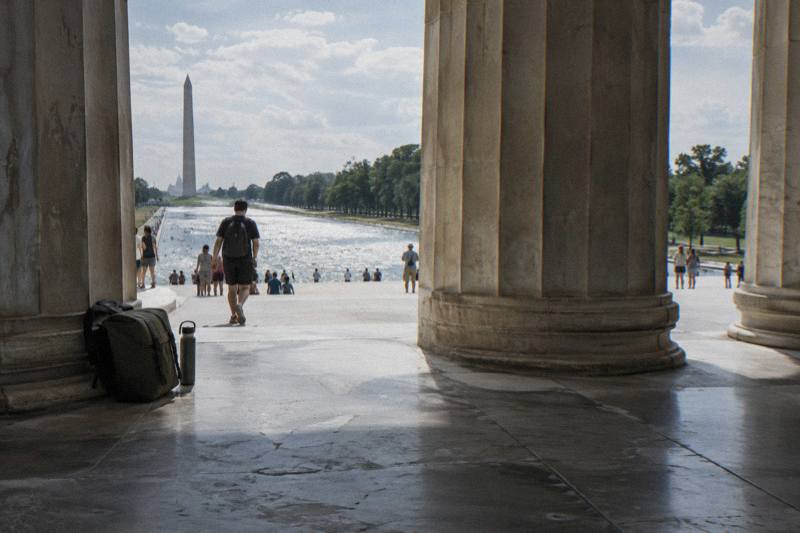
National Mall Monuments By Bike: Route And Stops
The Lincoln to Capitol loop is the classic Washington DC bike ride: memorials on one side, museum frontage on the other, and bike racks at nearly every stop. Here is how the route works, what a guide adds over riding it alone, and what is closed right now.
Short answer
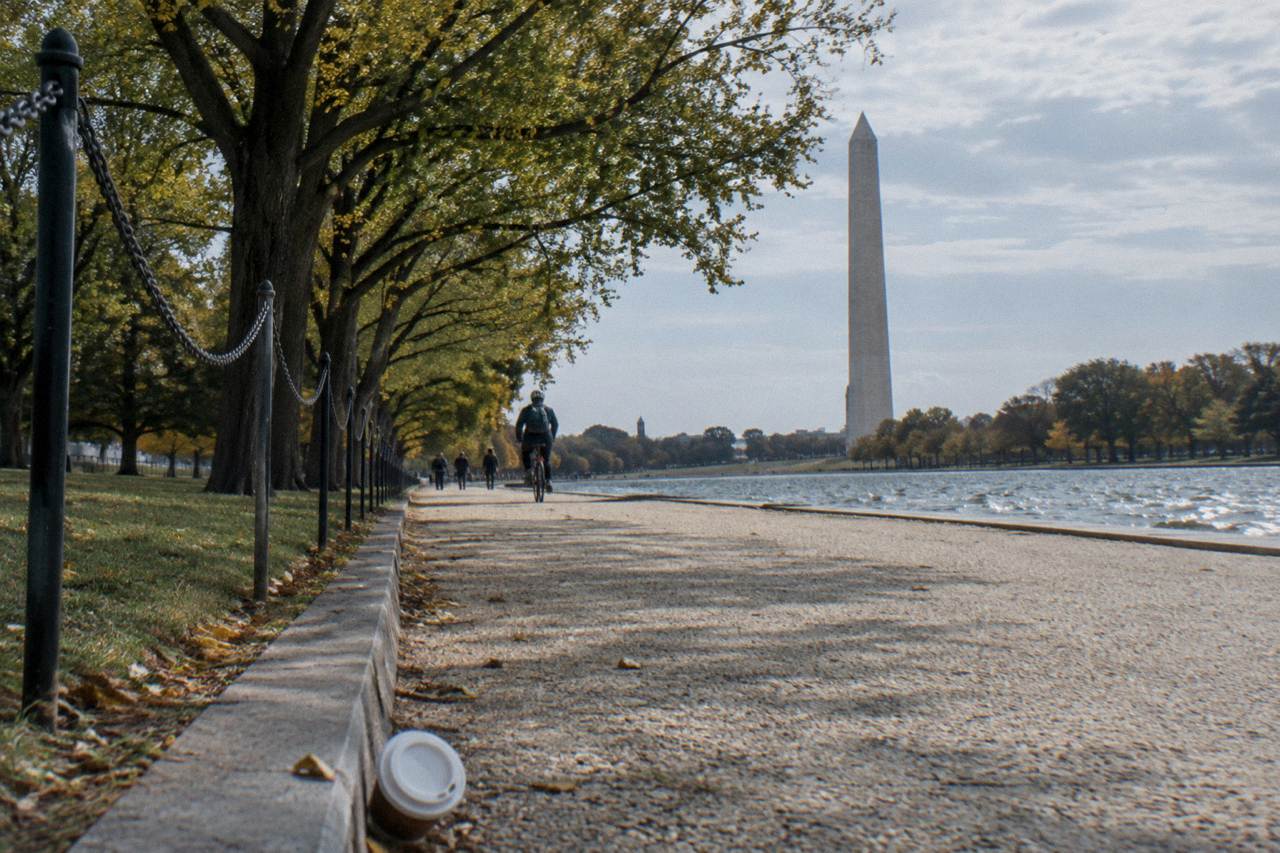
The classic loop runs from the Lincoln Memorial along the reflecting pool side to the Washington Monument and on to the Capitol, returning past the Smithsonian museums and the Tidal Basin side. Guided monument rides take about 3 hours; bicycles are welcome throughout National Mall and Memorial Parks, with parking near each major memorial and no riding inside the memorials themselves.
The classic National Mall bike loop runs from the Lincoln Memorial past the Washington Monument to the United States Capitol and back down the museum side, and it is the single most efficient way to see the big memorials in one outing: guided versions of this exact ride take about 3 hours, bicycles are welcome throughout National Mall and Memorial Parks, and bike racks sit near each major memorial. The catch is the fine print: riding inside the memorials is not permitted, two memorials require walking the bike through, and a couple of active closures reshape parts of the loop right now. Since those closures can shift where you'd want to start and finish, our guide to cyclist-friendly neighborhoods around the National Mall helps you pick a base that keeps the whole loop within easy pedaling distance.
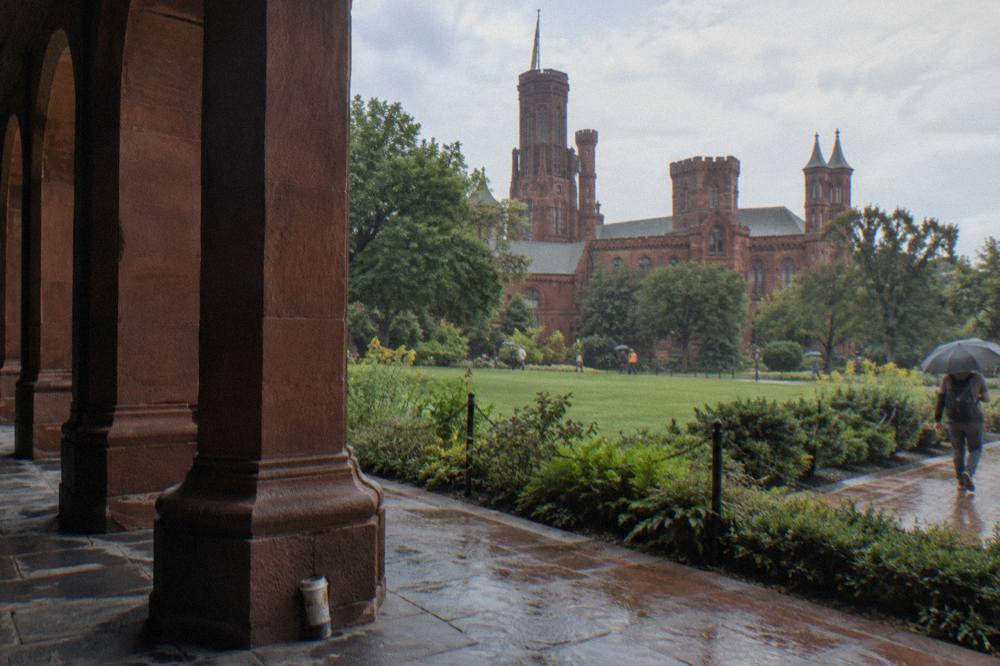
Most riders weighing this route are deciding between two versions of the same day. One is freeform: grab a bike, follow the Mall, and read the wayside signs. The other is a guided loop like the 3-Hour Monuments Bike Ride, where a local guide sets the stop order, keeps the pace honest and tells you what you are actually looking at. Both work. They suit different travelers, and the trade-offs are concrete rather than philosophical. Whichever style you pick, a one-day must-see plan for the Mall's unmissable monuments fills in the gaps between stops so nothing important gets skipped.
This guide lays out the route stop by stop, the pace question, the park rules that trip people up, the weather picture, and the closures in force as of late 2026. Where a detail like a current price or a meeting point lives on the booking page rather than in a fixed fact, it says so.
What Is The Best Bike Route Across The National Mall?
Ride the Mall as a loop rather than an out-and-back: start at the Lincoln Memorial end, pedal east past the Washington Monument to the Capitol, then return along the Smithsonian museum side, which gives you memorial views on the outbound leg and shade, food trucks and museums on the return. The loop form means no wasted backtracking, and it lets you fold the Tidal Basin side in on the return if your legs agree. This loop also happens to cover most of the ground discussed in our guide to the National Mall as Washington DC's top attraction.
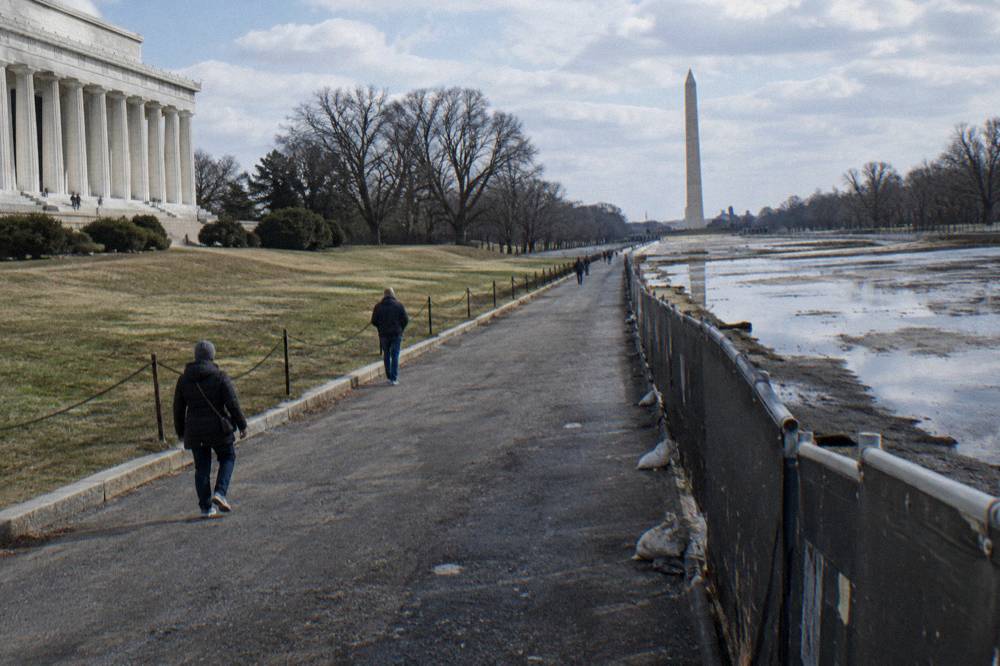
The geometry of the Mall makes this decision for you. The memorial cluster, the Lincoln Memorial, the World War II Memorial, the Washington Monument and the Korean War and Vietnam Veterans Memorials, sits at the west end. The Capitol anchors the east end. Between them run the parallel paths along the museum frontage, and the whole ensemble sits inside National Mall and Memorial Parks, which is open 24 hours a day, according to the National Park Service.
Direction matters less than you would think, but starting west has two advantages. The memorials are the crowd-pleasers, and you hit them with fresh legs and, on most days, before the tour buses thicken. And the return along the museum side is the more forgiving half: flat, wide, and lined with places to stop, lock the bike and duck into a museum or a food line.
One practical note on how to source the bike itself. Capital Bikeshare, the public system with roughly 8,000 bikes across more than 800 stations, is the cheapest way onto the route: a day pass is $10 per 24 hours with classic rides free for the first 45 minutes each, per the operator's pricing page. A guided ride bundles the bike, a helmet and a guide into one fare. The full comparison lives in our Capital Bikeshare or guided ride breakdown.
What Stops Should A Monuments Bike Loop Include?
Plan on six to eight stops on a full loop: the Lincoln Memorial, the Vietnam Veterans Memorials, the Korean War Veterans Memorial, the World War II Memorial, the Washington Monument grounds, the Capitol itself, and, on the return, the Franklin Delano Roosevelt and Martin Luther King Jr. Memorials on the Tidal Basin side. Guided rides hit most of this list in about 3 hours; self-guided riders should budget closer to half a day with memorial time included.
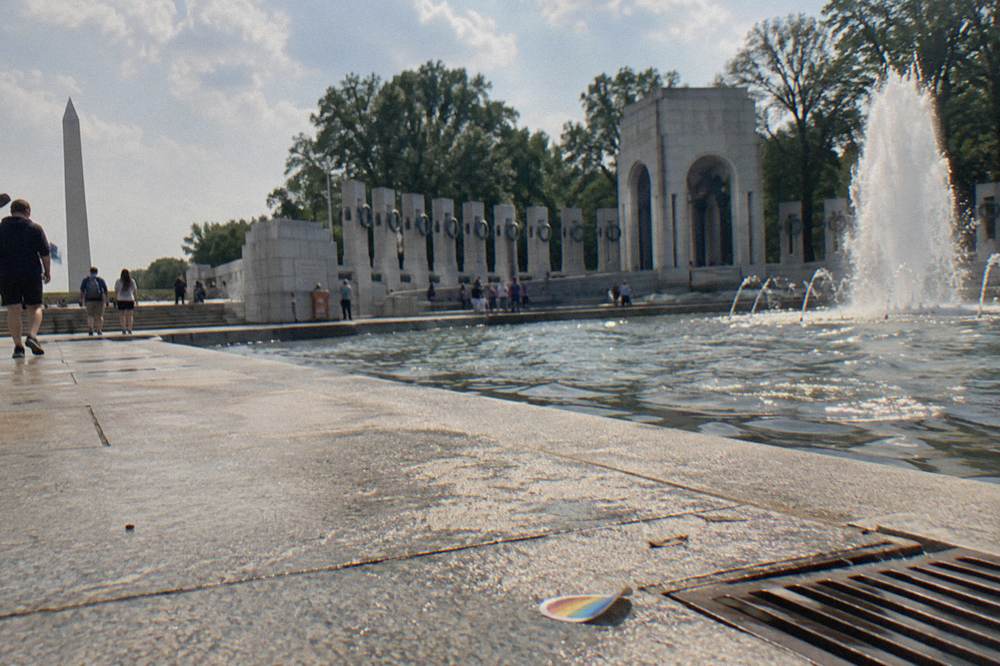
The stop order below follows the west-to-east-then-south loop. Distances between stops are short; the Mall is a compact space, and the time goes into the memorials, not the pedaling.
| Order | Stop | What You Get | Bike Notes |
|---|---|---|---|
| 1 | Lincoln Memorial | The signature view back across the reflecting pool towards the Washington Monument | Rack up before entering; the pool and its walkways are closed until 20 November 2026 |
| 2 | Vietnam Veterans Memorial | The Wall, the most sobering stop on the route | Parking nearby; walk the bike in |
| 3 | Korean War Veterans Memorial | The column squad and the reflecting wall | Short walk from the Vietnam stop |
| 4 | World War II Memorial | Fountains and the state pillars at the Mall's axis | Walk the bike through; no riding inside |
| 5 | Washington Monument grounds | The 555 feet 5 1/8 inch obelisk up close | West side closed through 23 January 2027 |
| 6 | US Capitol | The east anchor of the loop | Rack up on the surrounding paths |
| 7 | FDR Memorial | Room-like granite scenes on the Tidal Basin side | Walk the bike through; no riding inside |
| 8 | MLK Jr. Memorial | The Stone of Faces quote walls on the basin | Parking nearby |
Two rules from the Park Service shape every one of these stops. Bicycles are welcome in National Mall and Memorial Parks, and bicycle parking is provided near each major memorial, but riding inside the memorials themselves is not permitted; the Park Service specifically directs riders to walk bikes through the World War II and Franklin Delano Roosevelt Memorials, per the official bicycling information page. In practice that means every stop is a dismount stop. Build that rhythm in from the start: ride, rack, walk, repeat.
If the list feels ambitious for one outing, it is worth reading our longer take on the best way to see all the monuments in DC, which compares biking against walking and the hop-on options on time rather than on romance.
If you would rather have the stop order handled for you, these are the three guided rides that cover this loop or a close variant of it:
Guided Ride Or Self-Riding: What Does A Guide Add On The Mall?
A guide adds three things self-riding cannot: a pre-set stop order that avoids the classic first-timer mistakes, a running narrative that turns each memorial from a photo stop into a story, and logistics, since guided rides include the bike and a helmet so there is no dock-hunting or rental-counter time. The cost is the pace and the schedule: you ride on the operator's clock, not yours.
The narrative part is not a soft benefit on this particular route. The Mall is dense with meaning that is genuinely invisible if nobody points at it: why the Korean War Memorial's faces are reflected in its wall, what the FDR memorial's four rooms represent, why the King memorial stands where it does. Wayside signs carry some of this, but a guide carries all of it and answers questions. Rider reviews of guided monument loops again and again single out the guide's commentary as the thing they would have missed alone.
The logistics part matters more than newcomers expect. The Mall's bike parking is real but not infinite, and on peak days the racks nearest the Lincoln Memorial fill first. A guided ride removes the guesswork about both the bike and the timing. The classic shared option is the 3-Hour Monuments Bike Ride, which covers the memorial core on a regular bike in about 3 hours; Check availability for current times and meeting point details.
The same route also exists with an e-bike option, which changes the calculus for riders worried about distance or heat:
The e-bike version covers the same monuments-and-memorials ground in about 3 hours with an electric assist, per the operator's listing. For a deeper look at whether an assist is worth it on Mall terrain, which is flatter than most visitors assume, see our e-bike or regular bike comparison for DC.
Self-riding, for its part, is not a consolation prize. It costs a fraction of a guided fare once you own or Bikeshare the bike, it lets you linger an hour at the Wall or skip straight to lunch, and the Mall's paths are easy to follow. The honest summary: a guide converts the Mall from a checklist into a story, and freedom converts it into whatever you want. Our private and small-group rides guide covers the middle path, a private guide on your own route.
How Long Does The Monument Loop Take And What Pace Should You Ride?
A guided monuments loop runs about 3 hours door to door; self-guided riders typically spend 3 to 5 hours depending on how long they linger inside memorials, and the riding itself is gentle because the Mall is flat and the stops, not the distance, consume the time. No official mile figure is published for the full Mall, so plan on time, not mileage, and let the stop list set the pace.
The right mental model is a walking tour with a bike between the rooms. Each stop deserves ten to twenty minutes if you actually enter the memorial, read and look. Eight stops at that rate is the whole afternoon, which is why guided rides compress: they curate the time at each stop so the full list fits inside roughly three hours.
Families should add slack rather than subtract stops. Kids who can ride confidently handle the Mall's paths well, and our family bike rides in DC guide covers the age and confidence questions in detail. One legal point from DC code worth knowing before you load the crew: helmets are required by law for anyone under 16 riding on a public roadway, path or other right-of-way.
If three hours of stop-and-go sounds like too much standing, two shorter formats exist on the same footprint. The Tidal Basin and National Mall e-bike ride below covers the basin side of the loop in about 3 hours with an electric assist:
And at the opposite end, an easy two-hour Capitol Hill ride makes a compact half-loop for riders short on time, pairing neatly with a later monuments loop on a second day.
| Ride Format | Typical Time On The Listing | Bike Type | Best For |
|---|---|---|---|
| Monuments loop, shared guided | 3 hours | Classic bike | First-time visitors wanting the full story |
| Monuments loop with e-bike option | 3 hours | E-bike or classic | Distance-shy riders, hot days |
| Tidal Basin and Mall e-bike | 3 hours | E-bike | Basin-side focus, less standing |
| Easy Capitol Hill | 2 hours | Classic bike | Short visits, second-day riders |
| Self-guided Bikeshare loop | Your call | Classic | Budget and schedule freedom |
Times above are the durations the operators state; prices and start times sit on each booking page and shift with season, so treat those as live details rather than fixed facts.
Where Can You Ride And Park A Bike At The Memorials?
You can ride the paths and roads of National Mall and Memorial Parks freely, and the Park Service provides bicycle parking near each major memorial, but you cannot ride inside any memorial: at the World War II and FDR Memorials you walk the bike through, and everywhere else you lock up before entering. Helmets are legally required for riders under 16 on any public roadway or path.
These rules come straight from the Park Service's bicycling guidance, and they are unusually friendly as national park rules go. There is no permit, no restricted lane and no time window; the park never closes, so an evening or even a pre-dawn loop is legal and, in summer, considerably saner than midday. Our night ride past the DC monuments guide covers the after-dark version, when the memorials are lit and the crowds thin dramatically.
The walk-through rule at the World War II and FDR Memorials confuses first-timers. You do not lock up at these two; you dismount and push the bike through the memorial alongside you, which is actually convenient since it keeps your rig with you. At the Lincoln, King, Vietnam and Korean War Memorials, use the racks and travel light or use a lock, which guided rides typically carry or make unnecessary altogether.
Two DC-specific legal points round out the picture. The helmet law for under-16s applies on the Mall's paths, not just streets. And DC's legal definition of an e-bike, a motorized bicycle whose motor cannot propel it faster than 20 mph on level ground with operative pedals, means the assisted bikes on guided tours are treated as bicycles under city code rather than as motor vehicles.
Which Seasons And Weather Work Best For A Mall Bike Loop?
April, May, late September and October are the sweet spots: NOAA's 1991 to 2020 climate normals for Washington Reagan National Airport show average highs of 68 to 76.5 degrees F in spring and 69.4 to 80.7 degrees F in early autumn with rain on fewer than eight days a month, while July's average high of 89.6 degrees F and June's 85.1 make summer midday rides a heat-management exercise rather than a pleasure.

| Month | Avg High F | Avg Low F | Rain Days | Ride Verdict |
|---|---|---|---|---|
| March | 56.5 | 38.6 | 6.5 | Fine with layers; blossom season crowd risk |
| April | 68.0 | 48.4 | 6.4 | Prime riding, peak crowds during bloom |
| May | 76.5 | 58.0 | 7.3 | Prime riding |
| June | 85.1 | 67.5 | 6.5 | Ride early, hydrate |
| July | 89.6 | 72.4 | 6.7 | Early morning or evening only |
| August | 87.8 | 71.0 | 5.6 | Early or late; storm watch |
| September | 80.7 | 64.1 | 5.8 | Good from mid-month |
| October | 69.4 | 52.2 | 4.9 | Prime riding, fewest rain days |
These are 30-year normals, not forecasts; any given week can swing well outside them. What the table is honest about is the shape of the year: a cold half, a hot, humid core from June through August, and two genuinely pleasant shoulders. Our month-by-month best time of year to bike in Washington DC guide works through the trade-offs, and the summer heat riding guide has the tactics if you are locked into July.
Cherry season deserves its own sentence of caution. The 2026 peak bloom landed on 26 March, and the typical window runs the last week of March to the first week of April, with the 2027 National Cherry Blossom Festival set for 20 March to 11 April 2027. No peak-bloom forecast for 2027 has been published yet; forecasts normally appear in late February or early March. During that window the Tidal Basin side of the loop is beautiful and mobbed in equal measure, and it is the one stretch where a guide's timing instincts genuinely earn their keep. Our cherry blossom season by bike guide covers riding that week properly.

What Closures Should You Check Before Riding The Mall Loop?
Two closures in force right now reshape the loop: the Lincoln Memorial Reflecting Pool, its adjacent walkways and grass medians are closed until 20 November 2026 at 11:59 p.m., and the Washington Monument grounds' west side is closed through 23 January 2027 for turf restoration, so plan the Lincoln stop around the pool's far approaches and check the Park Service notice before setting out.
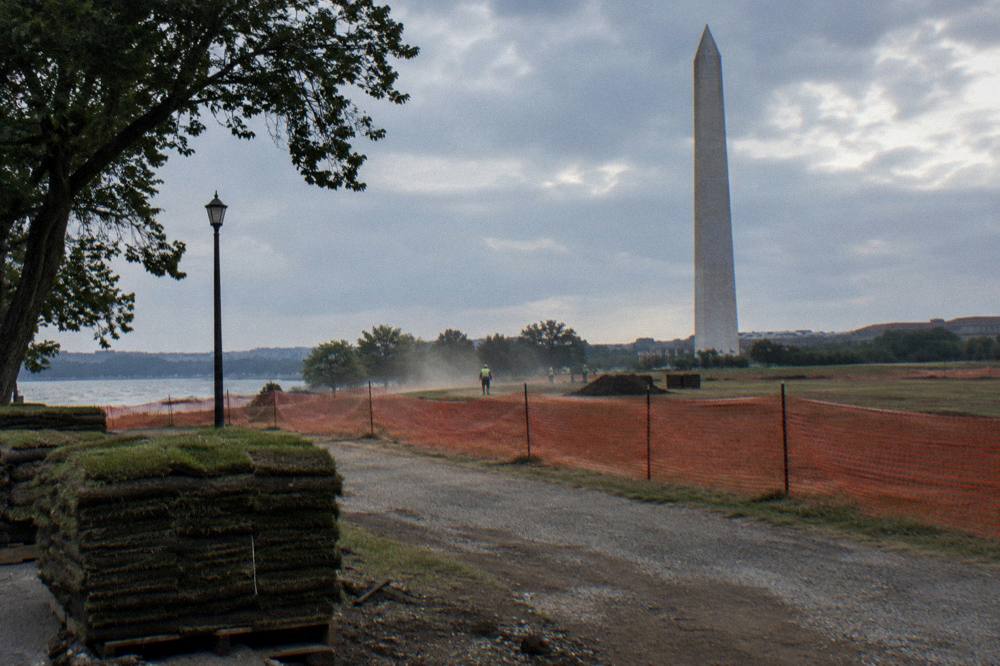
Neither closure blocks the loop itself; the paths that carry cyclists around the Lincoln Memorial grounds and past the monument remain usable, and the memorials stay open. What changes is the experience at two signature stops: the reflecting pool view from the Lincoln steps is interrupted, and the monument's west approach is fenced. The Park Service's public notice for the reflecting pool closure carries the current end date, and turf-restoration projects on the monument grounds have already run in phases, with the north and south turf sections closed through 10 September 2026 and reopened since.
Beyond these two, the pattern to know about is event-driven closures. The Park Service issues rolling temporary closures around the Salute to America period in early July, the Marine Corps Marathon in late October, and security movements, any of which can shut Mall roads and sidewalks for hours at a time. These are unpredictable enough that the practical advice is simply to glance at the Park Service's National Mall and Memorial Parks notices page on the morning of your ride. Guided rides have an advantage here too: operators reroute around closures as part of the job. If you're weighing whether you even need a bike, our breakdown of how walkable DC is for tourists covers where the Mall works fine on foot and where wheels earn their keep.
Weather adds a second check. The rain and cold riding guide covers wet-day tactics, and the general rule from the climate table holds: October averages under five rain days a month, summer thunderstorms are the bigger interruption risk.
Is A Shorter Capitol Hill Ride A Better First Day Option?
For visitors with only a half-day or a first evening in the city, a two-hour Capitol Hill ride is a legitimate alternative to the full monuments loop: it covers the Capitol, the Library of Congress and Supreme Court side of the Mall in about 2 hours on a regular bike, leaving the west-end memorials for a second outing with fresher legs.
The east end of the Mall gets less love and fewer crowds, and its buildings, the Capitol itself, the Library of Congress, the Supreme Court, the congressional office fronts, are working architecture rather than mourners. A short loop there pairs well with a museum afternoon, since the museum spine sits between the two anchors.
The easy shared option looks like this:
Whichever half you ride first, the same park rules apply, and the same flat, forgiving paths connect everything. Bike Tours Washington DC exists because this city rewards covering ground on two wheels: the distance between Lincoln and Capitol that eats a morning on foot becomes a pleasant ride, and the stops in between become choices rather than chores.
If the full monuments loop, the e-bike variant or the Capitol short ride all fit your trip, these are the three worth comparing side by side.
Common Questions About Biking The National Mall
Can You Bike The Whole National Mall?
Yes. Bicycles are welcome throughout National Mall and Memorial Parks on the paths and roads, with parking provided near each major memorial. Riding inside the memorials themselves is not permitted; walk the bike through the World War II and FDR Memorials and lock up at the others.
How Long Does It Take To Bike The Monuments In Washington DC?
Guided monument loops take about 3 hours per the operators' listings. Self-guided riders usually spend 3 to 5 hours with time inside the memorials included, since the stops, not the riding, consume the time.
Is The National Mall Flat Enough For A Casual Rider?
Yes, the Mall and its approaches are essentially flat, which is why classic bikes dominate the guided options. E-bike versions exist mainly for heat, distance anxiety and longer combinations rather than for hills.
Do Kids Need Helmets On The National Mall Paths?
Yes. DC law requires a securely fastened helmet for anyone under 16 operating or riding as a passenger on a bicycle on a public roadway, public bicycle path or other right-of-way, and the Mall's paths count.
What Is Closed On The Mall Loop Right Now?
The Lincoln Memorial Reflecting Pool, its walkways and grass medians are closed until 20 November 2026 at 11:59 p.m., and the Washington Monument grounds' west side is closed through 23 January 2027. Check the Park Service notices page on the morning of your ride for event closures.
Is A Guided Monument Ride Worth It Over Riding Alone?
If you want the history explained, yes: the guide's commentary at each memorial is the part self-riders miss, and the bike, helmet and stop order are handled. If your priority is flexibility and budget, a Bikeshare day pass at $10 per 24 hours and a good stop list does the job well.