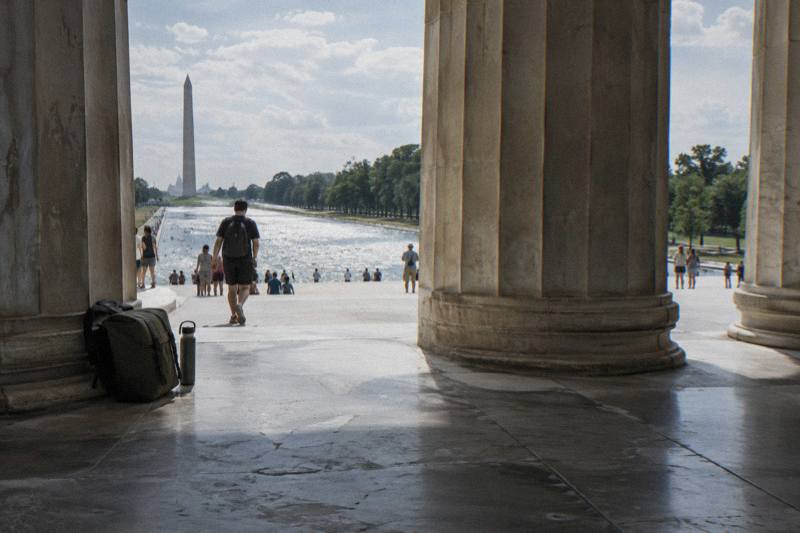
What Is The Number 1 Attraction In Washington DC?
The National Mall is the most cited number one attraction in Washington DC. Here is what that means in practice, how to see it, and when a guided bike ride helps.
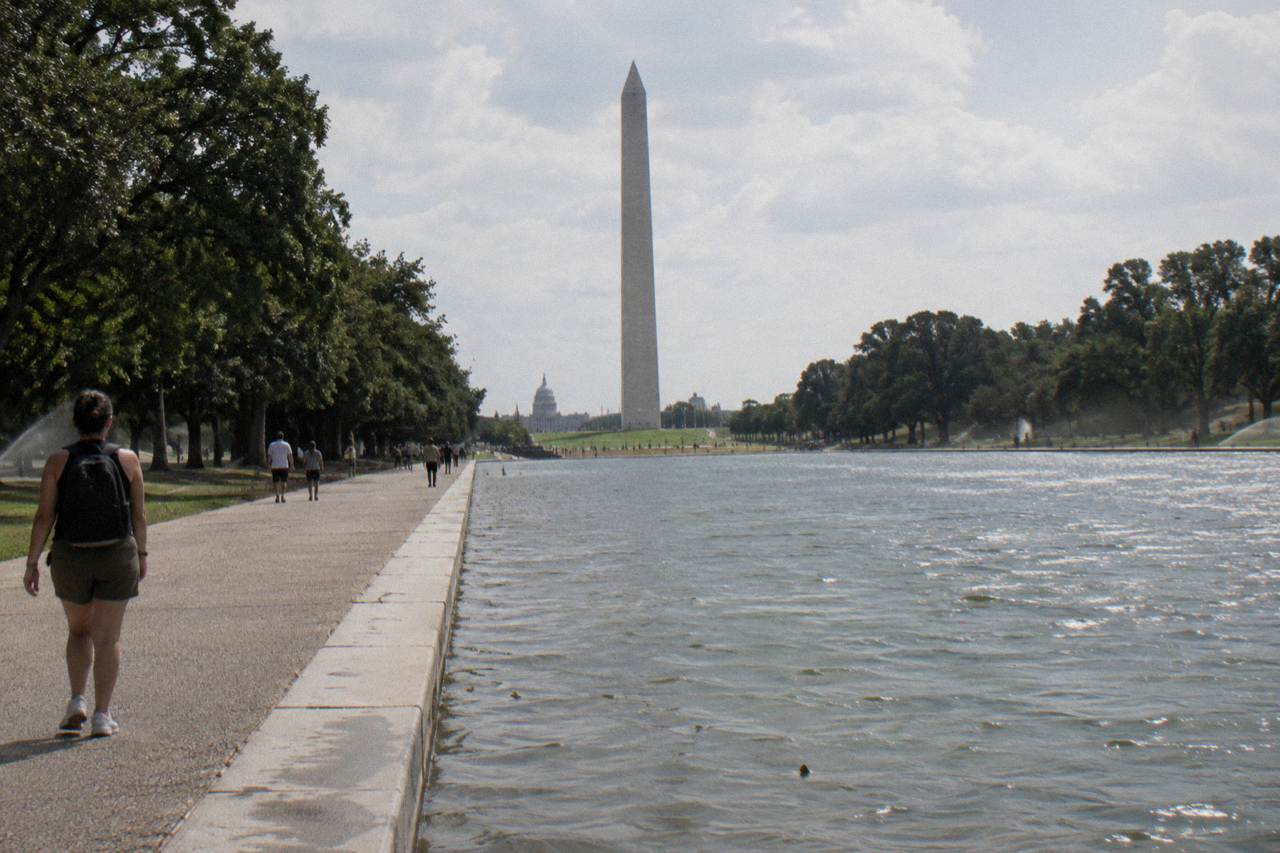
The honest answer is the National Mall, the two-mile-scale parkland strip that holds the Lincoln Memorial, the Washington Monument, the Smithsonian museums and the Capitol grounds, and it costs nothing to enter. No single ticketed site in the city draws the same concentration of visitors. Treat "number one" as the most visited and most reviewed consensus rather than an official ranking, and plan around it.
That framing matters. Travel sites and visitor boards routinely crown a single site, but a ranking only means something when it rests on a count. What can be said plainly is this: the National Mall and its memorials are the common denominator of nearly every DC itinerary, the place first-time visitors head first and the reason the city's sightseeing economy exists in its current shape. The park that contains them, National Mall and Memorial Parks, is open 24 hours a day according to the National Park Service, and entry to the memorials themselves is free.
The Mall rewards a plan. Spread from the Capitol to the Lincoln Memorial, its sights sit far enough apart that walking the whole thing in one go tires most people out, which is why bikes, scooters and hop-on buses are everywhere here in high season. The best way to see all the monuments is a question worth settling before you arrive, because the answer changes with your time budget, the season and how much walking your group can absorb.
For many visitors a guided ride is the cleanest fit, and three options on this site cover the core ground.
The featured ride among these is the 3-Hour Monuments Bike Ride, a shared classic-bike tour whose listing states 3 hours with a guide moving between the major memorials. Check availability on the live listing for the current price. It suits a first visit well: you cover the full east-west span, you get context at each stop, and you finish with a mental map you can reuse on foot later. Check the booking page for the current meeting point and inclusions, since those details vary by season.
Why The National Mall Tops Every Shortlist
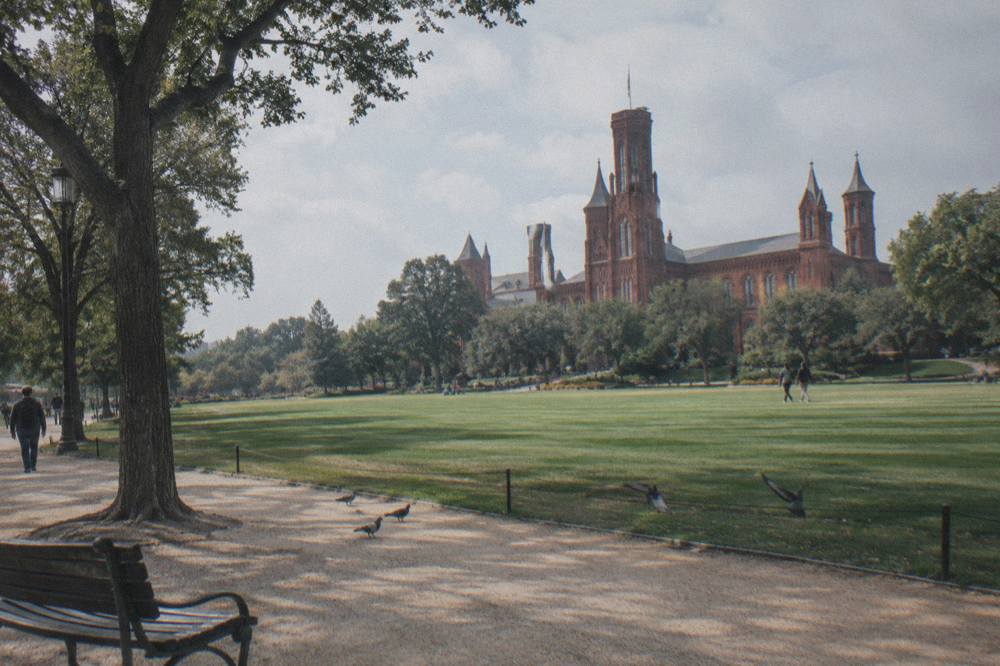
Concentration is the reason. The Mall puts a dozen world-class sights within sight of one another: the Lincoln Memorial, the Washington Monument, the Capitol, the Smithsonian Castle and its cluster of free museums, and the memorial-lined Tidal Basin edge. No other DC district comes close for density, and almost none of it charges admission. That combination, many headline sights at zero entry cost, is unmatched in any other US city.
Start with the monuments themselves. The Lincoln Memorial, at the western end, anchors the view that appears on postcards and in a thousand films: the reflecting pool stretching toward the Washington Monument, which rises 555 feet 5 1/8 inches from its base, a figure the Park Service confirms on its monument FAQ page. Walk east and the scale keeps paying out. The World War II Memorial, the Vietnam Veterans Memorial wall, the Korean War Veterans Memorial and the Martin Luther King Jr. Memorial all sit within a short ride or a longer walk of one another.
Then there is the museum layer. The Smithsonian museums lining the Mall, including the National Museum of Natural History and the National Air and Space Museum, are free to enter, which means a family can spend an entire day on the Mall without buying a single attraction ticket. Food, drink and transit are the real costs of a Mall day, not the sights.
If a three-hour guided loop appeals, this is the moment to book it:
The Monuments That Anchor The Mall
Four memorials form the spine of a first visit: the Lincoln Memorial at the west end, the Washington Monument at the center, the World War II Memorial between them, and the Jefferson Memorial across the Tidal Basin to the south. Add the Vietnam Veterans Memorial wall and the Martin Luther King Jr. Memorial and you have covered the sights most visitors mean when they say they "did the Mall." All are free and open around the clock.
Each has a distinct character, and the order you visit them in matters more than most people expect. The Lincoln Memorial is busiest at midday and quietest early in the morning; its steps face the long eastern view down the reflecting pool. The Washington Monument, 555 feet 5 1/8 inches tall, requires a timed ticket if you want to ride to the top, and the Park Service's monument FAQ page explains how those tickets work. The World War II Memorial sits at the pool's east end and doubles as the natural hinge between the Lincoln side and the Monument side.
The Tidal Basin memorials, the Jefferson and the Martin Luther King Jr. Memorial, sit on a loop road that becomes Washington's most crowded path during cherry blossom season. In late March the Yoshino cherries around the basin draw the biggest single crowds the park sees all year, and in 2026 the Park Service confirmed peak bloom on March 26. The typical window runs the last week of March into the first week of April, though no forecast for 2027 has been published yet, so treat any date you read as provisional until the Park Service's bloom watch updates in late winter.
A note on pacing: these sights are farther apart than photos suggest. The full west-to-east Mall walk is a serious outing on foot, and many visitors who start at one end flag by the middle. That is the gap a bike ride closes neatly, and the National Mall monuments bike route breaks the stops into a rideable sequence if you would rather go self-guided.
When To Go: Seasons On The Mall
April through early June and September through October are the comfortable windows, and that is not opinion but the climate record. Average highs run 68 F in April, 76.5 F in May and 80.7 F in September, against 89.6 F in July. March splits the difference at a 56.5 F average high, cool but workable, while winter highs sit in the 40s with rain on roughly five to six days a month.
The numbers below are NOAA 1991 to 2020 climate normals for Washington Reagan National Airport, long-run averages rather than any forecast for your dates:
| Month | Avg high F | Avg low F | Rain days |
|---|---|---|---|
| January | 44.8 | 30.1 | 5.7 |
| February | 48.3 | 31.8 | 5.4 |
| March | 56.5 | 38.6 | 6.5 |
| April | 68.0 | 48.4 | 6.4 |
| May | 76.5 | 58.0 | 7.3 |
| June | 85.1 | 67.5 | 6.5 |
| July | 89.6 | 72.4 | 6.7 |
| August | 87.8 | 71.0 | 5.6 |
| September | 80.7 | 64.1 | 5.8 |
| October | 69.4 | 52.2 | 4.9 |
| November | 58.2 | 41.6 | 5.0 |
| December | 48.8 | 34.5 | 6.4 |
July and August are the months to treat with respect. The combination of upper-80s highs, low-70s lows that never give pavement a chance to cool, and humid air makes midday monument-hopping genuinely draining, and afternoon thunderstorms are common enough that a flexible plan beats a rigid one. If summer is your only window, shift the heavy sightseeing to morning and evening: the memorials are open and lit at night, sunset in late October falls around 6 p.m., and the Park Service keeps the park open around the clock.
Winter, by contrast, is the insider's season. Crowds thin dramatically, the memorials photograph beautifully in low light and occasional snow, and a 45 F afternoon ride is far more pleasant than the July version of the same route. The trade-off is shorter days and a real chance of rain, so pack layers and check the forecast rather than the normals table, which describes the long run, not your Tuesday.
Cherry blossom season deserves its own line in any timing discussion. The 2027 National Cherry Blossom Festival runs March 20 to April 11, and that period will bring the year's densest crowds to the Tidal Basin regardless of when peak bloom lands. If your trip dates are fixed around the festival, book guided rides early and expect company everywhere.
Seeing The Mall By Bike
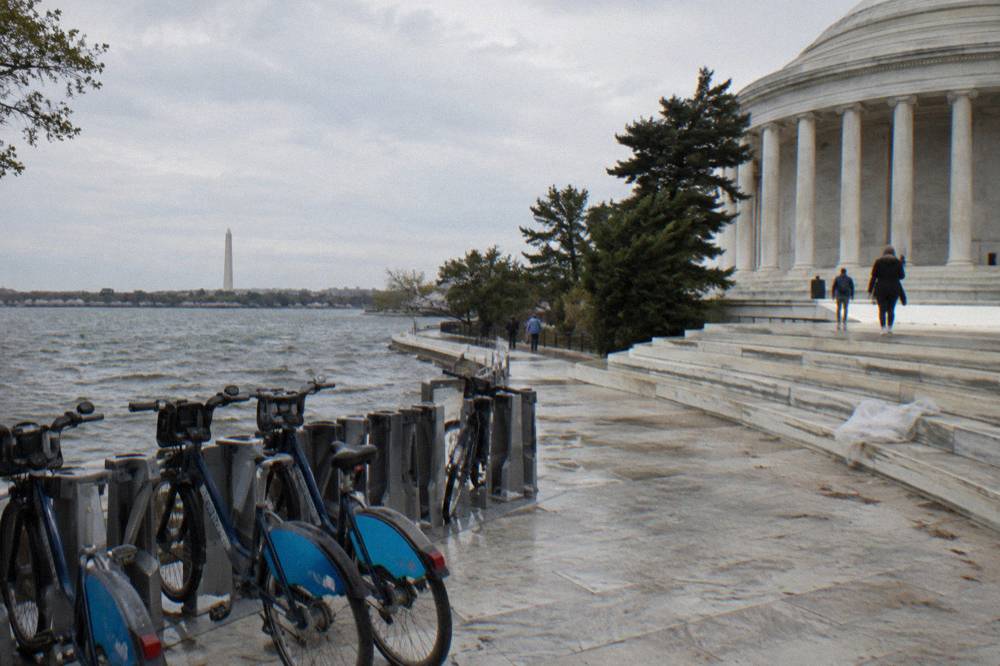
Bicycles are welcome throughout National Mall and Memorial Parks, with bike parking near each major memorial, and riding inside the memorials themselves is not permitted. The Park Service asks riders to walk bikes through the World War II and Franklin Delano Roosevelt Memorials or lock up before entering any other one. That makes the Mall one of the most bike-friendly headline attractions in the country.
Those rules come straight from the Park Service's own bicycling information page, and they are the whole rulebook you need for a Mall ride. There is no entry fee for the park, no bike permit, and no restriction on where along the Mall you can roll between memorials. In practice the rideable circuit linking the Lincoln Memorial, the Washington Monument grounds, the World War II Memorial and the Tidal Basin loop is the route most guided tours use, and it works just as well self-guided with a rented or Bikeshare bike.
Helmets are worth a sentence of DC law: anyone under 16 must wear one on a public roadway or path, and parents can be cited for letting a child ride without. Guided tours supply helmets as standard equipment, which is one quiet argument for them with kids in tow. E-bikes fit here too. DC defines a "motorized bicycle" as a pedal-equipped two- or three-wheeler whose motor cannot push it faster than 20 mph on level ground, so the assisted bikes used on the Mall e-bike tours sit inside the ordinary bicycle rules.
For a shorter or easier first ride, the Capitol Hill side is a good alternative to the full Mall loop:
The Easy Capitol Hill Highlights ride is a 2-hour classic-bike shared tour focused on the Capitol end of the Mall, the side most visitors under-visit. The listing states 2 hours; check the booking page for the meeting point, price and what is included. Pairing it with an afternoon walk among the Lincoln-side memorials covers the headline sights without a full-day commitment.
Closures To Check Before You Go
Two NPS closures are in force as this article is written: the Lincoln Memorial Reflecting Pool, its adjacent walkways and grass medians are closed until 20 November 2026 at 11:59 p.m., and the west side of the Washington Monument Grounds is closed through 23 January 2027 for turf restoration. Neither closes a memorial itself, but both reshape how the central Mall reads on the ground.
The reflecting pool closure is the more visible one. The long water frame of the classic Lincoln view is drained or fenced, so the postcard perspective is interrupted even though the memorial steps remain open. The Washington Monument grounds work has already closed the north and south turf areas through 10 September 2026, and the west side follows through late January. The Park Service also runs short-notice closures for events and security, including nighttime road closures around Maine Avenue and the Tidal Basin for the Long Bridge project in October 2026, so the practical habit is to glance at the park's public notices the day before you ride.
None of this argues against visiting. It argues for checking the Park Service notices rather than trusting a blog post, this one included, since construction timelines shift and event closures land with little fanfare. A guided tour adds a buffer here too: operators reroute around active work, and a guide will know on the morning of your ride what the notices said that week.
Free And Nearly Free Ways To Do The Top Sights
Everything headline on the Mall is free to enter: the memorials, the park, and the Smithsonian museums along it. The real budget question is transport and time. Capital Bikeshare's day pass costs $10 per 24 hours with classic rides free for the first 45 minutes each, which makes a self-guided monuments loop nearly free once you own the pass. Guided tours charge for the guide, the bike and the helmet, not for the sights.
Since "free" needs precision, here is what the verified Bikeshare pricing looks like:
| Option | Price | What you get |
|---|---|---|
| Single ride | $1 unlock plus $0.15 per minute classic, $0.35 per minute e-bike | One bike, pay as you go |
| Day pass | $10 per 24 hours | Unlimited 45-minute classic rides, then $0.05 per minute; e-bikes $0.15 per minute |
| 30-day membership | $25 per month | Same 45-minute classic terms, e-bikes $0.15 per minute |
| Annual membership | $120 per year | Same terms, free unlocks |
Note that a day pass is not free, despite how it sometimes gets described in roundups. But for a visitor riding monument to monument with station stops between, three or four classic rides inside the 45-minute windows often comes out far cheaper than a full-day rental, and the system spans roughly 8,000 bikes across more than 800 stations in eight jurisdictions. The trade-off is simple: no guide, no helmet supplied, no narrative at the stops. If you want the stories behind the stones, that is what a guided ride sells.
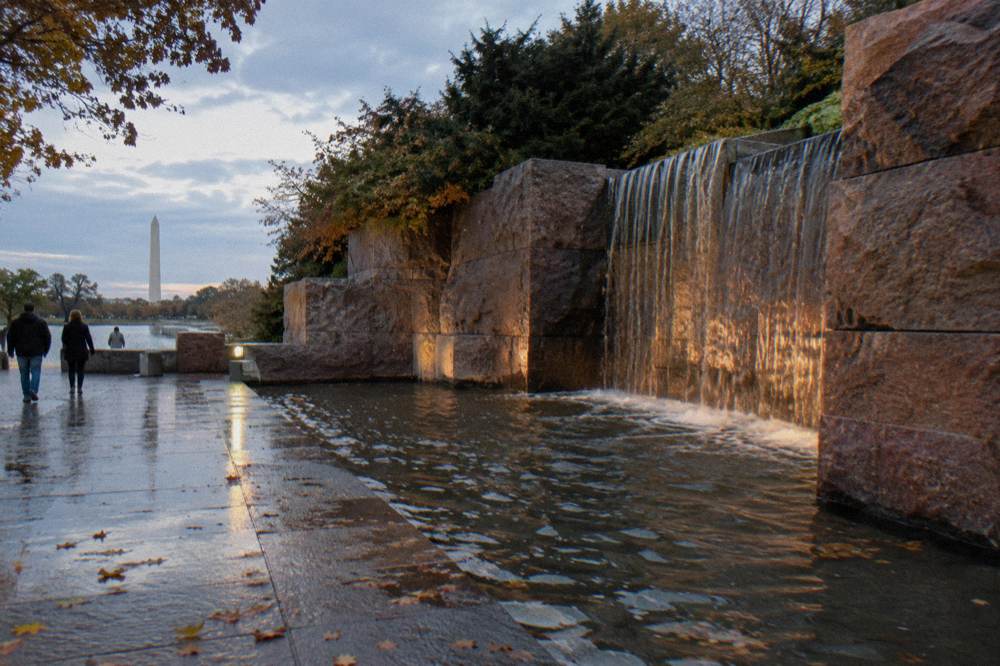
The evening version of the free visit deserves its own plug. Because the park never closes and the memorials are lit after dark, a night walk or ride among them costs nothing and delivers the atmosphere many visitors remember most. Crowds thin, the stone glows, and the summer heat finally breaks. For those who want the same scene with a guide:
The Night Monuments tour is a 3-hour classic-bike shared ride through the lit memorials, in English. The listing states 3 hours; check the booking page for seasonal start times, price and meeting point, since night rides shift with the sunset all year.
A Sensible Day Built Around The Number One Attraction
A pattern that works repeatedly: mornings for the Lincoln-side memorials before the crowds build, midday inside a Smithsonian museum when the sun or the cold peaks, and late afternoon or evening for a guided bike loop that ties everything together. In blossom season, swap the museum block for a Tidal Basin loop at opening time and accept the crowds as the price of the year's best scenery.
None of this requires a strict schedule, but the sequencing saves energy. The monuments are outdoor standing-and-walking experiences, and museums are sitting-and-climate-controlled ones, so alternating them keeps a family functional through a full day. A three-hour guided ride slots best either early, as an orientation pass you then deepen on foot, or late, as the wrap-up that connects sights you saw separately.
If the guided version appeals, these three rides are the natural shortlist for a first visit:
Whichever way you build the day, the underlying answer holds. The number one attraction in Washington DC is not a single building but the whole free, always-open stretch of park that holds them, and the only real decision is how to move through it. Bike Tours Washington DC exists because, for most visitors, two wheels turn that long walk into the best three hours of the trip.
Common Questions About The Number One Attraction In Washington DC
What Is The Number 1 Attraction In Washington Dc?
The National Mall and its memorials, understood as the parkland strip holding the Lincoln Memorial, the Washington Monument, the World War II Memorial and the free Smithsonian museums. No official ranking crowns a single site, so treat this as the visitor consensus: it is where nearly every itinerary starts, and entry costs nothing.
Is The National Mall Free To Visit?
Yes. The park is open 24 hours a day, the memorials are free, and the Smithsonian museums along the Mall do not charge admission. Your costs are transport, food and any guided tour you add on top.
Can You Ride A Bike On The National Mall?
Yes. Bicycles are welcome in National Mall and Memorial Parks, with bike parking near each major memorial. Riding inside the memorials themselves is not permitted; walk the bike through the World War II and Franklin Delano Roosevelt Memorials or lock it before entering others.
What Is The Best Month To Visit The Monuments In DC?
By the climate record, April, May, September and October offer the most comfortable conditions, with average highs between 68 and 80.7 F. Cherry blossom season, typically the last week of March into the first week of April, adds the year's best scenery and the year's biggest crowds.
How Long Does It Take To See The National Mall?
A full walk end to end is a serious outing, and most visitors need a full day to see the major memorials and one museum at a relaxed pace. A guided bike tour compresses the memorial circuit into roughly 3 hours, which is why it is a popular first-morning orientation move.
Are Any Parts Of The Mall Closed Right Now?
Closures change, so check the Park Service notices before you go. As of late 2026, the Lincoln Memorial Reflecting Pool and adjacent walkways are closed until 20 November 2026, and the Washington Monument Grounds west side is closed through 23 January 2027 for turf restoration.