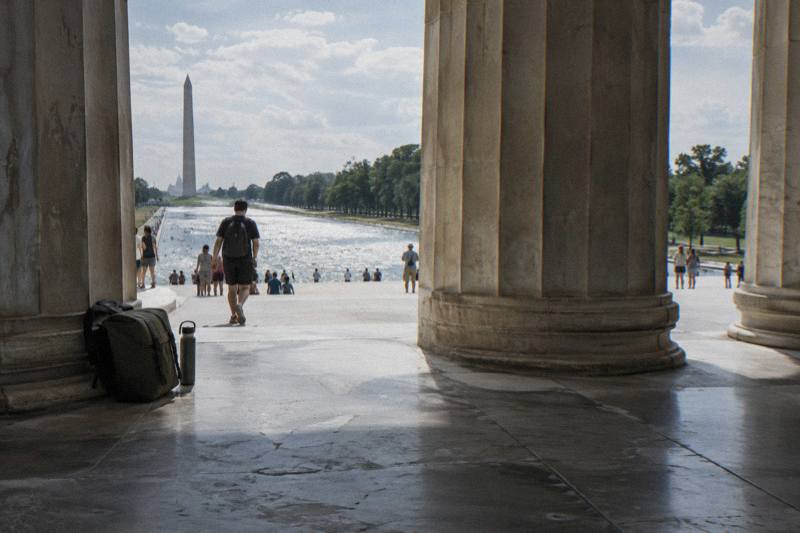
What Is The Best Way To See All The Monuments In DC?
Walking, a guided bike ride, Capital Bikeshare or an e-bike: verified numbers and park rules for seeing every DC monument in one visit.
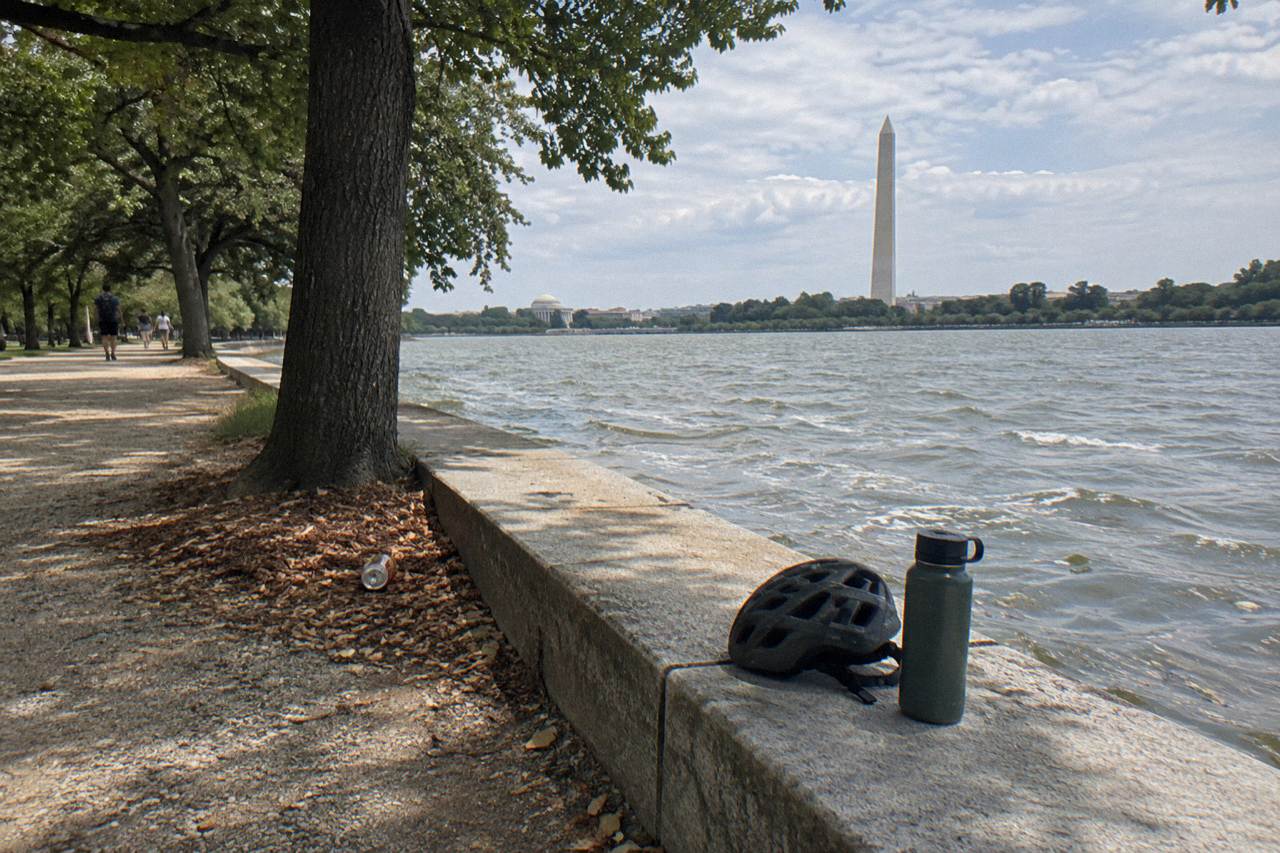
The best way to see all the monuments in DC is a guided bike ride across the National Mall: the park's own rules welcome bicycles, the memorial core sits in a compact strip of car-free paths, and a three-hour guided ride covers the Lincoln, Jefferson, World War II and more in one loop while walking the same ground takes most of a day. Walking is free but slow. Capital Bikeshare at $10 per 24 hours covers the DIY middle, and an e-bike ride flattens the distance further. The right answer depends on time, budget and legs, and each option carries real trade-offs worth knowing before you choose. If the Bikeshare idea appeals but you would rather not fiddle with a phone at the dock, how to use Capital Bikeshare without the app settles the question before you roll out.
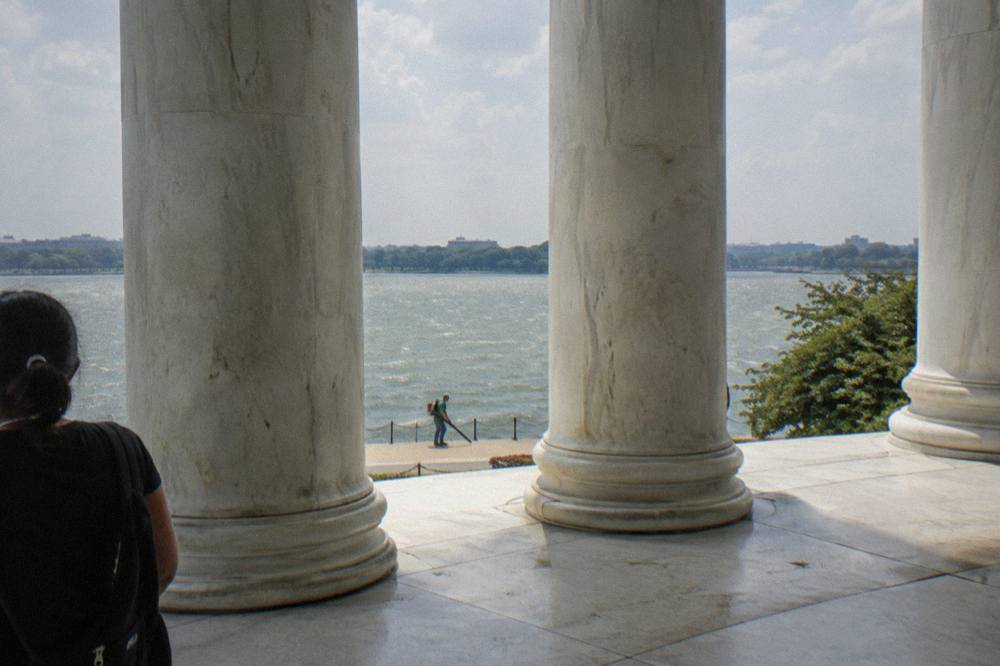
The question hides a geometry problem. The monuments are not clustered in one plaza; they ring the Mall's lawn and the Tidal Basin, so "seeing them all" means moving between the Lincoln Memorial at one end, the Capitol grounds at the other, and the Jefferson Memorial around the water. Doing that on foot is entirely possible, the National Park Service keeps the park open 24 hours a day, but the miles add up faster than most visitors expect, and summer heat turns the walk into an endurance event. The average July high at Reagan National Airport is 89.6 degrees Fahrenheit, with an average July low of 72.4, which means the relief after sunset is thin.
A bicycle changes the equation because the park was built for it in practice if not in design. The park service's bicycling page states plainly that bicycles are welcome in National Mall and Memorial Parks, that bicycle parking is provided near each major memorial and along the Mall, and that riding inside the memorials themselves is not permitted. Riders walk their bikes through the World War II and Franklin Delano Roosevelt memorials, or lock up before entering any other one.
The comparison also depends on what "all" means to you. Some visitors mean the big five names, Lincoln, Jefferson, Washington, World War II and the Vietnam Veterans Memorial. Others add the Korean War, Martin Luther King Jr. and Franklin Delano Roosevelt memorials, plus the Tidal Basin loop that connects them. The bike covers the full set comfortably; walking covers the first set well and the second set painfully.
Walking The Monuments: The Free Baseline
Walking costs nothing in dollars and everything in hours: every memorial on the National Mall is free to enter, the park never closes, and no ticket, tour or rental is required to stand at the Lincoln Memorial or the Vietnam Veterans Memorial. The price is pace, not money. A loop that takes in Lincoln, the Korean War and Vietnam memorials, the World War II Memorial, the Washington Monument grounds, and the Jefferson Memorial around the Tidal Basin is a multi-hour walk, and in July or August it is a hot one. Water fountains, shade and restrooms exist across the park but are spread out, so plan stops rather than assuming them.
Free guided walks exist too, and one pair is worth singling out. GuruWalk, an independent platform for pay-what-you-want tours, lists two verified all-English walks in DC. Note that "free" here means pay what you want: you tip the guide what the walk was worth at the end, which makes it the cheapest guided option in the city by any measure.
Walking Tour of DC Monuments runs about 2 hours across 9 stops, starting at the World War II Memorial information center at 5 Homefront Dr SW. It covers the Lincoln, Martin Luther King Jr., Franklin Delano Roosevelt and Jefferson memorials plus the World War II, Vietnam and Korean War memorials, and carries a 4.41 rating from 335 reviews on GuruWalk. That is a serious pool of reviews for a tip-based walk, and the itinerary is genuinely broad for the time.
See this free tour on GuruWalk
DC Monuments by Moonlight is the shorter evening version: about 1 hour 30 minutes, 7 stops, meeting at the Albert Einstein Statue at 2101 Constitution Ave NW, also pay what you want. It holds a 4.26 rating from 65 reviews on GuruWalk, and it gives a compact after-dark look at the big lit memorials for anyone whose daylight hours are booked.
See the moonlight walk on GuruWalk
Both are walks, not bike rides, and that is the honest gap. On foot in two hours you reach the memorials flanking the Reflecting Pool and the cluster around the WWII Memorial start point, but the Tidal Basin side, the Jefferson Memorial and the farther stretches of the Mall largely fall outside the loop. A paid bike tour covers more of the Mall and the Tidal Basin side in the same time, with bikes and helmets included per the listing, which is exactly where the guided rides in the next section earn their price.
A Guided Bike Ride: The Most Ground Per Hour
A guided bike ride is the most efficient way to see all the monuments in one pass: the 3-hour guided rides pair a local guide with a loop of the major memorials, include the bike and helmet per the listings, and remove every decision about routing, parking and which path is safe. The featured 3-Hour Monuments Bike Ride lists at three hours, classic bikes, shared groups, and its price and meeting point are on the booking page. The same family includes an e-bike upgrade option on the Monuments and Memorials ride for riders who want the motor's help, and a dedicated National Mall and Tidal Basin e-bike ride for the basin-side loop. If you're weighing which of the city's guided rides fits your plans, the side-by-side comparison of DC's guided bike rides matches each tour to how you like to travel.
The guide is the part walkers and Bikeshare riders go without. Guides time the loop around light and crowds, tell the story at each stop, and handle the one logistical trap that catches independent riders: knowing where to dismount. Because the park requires walking the bike through the World War II and FDR memorials and locking up at the others, a guide who knows each memorial's bike racks saves ten minutes of guesswork per stop, which across six or seven stops is real time. A guide also carries the answer to the questions that otherwise send you to your phone: which memorial faces east for morning light, where the nearest restroom is, and why the Korean War Memorial's wall looks the way it does at dusk.
Solo decision point here.
There is a full breakdown of stops and routing in the National Mall monuments route guide, and riders weighing the evening version can read the night ride past the DC monuments. The operator behind the featured ride also has its own booking page, and the tour page on this site carries the meeting point details and the full inclusion list.
Capital Bikeshare: The DIY Middle Ground
Capital Bikeshare sits between walking and a guided ride: a day pass costs $10 per 24 hours with unlimited 45-minute classic-bike rides included, e-bikes cost $0.15 per minute on that pass, and the system runs about 8,000 bikes across more than 800 stations in the region, including stations on the Mall. You get the bike's speed without the guide's routing, and the 45-minute ride window fits the Mall's stop-to-stop hops well since every re-dock restarts the free window. The catch is that the route, the timing and the closure-checking are all yours: you choose the loop, you find each memorial's bike racks, and you read the park notices yourself before setting out.
| Capital Bikeshare option | Price | What it includes |
|---|---|---|
| Single ride | $1 unlock plus $0.15 per minute (classic) or $0.35 per minute (e-bike) | One ride, no time window |
| Day pass | $10 per 24 hours | Unlimited 45-minute classic rides, then $0.05 per minute; e-bikes $0.15 per minute; free unlocks |
| 30-day membership | $25 per month | Same 45-minute classic terms and e-bike rates as the day pass |
The pricing comes from the operator's own pricing page. A station that matters here: the Smithsonian-National Mall station at Jefferson Dr and 12th St SW was reinstalled in late October 2026, restoring a dock right in the middle of the monument corridor. If a station near your next memorial is empty or full, the app shows the nearest alternative, and the 45-minute window makes re-docking a normal part of the loop rather than a penalty. For a visitor whose day is one long monument loop plus a museum or two, the day pass usually beats paying per ride within the first few hops.
Bikeshare's honest weakness is the stops themselves. There is no guide, no story at the Lincoln Memorial, no one timing your loop against sunset, and no helmet in the dock. DC law requires a helmet for anyone under 16 riding on a public roadway or path, so families with younger kids on Bikeshare need to carry helmets, which is one practical reason the guided family rides, with helmets included per the listings, appeal to parents. There is a fuller weighing of the two approaches in the Capital Bikeshare or guided ride comparison.
E-Bike Rides And The Night Option
An e-bike ride covers the same monument loop with the motor doing the climbing and the headwind work, and the e-bike rides listed here include a bike-or-e-bike choice on the Monuments and Memorials ride and a dedicated National Mall and Tidal Basin e-bike tour, both at three hours. DC defines its "motorized bicycle" category as a pedal bike whose motor cannot propel it faster than 20 mph on level ground, which is why the e-bikes on these tours feel like bicycles with a tailwind rather than scooters. Prices for both sit on the booking pages, and the choice between them comes down to whether the Tidal Basin loop is the point of your day.
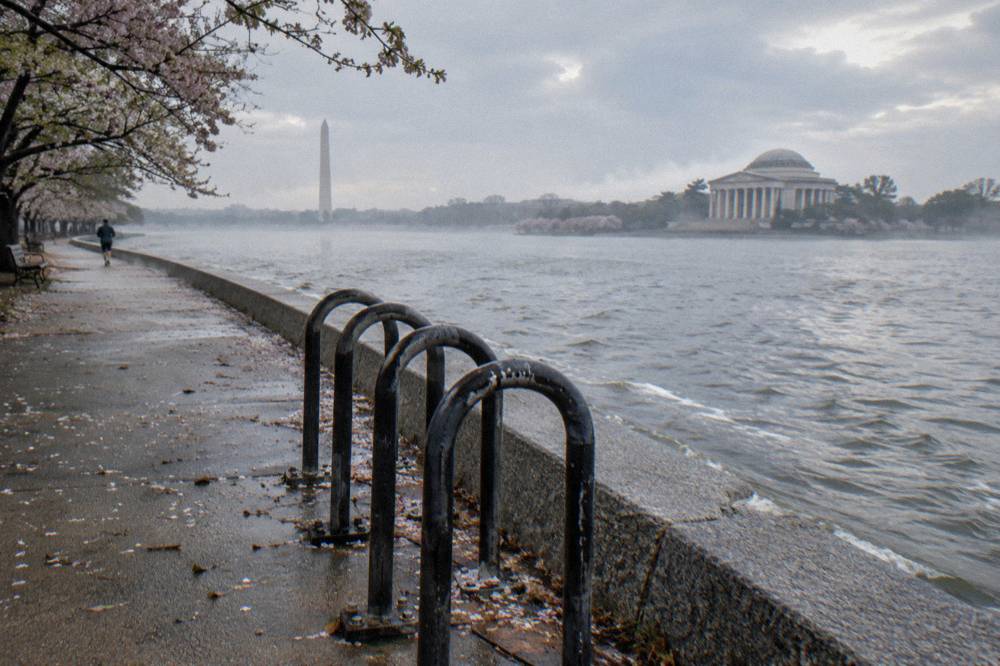
The e-bike case is strongest on two kinds of days. The first is hot ones: June through August average highs run from 85.1 to 89.6 degrees Fahrenheit at Reagan National Airport, and the motor strips the sweat factor out of a three-hour loop. The second is the Tidal Basin-heavy itinerary, because the basin's loop adds distance that a classic bike makes you feel by the Jefferson Memorial. The dedicated e-bike ride targets exactly that geography, and the motor means the distance stops being the constraint on how many monuments you can honestly claim to have seen.
Night deserves its own word. Sunset in Washington falls at 6:08 p.m. as of the end of October 2026, and it creeps earlier into November, which makes evening monument rides practical earlier in the day. The memorials are lit after dark, the park never closes, and the guided night rides run about three hours. Riders considering that version will find the timing and routing trade-offs laid out in the night ride guide linked above; the same guide-walk-lock rules apply under the lights.
Solo pick for the e-bike reader here.
Closures And Timing To Check Before You Go
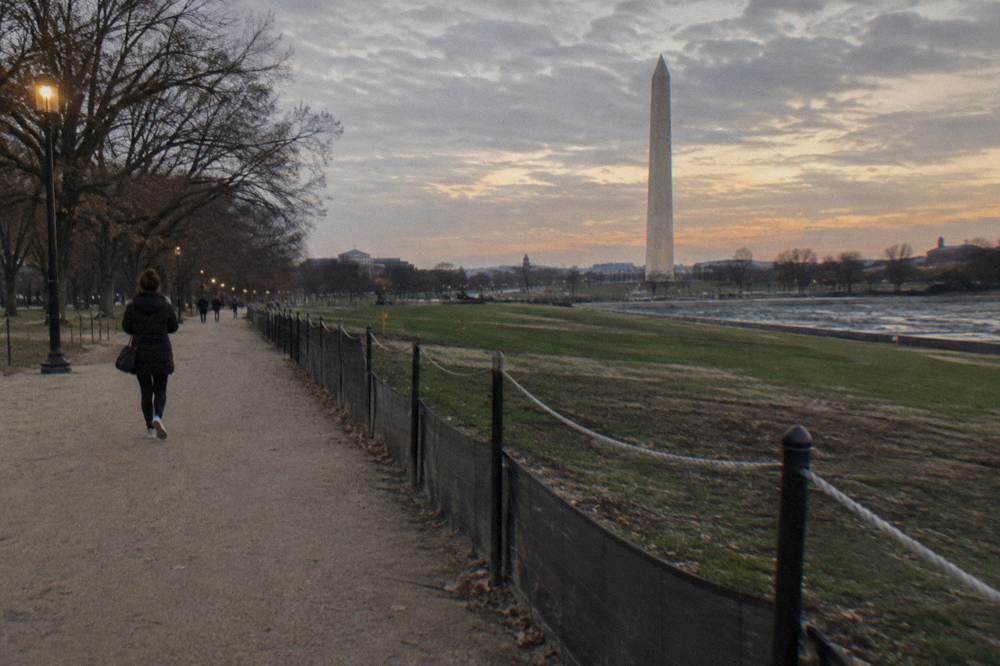
Two closures in force right now shape the monument loop: the Lincoln Memorial Reflecting Pool, its adjacent walkways and grass medians are closed until Friday, November 20, 2026 at 11:59 p.m., and the west side of the Washington Monument Grounds is closed through January 23, 2027 for turf restoration. Neither closes a monument itself, but both pinch the paths around them, and the park service posts updates on its official closure notice before conditions change. Check the notice the day you ride, since event closures can appear on short notice too.
Seasonality is the other timing lever. The verified NOAA normals put April's average high at 68.0 degrees Fahrenheit with 6.4 days of rain, about as good as DC riding weather gets, while May through July each average 7 or more wet days. October, at a 69.4-degree average high and 4.9 rain days, is nearly April's equal and far less crowded. Cherry blossom season, with 2026's peak bloom reached on March 26, is spectacular and dense; the 2027 festival runs March 20 to April 11, and no peak-bloom forecast for 2027 has been published yet, so anyone planning around the blossoms should watch the park service's bloom page rather than a calendar guess.
| Way to see the monuments | Cost basis | Time for the core loop | Best for |
|---|---|---|---|
| Walking | Free entry, park open 24 hours | Most of a day for the full set | One or two monuments in depth, unhurried visitors |
| Pay-what-you-want walk (GuruWalk) | Tip-based, about 2 hours | 2 hours, 9 stops | Budget travelers who want a guide's stories on foot |
| Capital Bikeshare day pass | $10 per 24 hours, 45-minute classic rides included | Half a day, self-directed | Independent riders comfortable planning their own loop |
| Guided 3-hour bike ride | Price on the booking page, bike and helmet included per the listing | 3 hours, guided loop | First-time visitors wanting every major memorial plus context |
| Guided e-bike ride | Price on the booking page | 3 hours, motor-assisted | Hot days, the Tidal Basin loop, riders who want less effort |
Whichever way you ride or walk it, the underlying asset is the same: a free, always-open park whose rules welcome bikes, with parking at every major memorial. The site behind this article, Bike Tours Washington DC, breaks down each guided option in detail if the comparison above points you toward a ride. For most first-time visitors with one day and a wish to see all the monuments, the guided three-hour ride is the single best answer; walkers and Bikeshare riders trade time or guidance for dollars, and the e-bike upgrade buys comfort on the hot or long versions of the same loop.
The closures split the calendar into distinct riding windows. Before November 20, 2026, budget extra time for the Reflecting Pool detour; the pool and its walkways reopen at 11:59 p.m. that night, so visitors arriving later in November get the direct route back. The Washington Monument turf work runs through January 23, 2027, making late winter and early spring the first stretch when both detours are gone.
The weather numbers favor the shoulders too. October's 4.9 rain days come in under even April's 6.4, and both sit below the 7-plus wet days May through July each average, so a dry ride is likeliest outside summer. Late October's 6:08 p.m. sunset adds a bonus: one day can hold an afternoon loop and a lit-memorial pass after dinner without rushing either.
Bikeshare riders get a practical anchor in the Jefferson Dr and 12th St SW station, back since October 26, 2026, and the day pass's 45-minute classic rides work as natural checkpoints: ride a leg, dock, walk a memorial, roll on. Prefer someone else handling the routing? The guided three-hour ride, or its e-bike version on hot days, does that.
Common Questions About Seeing All The Monuments In DC
What Is The Best Way To See All The Monuments In DC?
A guided three-hour bike ride covers the most monuments per hour, with a guide handling routing and the park's walk-your-bike rules. Walking is free but takes most of a day; Capital Bikeshare's $10 day pass covers the self-directed middle; an e-bike version of the guided ride adds the motor for hot days and the Tidal Basin loop.
Can You Ride A Bike At The DC Memorials?
Yes. The National Park Service states that bicycles are welcome in National Mall and Memorial Parks and that bicycle parking is provided near each major memorial. Riding inside the memorials themselves is not permitted: riders walk their bikes through the World War II and Franklin Delano Roosevelt memorials, or lock up before entering any other memorial.
Is The National Mall Open At Night?
Yes. National Mall and Memorial Parks is open 24 hours a day, and the memorials are lit after dark. Sunset in late October 2026 falls at 6:08 p.m., so an evening loop works right after dinner, and guided night rides run about three hours.
How Much Does Capital Bikeshare Cost For A Day Of Monuments?
The day pass is $10 per 24 hours and includes unlimited 45-minute classic-bike rides, then $0.05 per minute beyond 45; e-bikes cost $0.15 per minute on the pass with free unlocks. A single ride without the pass is $1 to unlock plus $0.15 per minute on a classic bike.
Are Any Monuments Closed Right Now?
Two closures are in force: the Lincoln Memorial Reflecting Pool, its walkways and grass medians are closed until November 20, 2026 at 11:59 p.m., and the Washington Monument Grounds west side is closed through January 23, 2027. The monuments themselves remain open; check the park service notice before you go.
Do Kids Need Helmets On The National Mall?
Yes, under DC law anyone under 16 riding a bicycle on a public roadway or path must wear a securely fastened helmet. Guided tours include helmets per the listings, which is one reason families often choose them over self-guided Bikeshare rides.