Capital Bikeshare Or A Guided Ride
Capital Bikeshare puts about 8,000 bikes at 800-plus stations across eight jurisdictions, while a guided ride hands you a route, a guide and a bike in one price. Here is how the money, the time limits and the experience actually compare on the National Mall.
Short answer
Capital Bikeshare costs $1 to unlock plus $0.15 per minute on a classic bike, or a $10 day pass with the first 45 minutes of each classic ride included. A guided ride costs more per person, from prices on the booking page, but includes the bike, a helmet and a guide. Short hops favor Bikeshare; the full monuments loop favors a guide.
How Does Capital Bikeshare Actually Work?
Capital Bikeshare is a public bike-share system with about 8,000 bikes and more than 800 stations across eight jurisdictions, priced either per ride or by a pass. A single ride costs $1 to unlock plus $0.15 per minute on a classic bike or $0.35 per minute on an e-bike. A day pass costs $10 per 24 hours and includes the first 45 minutes of every classic ride, with e-bikes at $0.15 per minute. Before you unlock your first ride, it helps to know where Capital Bikeshare bikes actually have to be returned, since the pricing only works in your favor when you dock the bike on time.
That 45-minute allowance trips up a lot of visitors, so it deserves a plain explanation. The day pass and the memberships, the $25 monthly or the $120 annual, let you take a classic bike out for 45 minutes at a time with no extra charge, then bill $0.05 per minute beyond that. The single ride has no included window at all; the meter starts at unlock and runs until you dock. An e-bike never has a free window on any plan, it is always $0.15 or $0.35 per minute depending on what you bought.
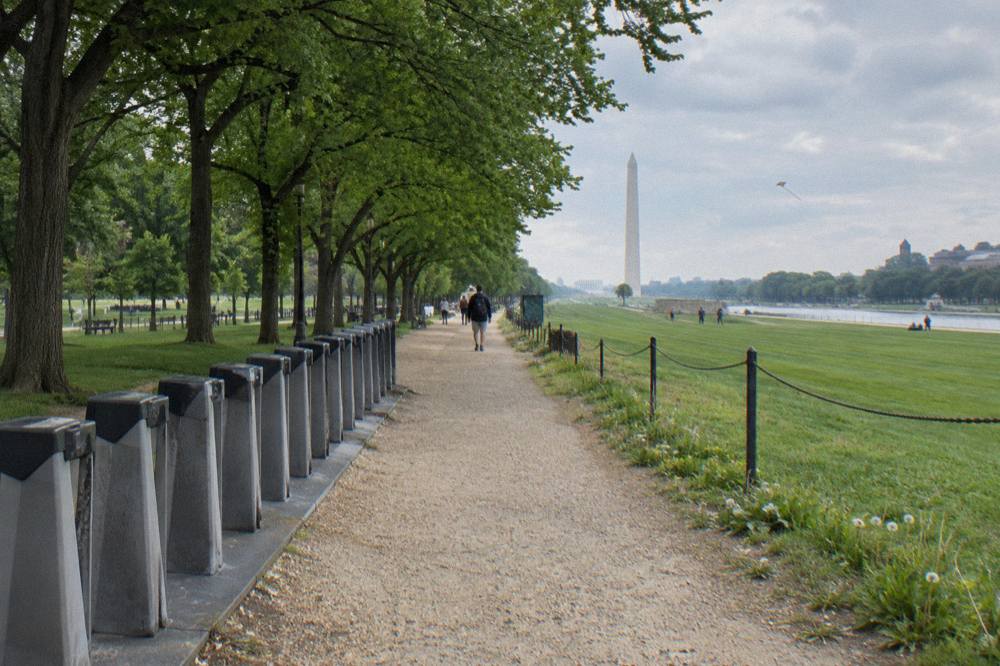
The system's own pricing page spells out every tier, and it is the one place to confirm the numbers before you ride: Capital Bikeshare pricing. For how bikes fit into the park itself, the National Park Service is direct: bicycles are welcome in National Mall and Memorial Parks, parking is provided near each major memorial, and riding inside the memorials is not permitted, you walk the bike through the World War II and Franklin Delano Roosevelt memorials or lock it up before entering.
| Plan | Upfront cost | Classic bike rate | E-bike rate | Notes |
|---|---|---|---|---|
| Single ride | $1 unlock | $0.15/min | $0.35/min | No included minutes |
| Day pass (24 hours) | $10 | First 45 min free, then $0.05/min | $0.15/min | Unlimited 45-min classic rides |
| 30-day membership | $25 | First 45 min free, then $0.05/min | $0.15/min | |
| Annual membership | $120 | First 45 min free, then $0.05/min | $0.15/min | Free unlocks |
One more structural point worth knowing before the comparison: the bikes live at the docks, so every ride ends at a station, not at a museum door or a memorial steps. For a deeper look at the dock-versus-tour question around the Mall, see the companion piece on renting a bike in DC, which adds rental shops to the same comparison.
What Does A Guided Ride Cost And Include?
A guided monuments ride in DC lists its price on the booking page, typically in the tens of dollars per person for a shared three-hour tour, and that single price covers the bike, a helmet and a licensed guide. There is no unlock fee, no per-minute meter and no dock to find. The trade is simple: you pay for convenience and route knowledge instead of paying by the minute. For a closer look at how that flat rate stacks up against pay-per-minute rentals, our guide to guided bike ride pricing in DC walks through the full comparison.
The most direct comparison point is the featured three-hour monuments ride on this site, a three-hour shared classic-bike tour of the Mall's memorials. Its per-person price and current rating sit on the booking page rather than in this article, but the shape of the product is consistent across the category: bike, helmet, guide, a set route, and stops where a guide explains what you are looking at.
The three rides above show the range: the full three-hour monuments classic ride, an e-bike version of the same idea, and a shorter two-hour Capitol Hill option for riders who want less saddle time. Prices and ratings for each are on their booking pages.
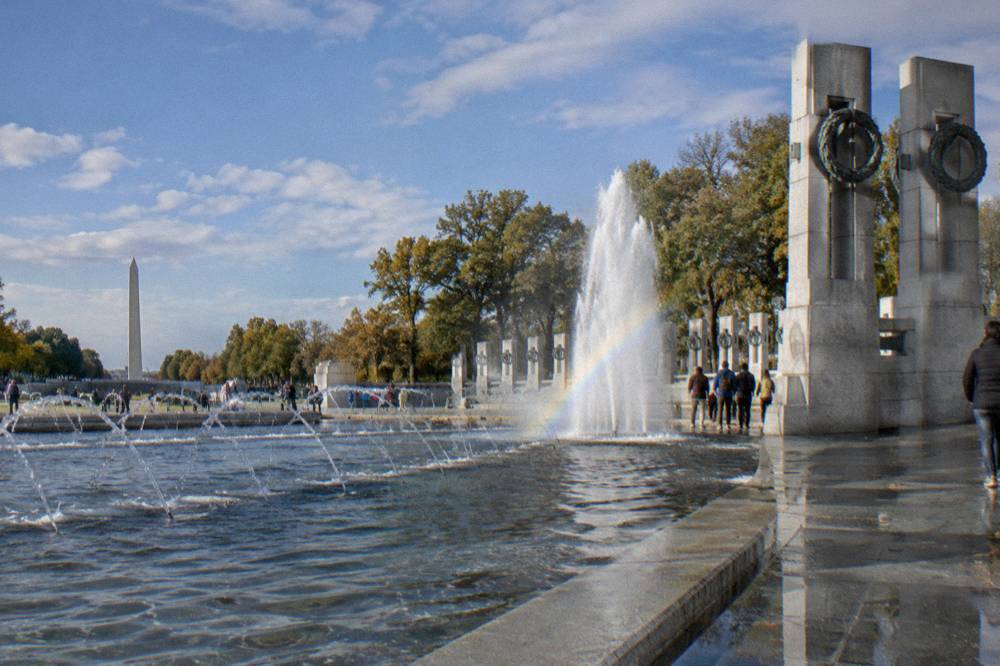
What the guided money buys, minute for minute, is freedom from the two Bikeshare pressures: the 45-minute clock and the dock hunt. A guide also handles the memorial geography, which on the Mall is genuinely confusing, the Lincoln Memorial, the World War II Memorial and the Vietnam Veterans Memorial sit close together but the Jefferson is a separate ride around the Tidal Basin. Riders who want that routing laid out in advance can read the National Mall monuments route guide before choosing either option.
It is worth being honest about what a guide is not: a private historian. Shared tours move at the group's pace, stop where the itinerary stops, and answer questions in the gaps between stops. For visitors who would rather linger for an hour at one memorial and skip another entirely, that structure can feel like a constraint, and it is the single best argument for the share bike.
When Do The 45-Minute Limits Bite?
The day pass's 45-minute window works well for hopping between memorials, because you dock between stops and the clock resets. It works badly for a continuous loop of the full Mall and Tidal Basin, which is exactly the ride a guided tour delivers in about three hours. If your plan is one long loop with no dock stops, a single ride or a pass quickly costs more than the per-minute math suggests.
Say you keep a classic bike out for two hours straight on a day pass. The first 45 minutes are included and every minute after that bills at $0.05, so the outing costs the $10 pass plus a small overage. Do the same continuous ride on a single ride ticket at $0.15 per minute and the meter runs the whole time, adding up to roughly $19 before you dock. Neither number is catastrophic, but neither includes a guide, a planned route or anyone handing you a fitted bike.
The dock-side reality matters as much as the arithmetic. The Mall's stations are popular, and at peak times the nearest dock to a memorial can be full when you want to drop a bike or empty when you want one. The system is large, more than 800 stations, so a working dock is usually a short walk away, but "a short walk" repeated six times across a monuments circuit adds up. That is the specific friction a guided ride removes, and it is invisible in the pricing table until you experience it.
| Your plan | Bikeshare fit | Guided fit | Why |
|---|---|---|---|
| Two or three memorials, casual pace | Strong | Weak | Dock-hop within free windows on a day pass |
| Full Mall loop plus Tidal Basin | Weak | Strong | Continuous ride, no dock clock running |
| Evening monuments at their best | Weak | Strong | Guided night rides exist; dock logistics in the dark |
| Capitol Hill only, short visit | Strong | Fair | Compact area, short ride times |
| Traveling with kids under 16 | Fair | Strong | Helmets required under DC law; tours supply them |
On that last row: DC law requires a securely fastened helmet for anyone under 16 riding on a public roadway, path or other right-of-way, per the DC Code. Guided rides include helmets in the ticket; Bikeshare does not, so families on shares need to bring their own.
Use the reset as a planning tool: build the day so each leg between docks stays inside the free window, and treat the re-dock as part of the visit. Pausing at a memorial while you re-lock costs nothing extra on the day pass.
That three-hour loop is where the e-bike fine print bites: with no free window on any plan, the per-minute charge runs from unlock to dock for the whole circuit, and the total lands far above the classic bike figures.
Closures matter here too. Detours around the Reflecting Pool area and the monument's west grounds can stretch a leg that looks short on the map, and a stretched leg is what pushes a dock-hop past the free window. Build slack into each segment of the day.
Which Memorials Can You Reach By Bike Either Way?
Every major memorial on the National Mall and around the Tidal Basin is reachable by bike under both options, because both ride the same park paths. The difference is not access, it is pacing and explanation. The park is open 24 hours, bicycle parking sits near each major memorial, and riding inside the memorials themselves is not permitted under either approach.
The routing rules come from the National Park Service, not from either product. Bicycles are welcome in National Mall and Memorial Parks; you walk the bike through the World War II and Franklin Delano Roosevelt memorials, which are designed as walk-through spaces, and lock up before entering the others. A Bikeshare rider following the same etiquette as a tour group loses nothing on access. The practical gap is narrative: a guide tells you what the Korean War Veterans Memorial's sculptures mean, while the dock timer quietly runs if you linger.
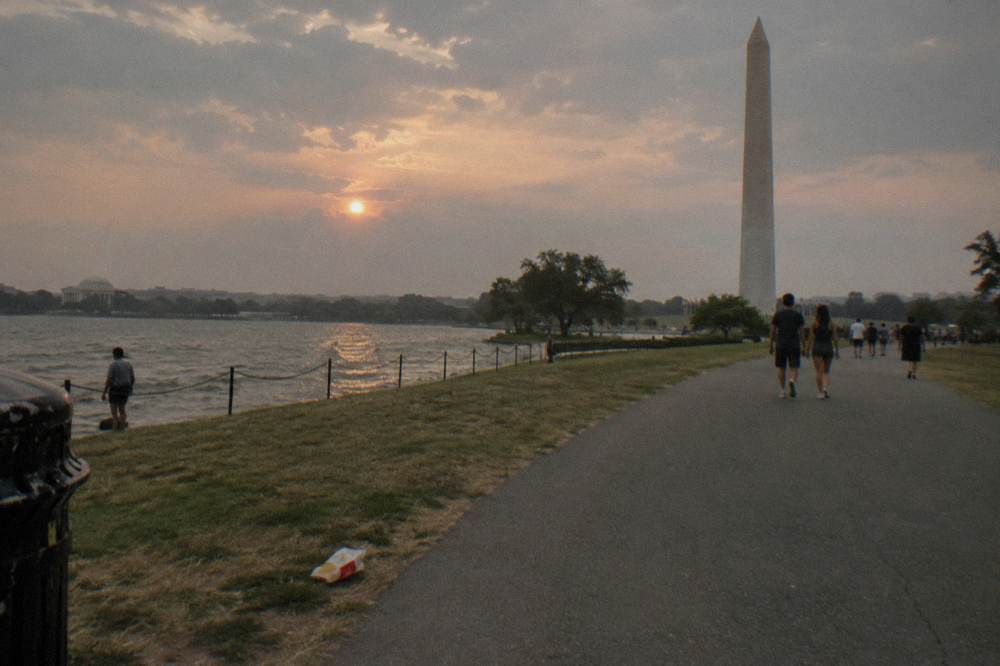
Two closures in force now shape any Mall ride, whichever option you pick. The Lincoln Memorial Reflecting Pool, its adjacent walkways and grass medians are closed until 20 November 2026 at 11:59 p.m., and the Washington Monument grounds' west side is closed through 23 January 2027. Check the NPS notices before you go, since both affect the standard monuments loop and tour operators reroute around them.
For the after-dark version of the same question, the night monument ride guide covers what changes after sunset, when the memorials are lit and the Mall quiets down.
What Does Each Option Do Best?
Bikeshare does spontaneous, short and cheap best: an unplanned hour between two museums, a ride down to the waterfront, a one-way trip when your feet give out. A guided ride does complete and interpreted best: the full monuments circuit, the history, the fitted bike and helmet, and a schedule that fits a one-visit trip. Neither is better; they solve different problems on the same paths. If the bikeshare side appeals but you would rather not depend on a phone, our guide to riding Capital Bikeshare without the app covers exactly what to sort out before you roll up to a dock.
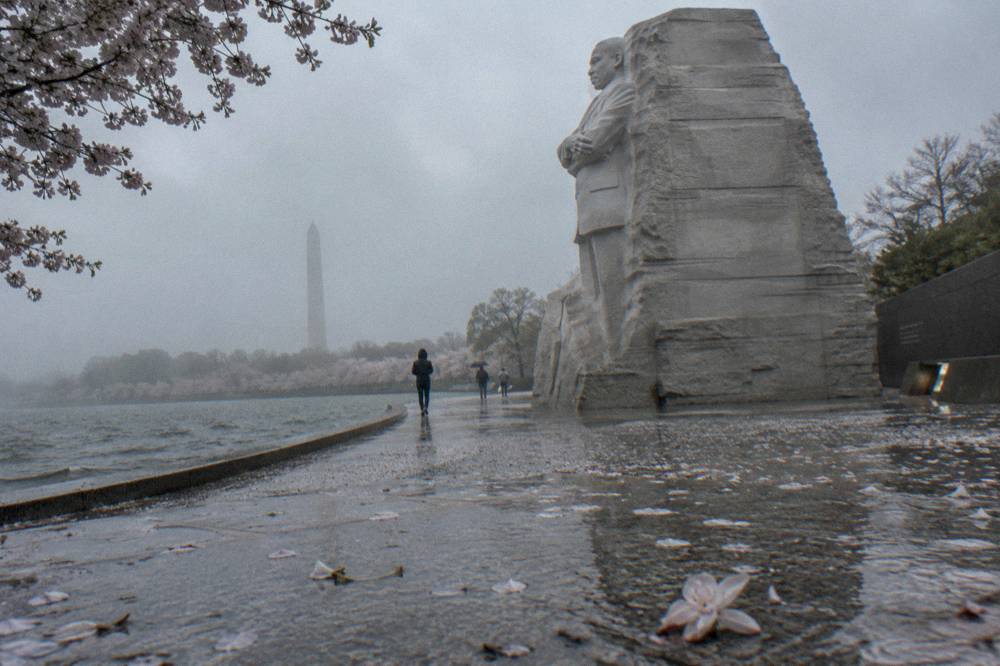
Visitors with a single day in the city lean guided, because a three-hour tour converts half a day into the entire core sightseeing list. That logic is laid out from the touring side in what to do with 3 hours in DC. Visitors with three or four days, or locals hosting guests, lean Bikeshare, because the day pass's 45-minute windows match how you actually move around the Mall when you are not in a hurry.

There is also a middle path worth naming: an e-bike share ride. At $0.35 per minute on a single ride it is the most expensive way to move, but it flattens the distance between the Capitol and the Lincoln Memorial for riders worried about stamina. The fitness question, and how much pedaling a DC tour actually demands, is covered separately in how fit you need to be for a DC ride.
If you want the e-bike experience with the guide included rather than by the minute, the Tidal Basin e-bike tour is that exact product, and its price and meeting point are on its booking page.
How Do Seasons And Weather Change The Math?
DC's climate favors bikes from April through June and again in September and October, when monthly average highs run from 68.0 to 85.1 degrees Fahrenheit. July and August average highs of 89.6 and 87.8 degrees, so summer rides shift to early morning or after sunset, which is when the night monument tours run. Winter riding works, with January's average high at 44.8 degrees, but docks and steel frames feel it.
These are NOAA 1991-to-2020 climate normals for Reagan National Airport, not forecasts, so treat them as planning ranges rather than promises for your dates. Rain days matter too: July averages 6.7 days with rain and May 7.3, the wettest month in the table, so a summer trip plan should include an indoor fallback either way.
| Season | Avg high / low (F) | Ride outlook |
|---|---|---|
| Spring (March to May) | 56.5 to 76.5 / 38.6 to 58.0 | Prime season; cherry blossom crowds in late March |
| Summer (June to August) | 85.1 to 89.6 / 67.5 to 72.4 | Ride early or after sunset; night tours shine |
| Fall (September to November) | 58.2 to 80.7 / 41.6 to 64.1 | Second prime season, thinner crowds after October |
| Winter (December to February) | 44.8 to 48.8 / 30.1 to 34.5 | Workable with layers; shortest days |
Weather affects the two options differently. A guided ride goes on a schedule, so a rainy afternoon means riding in it or rescheduling per the operator's policy, which the booking page states. A Bikeshare ride waits for you at no cost until you unlock, which is genuine flexibility, though a wet marble plaza is worth avoiding on any bike.
Which Should A First-Time Visitor Choose?
Most first-time visitors with one or two days in DC get more from a guided ride, because the monuments loop, the guide's commentary, the included bike and helmet and the fixed schedule remove every decision except showing up. Visitors staying longer, or riders whose main plan is museums with occasional short hops, spend less on a $10 day pass and lose little.
The deciding questions are blunt. Do you know which memorials you want and in what order? Do you care why they are arranged the way they are? Is your time budget measured in hours or days? Two yeses on the first pair point to a guide. A "days" on the third points to the pass.
For visitors who land on the guided side but want a smaller first step, the easy two-hour Capitol Hill tour is the lightest commitment in the category: a compact area, a shorter ride, and a price and rating listed on its booking page.
And for the evening version of the same decision, the three-hour night monuments ride pairs the guided format with the lit memorials and cooler air. Its start time, meeting point and price are on the booking page.
Can You Mix Both In One Trip?
Yes, and it is the smartest split for many trips: take a guided monuments ride on day one to learn the layout, then use a Bikeshare day pass on later days for the hops the tour skipped, Georgetown's waterfront, the river paths, or a return to a favorite memorial. The two systems do not compete on those days, they hand off.
The handoff works because the guided ride teaches the park's geography, where the Tidal Basin sits relative to the Lincoln Memorial, which paths are car-free, where the bike parking is, and the pass lets you act on it cheaply. Riders heading further afield can take that confidence onto the region's longer trails; the Mount Vernon Trail from Alexandria is the classic next ride, and it is one where a tour's group pace matters far less than on the Mall.
| Day of trip | Best option | What it covers |
|---|---|---|
| Day 1 | Guided 3-hour monuments ride | Full Mall circuit with a guide |
| Day 2 morning | Bikeshare day pass | Museum hops, short memorial revisits |
| Day 2 evening | Guided night ride or Bikeshare | Lit memorials, cooler air |
| Day 3 | Bikeshare or a trail tour | Waterfront, Georgetown, longer paths |
One rule survives every mix: the memorials themselves are walk-through spaces on foot, bicycles are not ridden inside them, and that applies identically to a $10 pass holder and a guided guest.
Common Questions About Capital Bikeshare Or A Guided Ride
Is Capital Bikeshare Cheaper Than A Guided Bike Tour In DC?
For short rides, usually yes. A $10 day pass with 45-minute classic-ride windows can cover a day of memorial hops. For a continuous three-hour monuments loop, the per-minute overages narrow the gap, and a guided ride adds a bike, helmet and guide in one flat price on the booking page.
Does The 45-Minute Limit Apply To Every Capital Bikeshare Plan?
No. It applies to the day pass and the memberships. A single ride has no included minutes at all, it is $1 to unlock plus $0.15 per minute on a classic bike or $0.35 on an e-bike until you dock.
Can You Ride A Capital Bikeshare Bike On The National Mall?
Yes. The National Park Service welcomes bicycles in National Mall and Memorial Parks, provides bike parking near each major memorial, and requires that you not ride inside the memorials themselves. Walk the bike through the World War II and FDR memorials or lock it before entering.
Do Guided DC Bike Tours Include The Bike And Helmet?
Generally yes, bike and helmet are included in the tour price, which is listed on each booking page. That inclusion is one of the main reasons families choose a guide, since DC law requires helmets for riders under 16 and Bikeshare does not provide them.
Which Is Better With Kids In Washington DC?
A guided family-friendly ride usually wins, because the equipment, helmets and pacing are handled for you. Bikeshare works for confident older kids on their own bikes, but you supply the helmets and the route decisions yourself.
Can You Use Capital Bikeshare At Night?
Yes, the system runs around the clock, and the Mall's paths and lit memorials make evening riding popular. Guided night monuments rides also run in the evening for visitors who prefer a group and a guide after dark.