Can You Leave A Capital Bikeshare Bike Anywhere?
No, Capital Bikeshare bikes go back to a dock, and here is how the pricing, stations and rules around the National Mall actually work, plus when a guided ride fits better.
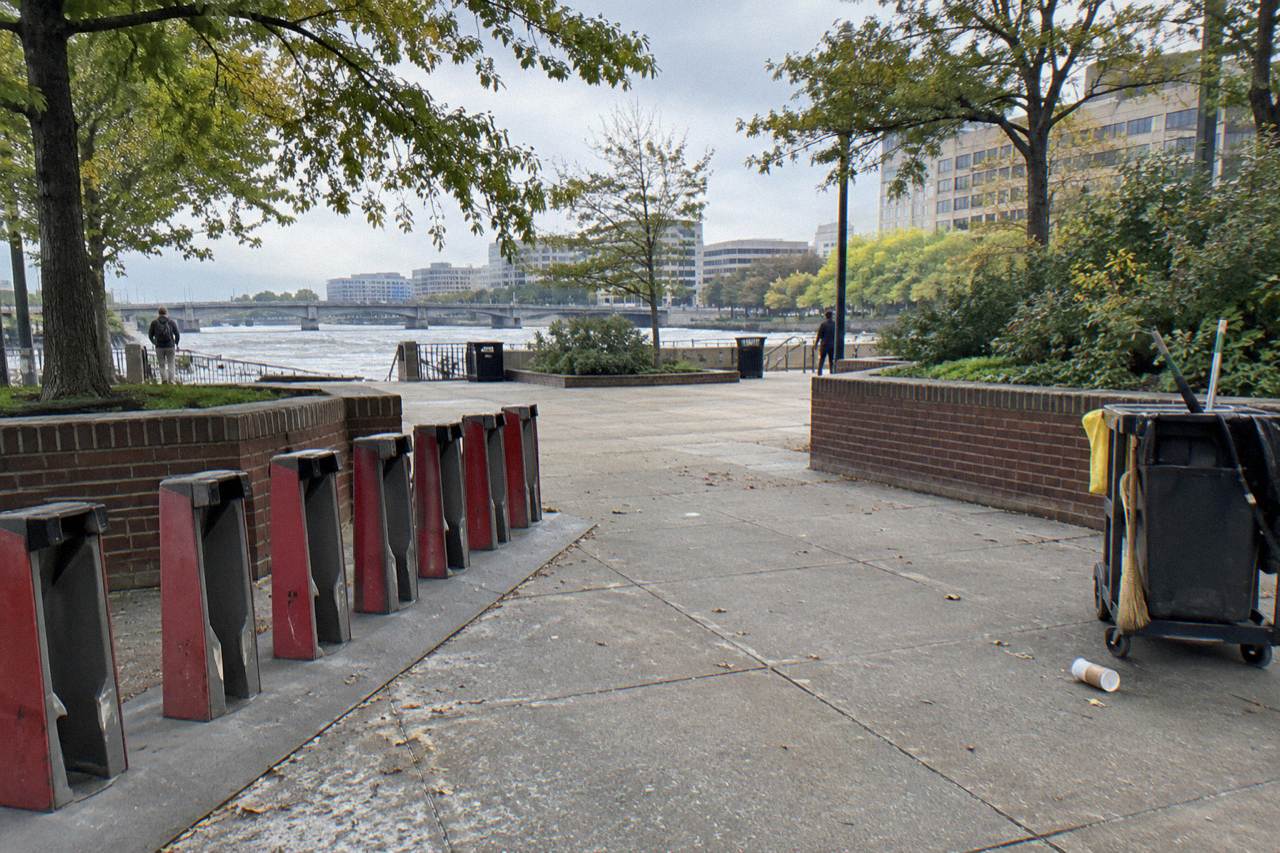
No. A Capital Bikeshare bike must go back to a docking station, never a sidewalk, railing or memorial plaza. The system is dock-based: about 8,000 bikes live at 800-plus stations across 8 jurisdictions, and a ride only ends when the bike is seated in a dock and confirmed. Return rules, including what happens at a full station, are on the operator's help pages, so confirm there before your first ride. If having to return to a dock feels limiting, our guide to renting a bike in DC compares Bikeshare pricing with local shops and guided ride options.
That single rule shapes everything else about using bike-share in Washington DC. You are not renting a bike for the afternoon, you are borrowing one for a trip. The meter, or the 45-minute window on a pass, runs until the bike clicks into a dock. Plan your route around where stations are, not just where you want to go.
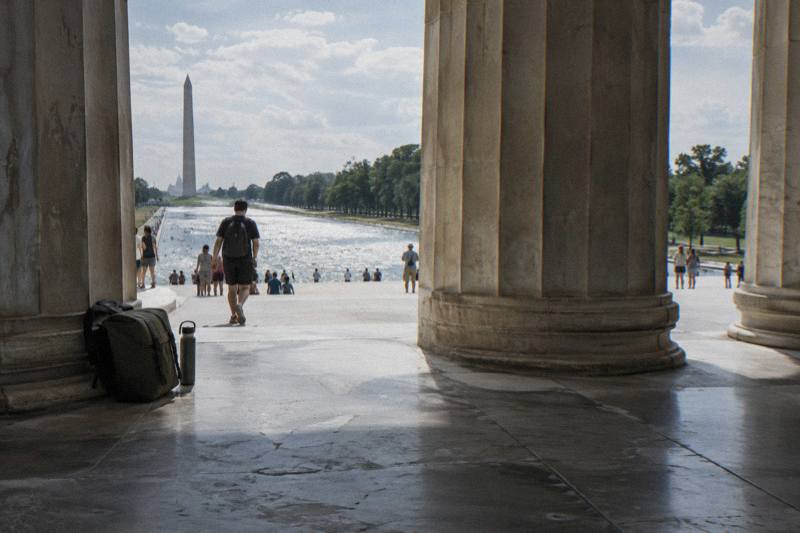
The good news is that the network is dense exactly where visitors want to be. The National Mall and Memorial Parks explicitly welcome bicycles, provides bike parking near each major memorial, and is open 24 hours a day, which makes a dock-to-dock hop between memorials one of the pleasantest ways to see the city. Riding inside the memorials themselves is not permitted, so walk the bike through the World War II and Franklin Delano Roosevelt memorials, or lock up before entering any other one. Once the bike is locked up, our guide to mixing Metro rides with walks between the sights explains how to cover the Mall, the Tidal Basin and the memorials without wearing yourself out on the distances.
If your plan is bigger than a hop, a guided ride changes the arithmetic: the operator supplies the bike, the helmet and the route, and there is no dock hunt at the end.
A quick note on what this article is and is not. It answers the return question from the operator's own published pricing and system facts, plus the National Park Service rules for the Mall. Dock-by-dock return policies, penalties and out-of-hub procedures are detailed on the Capital Bikeshare help pages, and where a figure or rule is not published, ask the operator or check the official page rather than guess. If you're still planning how you'll get around the city overall, our guide to exploring DC on foot covers where walking works on the Mall and where a bike makes more sense.
How The Return Actually Works At A Dock
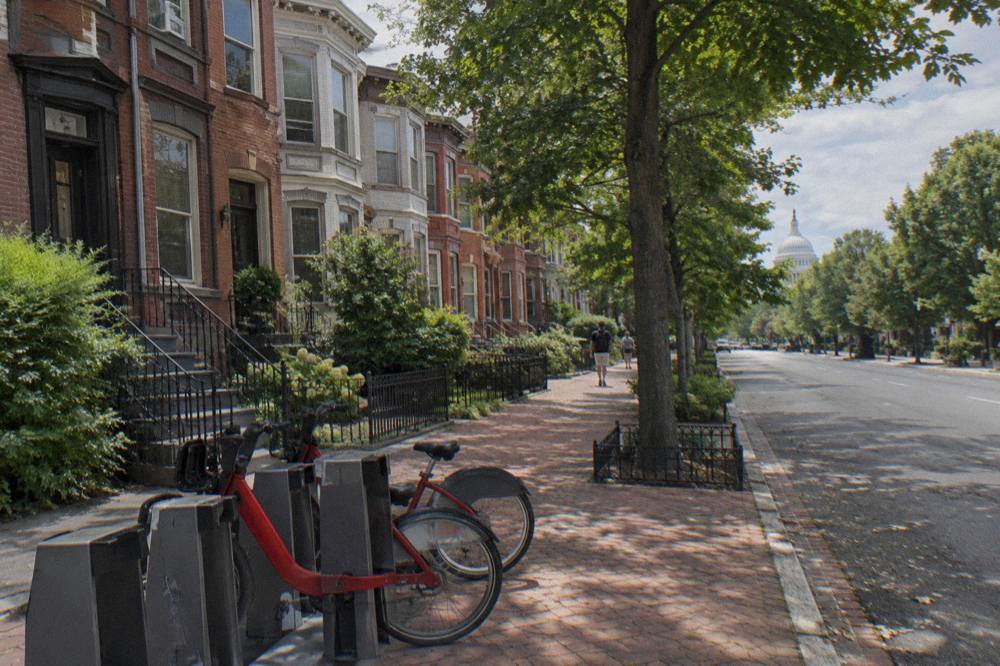
A ride ends when the bike is pushed fully into an empty dock slot and the dock light or screen confirms the return. If a station is full, the operator's help pages describe the official steps to take, and this article will not invent a fee or a workaround for that situation. Pulling the bike out and walking away mid-slot leaves the ride running, which is the single most expensive mistake a first-time rider can make.
The mechanics take one attempt to learn. Find an empty dock, lift the bike in, push until it locks, and watch for the confirmation. Many riders then tap their phone or card on the dock again to get a receipt and see the ride summary. None of that is optional bookkeeping: until the system sees the return, the bike is yours and the clock is running.
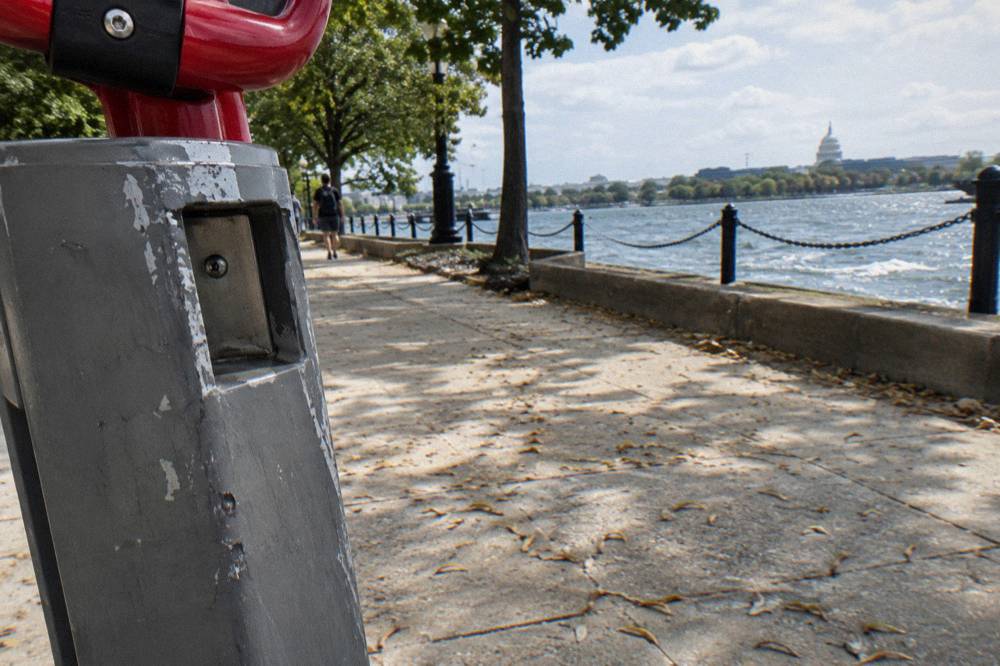
The station network is what makes the dock rule livable. With 800-plus stations spread across 8 jurisdictions, including a dense ring around the National Mall, downtown DC, Capitol Hill and Arlington, a dock is usually a short walk from wherever you actually wanted to stop. The operator reinstated the Smithsonian-National Mall station at Jefferson Dr and 12th St SW in late October 2026, right in the middle of the museum corridor, which is a useful anchor for a Mall loop.
What the system does not do is let you end a trip at an arbitrary pole, the way some lock-to-anything systems in other cities do. If you have used a dockless system elsewhere, drop that habit at the dock. The operator's how-it-works pages walk through unlocking, riding and returning step by step, and they are the authority on edge cases like full stations and damaged docks.
Practical habit to build: before you ride away from a station, glance at the map for a dock near your destination, and have a second-choice station in mind. Near the memorials the nearest dock can fill on a busy spring afternoon, and knowing the alternative saves you circling with a bike you cannot put down.
What A Capital Bikeshare Ride Costs
A single ride is $1 to unlock plus $0.15 per minute on a classic bike, or $0.35 per minute on an e-bike. A day pass is $10 for 24 hours with unlimited classic rides, each free for the first 45 minutes, then $0.05 per minute, and e-bikes at $0.15 per minute with free unlocks. A 30-day membership is $25 and an annual is $120 on the same riding terms.
Those are the operator's published rates, effective since August 2025 with no later changes identified on official pages. The structure matters more than any single number: single riders pay by the minute with no free window, while pass and membership holders get a 45-minute free window on classic bikes for each ride. E-bikes never have a free window on any plan, they always bill by the minute.
| Option | Upfront cost | Classic bike cost | E-bike cost | Notes |
|---|---|---|---|---|
| Single ride | $1 unlock | $0.15 per minute | $0.35 per minute | No free window on either bike type |
| Day pass | $10 per 24 hours | Free first 45 minutes per ride, then $0.05 per minute | $0.15 per minute | Unlimited rides in the window, free unlocks |
| 30-day membership | $25 per month | Free first 45 minutes per ride, then $0.05 per minute | $0.15 per minute | Suits a longer stay or locals |
| Annual membership | $120 per year | Free first 45 minutes per ride, then $0.05 per minute | $0.15 per minute | Free unlocks included |
Full current pricing lives on the operator's pricing page, and it outranks anything you read here if it changes. One rough planning comparison, using only the published rates: a day pass pays for itself against single rides once you take a couple of trips in a day, especially classic-bike trips kept under 45 minutes each.
The 45-minute window rewards exactly the riding style the Mall invites: dock, walk through a memorial, undock the next bike, roll on. A rider who treats the Mall as a chain of short hops can see a lot of ground in a day on a $10 pass. A rider who wants one long, narrated sweep past everything, with the story behind each stop, is shopping for a different product.
That is the honest dividing line. Bike-share pricing punishes the long single ride: 90 minutes on a classic bike on a day pass is 45 chargeable minutes, and on a single ride it is a per-minute bill from the first pedal stroke. Guided rides are priced flat for the whole outing, bike and helmet included per the listing, which is why the two products sit next to each other rather than competing head-on.
Where To Dock Around The National Mall
Bicycle parking sits near each major memorial, and dock stations ring the Mall, including the reinstated Jefferson Dr and 12th St SW location. The park service welcomes bikes on Mall paths, requires you to walk them through the World War II and FDR memorials, and keeps the park open around the clock, so early and late rides are legitimate options rather than workarounds.
The geography works in a cyclist's favor. The memorials sit along a corridor where car-free and low-traffic paths connect one to the next, which the bike-share operator itself recommends for evening visits to the lit monuments. Between docks and the memorial-area bike parking, there is almost always somewhere legal and close to put a bike down.
Two rules do the most work here. First, no riding inside the memorials: the Park Service is explicit, and the stone plazas around the Lincoln Memorial steps get thick with pedestrians anyway. Second, if a bike-share station near your stop is full, the nearest alternative is usually only a few minutes away on foot, and the operator's app shows dock availability in real time, so check before you commit to a station.
Closures matter too, and they shift season by season. Through late November 2026 the Lincoln Memorial Reflecting Pool, its adjacent walkways and grass medians are closed for repairs, and the west side of the Washington Monument grounds is closed into January 2027. Neither erases the memorial itself, but both reshape the walking and riding around it, so check the Park Service bicycling page and current notices before mapping a loop. A route planned around a closed walkway is a route planned twice.
For a fuller picture of where the rides and meeting points sit around the Mall, the meeting points near the Mall guide maps the neighborhood station by station, and the bikeshare versus guided ride comparison works through the trade-offs in more depth than this article has room for.
When A Guided Ride Beats The Dock
A guided ride wins when you want one continuous loop with a narrated story, a bike that is already there, and no dock at the end. Bike-share wins for short hops, flexible timing and days when your itinerary is scattered. The 3-Hour Monuments Bike Ride, for example, spends its whole runtime on the memorial corridor with a guide, while a day pass rider is docking and undocking between stops.
The difference is not just convenience, it is the shape of the experience. A guided monuments ride is built as one arc: guide, group, route and stops chosen so the story accumulates as you ride. The listing describes a 3-hour shared ride on classic bikes, with the bike and helmet included, which removes the two chores bike-share hands you, finding a working bike and finding a dock before the meter matters. If you would rather ride on your own but skip the smartphone, our guide to using Capital Bikeshare without the app walks through the pricing tiers and what to confirm before you set off.
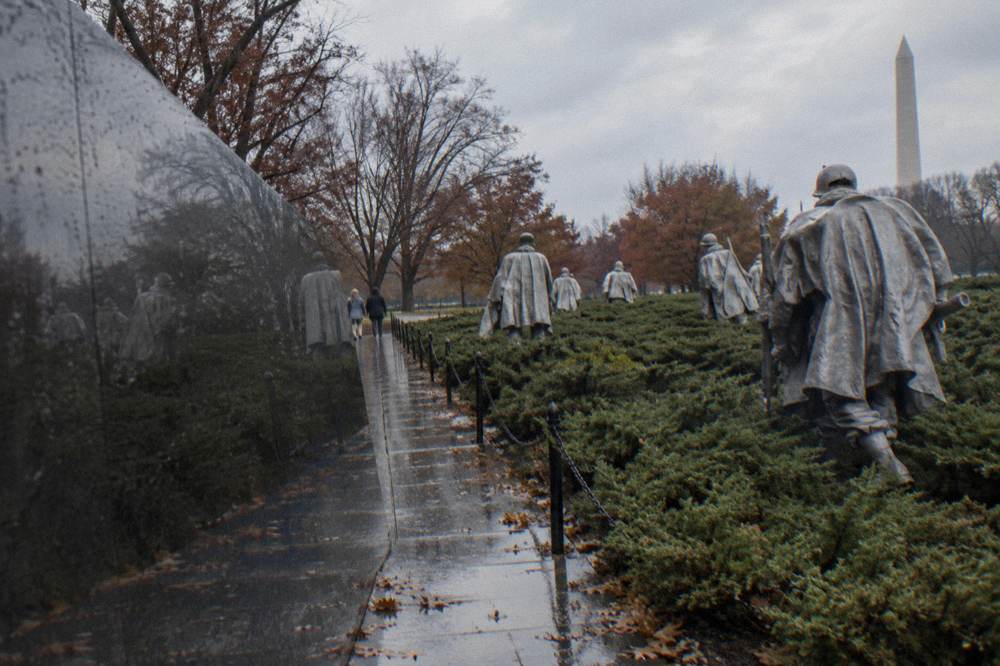
Bike-share's counterargument is real. On a pass, a rider who knows the Mall can hit the Lincoln Memorial, the Korean War Veterans Memorial and the Martin Luther King Jr. Memorial in a series of short hops for the price of the day pass, on their own clock, with no start time to meet. That freedom is the product. What it costs you is the narration, the group energy and the flat price certainty.
There is also an e-bike angle. Bike-share e-bikes bill at $0.15 to $0.35 per minute with no free window on any plan, so a long e-assisted day on bike-share adds up fast. A dedicated e-bike tour, like the 3-hour Monumental Electric Bike Ride, prices the assist flat for the outing, which is worth comparing if the legs or the summer heat argue for a motor. Summer matters here: July normals in DC average a high of 89.6 degrees Fahrenheit, and June and August sit close behind, so the assist is not a luxury in midsummer, it is a planning decision.
The Capitol Hill end of the Mall has its own short guided option, a 2-hour classic-bike ride built around the Capitol's highlights, which pairs well with a morning bikeshare loop on the western Mall. Mixing the two is a genuinely good plan: guided ride for the flagship sweep, bike-share for the wandering. If your sightseeing time is short, the one-day Washington DC plan with a bike ride as its backbone shows how to cover the unmissable monuments and still leave room for the Mall's free sights.
If the monuments-by-bike route itself is the draw, the full Mall route and stops guide lays out the corridor stop by stop, and it works as well for a self-guided bike-share day as for anything with a guide.
One more honest note on scale. The National Mall corridor is flatter than most visitors expect, and shared guided rides move at touring pace, not training pace. Fitness is rarely the deciding factor between dock and guide; timing, narration and price structure are. If you are unsure how demanding a guided ride might be, the fitness expectations guide covers it directly.
Rules And Helmets Before You Roll
DC law requires a securely fastened helmet for anyone under 16 riding or riding as a passenger on a public roadway, path or other right-of-way, and parents can be held responsible for letting it slide. Riding inside the memorials is prohibited everywhere on the Mall, and sidewalk rules vary by district, so the transportation agency's bicycle pages are the reference for anything beyond the park itself.
The helmet law is the one with teeth, and it applies to bike-share bikes exactly as it applies to any other bicycle. Guided tours include helmets in the ride price per their listings, which quietly solves the problem for families with teenagers; bike-share riders under 16 need to bring their own.
The definition DC uses for an e-bike is also worth a sentence: the city's "motorized bicycle" category covers two- and three-wheelers with operative pedals and a motor incapable of propelling the bike faster than 20 mph on level ground. The details live in the DC Code on bicycle helmets, and the transportation agency's bicycle pages carry the practical summaries.
Beyond the law, etiquette does most of the work on the Mall. Pedestrian volume around the major memorials peaks from late morning through afternoon, and the paths are shared with everyone from joggers to school groups. Slow down approaching the memorial plazas, dismount where the crowd thickens, and treat the dock as the place where the ride pauses rather than the place where it ends.
A Sensible Day That Uses Both
Start with a guided 3-hour monuments ride to learn the corridor, then spend the afternoon on a $10 day pass hopping between the docks near the memorials and museums, docking at each stop so every classic ride stays inside the 45-minute window. End with a short evening hop to see the lit monuments, since the park never closes.
The sequence works because each product covers the other's weakness. The guided ride front-loads the orientation: names, stories, the layout, the sense of distance between the Lincoln Memorial and the Capitol that a map never conveys. The afternoon pass then gives you the freedom to double back to whatever the guide mentioned in passing, or to wander into a museum on a whim with no meter anxiety, as long as each classic hop is docked inside the free window.
Timing helps. Sunset in Washington DC sits near 6 p.m. in early November and slides earlier through the month, so an early guided start leaves a real evening margin. The memorials are lit at night and the paths stay open, which is why both the bike-share operator and the night-ride operators point visitors toward the after-dark Mall. For a deeper look at that end of the day, the night ride past the monuments guide covers the after-dark options.
Whatever the mix, one rule survives every plan: the red bike goes back to a dock. Every other decision on this page, pass versus single ride, guide versus self-guided, morning versus dusk, is negotiable. That one is the system.
Season note for planners: spring is the corridor's peak draw, with the cherry blossom bloom typically landing in the last week of March to the first week of April and the 2027 festival running March 20 to April 11, 2027. No peak-bloom forecast for 2027 has been published yet, so watch the Park Service bloom page rather than trusting a date in a forum. A dock-based visit in bloom week is still workable, but expect full stations near the Tidal Basin and plan the alternative dock before you arrive, not after.
For the question this page actually set out to answer, the short version stands: no, you cannot leave the bike anywhere, and once you accept that, the system around the National Mall is generous with docks and short on reasons to break the rule. If a guided sweep with no dock at the end sounds better, the 3-Hour Monuments Bike Ride is the natural pairing, and this site, Bike Tours Washington DC, walks through it in full.
Common Questions About Capital Bikeshare Returns
Can You Leave A Capital Bikeshare Bike Anywhere?
No. The bike must be returned to a docking station and locked in until the dock confirms the return. Leaving it on a sidewalk or locked to a railing does not end the ride, and the specific consequences and procedures are on the operator's help pages.
What Happens If The Dock Is Full When I Want To Return The Bike?
The operator's help pages describe the official steps for a full station, including any time credit or alternative-station guidance. No fee or workaround has been published, so check those pages directly., ideally before you ride, using the app's live dock availability.
Is A Day Pass Or Single Rides Cheaper For Seeing The Mall?
For a day of Mall hopping, usually the pass. A day pass is $10 for 24 hours with unlimited classic rides free for the first 45 minutes each, while a single ride is $1 to unlock plus $0.15 per minute with no free window. Two or three trips on single-ride pricing often exceed the pass price.
Can I Ride A Capital Bikeshare Bike Inside The Memorials?
No. Bicycles are welcome in National Mall and Memorial Parks, but riding inside the memorials themselves is not permitted. Walk the bike through the World War II and Franklin Delano Roosevelt memorials, or dock or lock it before entering any other memorial.
Do Kids Need A Helmet On A Capital Bikeshare Bike?
Yes, under DC law anyone under 16 riding a bicycle on a public roadway, path or other right-of-way must wear a securely fastened helmet, and that includes bike-share bikes. Guided tour listings include helmets, while bike-share riders need to bring their own.
Can I Use Bike-Share At Night Around The Monuments?
Yes, National Mall and Memorial Parks is open 24 hours a day and the monuments are lit at night, and the operator recommends evening rides on the car-free Mall paths. Check dock locations and availability in the app before you head out, since staffing and lighting vary away from the main corridor.