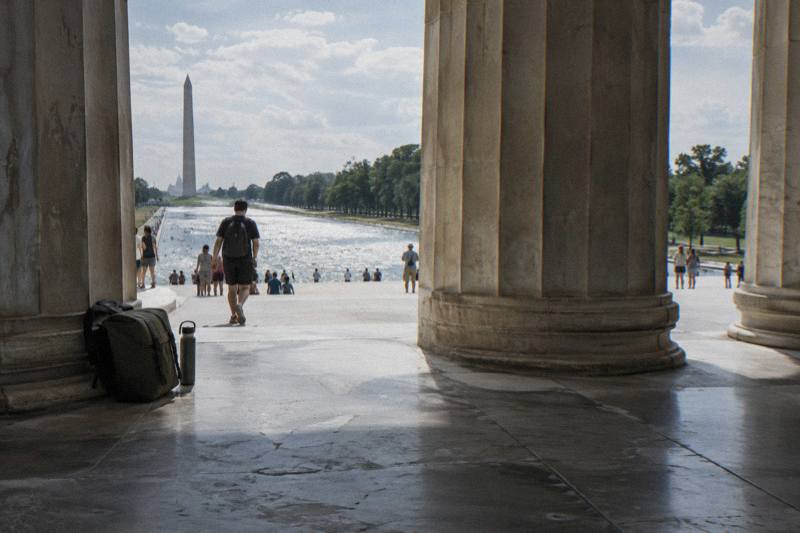
What Is A Must-See In Washington DC In One Day?
A one-day Washington DC plan built around the monuments you cannot skip, with a guided bike ride as the backbone and the National Mall's free sights filling the gaps.
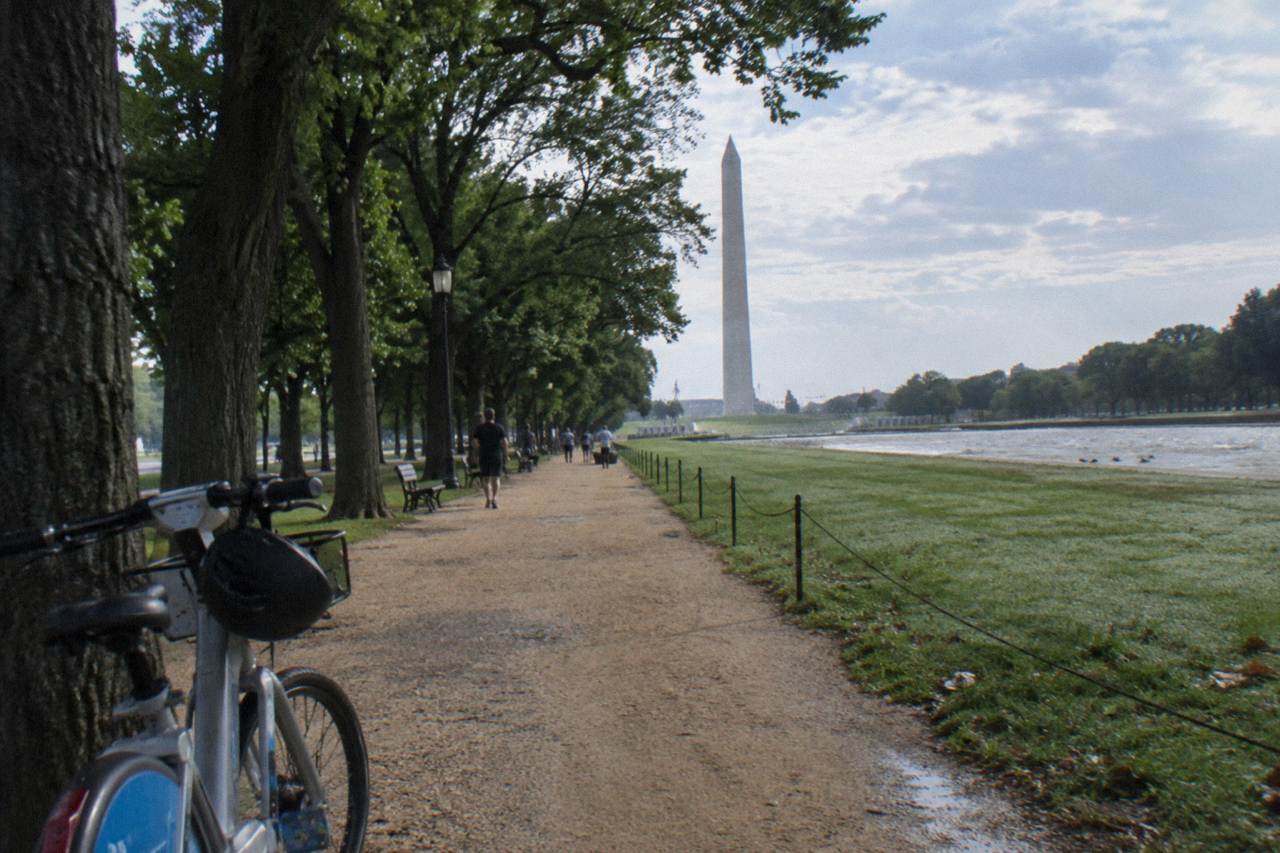
The must-see core of Washington DC in one day is the National Mall corridor: the Lincoln Memorial, the Washington Monument, the Capitol, and the memorials between them, which the National Park Service keeps open 24 hours a day with bicycle parking near each major memorial. A guided 3-hour monuments bike ride covers that core in a single morning, leaving the afternoon for the Tidal Basin, the Smithsonian museums, and an evening return to the lit memorials.
That answer surprises people who arrive with a list of twenty sights and a single day to see them. The honest arithmetic is harsher than any itinerary admits. The stretch from the Capitol to the Lincoln Memorial is long, the memorials sit wide apart, and summer heat on the Mall is real: NOAA's 1991 to 2020 climate normals put July's average high at 89.6 degrees Fahrenheit in Washington. Walking the whole corridor and doing it justice in one day does not work for most visitors.
Riding it does. Bicycles are welcome throughout National Mall and Memorial Parks, with riding permitted on the paths between the memorials but not inside the memorials themselves, where the park service asks visitors to walk bikes through or lock them up before entering. That single fact is what makes a one-day visit realistic. The pattern that works for most first-time visitors looks like this:
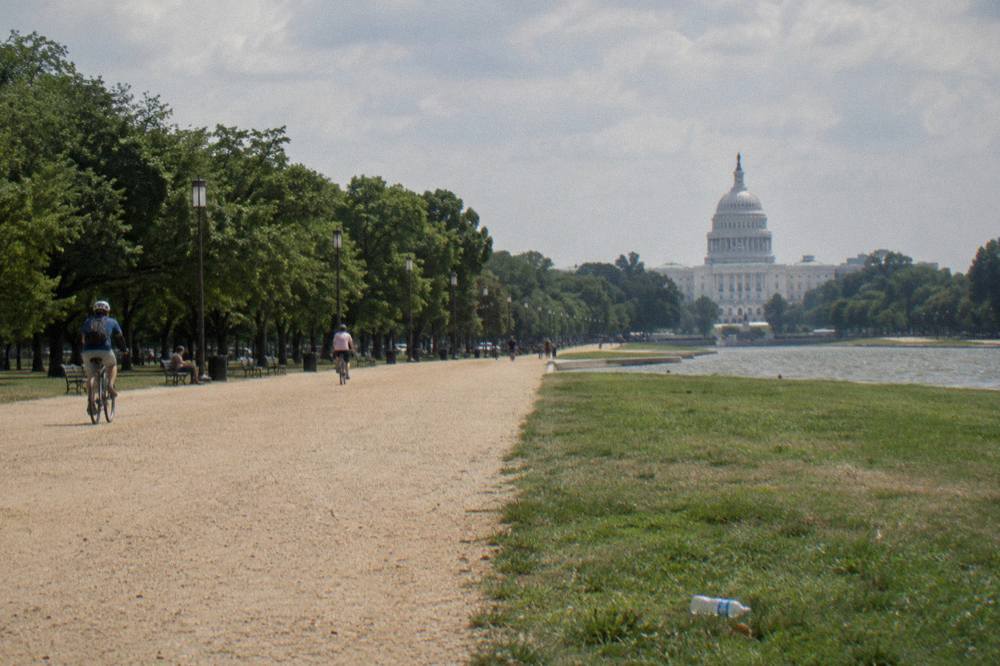
A morning guided ride that hits the Lincoln Memorial, the Washington Monument area, the war memorials and the Capitol end of the Mall in one loop. Then a museum block in the middle of the day when the sun is highest. Then, if your legs allow, an evening pass past the monuments after dark, when they are lit and the crowds thin out. The monuments are illuminated at night, and Capital Bikeshare itself recommends car-free Mall paths for evening rides past the lit memorials.
The three guided rides that carry this plan best.
The centerpiece is the 3-Hour Monuments Bike Ride, a shared classic-bike tour that spends its full three hours on the monument core. If your day starts late or you would rather skip the museums, the same route exists after dark on the 3-Hour Night Monuments Ride. And if you only have the morning free before a flight, the 2-Hour Capitol Hill Ride compresses the east end of the Mall into two hours. If you're trimming the rest of your schedule, our guide to what to skip in DC shows which lines, parking headaches, and closed stretches you can cross off entirely.
Which Monuments Can You Actually Not Skip?
The unskippable four are the Lincoln Memorial, the Washington Monument, the U.S. Capitol, and the World War II Memorial, with the Vietnam Veterans Memorial and the Martin Luther King Jr. Memorial as the near-mandatory additions beside them. Everything else on the Mall is a bonus if time allows. That is the whole honest list, and it fits one afternoon on a bike.
Start with why these six. The Lincoln Memorial anchors the west end and rewards the longest stay of any stop, partly because three other unskippables sit within a short walk of its steps. The Vietnam Veterans Memorial sits just north, the World War II Memorial due east across the lawn, and the King memorial southeast toward the Tidal Basin. The Washington Monument, 555 feet 5 1/8 inches tall and 55 feet wide at its base, stands at the midpoint and works as the orientation landmark for the entire day: if you can see it, you know where you are.
The Capitol closes the east end. Two practical notes shape how you treat it. First, it is a working legislative building, so the exterior and grounds are the realistic target on a one-day visit; interior tours are a separate logistics exercise with their own scheduling. Second, the east end around Capitol Hill is where a 2-hour Capitol Hill ride concentrates, which matters if you would rather have a guide put the Library of Congress and Supreme Court buildings in context than puzzle out which white building is which.
Between those anchors sit the memorials that most one-day visitors are glad they did not miss: the Korean War Veterans Memorial, the Franklin Delano Roosevelt Memorial along the Tidal Basin, and the Jefferson Memorial across the water. On a bike, all three are short hops from the Lincoln end. On foot, the Jefferson in particular is where one-day walkers give up, because it sits at the far southern loop of the Tidal Basin, a long way from everything else.
One thing a guided ride adds that a solo loop cannot: a guide who explains what you are looking at. The difference between seeing the Korean War Veterans Memorial and understanding its design is about ten minutes of storytelling, and that is what the three-hour shared tours are built around. The listed inclusions, meeting point and current price are on the booking page, and free-cancellation terms are worth confirming there before you lock your one day around a fixed start time.
How Do You Sequence One Day Around A Guided Ride?
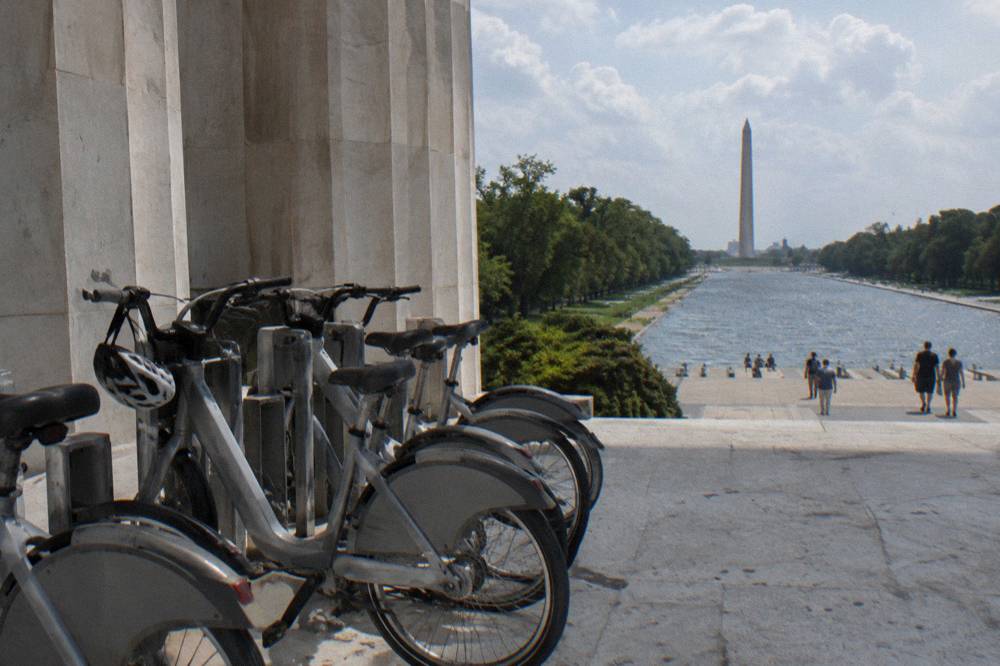
Book the morning monuments ride, ideally a start before 10 a.m., spend midday inside a Smithsonian museum, and return to the lit memorials in the evening either on the night bike ride or on foot. That three-block structure fits the verified opening hours, the climate normals, and the way crowds build on the Mall.
The sequencing logic is simple once you see it. The park is open 24 hours, so nothing about the monuments themselves forces a schedule; the pressures are heat, crowds and your own energy. August's average high is 87.8 degrees and July's is 89.6, with the sun doing its worst between noon and 4 p.m. That argues for outdoor sightseeing in the morning and evening, with air-conditioned museums in between. The Smithsonian museums along the Mall fill that midday slot precisely because they sit in the middle of the route.
A sample day on this structure:
| Block | Time | What you do | Why it works |
|---|---|---|---|
| Early morning | 8 to 11 a.m. | Guided 3-hour monuments bike ride | Cooler air, thinner crowds, a guide covers the whole core |
| Midday | 11 a.m. to 3 p.m. | One Smithsonian museum, lunch | Air conditioning during peak heat, zero transport needed |
| Afternoon | 3 to 5 p.m. | Tidal Basin loop, FDR and Jefferson memorials | Softening light, short riding distances |
| Evening | after sunset | Lit monuments, on foot or the night ride | Monuments are illuminated, crowds drop sharply |
Two closures in force right now affect this plan, both verified on National Park Service notices. The Lincoln Memorial Reflecting Pool, its adjacent walkways and the grass medians are closed until Friday 20 November 2026 at 11:59 p.m. for repair work, which means the pool itself will not be reflecting anything if your one day falls before that date. The Lincoln Memorial remains the anchor; only the pool and its immediate surroundings are off limits. Farther east, the west side of the Washington Monument grounds is closed through 23 January 2027 for turf restoration. Neither closure removes a must-see from the list, but both change what the ground around those must-sees looks like, so check the NPS closure notices before you build the day.
The evening block deserves its own pitch. Sunset in late October falls around 6 p.m. in Washington, and the shift to darkness turns the Mall into a different place: the same granite, lit from below, with a fraction of the daytime crowd. The 3-Hour Night Monuments Ride exists exactly for this, a classic-bike shared tour that runs the same core after dark. Riders who did the daytime version sometimes book the night version too for the same day, which sounds excessive until you have stood at the World War II Memorial at noon and again at 8 p.m. and understood that they are effectively two different attractions.
If a second paid ride is not in the budget, the evening walk works too: the park never closes, bicycle parking sits near each major memorial for anyone arriving on a Capital Bikeshare bike, and the paths are car-free. Seasonal start times and the current meeting point for the night ride are on its booking page.
One practical effect of the closures on the riding day: neither touches the Tidal Basin side of the route, so the FDR and Jefferson leg of the afternoon block runs exactly as drawn. The Lincoln Memorial stop is unchanged too; what you lose is the pool in the foreground, not the memorial. At the Washington Monument, the open east side of the grounds is the natural approach while the west side recovers.
Adjust the blocks to your month. In July and August, treat the midday museum block as immovable and let the museums carry you through the worst of the afternoon sun. In late October the binding constraint flips from heat to daylight, so the afternoon Tidal Basin loop can stretch toward dusk and the evening block starts earlier, not because the park closes but because darkness arrives sooner.
For the self-guided evening, the day pass rewards a dock-and-walk rhythm: park at one memorial's bike parking, see it on foot, unlock a fresh bike for the next leg. The hops between lit monuments are short, so each leg fits inside the free classic-ride window, and the no-riding rule inside the memorials themselves sets a slower, walkable pace that suits the hour.
Is One Day Enough, Or Are You Shortchanging DC?
One day is enough for the monument core and one museum, which is the honest definition of the must-see Washington DC experience, but it is not enough for the full city: Arlington, Georgetown, the neighborhoods and Mount Vernon all sit outside a single day's reach, and pretending otherwise is how visitors end up seeing nothing well.
The framing matters because the must-see question is really a triage question. Within the National Mall corridor, one day on a bike genuinely covers the core: the six unskippables, two or three of the bonus memorials, and a museum block. Outside that corridor, the city opens up. Arlington National Cemetery sits just across the Potomac. Georgetown and the Capital Crescent Trail start at the Mall's west edge. The Mount Vernon Trail runs south along the river toward George Washington's estate, a ride that deserves, and gets, its own full day, as the Alexandria to Mount Vernon ride timing makes clear.
What one day forces you to skip, ranked by how much it hurts:
| Sights cut from a one-day plan | Where they sit | Realistic time needed | Worth returning for? |
|---|---|---|---|
| Arlington National Cemetery | Across the river, west | Half a day on its own | Yes, including the changing of the guard |
| Mount Vernon by bike | South along the Potomac | A full day | Yes, best as a dedicated ride |
| Georgetown and the C&O towpath | Northwest of the Mall | Half a day | Yes for shops and river paths |
| Anacostia and the riverfront trails | East of the river | Half a day | For a second visit |
| Inside the Capitol and Library of Congress | Capitol end of the Mall | Half a day with timed entry | Yes, for architecture and history |
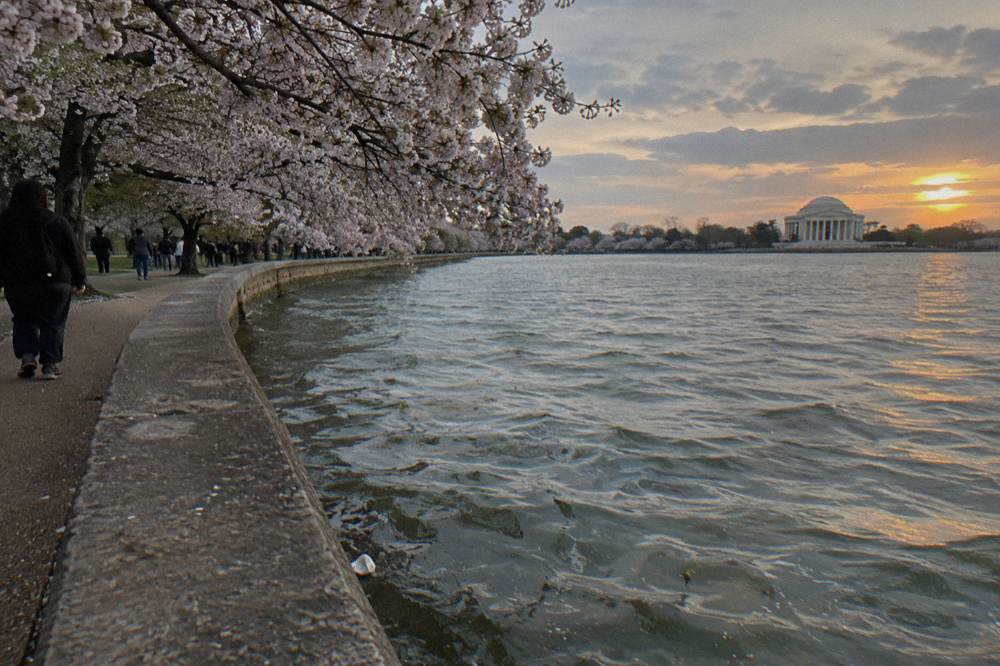
Season changes the one-day calculus more than most visitors expect. The last week of March into the first week of April is cherry blossom season, when the Tidal Basin becomes both the city's best sight and its most crowded; 2026's peak bloom arrived on March 26, and the 2027 National Cherry Blossom Festival runs March 20 to April 11. In bloom week, the Tidal Basin memorials jump the queue and the monument loop bends around them, a sequencing problem this site's cherry blossom riding guide covers in detail. No peak bloom forecast for 2027 has been published yet, so check the NPS bloom watch page before planning a spring trip around it.
Weather-wise, the pleasant riding windows are April, May, October and the first half of June, when average highs run from the upper 60s to the mid 80s and rain days stay near six per month. July and August are doable but demand the morning-and-evening structure above. Winter is the sleeper: December's average high of 48.8 degrees is cold but workable, crowds are thin, and the park's 24-hour access means the lit monuments are all yours after dark.
Guided Ride Or Capital Bikeshare For The One-Day Plan?
For a single day, the guided monuments ride wins because a guide compresses the core into three hours with zero route-finding; Capital Bikeshare wins for the flexible evening block, with a $10 day pass covering unlimited 45-minute classic-bike rides across 800-plus stations. The two are complements, not rivals, in a one-day plan. To see how that split day plays out in practice, the guided ride plus evening Bikeshare plan for DC maps out meeting points, monument stops, and options after dark.
The case for the guided ride is density. Three hours with a guide delivers the Lincoln, the war memorials, the King memorial, the Washington Monument grounds and the Capitol approach in one loop, with context at every stop. Doing that alone means route decisions, locked-bike logistics at each memorial, and no one explaining what the 19 stainless steel statues at the Korean War memorial are doing. The classic-bike shared tours also come with a bike and helmet per the listing, so nothing about the day depends on finding an open dock. The tour's inclusions, meeting point address and price basis are all on the booking page. If your budget for the day is zero, the free-by-bike guide to Washington DC shows which memorials and paths cost nothing at all, and where a paid ride actually earns its price.
The case for Capital Bikeshare is the rest of the day. The verified pricing: a day pass is $10 per 24 hours with unlimited classic-bike rides free for the first 45 minutes each, then $0.05 per minute beyond that, and e-bikes at $0.15 per minute. Single rides without a pass cost $1 to unlock plus $0.15 per minute on a classic bike or $0.35 per minute on an e-bike. The system runs roughly 8,000 bikes across more than 800 stations in eight jurisdictions, and it reinstalled its Jefferson Drive and 12th Street SW station right on the Mall, which puts a dock within reach of the museum strip. Confirm current details on the Capital Bikeshare pricing page.
The hybrid one-day budget, roughly:
| Day block | Best tool | What it costs | What you get |
|---|---|---|---|
| Morning monument core | Guided 3-hour shared ride | Price on the booking page | Bike, helmet, guide, full loop |
| Midday museums | On foot | Free Smithsonian entry | No bike needed between museums |
| Evening lit monuments | Capital Bikeshare day pass | $10 for classic rides | Flexibility, no fixed start time |
Anyone weighing this choice in more depth will find the Bikeshare versus guided ride comparison breaks down the trade-offs across a longer trip. For one day only, the answer is almost always both: the guided ride in the morning, when density matters most, and a day pass for the loose evening. As Bike Tours Washington DC covers in its route planning, the Mall's car-free paths make the evening lap low-stress even for riders who rarely cycle at home.
One rule cuts across every version of the plan: DC law requires a helmet for anyone under 16 riding on a public roadway, path or other right-of-way, and riding is not permitted inside the memorials themselves, so plan to walk the bike through the World War II and FDR memorials or lock it at the racks the park service provides near each major memorial. The full rules for cycling on the Mall are covered in this site's dedicated helmet and bike-rules guide.
The three rides this plan is built around, side by side:
Common Questions About A Must-See Day In Washington DC
What Is A Must See In Washington Dc In One Day?
The must-see core is the National Mall: the Lincoln Memorial, the Washington Monument, the Capitol, the World War II Memorial, the Vietnam Veterans Memorial and the Martin Luther King Jr. Memorial. A morning guided 3-hour bike ride covers all six, a midday Smithsonian museum block fills the hot hours, and the lit monuments after dark finish the day.
Can You See The Washington Monument And Lincoln Memorial In The Same Day?
Yes, easily, and they anchor opposite ends of the same corridor. On a bike the loop between them takes under three hours with stops, which is exactly what the 3-hour guided monuments ride is built around. The reflecting pool at the Lincoln Memorial is closed until 20 November 2026 for repairs, but the memorial itself remains open.
Is The National Mall Open At Night?
Yes. National Mall and Memorial Parks is open 24 hours a day, and the monuments are illuminated after dark. Evening is one of the best times to see them because crowds drop sharply, and a dedicated night bike tour runs the same core after sunset.
How Much Of DC Can You Cover By Bike In One Day?
The full monument core plus the Tidal Basin loop plus one museum block, comfortably. That is roughly the route the 3-hour guided ride covers, with the evening free for a slower lap on foot or a Capital Bikeshare bike. Arlington, Georgetown and Mount Vernon do not fit a single day alongside that core.
Is A Guided Bike Tour Worth It If You Only Have One Day?
For most one-day visitors, yes: the guide eliminates route decisions, the tour supplies the bike and helmet, and three hours covers what would take most of a day to walk. If your day is already spoken for until afternoon, a night version of the same ride exists, and a 2-hour Capitol Hill ride covers the east end for late starts.
When Is The Best Time Of Year For A One-Day DC Visit?
April, May and October, when average highs run from the upper 60s to mid 70s and rain days stay near six per month. Late March into early April adds cherry blossoms at the Tidal Basin, with the 2027 festival running March 20 to April 11; no peak bloom forecast for 2027 is published yet, so check the NPS bloom watch page before booking around it.