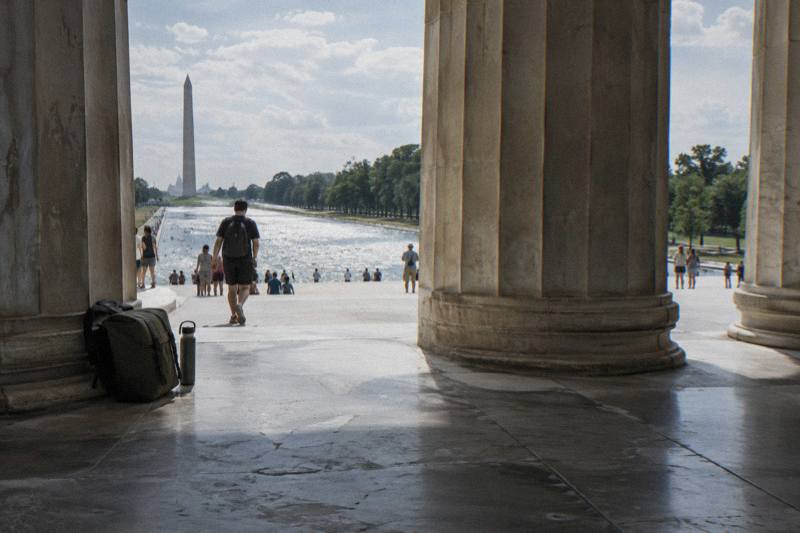
What To Do With 3 Hours In DC?
A three-hour plan for Washington DC built around the 2 and 3 hour guided bike rides, with monuments, Capitol Hill and night options, meeting points, closures and Bikeshare math.
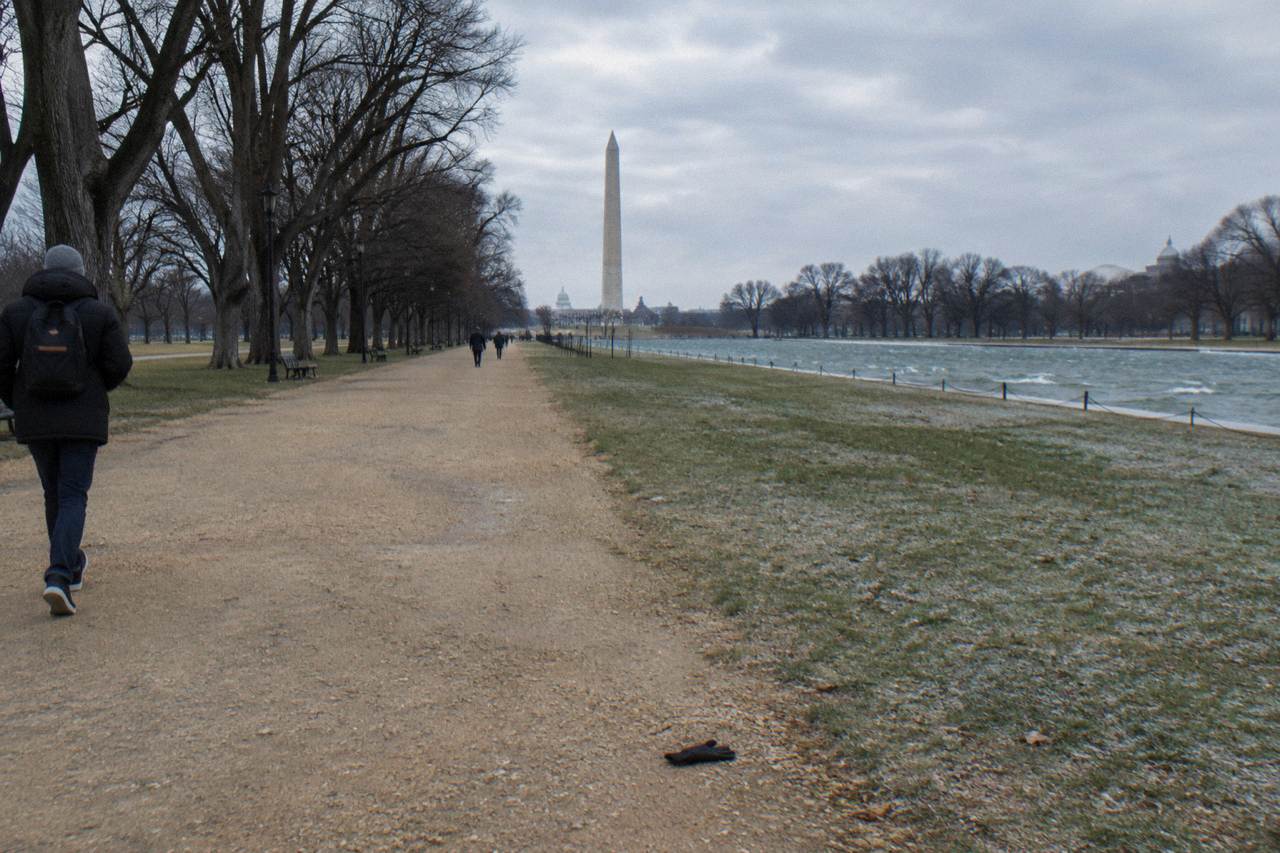
Three hours in Washington DC is a real window, not a consolation prize. The most efficient plan is a guided bike ride across the monument core: the 3-hour Monuments and Memorials Bike Tour covers the big names on the Mall with a guide, a bike and a helmet included, while the 2-hour Capitol Hill rides compress the same idea if your window shrinks. Doing it on foot in three hours means choosing two memorials; doing it on two wheels means most of them. The trade is simple: wheels buy coverage, and the Mall is flat enough that fitness barely enters the equation. If that window ever stretches to a full day, the must-see guide to a longer DC visit builds on the same bike-first logic and fills the gaps with the Mall's free sights.
That is the honest arithmetic of a short visit. The National Mall and Memorial Parks are open 24 hours a day, and bicycles are welcome throughout the park, with bike parking near each major memorial. You are not allowed to ride inside the memorials themselves; at the World War II and Franklin Delano Roosevelt memorials you walk the bike through. But between memorials, the paths are yours, and they connect almost everything a first-time visitor wants.
This article builds three-hour plans from the actual 2 and 3 hour rides available, explains what each covers and where they meet, then covers the do-it-yourself alternative with Capital Bikeshare math, plus the closures and weather that can quietly eat your window.
Can You Really See The Monuments In Three Hours?
Yes, with a bike and a guide, three hours is enough for the monument core rather than a sample of it. The 3-hour Monuments and Memorials Bike Tour is built exactly to that window: a guide, a bike and helmet included, shared group format, riding the Mall paths between the major memorials. Walking the same ground would take most of a day; buses spend a slice of that window parked. The constraint is not stamina, it is routing, which is what you are paying a guide for.
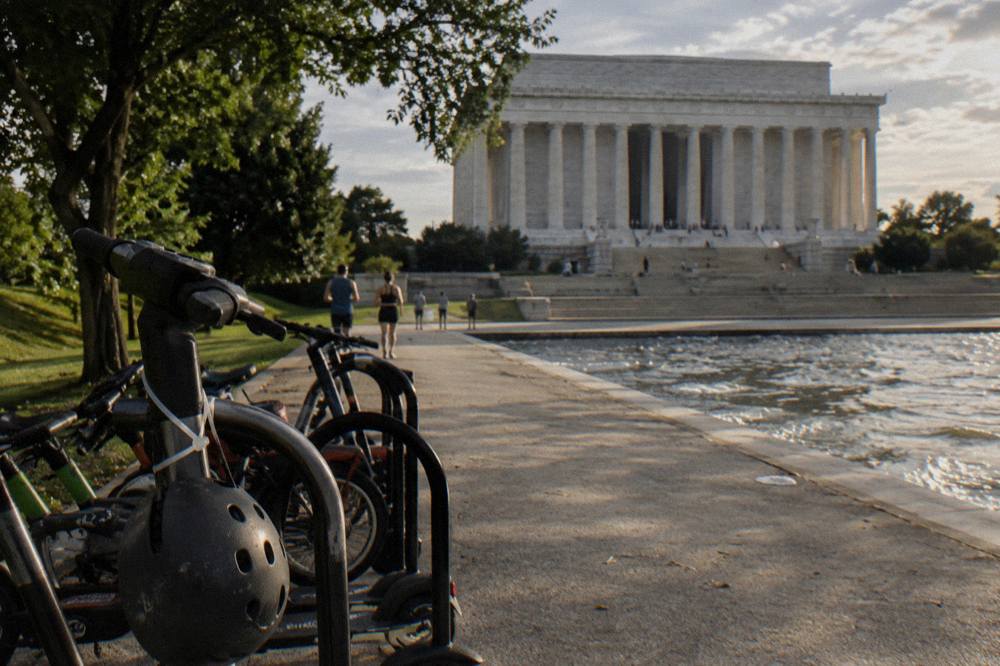
The reason this works is geometry. The memorials you have heard of, the Lincoln, the World War II, the Vietnam and Korean War memorials, the Martin Luther King Jr., FDR and Jefferson memorials, sit in a compact arc around the Tidal Basin and the western Mall. A walker crosses that arc in pieces; a rider crosses it in minutes between stops. The park's own bicycling guidance welcomes bikes across National Mall and Memorial Parks and notes parking near each major memorial, so the pattern is stop, dismount, look, remount.
Two practical notes shape any three-hour plan right now. The Lincoln Memorial Reflecting Pool, its adjacent walkways and grass medians are closed until Friday 20 November 2026 at 11:59 p.m. for repair work, and the west side of the Washington Monument Grounds is closed through 23 January 2027 for turf restoration. Neither closure erases the core experience, but both pinch the classic photo stops, so check the National Park Service notice pages before you go and let the guide's route absorb the detour. Guided rides adjust; a self-planned walking loop is where a surprise closure hurts.
If your three hours fall in the evening rather than the day, the same arithmetic holds with better light. Sunset in DC in late October sits around 18:08, and the Mall's monuments are lit after dark, which is exactly the premise of the 3-Hour Night Monuments Ride: the same monument core, the same included bike and helmet, run at the hour when the crowds thin and the floodlights take over. For a three-hour evening window it is arguably the single best fit on the board.
What Does A Three-Hour Monuments Ride Actually Cover?
The 3-hour Monuments and Memorials Bike Tour spends its window on the western Mall and the Tidal Basin side: the Lincoln Memorial, the war memorials, the civil rights memorials and the Jefferson, with a guide narrating between stops on a shared classic-bike ride. The listing describes the format as a small-group day tour with bike and helmet included. What three hours does not buy is the museums: no ride replaces the Air and Space or the American History Museum, which each swallow half a day on their own. The honest framing is that a bike ride does the outside of DC, and does it completely.
Between stops, the value is the running commentary. A first visit to the Lincoln Memorial alone raises questions the plaque does not answer, and a guide spreads that context across every stop without you queuing for anything or studying a map on a windy corner. Riders who have reviewed the monuments rides consistently praise the efficiency of the format: more stops than a bus tour, more ground than walking, and someone else handling the routing.
The tour's bike and helmet are included, which matters more than it sounds in a three-hour window. Rental logistics are the silent killer of tight itineraries: finding a shop, fitting a bike, returning it, and suddenly a quarter of your window is gone. The guided rides collapse that to a sign-in at the meeting point. For the night version the same inclusions apply, and the operator's booking page lists the seasonal start times, which shift as sunset moves; check it rather than assuming a fixed hour.
The Tidal Basin stretch deserves a mention of its own, because it is the part of the loop that surprises people most. After the Lincoln and the war memorials, the route bends toward the water and the Martin Luther King Jr., FDR and Jefferson memorials line up along the basin's edge, close enough together that a rider barely warms up between them. In late March and early April this is also where the cherry blossoms sit; 2026 peak bloom landed on March 26, and the typical window runs the last week of March into the first week of April. A spring three-hour ride therefore doubles as a blossom tour without changing the plan at all.
One variant worth knowing if your window is actually three hours but you would rather go deeper than wider: the National Mall & Tidal Basin E-Bike Tour, also 3 hours, runs on e-bikes and concentrates on the Tidal Basin loop. Same window, different emphasis, less pedaling. It is a fair swap for visitors who want the basin-side memorials at a gentler pace.
What If You Only Have Two Hours, Or Want Capitol Hill Instead?
Two workable shorter plans exist. The 2-hour Capitol Hill rides, the Easy Capitol Hill Highlights and the 2-Hour Capitol Hill Ride, trade the western monuments for the Capitol, the Library of Congress and the Supreme Court side of the Mall. If you have already seen the Lincoln side on a past trip, or your three hours include check-in and transit, a 2-hour ride plus an unhurried walk is a better fit than sprinting the full arc.
The Capitol Hill option covers the eastern end: the Capitol grounds, the Library of Congress and the Supreme Court buildings cluster within a short ride of each other, and a guide fills in the politics and architecture between them. It is the half of the Mall that rushed visitors skip entirely, which makes it a surprisingly good answer to a short second visit. If your first trip gave you the Lincoln Memorial at sunset but never took you east of the Washington Monument, this is the ride that fixes that.
One of the two-hour options, the Easy Capitol Hill Highlights ride, is exactly what the name suggests: a gentler loop pitched at riders who want the highlights without the mileage of the full monuments circuit.
The decision between the two families of ride comes down to one question: which DC did you come for? If it is the postcard memorials, the western Mall rides are the answer. If it is the working government city, Capitol Hill wins. And if your three hours start after dinner, the night ride becomes the only question that matters, because the day versions will have finished.
Where To Meet, What Is Included, And What To Check
Every guided ride here includes the bike and a helmet, and each listing names its own meeting point; the booking page for your chosen tour is the place to confirm the address and the check-in window before you head out. Meeting points cluster near the Mall and downtown hotels, which keeps transit time inside your three hours small, but they differ between operators and between day and night versions. Assume nothing, check the page, arrive fifteen minutes early. If you're still weighing which ride fits your window and the season you're visiting, the guide to choosing the right DC bike tour lines up every option with meeting points and what each one includes.
What the listings consistently include, beyond the bike and helmet, is a licensed guide and the route itself; specifics like water, snacks or child equipment vary by tour, so confirm on the booking page if any of those matter to your group. DC law requires a helmet for anyone under 16 riding on a public roadway, path or other right-of-way, so families with younger riders should confirm the operator's child-bike and helmet options when booking rather than on the sidewalk.
A small legal footnote that occasionally matters: DC defines its "motorized bicycle" category as a two or three wheeler with operative pedals and a motor incapable of propelling it faster than 20 mph on level ground, per the DC Code. If you are choosing an e-bike tour and wondering what you will be riding, that is the legal envelope; the practical differences between tours are in the route and the guide, not the top speed.
Dress for the season and check the forecast against the climate normals rather than hope. The NOAA 1991 to 2020 normals for Reagan National Airport put average highs at 69.4°F in October and 58.2°F in November, with average lows of 52.2°F and 41.6°F respectively, and rain on roughly five days a month in each. April averages 68.0°F highs but rain on 6.4 days, and July sits at 89.6°F highs and 72.4°F lows, which is why summer rides lean early and late in the day. For more on this, the DC weather and rain riding guide breaks down what to wear month by month, and the what to wear for a DC ride guide covers layers.
Transit deserves a sentence of planning too. If you are arriving by Metro and heading straight to a meeting point, build the ride from the station into your three hours rather than discovering it on the day; the getting-around comparison of Metro, walking and bikes covers the trade-offs in detail for visitors deciding how to reach the Mall in the first place.
The Do-It-Yourself Option: Capital Bikeshare Math
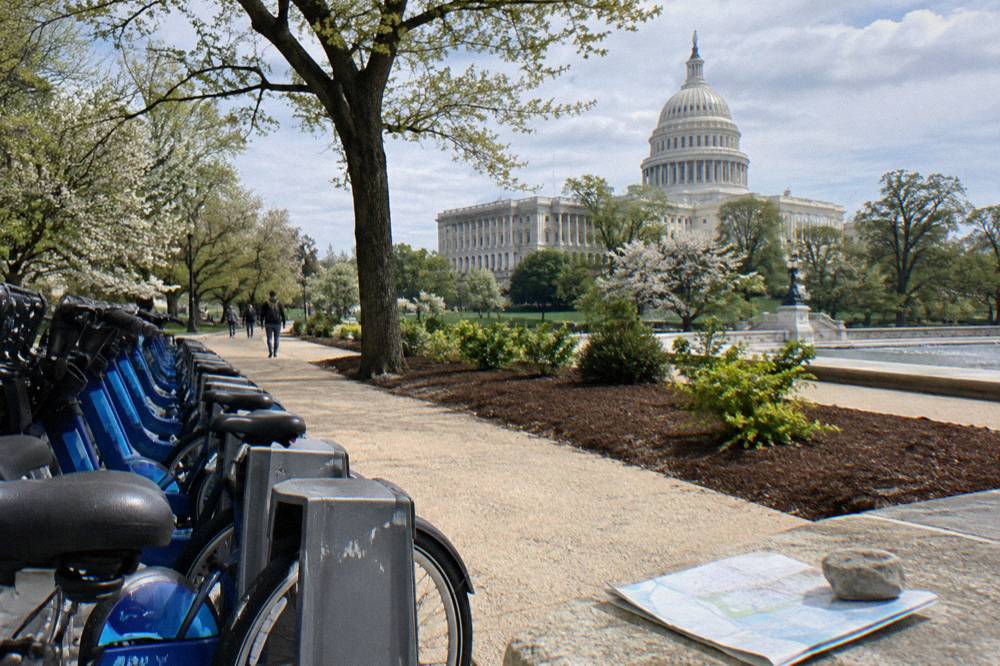
A self-guided three hours on Capital Bikeshare costs $10 for a day pass, which covers unlimited classic-bike rides of 45 minutes or less per 24 hours, with e-bikes at $0.15 per minute and overage minutes on classic bikes at $0.05. That is a genuine budget alternative to a guided ride, with two catches: you supply the routing and the commentary, and the 45-minute classic-ride clock means docking and re-unlocking between clusters of memorials.
The math works like this. A single ride is $1 to unlock plus $0.15 per minute on a classic bike or $0.35 on an e-bike, so one long 60-minute classic ride already costs $10 and the day pass has paid for itself. A 30-day membership at $25 or an annual at $120 only makes sense for repeat visitors, not a one-off three-hour window. The system runs about 8,000 bikes across more than 800 stations in eight jurisdictions, and the Smithsonian station at Jefferson Dr and 12th St SW on the Mall was reinstalled in late October 2026, which puts a dock back in the middle of the monument core.
What the day pass does not give you is the part you are actually short of: a route through the current closures, the stories at each stop, and a fixed schedule that gets you back on time. A reasonable self-guided three hours is the Lincoln Memorial area to the Tidal Basin arc to the Washington Monument, walking the bike through the World War II and FDR memorials and locking up at the others, then docking before the 45 minutes expire. It is a good plan. It is also the plan where the reflecting pool closure through 20 November 2026 bites hardest if you do not know about it.
One subtlety of the day pass: the 45-minute clock applies to classic bikes only, and the e-bike surcharge runs per minute regardless. A rider who plans to hop between the Lincoln, the Tidal Basin and the Monument in three separate classic hops pays nothing beyond the pass; a rider who grabs an e-bike for the same loop pays $0.15 a minute the whole way. Both can be the right call, but know which one you are making before you unlock.
The fuller comparison between the two approaches, including where guided rides earn their price and where they do not, is laid out in the Capital Bikeshare or guided ride guide.
Which Three-Hour Plan Fits Which Visitor?
Pick the night monuments ride for an evening window or a second visit; pick the 3-hour monuments day ride for a first visit with postcard priorities; pick a 2-hour Capitol Hill ride if you have done the Mall before or your window is really two hours; pick Bikeshare if the budget is the constraint and you do not mind being your own guide. Every one of those plans fits inside three hours including check-in, which is the test that matters. If you are also weighing e-bikes, private tours, or seasonal options, the side-by-side comparison of DC guided bike rides walks through how each one fits different travel styles.
| Plan | Length | Bike type | Format | Best for | Watch out for |
|---|---|---|---|---|---|
| Monuments and Memorials day ride | 3 hours | Classic | Shared | First visit, postcard list | Reflecting pool closure to 20 Nov 2026 |
| Monuments at Night ride | 3 hours | Classic | Shared | Evening windows, second visits | Seasonal start time, check booking page |
| Capitol Hill rides (two operators) | 2 hours | Classic | Shared | Government-side DC, repeat visitors | Leaves the western Mall out |
| National Mall & Tidal Basin E-Bike | 3 hours | E-bike | Shared | Gentler pace, basin focus | Same window, narrower loop |
| Capital Bikeshare day pass | Self-timed | Classic or e-bike | Solo | Budget, flexible plans | 45-minute classic-ride limit per ride |
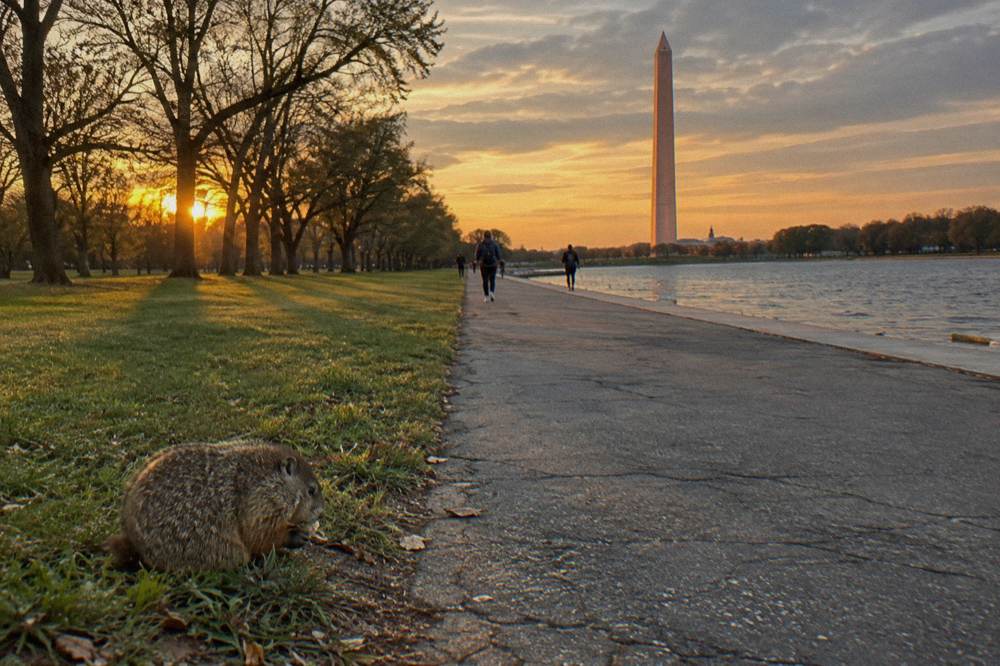
Two timing notes finish the picture. First, the night-ride seasonality: with sunset at 18:08 in late October and drifting earlier into November, evening rides start earlier and the lit-monument window shifts with them, so the booking page, not a rule of thumb, is the authority on start times. Second, the Monument Grounds west-side closure through 23 January 2027 means winter riders should expect a rerouted approach on that side; the north and south turf closures ended on 10 September 2026, so those areas have reopened.
One final pairing for a longer evening: a rider who takes the night monuments ride covers the same arc as the day version with thinner crowds, which is why it earns its place as the featured pick on Bike Tours Washington DC. The 3-Hour Night Monuments Ride includes the bike, helmet and guide, and the listing notes free cancellation terms, so an uncertain forecast does not have to cost you the slot.
Common Questions About Three Hours In DC
What To Do With 3 Hours In DC?
Take a guided bike ride across the monument core. The 3-hour Monuments and Memorials Bike Tour covers the Lincoln, World War II, Vietnam, Korean War, MLK, FDR and Jefferson memorials with a guide, bike and helmet included. For an evening window, the Monuments at Night ride runs the same length after dark. For a budget version, a $10 Capital Bikeshare day pass plus a self-planned loop also fits.
Can You See The DC Monuments In 3 Hours?
Yes, on a bike. The monument core is compact and flat, and the Mall's paths welcome bicycles between memorials, with parking near each major one. Walking the same list takes most of a day; a guided 3-hour ride covers it with commentary and no time lost to logistics.
Is A Night Bike Tour Worth It In A Short Visit?
For many visitors, yes. The monuments are lit after dark, sunset sits near 18:08 in late October, and crowds thin in the evening. The night ride runs about 3 hours with bike, helmet and guide included, so it fits the same window as a daytime tour with a completely different atmosphere.
How Much Does Capital Bikeshare Cost For A Few Hours?
A day pass is $10 per 24 hours, covering unlimited classic-bike rides of 45 minutes or less, then $0.05 per minute beyond that, with e-bikes at $0.15 per minute. A single ride costs $1 to unlock plus $0.15 per minute on a classic bike or $0.35 on an e-bike.
Are Any Memorials Closed Right Now?
Check the National Park Service notices before you go. The Lincoln Memorial Reflecting Pool, its walkways and grass medians are closed until 20 November 2026 at 11:59 p.m., and the Washington Monument Grounds west side is closed through 23 January 2027. The memorials themselves remain reachable, but the classic routes adjust.
Is 3 Hours Enough For Capitol Hill Too?
Not both sides comfortably. The western monuments and Capitol Hill are different ends of the Mall. If Capitol Hill is the priority, the 2-hour Capitol Hill rides cover the Capitol, Library of Congress and Supreme Court area and leave you an hour to walk the Mall itself.