What Is The Best Tour To Take In Washington DC?
The best DC tour depends on your time, season and fitness. This guide matches the main guided bike rides to each situation, with meeting points, seasons and what each one includes.
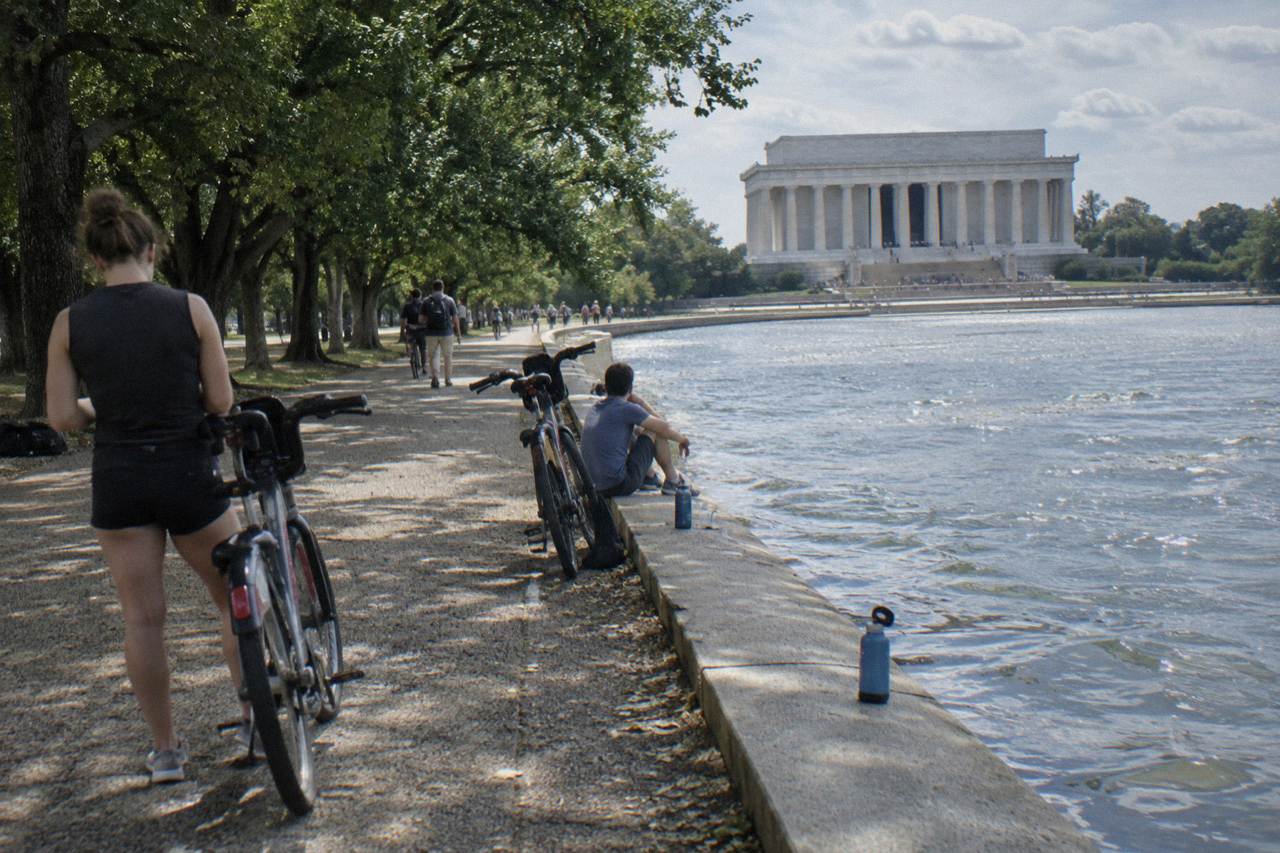
For most first-time visitors the best tour in Washington DC is a three-hour guided monuments bike ride: it reaches the Lincoln, Korean War, Vietnam and Martin Luther King Jr. memorials in one loop that would take a full day on foot, with a guide telling you what you are looking at. If you only have two hours, ride Capitol Hill instead. In summer heat or cherry blossom season, an evening monuments ride beats the midday version.
The honest answer is that "best" splits into four situations, and each has a clear winner. You are here for a short trip and want the headline monuments in one go. You are travelling with family or limited energy and want a gentler loop. You are visiting between late spring and early autumn, when the memorials are lit at night and the heat has gone. Or you are a repeat visitor who has already seen the Mall and wants something quieter, like Capitol Hill or a trail ride out to Mount Vernon.
A guided bike ride earns its place over a walking tour for one simple reason: distance. The major memorials are spread along the Mall and the Tidal Basin, and the park service confirms bicycles are welcome throughout National Mall and Memorial Parks, with bike parking near each major memorial. Riding inside the memorials themselves is not permitted, so you walk the bike through the World War II and Franklin Delano Roosevelt memorials, but between them the wheels do the work.
That welcome extends around the clock, which matters for the night options discussed below: the park is open 24 hours a day, so an evening or even a very early morning ride is a legitimate plan rather than a workaround. Very few American capital-city parks hand cyclists that much flexibility on car-free paths through the middle of the monumental core.
Start with the three rides below, then read on for how time, season and fitness change the answer.
How Do You Match A Tour To Your Time And Season?
Count your available hours first, then the season. With three hours free, take the full monuments loop. With two hours, the Capitol Hill ride or an easy highlights ride fits better. From late March to early April, the Tidal Basin is at its busiest and a guided ride saves you the parking and crowd problem. In July and August, when average highs climb toward the high eighties, ride early or after dark.
Time is the first filter because every guided ride on the Mall is either roughly two or roughly three hours long, and the difference is not padding. The three-hour rides reach the full spread of memorials from the Capitol side down to the Lincoln Memorial end. The two-hour rides concentrate on one zone, usually Capitol Hill, trading breadth for a finish time that leaves your afternoon open. A two-hour ride at 10 a.m. and a museum afterwards is a realistic day. A three-hour ride plus two museums usually is not.
Season is the second filter. The NOAA 1991 to 2020 climate normals for Reagan National Airport put the average July high at 89.6F and the average January high at 44.8F. Neither month is a reason to stay home, but both are reasons to shift your ride toward the cooler hours or shorten it. April, May, late September and October are the sweet spots: average highs in the 60s and low 70s, rain in the three to four inch monthly range rather than the summer peak.
Closures matter more than visitors expect, so check the park service notices before you go. The Lincoln Memorial Reflecting Pool, its walkways and its grass medians are closed until 20 November 2026, and the west side of the Washington Monument grounds is closed through 23 January 2027 for turf restoration. A guide will route around these, which is a quiet argument for a guided ride over a self-planned loop in a closure-heavy stretch.
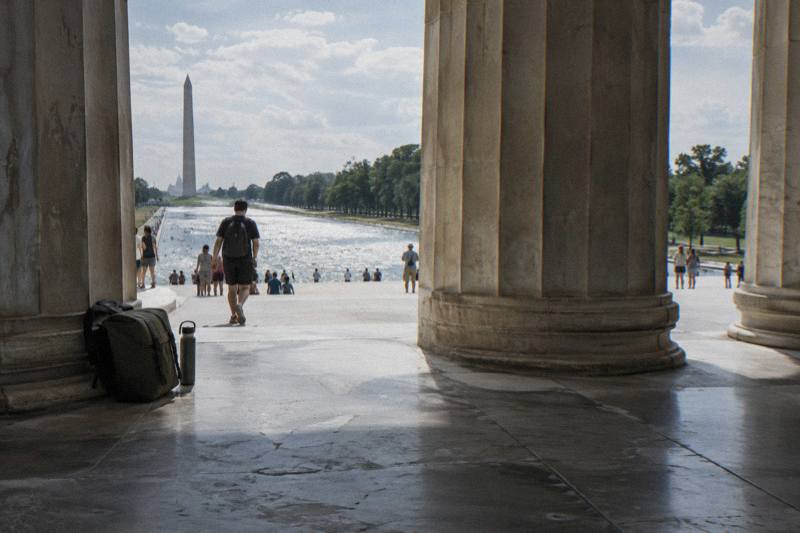
The Washington Monument itself, 555 feet 5 1/8 inches tall, anchors the middle of any route, and even with partial grounds closures the surrounding paths carry riders between the Capitol end and the Lincoln end without detours onto busy streets. That continuity is part of why the Mall works so well as a cycling venue compared with cities where the sights sit on car-dominated boulevards.
If that time-and-season picture already points you toward the headline monuments loop, the box below is the fastest way to check dates against your own calendar.
Why Is The Three-Hour Monuments Ride The Default Answer?
The three-hour guided monuments ride is the default best tour because it converts DC's biggest problem, spread-out monuments, into a strength: the distance that exhausts walkers is a pleasant bike loop, and every stop arrives with a story from the guide. It runs on classic bikes, includes the bike and helmet, and it is the most reviewed guided ride on this site's pages.
That last point deserves a caveat rather than a cheer. The ride is the most reviewed option in the category, and review counts, not ratings from small pools, are what you should weigh when choosing between near-identical tours. When you compare rides, look at how many reviews sit behind each rating and read the recent ones for route and guide quality rather than the headline number. The ride itself is the 3-Hour Monuments Bike Ride, and its listing carries the current price and start times.
What the ride actually delivers is a loop past the memorials people fly across the country for: Lincoln, the Vietnam Veterans Memorial, the Korean War Veterans Memorial, the Martin Luther King Jr. Memorial and the World War II Memorial are all within reach of a three-hour ride, with the White House's southern view often folded in. The booking page lists the exact stop order and the meeting point, and both are worth reading before you book, because meeting points cluster on the south side of the Mall near the storage building and Metro access.
Who should skip it? Anyone with less than three and a half free hours, since you want buffer time either side for check-in and bike fitting, and anyone for whom three hours in the saddle sounds like enough saddle time for one day. For both of those readers, the two-hour options in the next section are the better answer, not a compromise.
The ride also solves the bike question for you. Bikes and helmets are included, which matters because DC law requires a helmet for anyone under 16 riding on a public roadway or path, and rental fleets are sized and adjusted on the spot. If your own bike situation is uncertain, this is the tour that removes the variable entirely.
There is a second three-hour version of the same idea with an e-bike upgrade available, which suits riders who want the monuments spread with less effort or who are pairing the ride with a long flight day. The classic-bike original remains the default, but knowing the electric option exists widens the answer for older travellers and anyone recovering from injury.
Is A Night Monuments Ride Better Than A Daytime One?
For much of the year, yes. The monuments are lit after dark, the Mall's car-free paths are at their quietest, and in summer an evening ride escapes the heat entirely. The night version covers the same memorial spread as the daytime loop in cooler, emptier conditions, and for visitors in June through September it is arguably the best tour in the city rather than the runner-up.
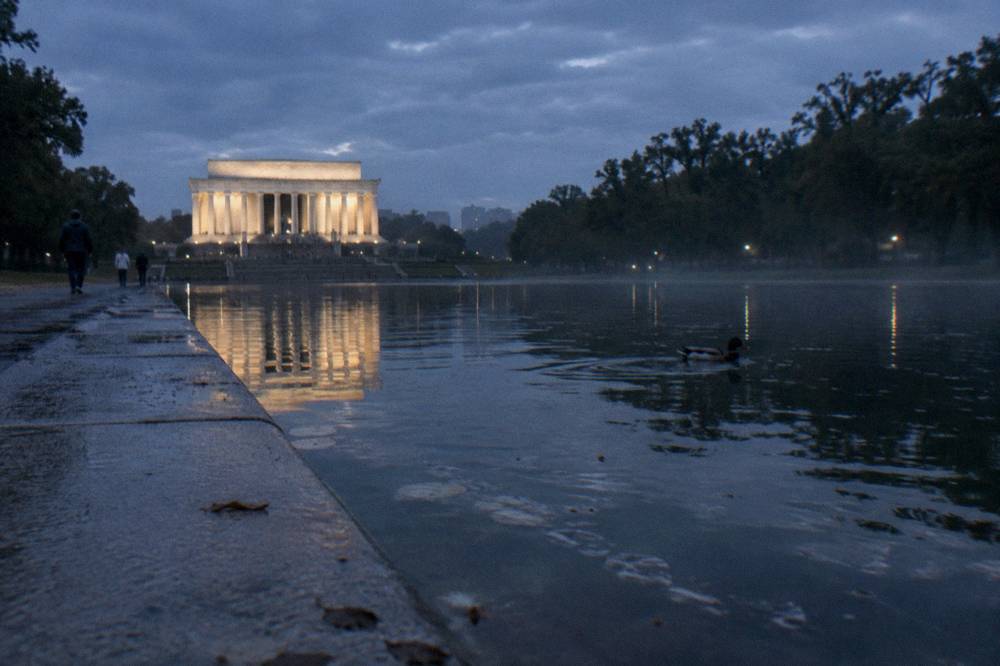
The case for night is strongest in the hot months, when the average August high of 87.8F makes a midday ride a sweat management exercise. Sunset in late October falls around 6 p.m., so by July an evening start means riding in daylight and finishing under floodlights, with the Lincoln Memorial glowing at the far end of the Reflecting Pool. One operator's listing describes seasonal evening start times from April through October and earlier afternoon starts from November through March, so check the booking page for the start time in the month you visit.
The case against night is simple: you will not see much of the Tidal Basin or the cherry blossoms, the photo light is harsh or absent, and families with young children may find a late finish unworkable. If your priority is photographs rather than atmosphere, book the daytime ride and accept the crowds.
If the night idea appeals but you want a deeper comparison first, the night ride guide to the monuments after dark breaks down lighting, safety and what each memorial looks like under floodlights, and it is worth five minutes before you commit.
What If You Only Have Two Hours Or Want Something Easier?
With two hours, the best tour is a Capitol Hill ride: it concentrates on the Capitol, the Library of Congress, the Supreme Court and the surrounding residential blocks, and it covers ground that Mall-focused visitors routinely miss. Both the standard Capitol Hill ride and an easy highlights alternative fit the window, on classic bikes, with the pace set for a relaxed loop.
Capitol Hill rewards cyclists disproportionately. The neighborhood's landmarks sit close enough to walk between but far enough apart that a bike buys you two extra stops in the same time, and the side streets, row houses and Eastern Market area give the ride texture the monumental core lacks. For a second-time visitor who has already done the Mall, this is the best tour in the city, full stop. The full index of guides sits on Bike Tours Washington DC.
The two main candidates are the 2-Hour Capitol Hill Ride and its easy-riding sibling, and the choice between them comes down to pace and price rather than stops: both loop the same neighborhood, one simply pitches itself at a gentler rhythm. Check the booking pages for current prices, since per-person rates move with season and demand.
For riders who want easy in the literal sense, an e-bike removes the fitness question. DC treats e-bikes as motorized bicycles, with the motor unable to propel the bike faster than 20 mph on level ground, and the Mall's flat terrain means even classic bikes are undemanding here. The honest fitness picture for all of these rides: the terrain is flat, the pace is guided and conversational, and the fitness expectations guide walks through who genuinely needs to think about it.
Do You Need A Guide At All, Or Is Capital Bikeshare Enough?
A guide adds narration, routing around closures and a fixed meeting point; Capital Bikeshare adds freedom and a lower price, with a day pass at $10 per 24 hours covering unlimited 45-minute classic-bike rides. If you know the history already or want to linger at one memorial for an hour, skip the tour and ride share bikes. If you would otherwise read a phone screen at each stop, the guide earns the price.
The Bikeshare numbers are worth having side by side. A single ride is $1 to unlock plus $0.15 per minute on a classic bike or $0.35 per minute on an e-bike, and a day pass at $10 per 24 hours includes free 45-minute classic rides with a $0.05 per minute overage, e-bikes at $0.15 per minute, and free unlocks. The system runs roughly 8,000 bikes across more than 800 stations in eight jurisdictions, and the Smithsonian station at Jefferson Drive and 12th Street SW was reinstalled in late October 2026, putting docks back in the middle of the Mall.
| Option | What it costs | Best for |
|---|---|---|
| Guided 3-hour monuments ride | From the operator's booking page, per person | First visit, want the stories |
| Guided 2-hour Capitol Hill ride | From the operator's booking page, per person | Short on time or repeat visitor |
| Bikeshare single ride | $1 unlock plus $0.15/min classic, $0.35/min e-bike | One short hop |
| Bikeshare day pass | $10 per 24 hours, 45-min classic rides included | Self-guided full day |
Note that a day pass is not free, and unlike a guided ride it includes no helmet, no guide and no plan. The comparison guide on Capital Bikeshare versus a guided ride goes deeper, but the short version is above: knowledge and structure versus freedom and price.
One practical wrinkle of the 45-minute structure: the Mall's memorials do not cluster within single 45-minute windows, so a day-pass rider re-docks and re-unlocks several times across a full circuit. That is a small tax on flexibility, and for many self-guided riders it is a fair trade. For others it becomes the moment they wish they had booked a guide with a locked bike waiting at each stop.
Which Season Gives You The Best Tour Experience?
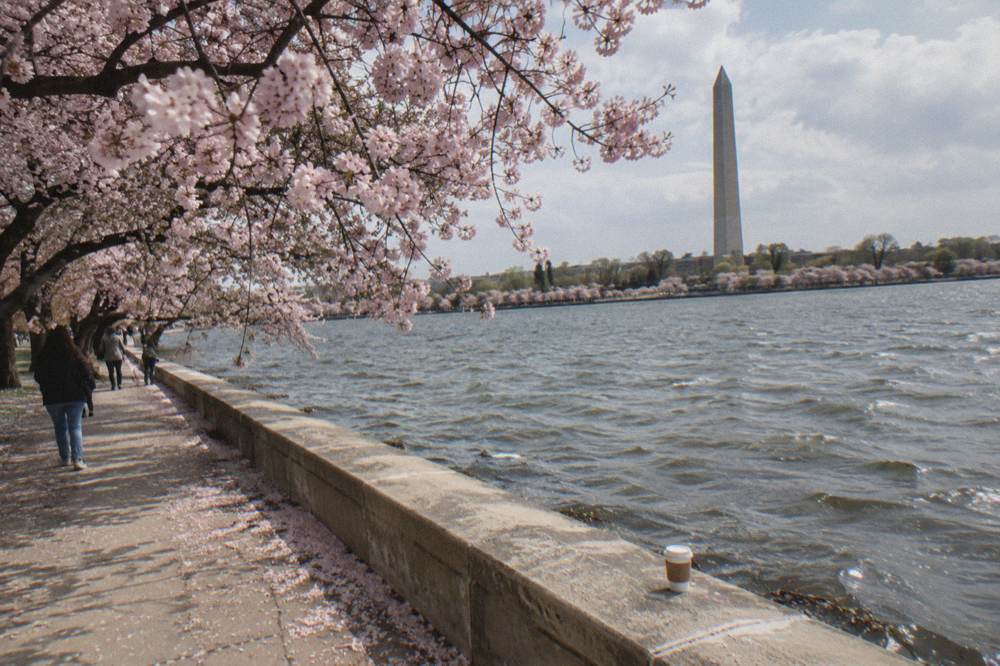
Late March through April is the most spectacular window, because the cherry blossoms peak, typically in the last week of March to the first week of April, and a bike is the fastest way through the crowd. May, late September and October are the most comfortable months. Summer rides should shift to morning or night, and winter rides are quieter, cheaper and perfectly workable on the Mall's flat terrain.
The blossom season deserves its own planning. The 2026 peak bloom was reached on 26 March, when 70 percent of the Yoshino trees at the Tidal Basin were open, and the 2027 National Cherry Blossom Festival runs 20 March to 11 April. No peak bloom forecast for 2027 has been published yet, forecasts typically arrive in late February or early March, so never book around a date someone has promised you. When the bloom does arrive, the Tidal Basin becomes the densest crowd in the city, and a guided ride is one of the few ways to see it without fighting for parking. The cherry blossom biking guide covers the routes in detail.
The Tidal Basin's own recent history shapes the experience too. The seawall reconstruction finished its first phase early and under budget, and the project area including paths stayed closed through the 2026 festival before reopening, which means the 2027 season will be the first in a while with the rebuilt waterfront fully in play. Expect that to draw even more riders and walkers than usual.
| Month | Avg high | Avg low | Ride advice |
|---|---|---|---|
| March | 56.5F | 38.6F | Blossom season, book early |
| April | 68.0F | 48.4F | Peak conditions, peak crowds |
| May | 76.5F | 58.0F | Comfortable, green |
| July | 89.6F | 72.4F | Ride at night or early |
| October | 69.4F | 52.2F | Second-best month |
| December | 48.8F | 34.5F | Quiet, dress in layers |
For a month-by-month breakdown including the shoulder seasons, the best time of year to bike in Washington DC is the deeper read, and the same logic applies to guided rides: the season picks your start time more than you do. If your dates are fixed and land in a tricky window, the weather and rain guide for DC rides explains what operators do when the forecast turns.
What Is The Best Tour For Families And Private Groups?
For families, a private ride wins because the guide sets the pace around the youngest rider and the route flexes: a private family-friendly ride runs around three hours, and private tours are priced per group rather than per person, which changes the maths for parties of three or more. The private and small group rides guide compares the options.
The per-group pricing point matters more than most families realize. Shared tours charge per person, so a family of four pays four fares, while several private options charge one fee covering the whole group up to a stated cap. The caps differ between operators, from smaller parties up to five, so read the group cap on the booking page before assuming which is cheaper for your headcount.
Kids change the route more than the tour. Helmet law applies to riders under 16, guides plan stops with bathroom and snack access on family versions, and the Mall's flat, car-free paths make it one of the most forgiving places in America to ride with children. The family bike rides guide covers age fit and pacing in detail.
For groups whose answer is "somewhere beyond the Mall", the long option is the Mount Vernon ride from Alexandria, a six-and-a-half-hour day combining trail riding, river scenery and the estate itself, with an optional river cruise on one version. It is not the best first tour in the city, but it is the best full-day tour, and the Mount Vernon trail guide prepares you for it.
Common Questions About The Best Tour In Washington DC
What Is The Best Tour To Take In Washington DC?
For most first-time visitors, a three-hour guided monuments bike ride: it reaches the major memorials in one loop with a guide narrating between stops. With two hours, take a Capitol Hill ride. In summer, take the night version of the monuments ride to escape the heat.
Is A Bike Tour Better Than A Walking Tour In DC?
For the monuments, usually yes. The memorials are spread out along the Mall and the Tidal Basin, and a bike covers the full loop in three hours where walking takes most of a day. For a single deep-dive site like the Capitol or a museum interior, walking wins.
Do DC Bike Tours Include The Bike And Helmet?
The guided rides listed on this site include bike and helmet per the booking details, with the fleet sized and adjusted at the meeting point. Check the specific tour's booking page for anything beyond that, such as e-bike availability or child equipment.
Can You See The Washington Monument And Lincoln Memorial On One Ride?
Yes, both sit on the same axis of the Mall and every three-hour monuments ride passes between them. Note the west side of the Washington Monument grounds is closed through 23 January 2027, and the Reflecting Pool walkways are closed until 20 November 2026, so routes loop around those areas for now.
Is A Night Monuments Ride Worth It?
In the warm months, many riders prefer it: the memorials are lit, the paths are quiet, and July and August evenings are far more comfortable than afternoons with average highs at 89.6F and 87.8F respectively. Start times shift with the season, so check the booking page for your month.
What If It Rains On My Tour Day?
Tours run in light rain and operators decide on weather safety themselves, so check the cancellation terms on the booking page before you book. April through October each averages five to seven days with rain per month, so a backup plan is reasonable at any time of year.