Rain And Cold Bike Rides In DC: Weather Guide
Rain and cold change how a DC bike ride feels, but they rarely have to cancel it. This guide covers what tours do in wet weather, how cancellation terms work, what to wear between November and March, and which rides suit a short, chilly day.
Short answer
DC guided bike rides generally run in light rain and pause only for conditions the operator judges unsafe; the park itself is open 24 hours. Weather decisions sit with each operator, so read the cancellation terms on the booking page before you pay. Winter riders should plan layers: January normals run 30.1 to 44.8 degrees F.
Do DC Bike Tours Run When It Rains?
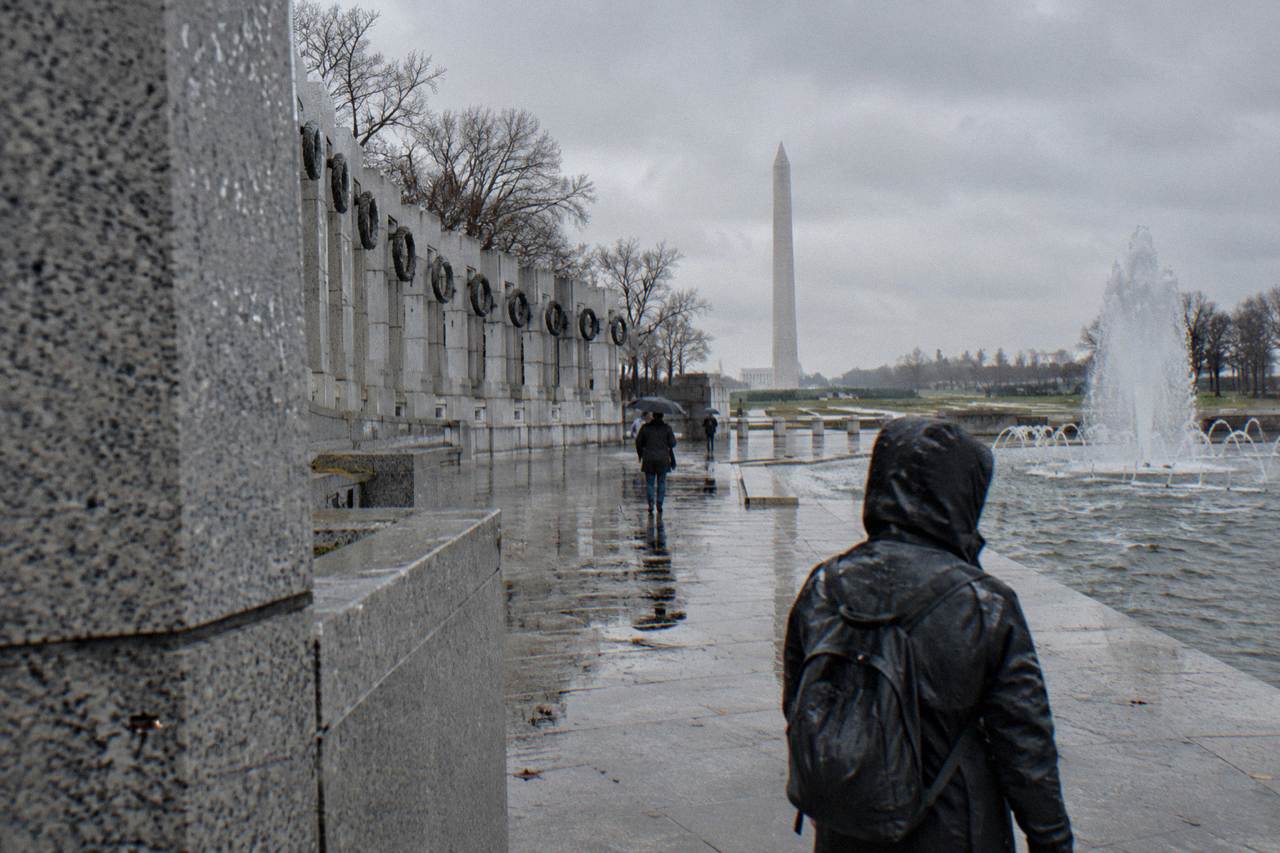
Most guided bike rides in Washington DC run in light rain, because the National Mall's memorial circuit works well on wet pavement and operators bring rain ponchos rather than cancel. The decision point is safety, not dampness: lightning, ice, or heavy storms are what pause a ride, and each operator makes that call on the day. Read the cancellation terms on the booking page before you pay.
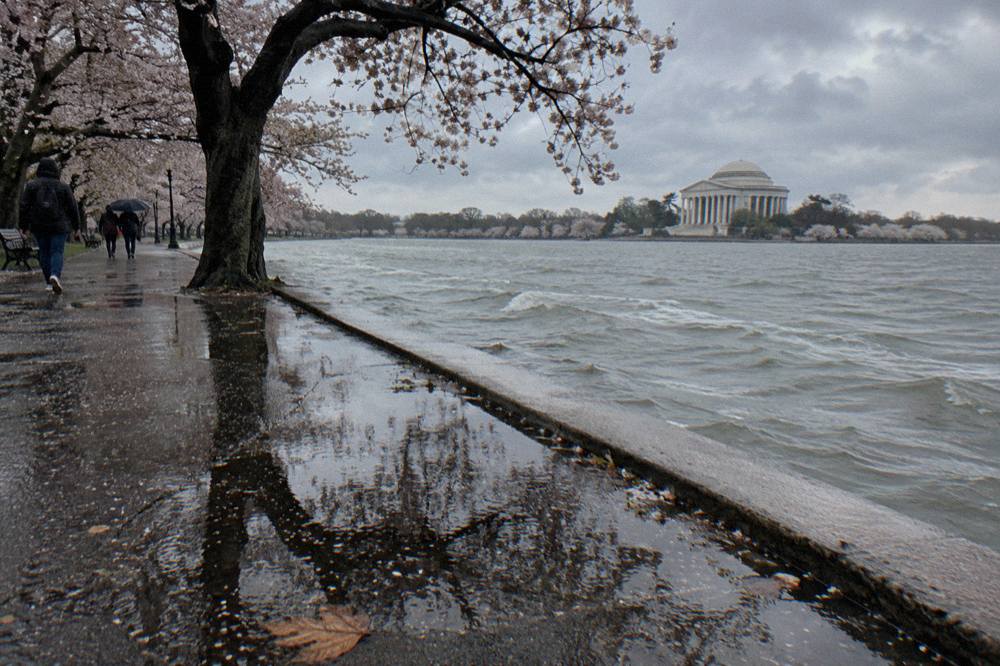
Rain in DC is frequent but rarely dramatic. The NOAA 1991 to 2020 normals for Reagan National Airport show between 4.9 and 7.3 days with rain per month across the year, with July the wettest at 7.3 days and October the driest at 4.9. That means a week-long visit has a real chance of a wet morning somewhere in it, and a rider planning around the Bike Tours Washington DC listings should treat a passing shower as a scheduling detail rather than a plan-ender.
Two things genuinely stop a ride: lightning and ice. Operators report that storms within a certain distance trigger a pause or a reroute, and winter ice on the Mall's paths is rare but real after freezing rain. Everything else is a comfort question, and comfort is mostly a gear question, which this guide covers in full below.
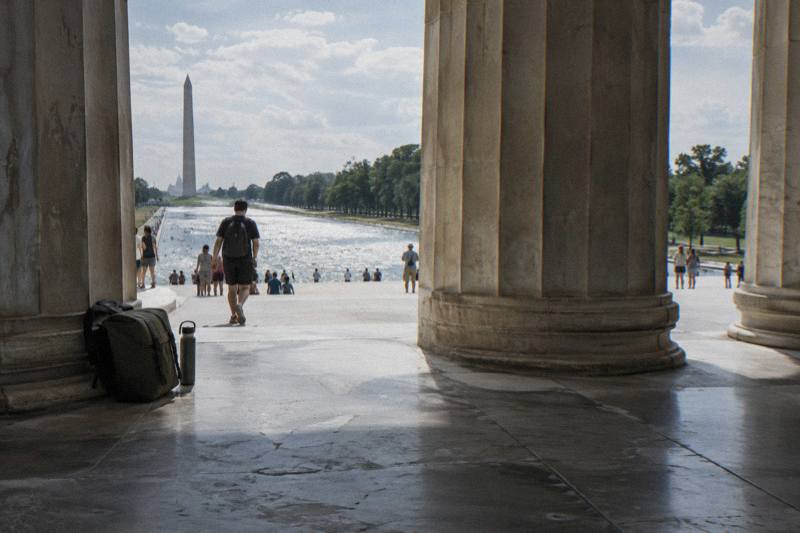
A related point that surprises first-time visitors: the park itself never closes for weather comfort. National Mall and Memorial Parks is open 24 hours a day, so a self-guided rider can go out in drizzle at any hour. The monuments are also built for bad weather in one useful sense: each major memorial has some covered or semi-enclosed space where a group can shelter while a guide talks. For a broader look at how the year breaks down, see our guide to the best time of year to bike in Washington.
What Happens If It Rains On The Day Of Your Monuments Ride?
Operators keep the ride going in ordinary rain and contact you directly if they cancel for safety; refunds and rebooking then follow the terms stated on the booking page, not a general city rule. There is no single DC-wide rain policy. Each tour sets its own cancellation window and its own bad-weather threshold, which is why the terms deserve a read before checkout rather than after.
The practical sequence on a rainy morning looks like this. You check in at the meeting point, the guide hands out ponchos if the listing includes them, and the ride rolls at a slightly adjusted pace. If the forecast shows something the operator will not ride in, you hear from them before the start time, usually with an offer to move to another day or another departure. What you are owed in that situation is set by the cancellation terms attached to your specific booking, so treat that fine print as part of the purchase.
A few details make the 3-Hour Monuments Bike Ride (Washington DC: Monuments and Memorials Bike Tour) a reasonable pick for weather-nervous riders: it is a shared classic-bike ride across the core memorial circuit, long enough to cover the big names but not so long that a wet three hours turns miserable. The related Capitol Hill option, the 2-Hour Capitol Hill Ride, is shorter still, which matters when the sky looks uncertain. And for total schedule control, the Private Customized Route tour lets you set both the start time and the emphasis with the operator.
One habit worth building: screenshot or save the meeting point details and the operator's contact channel the day before. Rain-day logistics go smoothly when you can answer "where" and "who do I call" without hunting through a confirmation email on a wet sidewalk. Meeting points for each tour are stated on the booking page, and they differ between operators, so confirm rather than assume.
The last piece of rain-day knowledge is about the paths themselves. The Mall's paved surfaces drain reasonably, but painted markings and stone plaza surfaces get slick. Braking earlier and taking corners slower solves almost all of it. Riders who want the full equipment and clothing rundown for wet conditions can pull it from our what to wear for a DC bike ride guide.
What Should You Wear For A Cold Ride Along The National Mall?
Plan three layers for winter riding in DC: a moisture-wicking base, an insulating mid layer, and a wind-blocking shell, plus gloves and something over your ears. January normals run from 30.1 degrees F overnight to 44.8 in the afternoon, and the wind across the open Mall makes it feel colder than the number suggests. Extremities, not your core, are what end a cold ride early.
The layering logic is simple. Your core stays warm from pedaling within minutes, but hands, ears, and face take the full wind. Gloves matter more than almost anything else you can pack, because cold hands stop working brake levers confidently. A thin hat or headband under the helmet, and a scarf or buff for the face, close the gap.
| Layer | What it does | Winter ride example | Shoulder-season version |
|---|---|---|---|
| Base | Moves sweat off skin | Synthetic or merino long sleeve | Short sleeve or light merino |
| Mid | Traps warm air | Fleece or light puffer | Long sleeve shirt |
| Shell | Blocks wind and light rain | Windproof jacket | Windbreaker or nothing |
| Extremities | Keeps control working | Full gloves, ear cover, buff | Light gloves |
Winter in DC is milder than most visitors expect, but it is windy. December normals sit between 34.5 and 48.8 degrees F, February between 31.8 and 48.3, and March warms to 38.6 overnight and 56.5 by afternoon. March is the month where a morning start can feel like winter and the ride home like spring, which is the strongest argument for removable layers over one heavy coat. For a wider view of the seasons, see where to go biking in DC and the broader weather picture, which adds routing ideas on top of this gear list.
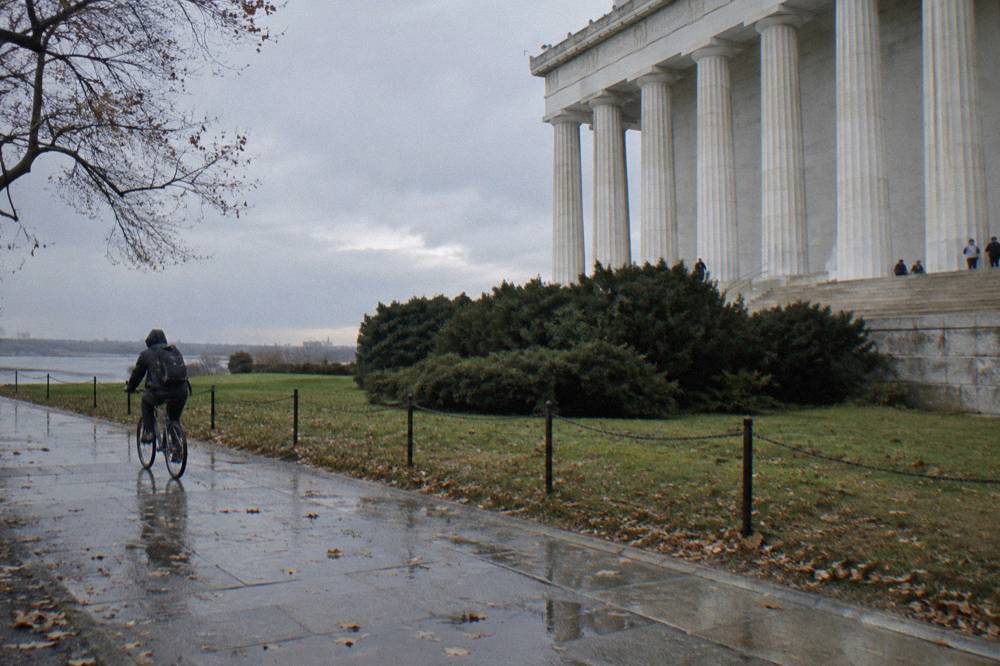
Helmets are supplied on guided rides, and DC law requires one for anyone under 16 riding on a public roadway or path, per the city code. A cold-weather tip that follows from that: bring a thin hat that fits under the helmet rather than planning to swap the helmet for a beanie, because guided tours include the helmet and the law covers young riders regardless of temperature.
Which Months Are Best For A Dry Ride Around The Tidal Basin?
On rain-day frequency alone, October is the driest riding month in DC at 4.9 days with rain, followed by February at 5.4 and November at 5.0, while May through July run wettest at 6.5 to 7.3. Temperature tells a second story: April through June and September through October combine comfortable highs, 68 to 85 degrees F, with tolerable rain odds, which is why locals call them the riding months.
The table below condenses the NOAA 1991 to 2020 normals into the months riders actually weigh. Read the rain column as a planning average, not a promise: a single storm system can put two inches on any month, as the 4.33-inch July normal shows.
| Month | Avg high F | Avg low F | Precip inches | Days with rain |
|---|---|---|---|---|
| February | 48.3 | 31.8 | 2.62 | 5.4 |
| March | 56.5 | 38.6 | 3.5 | 6.5 |
| April | 68.0 | 48.4 | 3.21 | 6.4 |
| May | 76.5 | 58.0 | 3.94 | 7.3 |
| September | 80.7 | 64.1 | 3.93 | 5.8 |
| October | 69.4 | 52.2 | 3.66 | 4.9 |
| November | 58.2 | 41.6 | 2.91 | 5.0 |
| December | 48.8 | 34.5 | 3.41 | 6.4 |
February's low rain count comes with the year's coldest lows, so the honest reading is that February rewards riders who own proper winter gear, while October rewards everyone. November splits the difference: 58.2-degree highs, 41.6-degree lows, and only 5.0 rain days, which is why shoulder-season pricing and thinner crowds make it a quiet favorite among people who ride the Mall often.

Can You Ride The National Mall In Winter Without A Tour?
Yes. The National Mall and Memorial Parks are open 24 hours a day, bicycles are welcome throughout, and bike parking sits near each major memorial, so a self-guided winter ride costs nothing beyond the bike itself. The one hard rule is that riding inside the memorials is not permitted: walk the bike through the World War II and Franklin Delano Roosevelt Memorials, or lock it before entering any other one.
Winter actually flatters a self-guided loop. The trees are bare, so sightlines from the paths open up, and the summer crowd is gone. Capital Bikeshare is the usual no-commitment option, and while it is not free, the pricing is simple: a day pass is $10 per 24 hours with classic-bike rides free for the first 45 minutes each, then $0.05 per minute, and e-bikes at $0.15 per minute. Single rides without a pass cost $1 to unlock plus $0.15 per minute on a classic bike. The system runs about 8,000 bikes across more than 800 stations in 8 jurisdictions, and the Smithsonian-area station at Jefferson Dr and 12th St SW was reinstalled in late October 2026, which puts a dock right on the Mall.
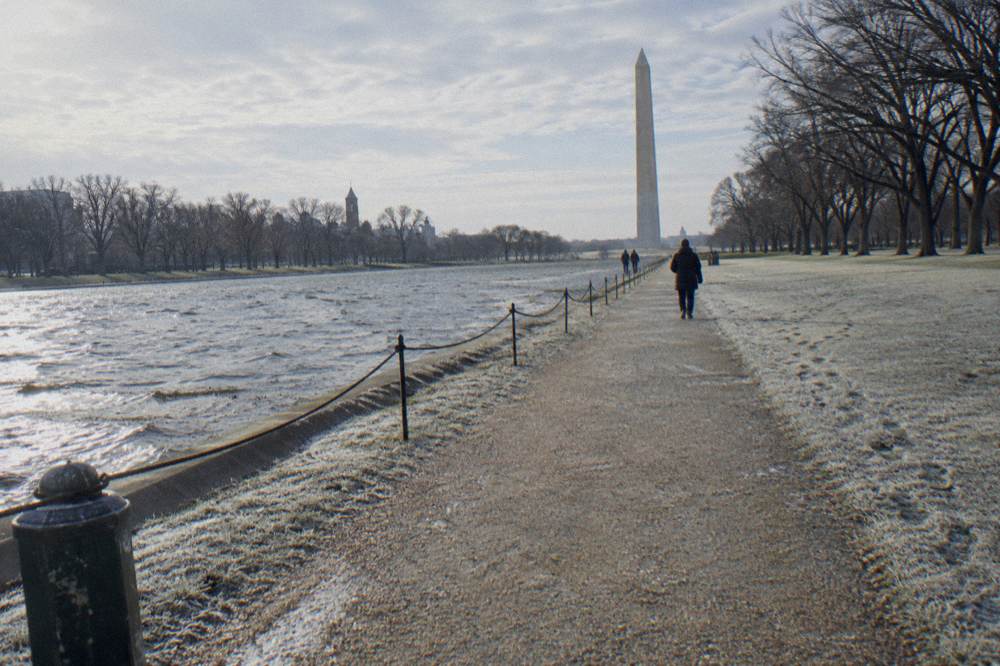
Winter daylight is short, and that shapes the route. Sunset in DC sits near 6:08 p.m. at the end of October and keeps sliding into November, so a 3 p.m. start finishes in the dark. That is not a problem, it is a feature: the memorials are lit at night and the car-free Mall paths are the recommended evening riding surface, which is exactly the case our night ride past the DC monuments after dark guide builds on.
If you are weighing the guided-versus-independent question in cold weather specifically, the tradeoff is pace control. A guided ride keeps you moving, which keeps you warm, and hands you a warm-up plan (the memorials with interior space) that locals take years to learn. A Bikeshare loop lets you bail the moment fingers go numb. Our Capital Bikeshare or a guided ride comparison walks through the cost math for both.
Which Tours Suit A Chilly Shoulder-Season Day In Washington DC?
Shorter rides with interior stops suit cold days best: the 2-hour classic-bike Capitol Hill rides cover a compact cluster, while 3-hour monuments rides balance distance against time in the open. Private tours add schedule control, so you can start at the warmest hour, and the listing describes each tour's inclusions, meeting point, and duration, which are the three details a cold-day plan depends on.
The Easy Capitol Hill Highlights tour is the compact pick: 2 hours on a classic bike in a shared group. Capitol Hill's sheltered institutional core means less time crossing open wind corridors than the full Mall loop, and two hours is about as long as unacclimatized riders stay comfortable in January air before the fun-to-ernst ratio turns. Check the booking page for the meeting point and what the listing includes.
The half-day private guided tour runs 4 to 5 hours, which sounds like the wrong answer for cold weather until you read the fine advantage: on a private ride the pace, the stops, and the coffee break are yours to negotiate with the operator. A private group that wants forty minutes inside the Smithsonian castle of monuments and a shorter rolling day can ask for exactly that. Pricing for private rides is per group rather than per person, so compare the basis, not just the headline number.
| Tour | Duration | Bike | Format | Cold-day strength |
|---|---|---|---|---|
| Easy Capitol Hill Highlights | 2 hours | Classic | Shared | Short, sheltered cluster |
| 3-Hour Monuments Bike Ride | 3 hours | Classic | Shared | Full Mall coverage, steady pace |
| E-Bike, Tidal Basin Route | 3 hours | E-bike | Shared | Motor takes the sting out of headwinds |
| Private Customized Route | 3 hours | Classic | Private | You set the route and pace |
| Half-Day Private, 4 to 5 Hours | 4 to 5 hours | Classic | Private | Long but fully negotiable |
Is A Night Ride Colder Than A Day Ride In DC?
Yes, noticeably. DC's overnight lows run 15 to 18 degrees F below the same day's highs in every month, so an evening departure in November means riding in low-40s air even after a mild afternoon, and the wind chill of moving at riding speed pushes it lower. The compensation is real: the memorials are lit, traffic is thin, and the Mall's car-free paths are the recommended surface for exactly this kind of ride.
Take November as the worked example. The normal high is 58.2, the normal low 41.6. A 6 p.m. night-ride start lands between those numbers and slides toward the low as the ride goes on. Double the gloves logic from the gear section above, add a proper windproof layer, and the cold becomes a managed variable. Sunset near 6:08 p.m. at the end of October means November rides start in darkness, which is the point, but it also means lights and reflective detail matter; e-bikes in the Capital Bikeshare fleet carry LED lights, and guided night tours ride lit, guided routes.
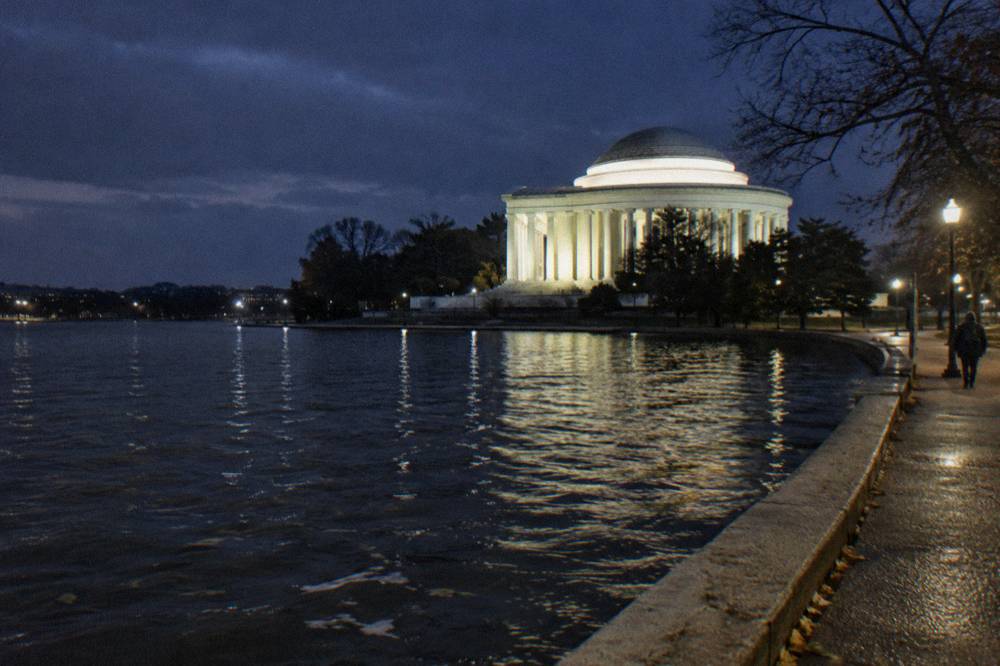
The Night Monuments tour, 3 hours on a classic bike with an English-speaking guide, is the structured way to do this: a shared group, a set circuit of the lit memorials, and a guide who knows which plazas hold warmth and wind. One planning note for private groups: the Private Night Ride runs 2 hours 30 minutes to 3 hours and includes pickup, which trims the exposure time and the cold-walk-to-the-meeting-point problem in one move.
How Do You Know If Closures Or Weather Affect Your Route?
Check the National Park Service public notices before any Mall ride: two closures are in force right now, the Lincoln Memorial Reflecting Pool and its adjacent walkways through 20 November 2026, and the Washington Monument Grounds west side through 23 January 2027. Neither closes the Mall, but both can shift a route around the Lincoln end of the Reflecting Pool axis, and event-day closures appear with little notice.
The Reflecting Pool closure is the one riders feel most, because the pool's walkways are a natural bike corridor between the Lincoln Memorial and the World War II Memorial. The official NPS notice runs through Friday 20 November 2026 at 11:59 p.m., with the pool, its walkways, and the grass medians all inside the fence line. The Washington Monument grounds notice keeps the west side shut through 23 January 2027 for turf restoration, after the north and south turf areas reopened in September 2026.
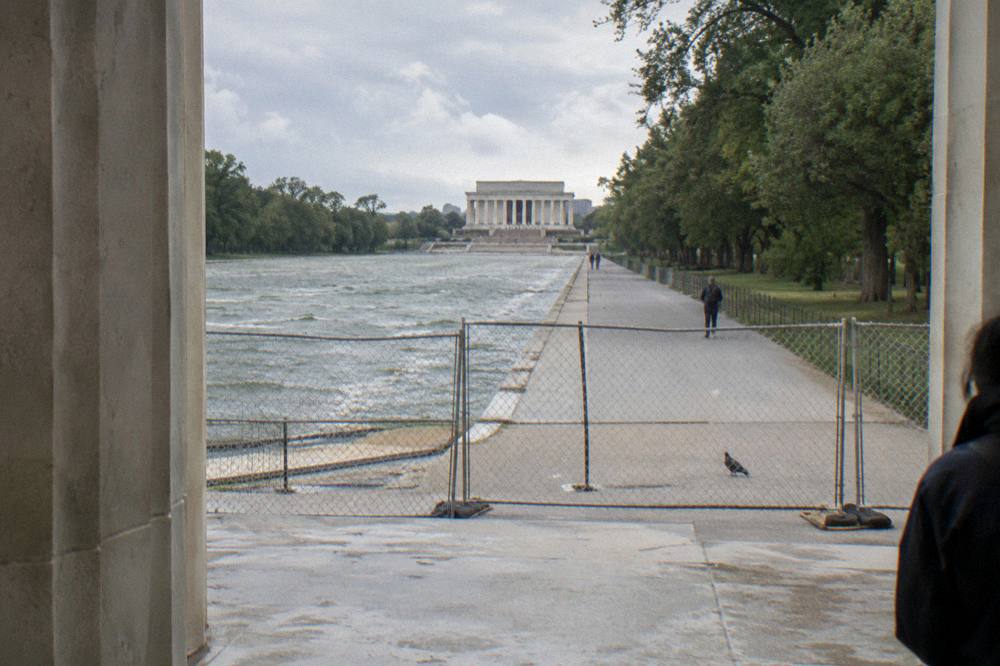
Event closures are the second layer. Autumn 2026 brought nighttime closures of Maine Ave SW, Ohio Drive, and East Basin Dr SW for the Long Bridge project, plus marathon-weekend restrictions, and past summer saw extensive closures around Independence Day and the America 250 events. The habit that protects your ride: search the park service notices for your exact date, and if you have booked a guided tour, the operator handles rerouting, which is one of the quiet arguments for a guided ride in a closure-heavy season.
For the helmet requirement, the city code is unambiguous for riders under 16 on any public roadway or path, and guided tours supply helmets for everyone. That is the whole compliance picture for a cold or wet day: layers, lights if dark, helmet on the young rider, and a glance at the park notices.
Common Questions About Rain And Cold Bike Rides In DC
Do DC Bike Tours Run In Rain?
Generally yes, in light rain. The Mall circuit works on wet pavement and operators hand out ponchos rather than cancel. Lightning, ice, and severe storms are what pause a ride, and the operator makes that call on the day. Cancellation and refund terms are set per tour, so read them on the booking page before you pay.
What Should I Wear For A Cold Bike Ride In Washington DC?
Three layers: a wicking base, an insulating mid layer, and a wind-blocking shell, plus gloves and ear coverage. January normals run 30.1 to 44.8 degrees F, and wind across the open Mall adds chill. Your core warms from pedaling; hands and ears are what end a ride early.
What Happens If My Tour Is Cancelled For Weather?
The operator contacts you before the start time when conditions are unsafe, typically offering a reschedule or another departure. What you are owed depends on the cancellation terms attached to your specific booking, since each tour sets its own policy. Check those terms at checkout, not after.
Which Is The Driest Month For Biking Around The National Mall?
October, with 4.9 days with rain and an average high of 69.4 degrees F in the 1991 to 2020 normals. February is nearly as dry at 5.4 rain days but much colder, with lows near 31.8. May through July are the wettest months, at 6.5 to 7.3 rain days.
Can You Ride The National Mall In Winter On Your Own?
Yes. The park is open 24 hours, bicycles are welcome, and parking for bikes sits near each major memorial. Riding inside the memorials is not permitted: walk the bike through the World War II and FDR Memorials or lock it before entering. Capital Bikeshare day passes cost $10 per 24 hours with classic rides free for the first 45 minutes each.
Are Night Rides In DC Too Cold In Winter?
They are cold but manageable with the right layers. Overnight lows run 15 to 18 degrees below daily highs in every month, so an evening start means riding in air well below the afternoon temperature. The payoff is lit memorials, thin crowds, and car-free paths, and guided night tours ride set circuits with shelter stops built in.