Best Time Of Year To Bike In Washington DC
The best biking weather in Washington DC clusters into two windows: late March through early May, and September through early November. Cherry blossom week is the most spectacular and most crowded; October delivers color, thin crowds and the driest riding of the year.
Short answer
The best time to bike Washington DC is mid-April through early May or late September through October, when highs run 56 to 76 degrees and rain days stay near five per month. Cherry blossom week, typically the last week of March to the first week of April, is spectacular but crowded. Winter riding works, with 24-hour park access and lit memorials.
What Is The Best Month To Bike In Washington DC?
The two sweet spots are mid-April through early May and late September through October, when average highs sit between 56.5 and 76.5 degrees and monthly rain days run five to six. Cherry blossom week in late March is the single most scenic window but draws the year's heaviest crowds on the Tidal Basin paths. Winter is rideable and quiet, with the park open 24 hours and the memorials lit after dark.
Everything else on this page hangs off that calendar. The National Mall and Memorial Parks never close for the season: the National Park Service keeps the park open 24 hours a day, bicycles are welcome throughout, and parking racks sit near each major memorial. That means the question is never whether you can ride, only what kind of day you will get.
The numbers below come from the NOAA 1991 to 2020 climate normals for Washington Reagan National Airport. Normals describe a 30-year average, not a forecast for your Saturday, but they are the most honest way to compare months against each other. Read the high temperature against how much pedalling you plan to do, and the rain-day column against how flexible your dates are.
Two practical notes shape the whole year. First, riding a bicycle inside the memorials themselves is not permitted: you walk the bike through the World War II and Franklin Delano Roosevelt memorials, or lock it at the racks before entering. Second, DC law requires a helmet for anyone under 16 riding on a public roadway or path, which matters if you are bringing children; our page on helmets and Mall bike rules covers the details. And if you are torn between pedal power and a motor, the guide to choosing an e-bike or a regular bike for DC sorts that question by season too.
Month-By-Month: How Does Each Month Feel On A Saddle?
April and October are the standout months, with average highs of 68.0 and 69.4 degrees and the lowest rain-day counts outside high summer. May and September run about eight degrees warmer and stay comfortable if you start early. July and August average 87.8 to 89.6 degree highs, which pushes serious rides to morning or after sunset. December through February averages lows below freezing, so dress in layers and expect bare trees.
The full month-by-month picture, drawn from the NOAA normals table:
| Month | Avg high / low (F) | Rain days | Riding quality around the Mall |
|---|---|---|---|
| January | 44.8 / 30.1 | 5.7 | Cold, bare, very quiet; best combined with a night ride past the lit memorials |
| February | 48.3 / 31.8 | 5.4 | Slightly milder, still thin crowds; watch for wind off the Potomac |
| March | 56.5 / 38.6 | 6.5 | Blossom anticipation builds late in the month; paths fill fast at peak bloom |
| April | 68.0 / 48.4 | 6.4 | Prime riding; post-bloom green, comfortable all day |
| May | 76.5 / 58.0 | 7.3 | Warm and green; start early or ride toward dusk |
| June | 85.1 / 67.5 | 6.5 | Hot and humid; morning rides or air-conditioned museum breaks |
| July | 89.6 / 72.4 | 6.7 | The toughest month; see our summer heat guide before committing |
| August | 87.8 / 71.0 | 5.6 | Hot but the driest rain count of summer; evenings soften |
| September | 80.7 / 64.1 | 5.8 | Humidity breaks; a strong shoulder-season pick |
| October | 69.4 / 52.2 | 4.9 | The driest month of the year and arguably the best overall |
| November | 58.2 / 41.6 | 5.0 | Crisp, colorful early, quiet late; sunset rides arrive early |
| December | 48.8 / 34.5 | 6.4 | Cold and quiet; monuments lit for the holidays |
October deserves its reputation: 4.9 rain days is the lowest figure in the table, highs near 70 make three hours in the saddle effortless, and the crowd pressure that builds in spring has drained away. November's first half keeps much of that, though the light goes short and the last weeks feel wintry.
June through August is not a ban, just a planning problem. Highs in the 85.1 to 89.6 range with overnight lows from 67.5 to 72.4 degrees means the concrete and gravel of the Mall radiate heat well past sunset. Riders who do go in summer shift to first-thing mornings or the after-dark window; our guide to biking DC in summer heat lays out the timing, hydration and clothing choices that make it work, and the piece on rain and cold weather rides handles the other end of the calendar.

Read the chart as a trade-off curve. Comfort climbs from March through May, collapses across June to August, then rebuilds September through October before sliding into winter. Whatever month you pick, the day-and-night contrast matters too: a sunset that lands early in November puts you on lit monument paths by half past five, while a July evening keeps daylight past the dinner hour.
If a guided ride is the plan, the calendar maps neatly onto the options. The three-hour day and night monuments rides run as the backbone of the year, with the cherry blossom ride as the spring specialist.
When Is Cherry Blossom Season On The Tidal Basin?
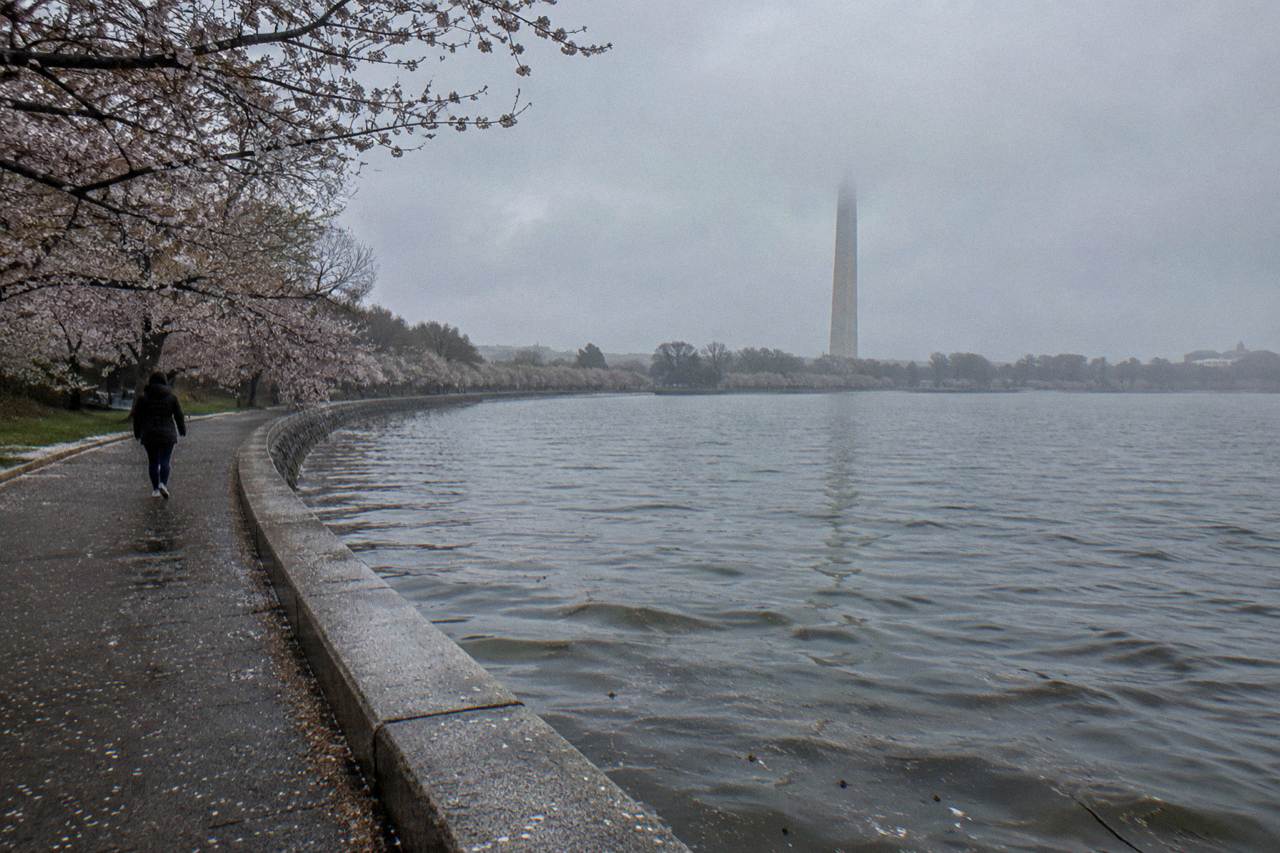
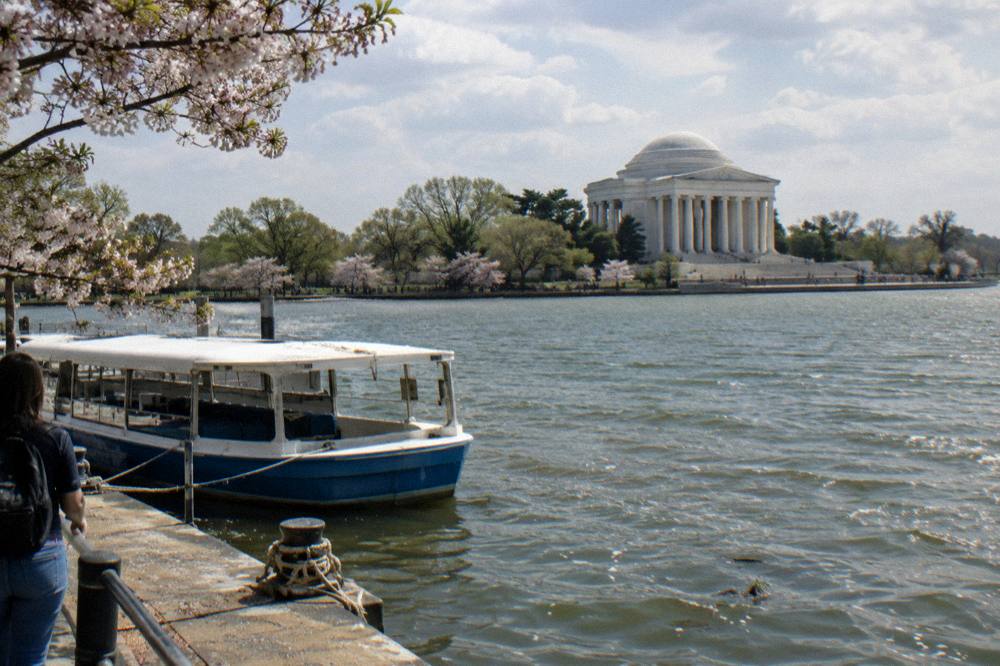
Peak bloom typically lands in the last week of March to the first week of April: in 2026 the National Park Service recorded peak bloom on March 26, when 70 percent of Yoshino blossoms were open. Blossoms usually hold about seven to ten days once open. The 2027 National Cherry Blossom Festival runs March 20 to April 11, and no peak-bloom forecast for 2027 has been published yet.
That is the honest version of the blossom pitch: the window is real but narrow, and it moves with the weather. The National Park Service tracks the trees on its Bloom Watch page, which is the only source worth watching once late February arrives, because forecasts begin then and shift with each warm or cold snap. The festival dates are fixed a year ahead; the trees answer to no calendar.
The key dates in one place:
| Blossom milestone | Date or window | Source character |
|---|---|---|
| Typical peak bloom window | Last week of March to first week of April | Long-running pattern |
| 2026 peak bloom | March 26, 2026 (70 percent of Yoshino trees open) | Confirmed bloom record |
| Blossom duration once open | About 7 to 10 days | Weather-dependent estimate |
| 2027 festival dates | March 20 to April 11, 2027 | Published festival calendar |
| 2027 peak bloom forecast | Not yet published | Forecasts typically begin late February |
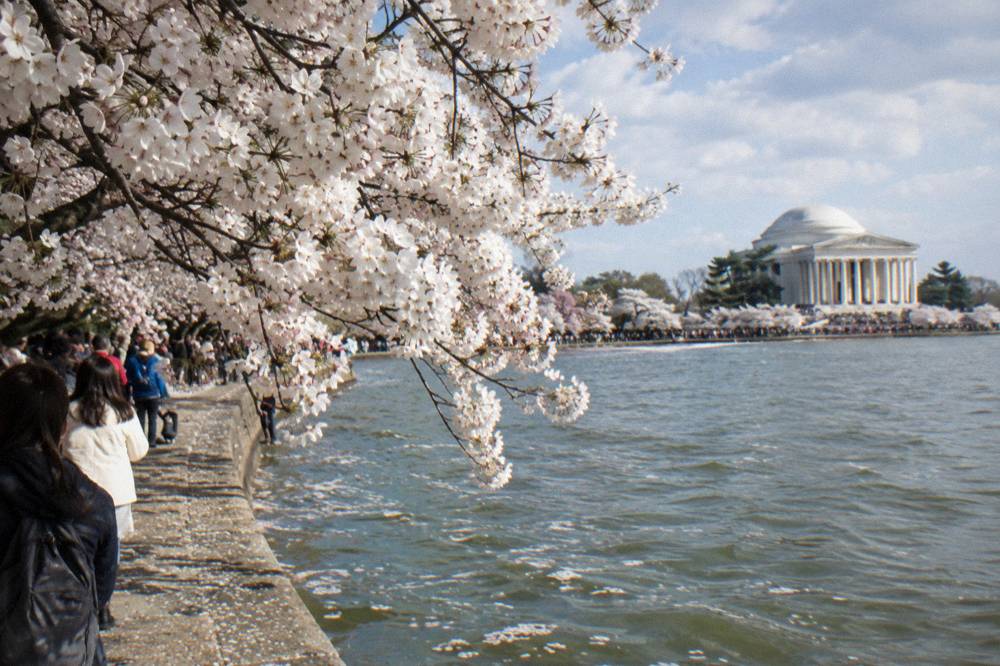
For cyclists the bloom week is a genuine spectacle and a genuine crowd problem. The Tidal Basin paths, the very lanes a bike tour wants to use, carry the densest pedestrian traffic of the entire year during bloom, and the seawall reconstruction project kept that area closed through the 2026 festival. No bloom-specific cycling restrictions have been confirmed for 2027, but assume slow, careful riding around the water and check the park notices before you go.
The workaround is timing and route. A guided blossom ride earns its keep precisely in this window: the guide picks the quieter approaches, and the listing states a two-hour format built around the trees. The budget-priced cherry blossom ride runs two hours on classic bikes, while the alternative version offers an e-bike option for the same two-hour window; both are spring-only products, so if your trip misses bloom week entirely, the standard monuments rides take over as the better fit. Our longer guide to cherry blossom season by bike goes deeper on where the trees actually are.
One more blossom nuance worth knowing: the week after peak bloom can be lovelier than peak itself. Petals come down in drifts, crowds drop by half, and the paths open back up. If your dates are flexible to the day rather than the week, watching Bloom Watch and riding two or three days past the announced peak is the insider move.
How Hot Is Summer Riding On The National Mall?
July averages a high of 89.6 degrees with an overnight low of 72.4, and June and August sit just below that, so summer rides around the Mall are morning or night propositions rather than midday ones. Rain falls on roughly 5.6 to 6.7 days per month, usually as short heavy storms rather than all-day drizzle. Humidity, not temperature alone, is what drains riders.
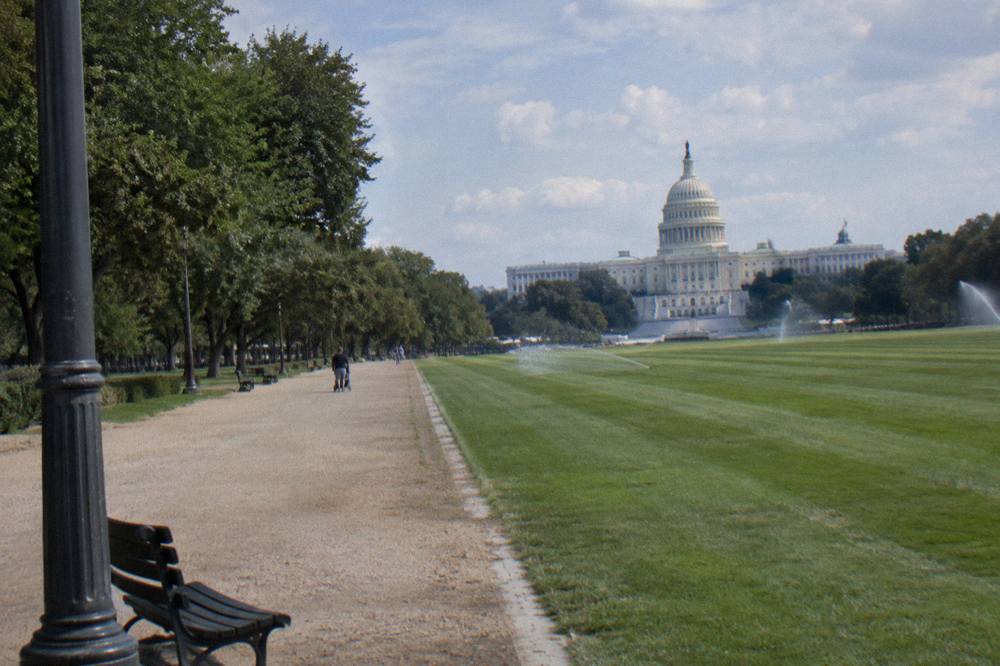
The Mall itself amplifies the heat. Long sightlines, gravel and stone, and a shortage of shade between the Capitol and the Lincoln Memorial mean an 89.6 degree afternoon feels hotter on the ground than the airport reading suggests. Fountains and the occasional misting spot help, but the practical answer is to move the ride. Guided night monuments rides exist for exactly this reason: the operator page for one describes roughly three-hour evening rides with seasonal start times, 18:30 from April through October and 16:30 from November through March, with stops at the lit memorials.
The night format flips the summer problem entirely. Memorials on the Mall are lit after dark, car-free paths are recommended by the local bikeshare system for evening visits, and a 72.4 degree July evening beats an 89.6 degree afternoon by any measure. The trade is depth of view: you see the monuments as lit architecture rather than in daylight detail, and the World War II memorial in particular reads beautifully under its fountain lighting, which the National Park Service modernized in 2026 with new in-fountain and exterior fixtures for night visibility.
If your summer dates are locked and daytime is the only window, treat the ride as an early-morning errand. Start at sunrise-adjacent hours, finish before the thermometer crosses the mid-80s, and bank the afternoon for the air-conditioned Smithsonian museums that line the Mall. Riders comparing the self-guided bikeshare route against a guided product in that heat should read our comparison of Capital Bikeshare or a guided ride, since a day pass costs $10 per 24 hours with classic rides free for the first 45 minutes, then $0.05 per minute, while e-bikes run $0.15 per minute on the same pass.
What About Fall Color And October Crowds?
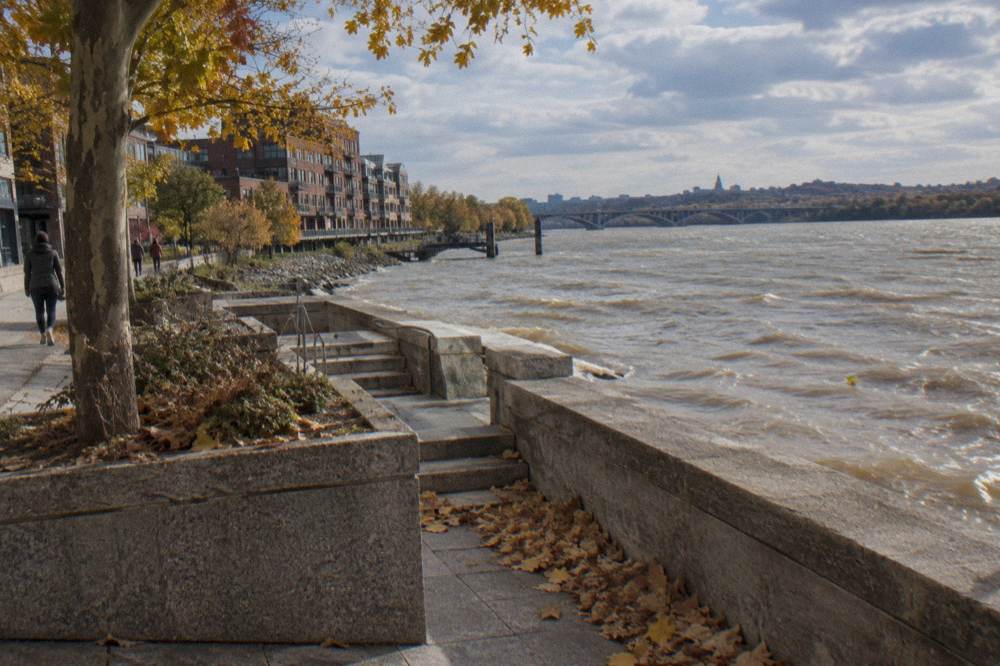
October is statistically the best riding month of the year in Washington DC: an average high of 69.4 degrees, the lowest rain-day count in the normals table at 4.9, and crowd levels far below spring. Early November stays nearly as good at 58.2 degrees before the light and the leaves give out. Fall color around the Mall and the Potomac riverfront typically peaks in late October into early November.
Fall rewards the patient planner. The school-trip wave that fills the Mall in April is gone, hotel rates soften after summer, and the riding surfaces that were shimmering in July go comfortable again. The Potomac-side paths, East Potomac Park and the riverfront toward Georgetown, carry their best color late in the season, and an e-bike makes a longer loop from the Mall toward the river a realistic half-day plan rather than an endurance test.
The guided options that fit fall best are the long ones. The three-hour e-bike loop of the National Mall and Tidal Basin covers the most ground per hour of effort, which matters when daylight shortens: an October sunset lands early enough that a late-afternoon start finishes in the lit-monument window, effectively giving you two rides in one. There is also a four-hour e-bike version that starts from Bethesda and rides in toward the monuments, a good pick if you are staying in Maryland rather than downtown.
For families, fall is the easiest sell of the year. Children ride comfortably in the 58.2 to 69.4 degree range that October and November deliver, the helmet requirement for under-16s is a five-second routine rather than a heat argument, and the family-friendly private ride format lets you set the pace and the stops. Our guide to family bike rides in DC with kids matches ages to formats in more detail.
Is Winter Biking In Washington DC Worth It?
Yes, for a specific kind of ride: winter around the Mall is cold, quiet and dramatically lit, with January averaging a 44.8 degree high and a 30.1 degree low on about 5.7 rain days. The park stays open 24 hours, so winter's best product is the evening monuments ride, when the Lincoln, Korean War and Vietnam memorials carry almost no crowds at all. Expect wind off the Potomac and dress in layers.
The case against winter is comfort, not access. Every path, every rack and every monument remains reachable, and the memorials that feel like an obstacle course in April feel like yours alone in February. Snow does fall occasionally and clearing varies, so check conditions on the day; rain-day counts of 5.0 to 6.4 per month from November through February mean most winter days are dry, just cold. For an easy winter route built around the quietest stops, the guide to the big three memorials and how to bike between them tells you what each one is and what to check before you roll out.
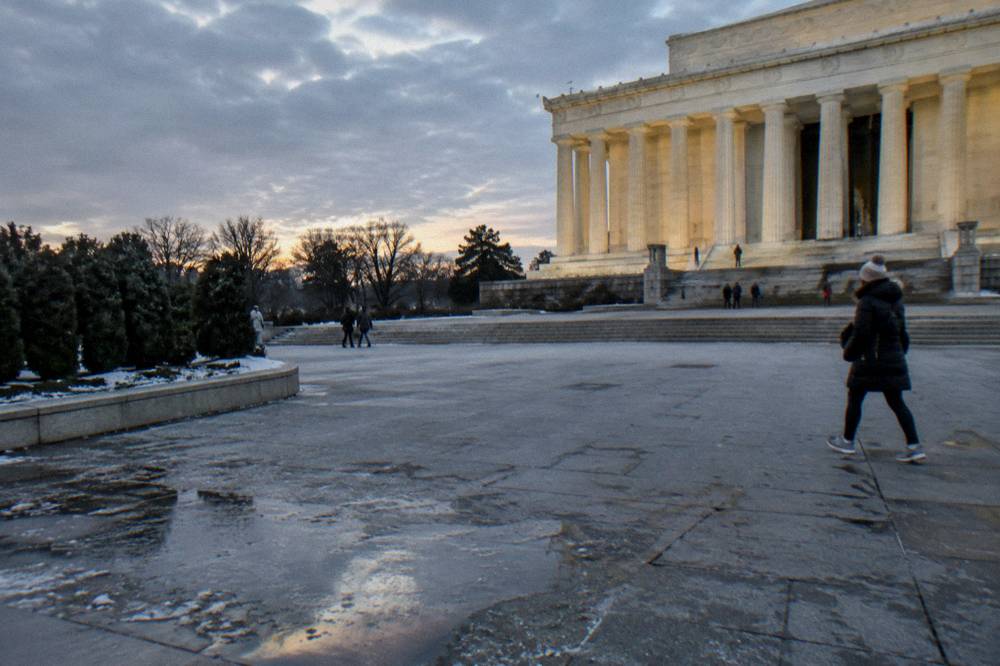
Winter is also when the night ride format does its best work. The 16:30 winter start time reported on the operator's page for the Monuments at Night tour means you roll out at the edge of dusk and ride fully dark streets within half an hour, which in July would require waiting until 20:30. A private night version adds pickup and a two-and-a-half to three-hour window for travelers who want the loop to themselves; our guide to private and small-group rides in Washington DC covers when the premium pays off.
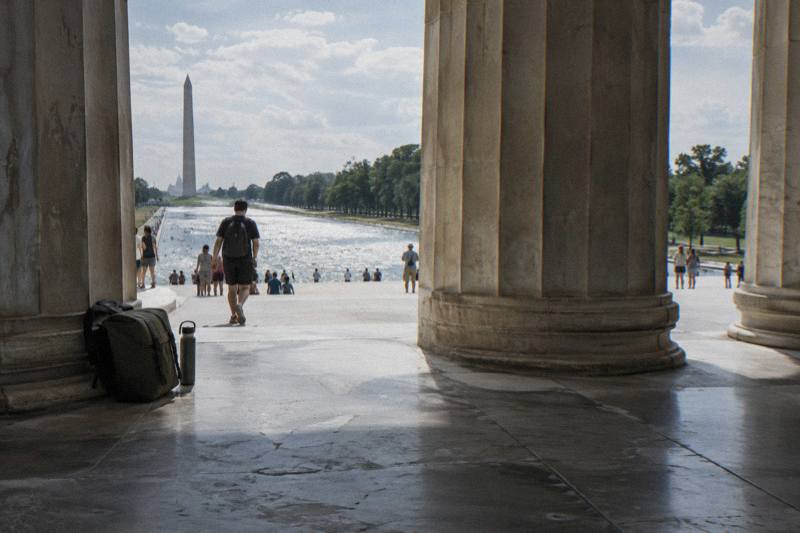
One closure note colors this winter specifically. The Lincoln Memorial Reflecting Pool, its adjacent walkways and the grass medians are closed for repairs through 20 November 2026 at 11:59 p.m., and the Washington Monument grounds' west side is closed through 23 January 2027 for turf restoration. Neither shuts the Mall, but both reshape the classic loop, so check the park service notices for the latest status before you route a ride around them.
Which Guided Ride Matches Each Season?
Spring blossom weeks call for the two-hour cherry blossom rides; April, May, September and October fit the three-hour monuments rides best; summer points to the evening monuments format; winter favors the early-start night ride or a private loop. The e-bike tours earn their premium in summer and on longer fall loops. Format, not price, is the seasonal variable: every shared ride covers the same core monument set.
The full seasonal match, using only what the listings state about duration, bike type and format:
| Season | Best-fit format | Rides that fit | Why it fits |
|---|---|---|---|
| Late March to early April (bloom) | Two-hour blossom ride, classic or e-bike | Cherry Blossom ride (classic), Cherry Blossom with e-bike option | Built around the trees; short window before crowds build |
| April to May | Three-hour day monuments ride, classic or e-bike | 3-Hour Monuments Bike Ride, Monuments Ride with E-Bike Upgrade | Comfortable temperatures carry a full three-hour loop |
| June to August | Evening monuments ride | Night Monuments rides (3 hours, classic) | Sunset start beats the summer afternoons |
| September to October | Three-hour day ride or e-bike loop | 3-Hour Monuments Ride, National Mall and Tidal Basin E-Bike Tour | Best weather of the year; e-bike stretches the range |
| November to February | Early-start night ride or private loop | Night Monuments ride, private night ride with pickup | 16:30 start matches early dusk; thin crowds |
The backbone choice in that table is the classic three-hour Monuments Bike Ride, which Bike Tours Washington DC features across seasons because its day slot works in nine months of the year. Its sibling listing offers a bike or an e-bike option on the same route, so the electric decision can be made closer to the date when you know the forecast. Meeting points, inclusions and current pricing sit on the booking page for each ride, and the private rides are priced per group rather than per person, so read the basis before comparing.
Two timing questions close the plan. First, book the blossom-window rides early: those products exist for roughly three weeks a year and the good slots go first. Second, remember that every ride here is weather-exposed, and operators' cancellation terms, which the booking page states, matter most in the two shoulder seasons when a storm can arrive on any of five or six days a month.
Common Questions About Biking Seasons In Washington DC
What Is The Best Month To Bike In Washington DC?
October, on the numbers: an average high of 69.4 degrees, the lowest rain-day count of the year at 4.9, and far lighter crowds than spring. Mid-April through early May is a close second, with highs near 68.0 and fresh post-bloom greenery on the Mall.
When Do Cherry Blossoms Bloom In Washington DC?
Peak bloom typically falls in the last week of March to the first week of April. In 2026 the National Park Service recorded peak bloom on March 26. The 2027 festival runs March 20 to April 11; no 2027 peak-bloom forecast has been published yet, and forecasts generally begin in late February.
Is Summer Too Hot For A Bike Tour In DC?
Midday often is: July averages an 89.6 degree high. The summer answer is the evening monuments format, a roughly three-hour ride that starts around 18:30 in the warmer months and rides the lit, car-free paths after the heat breaks.
Can You Bike The National Mall In Winter?
Yes. The park is open 24 hours and bicycles are welcome year-round. January averages a 44.8 degree high, so layers and gloves matter, and the early winter sunset makes the lit memorials the main event rather than an afterthought.
Are Any Areas Of The Mall Closed Right Now?
The Lincoln Memorial Reflecting Pool and adjacent walkways are closed through 20 November 2026, and the Washington Monument grounds' west side is closed through 23 January 2027 for turf restoration. Check the National Park Service notices before routing a ride around either area.