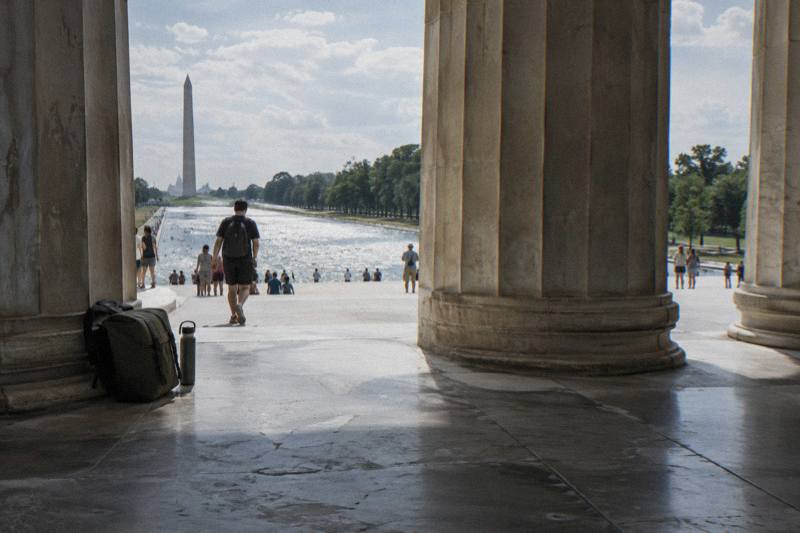
Helmets And Bike Rules On The National Mall
DC keeps its bicycle rules simpler than most visitors expect: helmets are a legal requirement only for riders under 16, the National Mall welcomes bicycles around the clock, and riding inside the memorials themselves is off limits. Here is what the law and the park service actually say, and how a guided ride handles the details for you.
Short answer
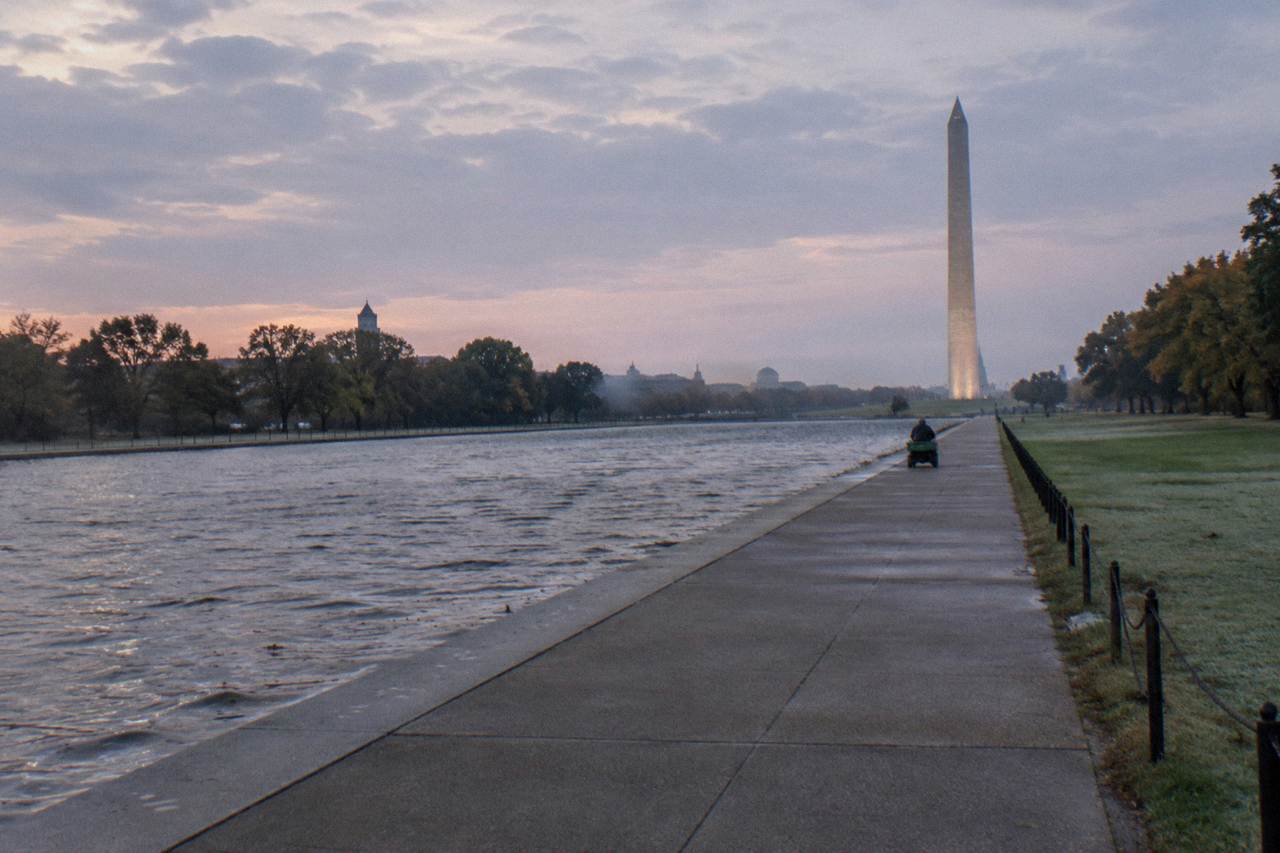
Helmets are required by DC law for anyone under 16 riding on a public roadway, path or right-of-way. Bicycles are welcome throughout National Mall and Memorial Parks, which stay open 24 hours, but riding inside the memorials is not permitted. A DC motorized bicycle cannot be propelled by its motor faster than 20 mph on level ground.
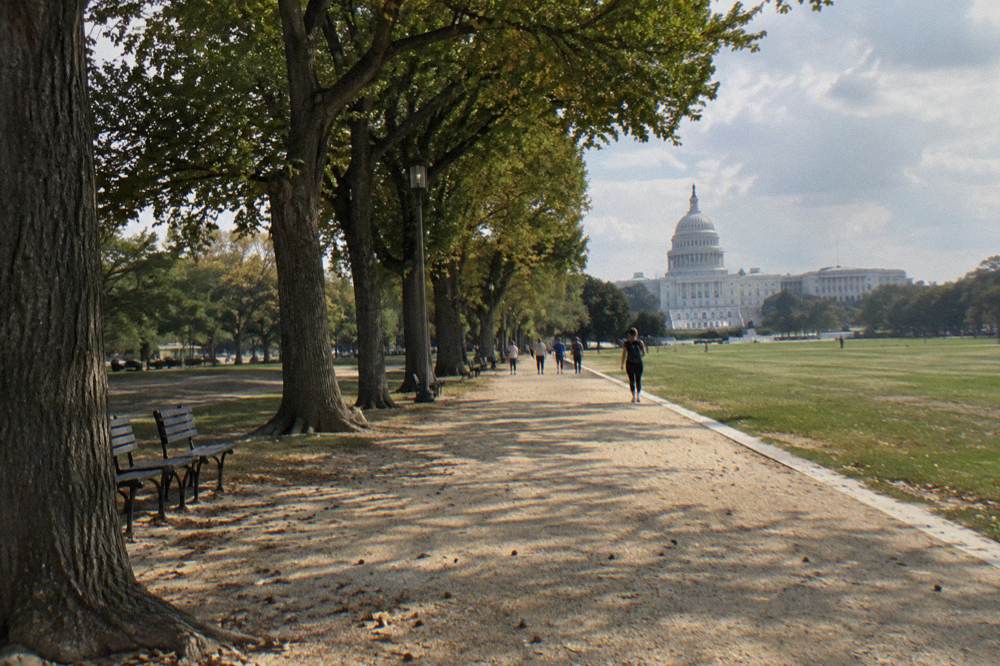
Washington DC is one of the most bicycle-friendly capital cities in the United States, and the reason is largely geographic: the National Mall and Memorial Parks form a long, mostly car-free corridor where bikes, pedestrians and joggers share wide paths from the Capitol grounds to the Lincoln Memorial. The National Park Service states plainly that bicycles are welcome in National Mall and Memorial Parks, that the park is open 24 hours a day, and that bicycle parking is provided near each major memorial. That combination, open all day, welcoming to bikes, parking at the sights, is unusual among big-city parks and it shapes everything about cycling here. Because you can ride straight from your lodging to those paths, picking the right base matters, and our guide to choosing a neighbourhood near the Mall for a cycling trip covers which areas put you closest to the best ride starts.
The rules still matter. DC has its own bicycle statutes, the Park Service has its own regulations for the memorials, and the two layers do not always overlap the way visitors assume. This guide walks through the helmet law, where you may and may not ride on the Mall, the sidewalk question, the legal definition of an e-bike in the District, the traffic rules that apply to cyclists, and the closures worth checking before any ride. Where a detail is genuinely unsettled or unpublished, it says so rather than guessing.
Is A Helmet Required For Biking In Washington DC?
DC law requires a securely fastened helmet for any person under 16 who operates a bicycle, or rides as a passenger, on a public roadway, public bicycle path or other right-of-way. Parents and guardians may not knowingly allow a child under 16 to ride without one. Riders 16 and older have no legal helmet requirement in the District, though operators and common sense both make a strong case anyway.
The statute is specific about the young-rider duty. It is not enough that a helmet happens to be in a backpack; DC Code requires it to be securely fastened, and it extends the duty to parents and guardians who knowingly permit an unhelmeted child to ride. For a family visiting with kids, this is the single rule to internalize before renting anything. The full text lives at the DC Council's code section on bicycle helmets.
For adults, the choice is personal and legal at the same time. No DC statute compels an adult to wear a helmet, and you will see plenty of commuters on the Mall paths without one. Guided tour operators generally supply helmets with their rides and encourage their use, and many riders take them simply because they are already included in the price. If you are riding with children, check before booking that child helmets are available in the right sizes; the booking page for any ride on this site will state what is included.
One nuance worth knowing: the law applies on public roadways, public bicycle paths and other rights-of-way. The Mall's shared paths are public bicycle paths in exactly this sense, so the under-16 rule fully applies on them, not just on streets.
| Rider | Legal helmet requirement in DC | Practical note |
|---|---|---|
| Child under 16, riding | Required, securely fastened | Parents can be cited for knowingly allowing a violation |
| Child under 16, passenger | Required, securely fastened | Applies to bike seats and trailers on public paths |
| Adult 16 and older | Not required by DC law | Most guided rides include a helmet in the price |
Where Are You Allowed To Ride A Bike On The National Mall?
Bicycles are welcome throughout National Mall and Memorial Parks, which the Park Service keeps open 24 hours a day, with bicycle parking near each major memorial. The firm exception is the memorials themselves: riding a bicycle inside them is not permitted, and at the World War II and Franklin Delano Roosevelt Memorials you are asked to walk your bike through. If you are weighing two wheels against two feet, our guide to walking the National Mall in one day compares how walkers and riders each handle the distances between the monuments.
That combination, broadly welcome with a specific carve-out, comes straight from the Park Service's own bicycling information page at nps.gov bicycling guidance for the Mall. In practice it means the long mall paths, the loop around the Tidal Basin side streets and the riverside routes are all fair game, while the polished granite terraces of the memorials are walking zones. The rule exists for good reason: the memorial plazas are crowded, often wet, and full of reflective surfaces that were never designed for wheels.
The walk-through instruction at the World War II and FDR Memorials is worth flagging because both sit directly on popular cycling lines. Rather than detouring around them, riders can push the bike through and keep the stops on their route. At every other memorial the cleaner move is to use the provided bicycle parking before entering, which the Park Service places near each major memorial precisely so locking up takes a minute rather than a detour.
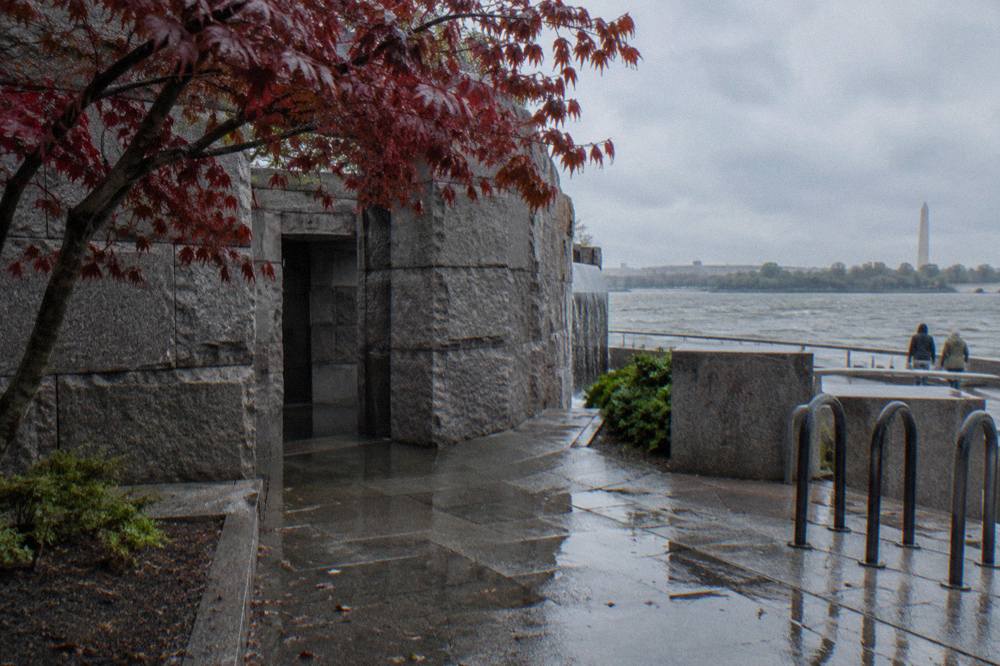
For visitors who would rather not memorize any of this, a guided ride solves the problem structurally. The 3-Hour Monuments Bike Ride is built around exactly this rule set: a guide leads the group along the legal lines, parks the bikes where parking belongs, and walks everyone through the memorials that require it, so the regulations become the route rather than a constraint on it. The same logic applies across the family of shared rides, from the 2-Hour Capitol Hill Ride on the east end to the Monumental E-Bike Ride for riders who want the full Mall with motor assistance. If the rule-keeping itself sounds like work, that is the strongest argument for a guide.
What Are The Sidewalk Rules For Cyclists In DC?
Sidewalk riding rules in DC vary by location, and the details are governed by District regulations administered by the Department of Transportation. Riders should check DDOT's bicycle laws page for the block-level specifics; on the National Mall itself, the shared paths are the intended and legal riding surface, so the sidewalk question rarely arises there.
The honest answer on sidewalks is that the specifics are genuinely localized, so check DDOT's current sidewalk rules The safe general framing: outside the Mall corridor, treat sidewalks as ambiguous, ride slowly where you use them, yield to pedestrians without exception, and consult DDOT's official bicycle laws page for the current rules in the block you plan to ride. Inside National Mall and Memorial Parks the question mostly dissolves, because the park provides broad multi-use paths that are legal and comfortable for cycling, so there is little reason to be on a sidewalk at all.
Pedestrian priority is the through-line of every version of the rules. On shared paths, slower traffic keeps right, faster traffic announces before passing, and memorial plazas at busy hours function as pedestrian space regardless of what the surface looks like. Riders who internalize one habit, slow down and give room when it is crowded, will stay on the right side of every rule that matters.
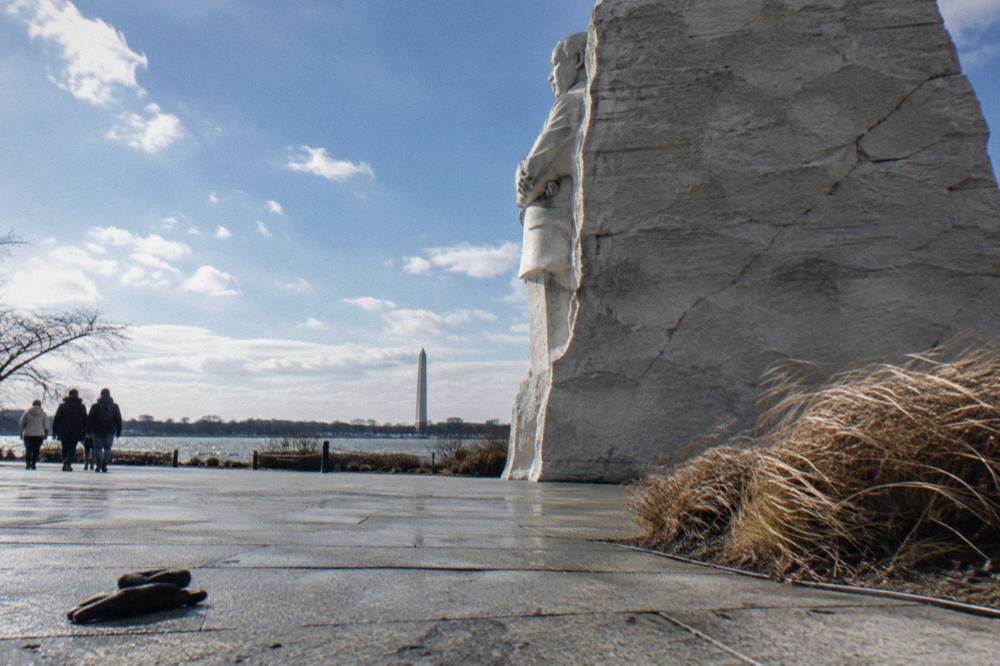
A short guided ride is a low-stress way to learn the local etiquette before exploring on your own. The Easy Capitol Hill Highlights ride covers a compact 2-hour loop on the east end of the Mall where path discipline is easiest to absorb, and its meeting point is listed on the live booking page, so check the details before you set out. Many visitors take one guided loop on day one and ride solo with confidence on day two.
What Counts As An E-Bike Under DC Bike Laws?
DC law defines a motorized bicycle as a two- or three-wheeled vehicle with wheels at least 16 inches in diameter, a post-mounted seat, fully operative pedals, and a motor incapable of propelling the vehicle faster than 20 mph on level ground. If the motor can push it beyond 20 mph under its own power, it is not a motorized bicycle under District law.
The definition matters more than it first appears. Because the vehicle must have fully operative pedals, DC's category describes what other places would call a pedal-assist or throttle e-bike, not a scooter or moped. And because the motor's ceiling is measured on level ground, the law captures the machine's capability rather than how a rider happens to use it. The DC Council's definitional text is at the definitions section of the DC Code.
What no official page spells out matters just as much for planning a ride. DC's e-bike age limits, if any, have not been officially published yet, and claims about a formal class system should be treated with caution. The rule of thumb that holds up: an e-bike you pedal, with a motor capped at 20 mph, fits the District's motorized bicycle definition and is treated as a bicycle for practical purposes on park paths. Anything faster or anything without pedals is a different vehicle with different rules, and riders should verify its status before bringing it onto NPS land.
For visitors, the practical takeaway is that the e-bike options sold on this site, such as the Monumental E-Bike Ride and the e-bike version of the Monuments Ride, fall inside the pedal-assist world this definition describes. The booking page for each states the bike type and what is included, and that is the detail to confirm rather than the law itself.
What Traffic Rules Apply To Cyclists On DC Roads?
Cyclists on DC roads follow the same traffic laws as other vehicles, so obey signals and local rules, and check DDOT for current requirements. On the National Mall paths, the operative rules are shared-path etiquette, keeping right, yielding to pedestrians, and walking the bike through the World War II and FDR Memorials rather than riding through them.
Crossing from park path to city street is where the rules shift. On DC roadways, a bicycle is a vehicle for the purposes of traffic control, which means signals, one-way streets and traffic lights all apply. Riders moving between the Mall and, say, the Capitol Hill side or the Penn Quarter hotels will cross several signalized intersections, and the safest habit is to behave exactly as a car would: full stops, indicated turns, no filtering up the right side of a turning truck.
After dark, lights are the rule that matters most, and it is a rule of physics as much as law. Sunset in late October falls around 6 p.m., and the monuments are lit while the paths between them are not uniformly so. Riders using Capital Bikeshare at night should note that the system's e-bikes carry lights, a detail the operator highlights in its evening riding guidance. On a guided night ride the operator handles lighting as part of the equipment, which is one less thing to arrange in a hotel room.

| Situation | What applies | Source layer |
|---|---|---|
| Rider under 16 anywhere public | Helmet required, fastened | DC Code |
| Riding inside a memorial | Not permitted; walk the bike through at WWII and FDR | NPS rules |
| On DC roadways | Vehicle traffic laws: lights, signals, direction of travel | DC traffic code |
| After dark | Bike lights required; guided rides supply them | DC law and operator practice |
| E-bike with motor over 20 mph capability | Outside the motorized bicycle definition | DC Code |
When Is The Best Weather For A Rules-Compliant Ride?
The most comfortable riding months on the Mall by climate averages are April, May, October and early November, with normal highs from about 58 to 76.5 degrees and the year's lowest rain-day count in October. July and August bring normal highs of 89.6 and 87.8 degrees respectively, with roughly two-thirds of summer months seeing rain, which makes early morning or evening rides the smarter choice then.
These figures come from the NOAA 1991 to 2020 climate normals for Washington Reagan National Airport, which describe long-run averages rather than any forecast. April's normal high of 68 degrees and October's 69.4, against rain on roughly six and five days per month respectively, explain why the guided-tour calendar is densest in those windows. The cherry blossom window, typically the last week of March into the first week of April, adds crowds to that pleasant weather, and riders should expect shared paths at their busiest then.
| Month | Normal high | Normal low | Rain days |
|---|---|---|---|
| March | 56.5 | 38.6 | 6.5 |
| April | 68.0 | 48.4 | 6.4 |
| May | 76.5 | 58.0 | 7.3 |
| June | 85.1 | 67.5 | 6.5 |
| July | 89.6 | 72.4 | 6.7 |
| August | 87.8 | 71.0 | 5.6 |
| September | 80.7 | 64.1 | 5.8 |
| October | 69.4 | 52.2 | 4.9 |
Short autumn days push more riding toward dusk, and that is when the monuments transition to their lit, quieter selves. The Night Monuments ride with an English-speaking guide runs about 3 hours through exactly this transition, and its equipment includes the lighting a solo rider would have to arrange personally. For anyone whose schedule lands them in DC between November and March, an evening guided ride is also the warmest way to see the memorials, since you keep moving and finish near a Metro line.
What Closures Should You Check Before Riding The Mall?
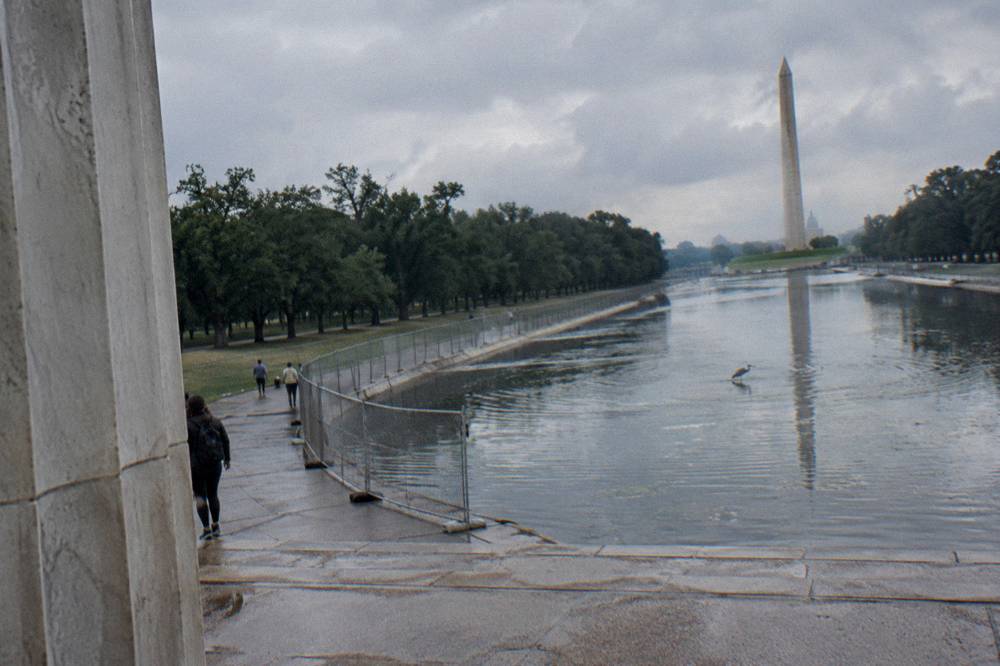
Two closures were in force at the end of October 2026: the Lincoln Memorial Reflecting Pool, its adjacent walkways and grass medians are closed until 20 November 2026, and the west side of the Washington Monument Grounds is closed through 23 January 2027. Both are posted as public notices, and the Park Service's closure pages are the authoritative check before any ride. Both closures affect stops on the classic monument loop, so check our guide to the must-see memorials on the National Mall before you map your route.
The Reflecting Pool closure is the one most likely to reshape a route, because the pool and its walkways sit on the natural line between the Lincoln Memorial and the World War II Memorial. The official notice on the Lincoln Memorial Reflecting Pool closure sets the end date and lists the affected areas, and extensions have happened before, so read the notice itself rather than a summary. The Washington Monument grounds work is a turf restoration on the west side through late January 2027; the monument itself, at 555 feet 5 1/8 inches tall, remains the Mall's anchor sight, and the closure affects lawn area rather than the full grounds.
Event closures are the second category, and they are frequent on a national stage. In 2026 alone, Independence Day security zones closed large parts of the Mall in early July, a race event closed roads in late October, and overnight work closures touched Maine Avenue and East Basin Drive near the Tidal Basin. None of these are predictable from a calendar alone. The habit that protects a ride is a two-minute check of the park's public notices the morning you ride, which guided tours effectively do for you since operators reroute around active closures as a matter of course.
| Closure | Area affected | In force until |
|---|---|---|
| Lincoln Memorial Reflecting Pool | Pool, adjacent walkways, grass medians | 20 November 2026, 11:59 p.m. |
| Washington Monument Grounds, west side | West turf area of the grounds | 23 January 2027 |
| Event and security closures | Varies: Mall roads, monument grounds | Posted per event by NPS |
Do Guided Rides Handle The Bike Rules For You?
Yes, and that is a large part of what you are buying. A guided ride supplies a legal bike and helmet, plans the route on paths where riding is permitted, parks or walks bikes at the memorials correctly, and reroutes around closures. Riders under 16 still need the helmet fastened, but every other rule-keeping decision moves to the operator.
Consider what a rider would otherwise assemble alone: a bike that matches DC's definitions, lights for anything after dusk, a route that respects the walk-through memorials, current closure knowledge, and parking judgment at each stop. A shared guided ride bundles all five. The 3-Hour Monuments Bike Ride, a classic-bike shared tour of the monuments and memorials, is the most direct example on this site: the guide sets the line, the pace and the stops, and the equipment arrives with the ride. Check availability on its booking page for current start times and what is included.
The same holds across formats. Private rides let a family set the distance while the operator still handles the legal layer, e-bike versions add the motor within the pedal-assist definition, and night versions fold lighting and sunset timing into the package. Bike Tours Washington DC exists because that division of labor is genuinely valuable in a capital city with layered rules.
Riders who prefer independence can still borrow the guided approach piecewise: rent from a shop that supplies helmets and lights, plan around the shared paths rather than sidewalks, and read the Park Service notices the same morning. The Mall's 24-hour access and the parking racks at every major memorial make self-guided riding genuinely easy once the rules are clear, and the fuller path network is covered in bike lanes and trails across Washington DC. For riders weighing the shared-bike system against a guided loop, the comparison in Capital Bikeshare or a guided ride works through the costs of each, and meeting-point logistics are mapped in where to meet for a ride near the Mall.
Common Questions About Bike Rules In Washington DC
Is A Helmet Required For Biking In Washington DC?
Only for riders and passengers under 16, who must wear a securely fastened helmet on any public roadway, bicycle path or right-of-way in the District. Adults 16 and older are not required by law to wear one, though guided tour operators typically include helmets in the ride price.
Can You Ride A Bike Inside The Memorials On The National Mall?
No. Riding a bicycle inside the memorials is not permitted. At the World War II and Franklin Delano Roosevelt Memorials you walk the bike through; at the other memorials, bicycle parking is provided nearby and the expectation is to lock up before entering.
Is The National Mall Open For Cycling At Night?
Yes. National Mall and Memorial Parks is open 24 hours a day, and bicycles are welcome throughout. The monuments are lit after dark while the connecting paths are not uniformly lit, so lights on the bike matter for any evening ride, and guided night rides supply them as part of the equipment.
Are E-Bikes Legal On The National Mall Paths?
E-bikes that fit DC's motorized bicycle definition, with operative pedals and a motor incapable of propelling the vehicle faster than 20 mph on level ground, are treated as bicycles. The e-bike rides sold on this site use pedal-assist bikes within this definition. Age limits and class labels are not confirmed in official sources, so check the booking page for rider requirements.
Can You Ride A Bike On The Sidewalk In Washington DC?
Sidewalk rules vary by location in the District, and the specifics are administered by DDOT, so check its bicycle laws page for the area you plan to ride. On the National Mall itself the question rarely comes up, because the park provides broad multi-use paths that are the intended and legal surface for cycling.
What Closures Should Cyclists Check Before Riding The Mall?
Check the National Park Service public notices the morning you ride. As of late October 2026, the Lincoln Memorial Reflecting Pool and its walkways are closed until 20 November 2026, and the west side of the Washington Monument Grounds is closed through 23 January 2027, with event closures added around holidays and races throughout the year.