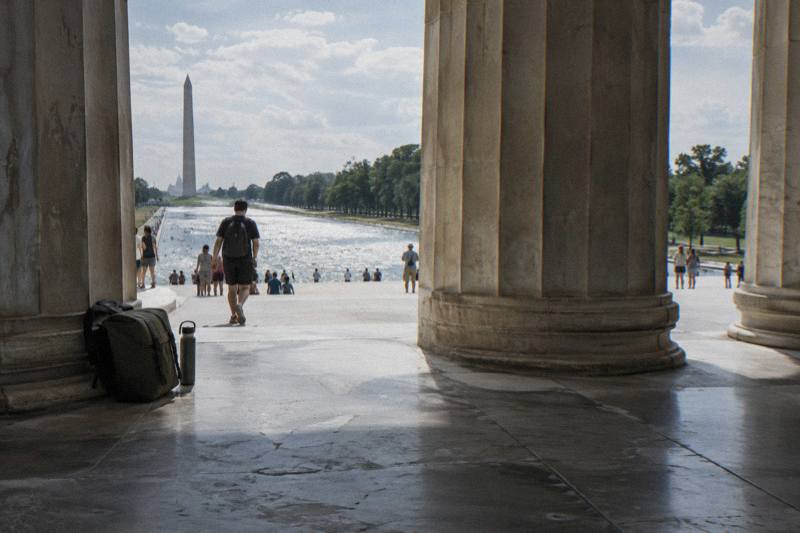
Where To Stay Near The National Mall For Cycling
A cyclist's guide to choosing where to sleep in Washington DC: which neighbourhoods sit closest to the Mall's ride starts, which Metro lines matter, where bikes can be parked, and what the seasons do to the decision.
Short answer
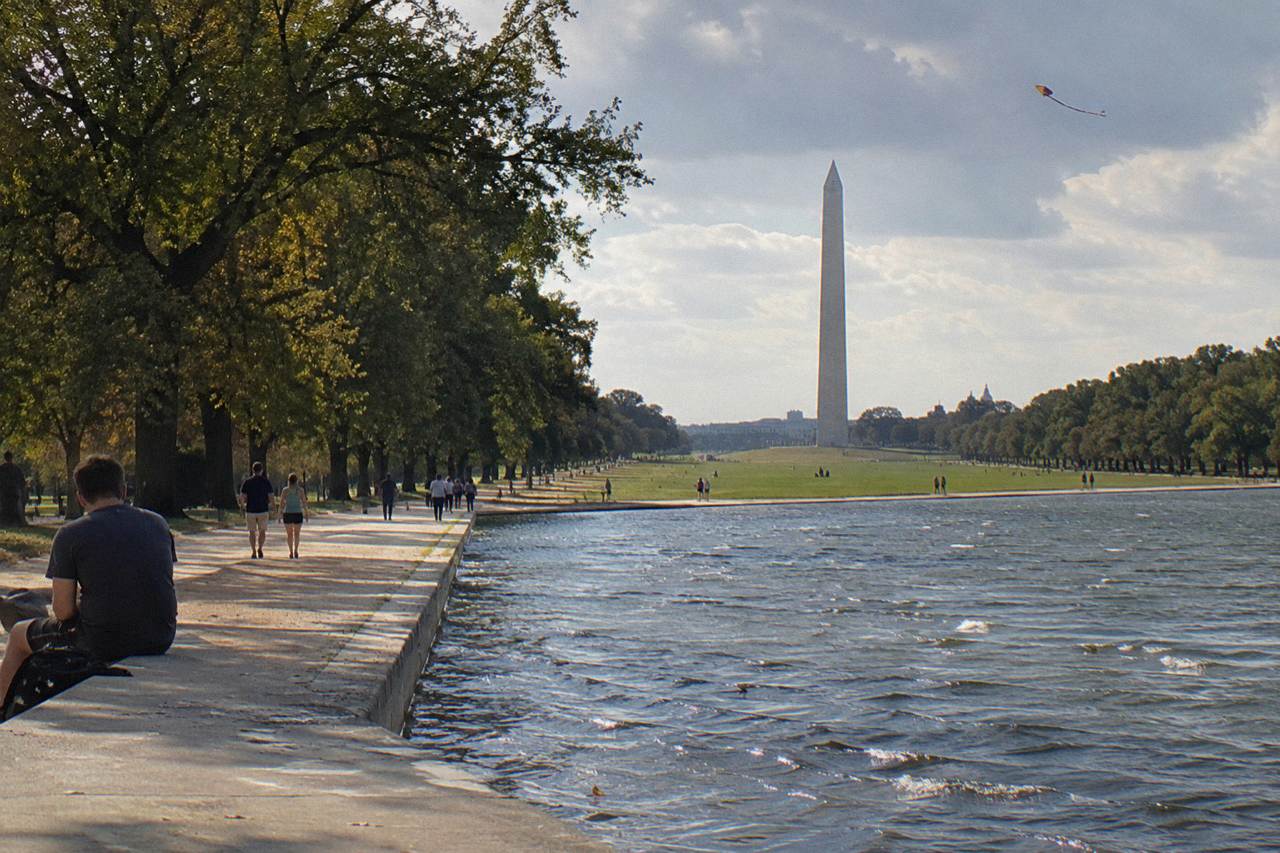
Staying within about a mile of the National Mall puts the Lincoln Memorial, the Capitol and the Tidal Basin inside an easy ride start. The park is open 24 hours, bike parking sits near each major memorial, and the Smithsonian, Federal Triangle and L'Enfant Plaza Metro stations all sit on the Mall's edge. Pick your base by which ride start and which season you want, not by landmark views.
Washington DC rewards travellers who sleep close to what they came to see. The National Mall and Memorial Parks stay open 24 hours a day, bicycles are welcome throughout the park, and bike parking is provided near each major memorial, which means a hotel on the Mall's edge turns the whole monument core into something you can reach in minutes rather than plan around. The question is not really "where to stay in Washington DC" but which side of the Mall, which Metro line and which season suit the riding you have in mind. This guide works through the decision the way a cyclist actually makes it.
Which Neighbourhoods Put You Closest To Ride Starts Near The National Mall?
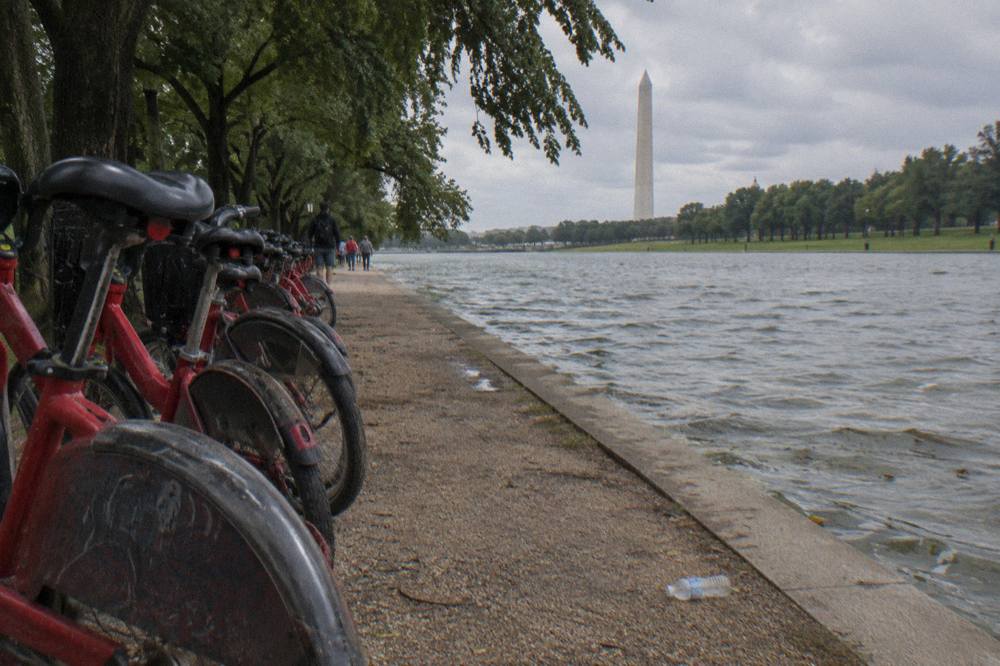
The most practical bases for a cycling trip are Downtown, Penn Quarter, Capitol Hill and the Southwest Waterfront, because each sits within easy reach of the Mall's memorial corridor and the meeting points the guided rides use. Georgetown works well for trail riders, while L'Enfant Plaza suits anyone prioritising the Tidal Basin and the south side. None of these requires a car once you arrive.
The guided rides on this site meet at points the operators name on their booking pages, and those points cluster around the Mall's edges rather than deep in the suburbs. A downtown or Penn Quarter base puts the White House area, the Smithsonian museums and the Washington Monument grounds within a short roll, and it puts the meeting points of the big shared monuments rides within walking or pedalling distance. The 3-hour Monuments and Memorials Bike Tour covers the core memorial corridor in a single loop; from a downtown room you can reach its start without a transfer, a bus or a car.
Capitol Hill flips the advantage east. The Capitol Hill rides, including the 2-hour Easy Capitol Hill Highlights tour, suit travellers who want the Capitol, the Library of Congress and the Supreme Court as their morning view and the Mall as their afternoon ride. Southwest Waterfront, on the Metro's Green line at Waterfront station, is the quiet sleeper option: it fronts the Tidal Basin's south side, which is exactly where the cherry blossom riding concentrates each spring, and it has grown a restaurant scene on the Wharf that a post-ride dinner actually deserves.
| Neighbourhood | Best for | Nearest Mall edge | Character |
|---|---|---|---|
| Downtown / Penn Quarter | First-time visitors, all-day monument rides | North side, Smithsonian to Archives | Hotels, dining, walkable everywhere |
| Capitol Hill | Capitol-area rides, quieter mornings | East end near the Capitol | Residential, political, calm at night |
| Southwest Waterfront | Tidal Basin, spring blossoms, evening dining | South side near the Tidal Basin | Newer hotels, Wharf district |
| L'Enfant Plaza | Monument access without downtown prices | South centre of the Mall | Office-quiet weekends, several stations |
| Georgetown | Trail riding, the Potomac riverfront | West, via the Rock Creek paths | Historic, no Metro station of its own |
The one thing to hold back from: Georgetown has no Metro station, and its cobblestones and crowds are better appreciated from a bike seat as a destination than as a daily base with panniers. For a fuller picture of the routes themselves, read the National Mall monuments bike route guide, which maps the stops in the order a ride actually visits them.
If you are torn between staying close and staying cheap, remember that the park never closes. A base one or two Metro stops out still lets you ride the monuments at 6 a.m. before the crowds or at 10 p.m. under the lights, then ride home. The distance penalty in DC is smaller than in most capitals because the whole monument core is compact and car-free paths run through it.
Which Metro Lines Serve Cyclists Staying Near The Mall?
The Blue, Orange and Silver lines run under the Mall's length with stops at Smithsonian, Federal Triangle and L'Enfant Plaza; the Yellow and Green lines cross at L'Enfant Plaza and serve the Waterfront and Archives stops. For a cycling trip, the Smithsonian and L'Enfant Plaza stations are the two that matter most, because they open directly onto the Mall and the Tidal Basin approaches.
The Metro matters less for the riding itself than for arrival and departure days. Bring a bike into the system outside rush hours, keep it with you rather than on a rack blocking doors, and you can land at Union Station, ride the Red Line one stop or simply pedal straight down Pennsylvania Avenue's protected lanes to a downtown hotel. Union Station is itself a reasonable base decision: it sits at the Mall's northeast corner, next to the Capitol grounds, with bike racks on the plaza.
| Metro line | Key stations for Mall cyclists | What it reaches |
|---|---|---|
| Blue / Orange / Silver | Smithsonian, Federal Triangle, L'Enfant Plaza | The Mall's length, Arlington Cemetery (Blue) |
| Green / Yellow | Archives, L'Enfant Plaza, Waterfront | Waterfront hotels, Gallery Place transfer |
| Red | Union Station, Metro Center | Arrival day, Union Station bike access |
Two practical notes from the operator side of the ledger. Capital Bikeshare, the region's public bike share, runs about 8,000 bikes across more than 800 stations in 8 jurisdictions, and its station at Jefferson Drive and 12th Street SW, on the Mall itself, was reinstalled in late October 2026 after years away, which restores a dock right in the monument core. The system is not free: a day pass costs $10 per 24 hours, with classic-bike rides free for the first 45 minutes and then $0.05 per minute, and e-bikes at $0.15 per minute. The full trade-off between docking a share bike and joining a guided ride with a bike and helmet included is laid out in Capital Bikeshare or a guided ride.
The three rides above span the formats most Mall-based travellers end up choosing: the classic 3-hour shared monuments loop, the same corridor after dark, and an e-bike version for riders who would rather flatten the distance. Which one suits your base best depends mostly on how you want your evenings to run, and on whether your hotel is close enough that a 3-hour riding block fits around dinner without a commute on either end.
Where Can You Park A Bike Near The Major Memorials?
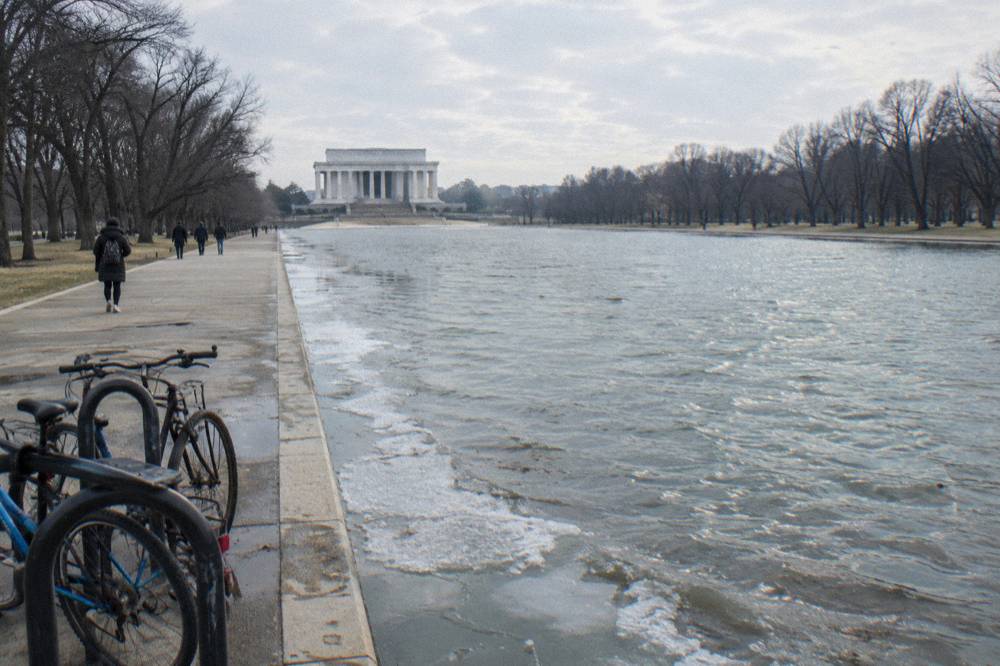
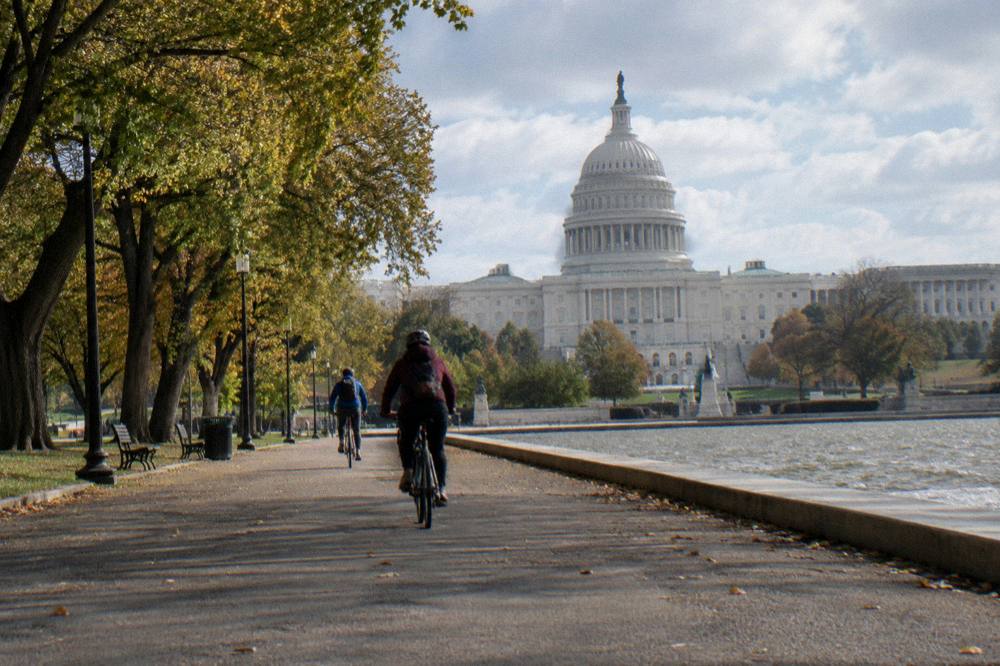
Bike parking is provided near each major memorial and along the Mall by the National Park Service, and riding inside the memorials themselves is not permitted: cyclists walk their bikes through the World War II and Franklin Delano Roosevelt memorials, and lock up before entering any other memorial. A hotel near the Mall therefore lets you ride to a memorial, lock up, and tour it on foot.
That single rule shapes the whole day more than any other. You do not pedal up to the Lincoln Memorial's steps; you lock up nearby and walk in, which is exactly how the guided rides operate too. The National Park Service's own bicycling page states plainly that bicycles are welcome in National Mall and Memorial Parks, with parking near each major memorial, and that riding within the memorials is off limits. Respect the rule and the rangers, and the park stays rideable for everyone.
For hotel-based riders, the implication is a lock-and-walk rhythm. Ride the corridor, lock at each stop, and carry what you need in a small bag rather than panniers you would have to unload every time. Helmets are required by DC law for anyone under 16 on a public roadway, path or other right-of-way, so families booking a hotel should check whether their ride includes helmets for children; the shared rides' booking pages list inclusions such as bikes and helmets, and the family rides are covered in detail in Family bike rides in DC with kids.
The details on rules, the walk-through requirements at the two named memorials, and what DC law says about e-bikes are collected in Helmets and bike rules on the National Mall. Read it before your first morning, not after a ranger has explained it to you.
How Do Seasons Change Where You Should Base Yourself In Washington DC?
Spring is the busy season and argues for a south-side base near the Tidal Basin; summer heat argues for a shorter walk between hotel and ride start, with early departures; autumn is the most comfortable riding window; winter is quiet, cheap and fully rideable since the park stays open 24 hours. The right neighbourhood shifts with the calendar more than with price.
The climate record for Washington Reagan National Airport gives the shape of the year. July averages a high of 89.6 degrees Fahrenheit with 4.33 inches of rain; January averages a high of 44.8 and a low of 30.1. October, by contrast, averages a high of 69.4 with the fewest rain days of any month, 4.9 on the 1991 to 2020 normals. Those are long-run averages, not forecasts, but they tell you when the riding is pleasant and when it is an act of will.
| Season | Avg high F | Avg rain days | What it means for your base |
|---|---|---|---|
| Spring (Mar-May) | 56.5 to 76.5 | 6.4 to 7.3 | Peak crowds at blossom time; south side wins |
| Summer (Jun-Aug) | 85.1 to 89.6 | 5.6 to 6.7 | Stay close to the start; ride early |
| Autumn (Sep-Nov) | 80.7 to 58.2 | 5.8 to 5.0 | Best overall riding; any base works |
| Winter (Dec-Feb) | 44.8 to 48.8 | 5.7 to 6.4 | Lowest prices; night rides start earlier |

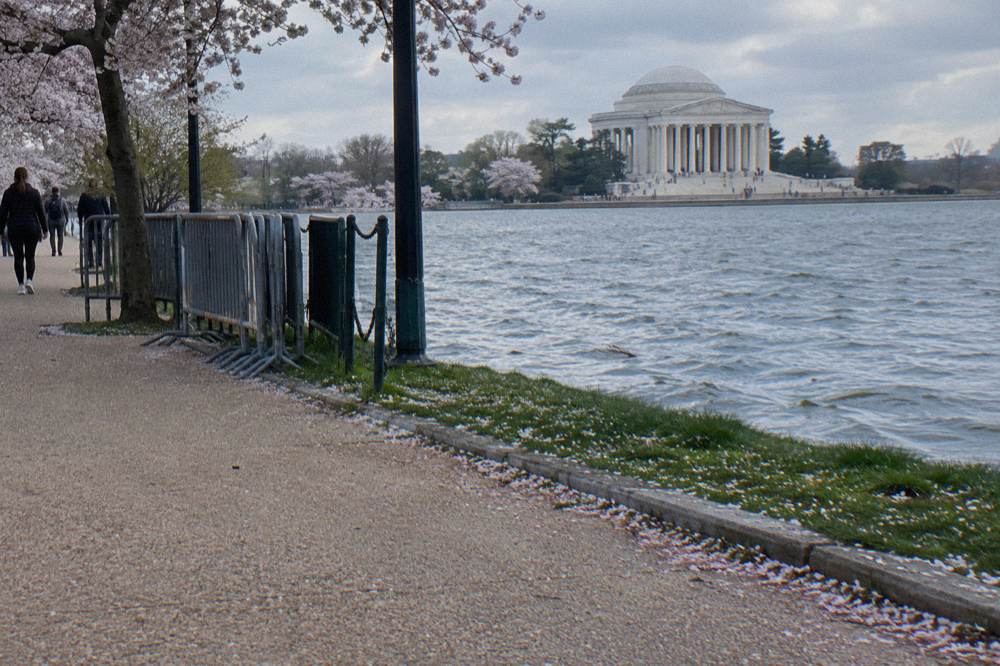
Spring deserves the most planning. The 2026 cherry blossom peak bloom was reached on March 26, 2026, with 70 percent of the Yoshino trees open at the Tidal Basin, and the typical window runs from the last week of March to the first week of April. The 2027 National Cherry Blossom Festival runs March 20 to April 11, 2027, and no peak-bloom forecast for 2027 had been published as of the end of October 2026, forecasts typically arrive in late February or early March. Book a spring hotel early, aim for the Waterfront or L'Enfant side to be closest to the Tidal Basin, and never plan around a promised bloom date, because there isn't one. The blossom rides, including the 2-hour Cherry Blossom Bike and E-Bike Tour, are the seasonal flagships; the timing question is covered in full in Cherry blossom peak bloom dates and timing.
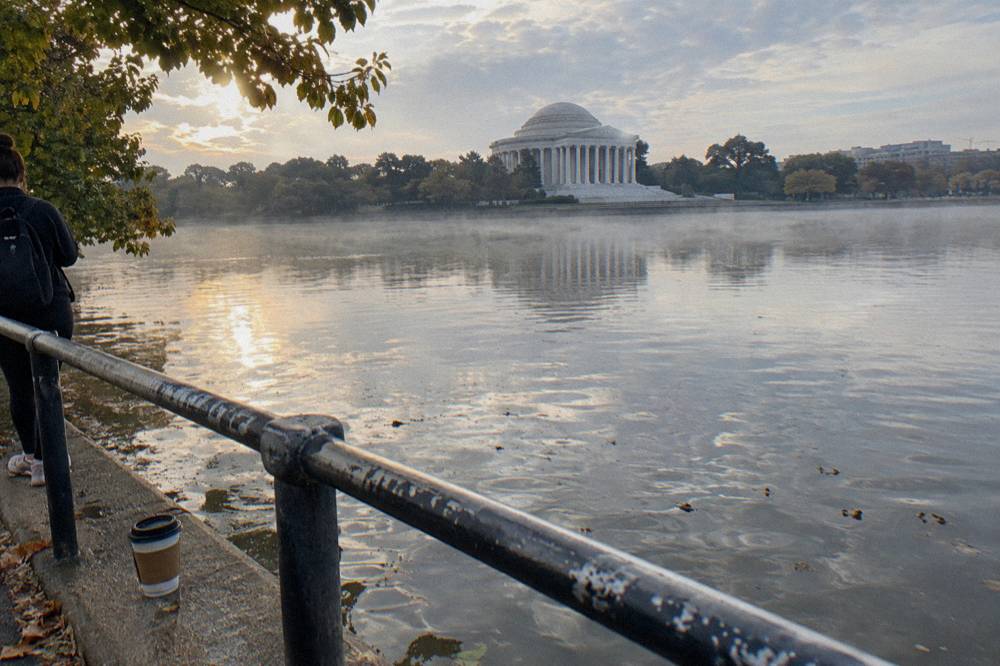
Summer riders should read the heat advice in Biking DC in summer heat before choosing between a 10 a.m. departure and the evening alternatives. The night-ride season has its own logic: sunset in Washington falls around 6:08 p.m. at the very end of October, and the National Park Service completed a lighting modernization at the World War II Memorial's fountain in 2026, so the lit-monuments corridor has become a stronger evening draw. One operator's Monuments at Night page describes roughly 3-hour guided rides with seasonal start times, from a meeting point on D Street NW; the shared 3-hour night monuments ride listed on this site is the booking-page version of that idea. The night ride past the DC monuments after dark guide covers the whole evening decision.
The Monuments at Night ride in its shared format suits a late-season base particularly well, because the earlier darkness of November through March means the lit memorial corridor arrives at a civilized hour:
What Does A Day Look Like From A Hotel Near The Tidal Basin?
A south-side base gives you the Tidal Basin, the Franklin Delano Roosevelt and Martin Luther King Jr. memorials, and the Jefferson Memorial within the first ten minutes of riding, then the whole Mall corridor north. From a downtown base the order reverses: monuments first, blossoms later, with the Lincoln Memorial end as the morning goal before the tour buses arrive.
Either way, the shape of the day is the same, and it is short. A 3-hour guided loop, a coffee beforehand, an hour walking through two or three memorials afterwards, and the day's core is done by early afternoon. That is why the hotel decision matters less than visitors fear: DC's riding core is compact, and every neighbourhood in the table above delivers you to it quickly. What the hotel really determines is what your non-riding hours look like, the dinner walk, the museum commute, the morning run.
For travellers pairing a monument morning with a Capitol afternoon, the Capitol Hill rides slot in naturally. The 2-hour Easy Capitol Hill Highlights tour, classic bikes, shared group, suits exactly that split day, and a Capitol Hill hotel makes it a walk-to-start:
One spring-specific note from the closure record: the Tidal Basin seawall reconstruction's first phase was completed early and under budget, with the project area and its paths closed through the 2026 festival for landscape stabilization and new tree planting, and reopening expected shortly after. The paths have since been part of the bloom-season landscape, but check current conditions on the Park Service's Tidal Basin pages if you are booking a spring 2027 stay, because landscape work at that site has moved dates before.
Which Closures Should You Check Before Booking A Stay Near The Monuments?
Two closures are in force as of late October 2026: the Lincoln Memorial Reflecting Pool, its adjacent walkways and grass medians are closed until November 20, 2026, and the Washington Monument grounds' west side is closed through January 23, 2027. Neither closes a hotel's usefulness, but both reshape rides on the west end of the Mall.
Neither closure is a reason to change neighbourhood, but both are reasons to check the National Park Service's public notices in the week before you travel, because DC's closure list changes month to month. Event-driven shutdowns are routine: Independence Day events closed large parts of the Mall and its roads from late June through mid-July 2026, an August 2026 race event closed Mall roads for two weeks, and October 2026 brought nighttime closures of Maine Avenue SW and Ohio Drive for bridge work. A rider staying nearby during any of those windows finds familiar paths fenced.
The practical habit is simple. Before booking the hotel, glance at the Park Service's notices for the Mall and Memorial Parks. Before each ride day, glance again. The closures rarely move a hotel decision, but they regularly change which side of the Lincoln Memorial your loop uses, and whether the reflecting pool view you pictured is behind a fence. The official bicycling information page for the National Mall is the standing reference for bike access rules, and the park's basic information page confirms the 24-hour access that makes early and late rides possible.
Which Guided Rides Start Within Reach Of Mall Hotels?
The shared rides that fit a Mall-based stay best are the 3-hour Monuments and Memorials Bike Tour, the 3-hour Monuments at Night ride, and the 3-hour Monumental Electric Bike Tour; all three are shared-group formats in the monument corridor, and their meeting points and inclusions are stated on each booking page. Longer options, like the 6.5-hour Mount Vernon day, suit trail riders rather than Mall-only stays.
For most first visits, the classic 3-hour monuments ride is the anchor booking, and its format is the reason: a shared group, classic bikes, the full memorial corridor, and a guide who handles the route and the timing. Riders staying downtown or at L'Enfant can treat its start as a short walk or roll; riders in outer neighbourhoods should check the meeting point on the booking page before booking the hotel, not after.
The e-bike alternative, also 3 hours and shared, flattens the same corridor for riders who would rather spend their legs on the walk through the memorials afterward. And the trails-beyond-the-Mall category, headlined by the 6.5-hour Alexandria and Mount Vernon bike-and-boat day, belongs to a different kind of stay, one based in Alexandria or at least willing to ride out along the Potomac; that trip has its own guide in Mount Vernon Trail by bike, Alexandria to Mount Vernon.
| Ride | Length | Bike type | Format | Best base |
|---|---|---|---|---|
| Monuments and Memorials Bike Tour | 3 hours | Classic | Shared | Downtown, Penn Quarter |
| Monuments at Night Bike Tour | 3 hours | Classic | Shared | Downtown, Waterfront |
| Monumental Electric Bike Tour | 3 hours | E-bike | Shared | Any Mall edge |
| Easy Capitol Hill Highlights | 2 hours | Classic | Shared | Capitol Hill |
| Alexandria: Mount Vernon Bike and Boat | 6.5 hours | Classic | Shared | Alexandria |
Prices and current inclusions for every ride above sit on the individual booking pages, and the comparison of what a guided ride costs versus renting or docking is worked through in How much does a guided bike ride cost in DC. The short version for hotel planning: a guided shared ride bundles the bike, the helmet and the route into one price, so your hotel does not need to be near a rental shop for the plan to work.
The final third of the decision is honestly about evenings. Washington's monument corridor is lit and rideable after dark, the night rides run around 3 hours, and a base that puts dinner and the ride start within a few blocks of each other is worth a premium in every season. Whether that means Penn Quarter for the restaurants, the Waterfront for the Wharf, or Capitol Hill for the quiet is a matter of taste; the cycling works from all of them, which is the quiet advantage of staying near the Mall at all. For everything else about riding the capital, Bike Tours Washington DC keeps the routes, the rules and the rideside decisions in one place.
Common Questions About Staying Near The National Mall For Cycling
Which Neighbourhoods Put You Closest To Ride Starts Near The National Mall?
Downtown and Penn Quarter sit against the Mall's north side and put the shared monument rides' meeting points within a short walk or roll. Capitol Hill serves the Capitol-area rides, and Southwest Waterfront fronts the Tidal Basin's south side, which is the spring blossom territory.
Which Metro Lines Serve Cyclists Staying Near The Mall?
The Blue, Orange and Silver lines run under the Mall's length with stops at Smithsonian, Federal Triangle and L'Enfant Plaza; the Green and Yellow lines cross at L'Enfant Plaza and serve the Waterfront. Smithsonian and L'Enfant Plaza are the stations that open directly onto the Mall.
Can You Ride Inside The Memorials In Washington DC?
No. Riding a bicycle inside the memorials is not permitted; cyclists walk their bikes through the World War II and Franklin Delano Roosevelt memorials and lock up before entering the others. Bike parking is provided near each major memorial.
Is The National Mall Open At Night?
Yes. National Mall and Memorial Parks is open 24 hours a day, and the memorials are lit after dark, which is why the roughly 3-hour guided night rides exist and why a hotel near the Mall extends your riding hours rather than just your sightseeing.
When Is Cherry Blossom Season, And Where Should I Stay For It?
The typical bloom window runs the last week of March to the first week of April; the 2026 peak was reached March 26, 2026. The 2027 festival runs March 20 to April 11, 2027, and no 2027 peak-bloom forecast had been published as of the end of October 2026. Stay on the south side, near the Waterfront or L'Enfant Plaza, and book early.
Do Capital Bikeshare Day Passes Work For A Mall Stay?
They can. A day pass is $10 per 24 hours with classic-bike rides free for the first 45 minutes, then $0.05 per minute, and e-bikes at $0.15 per minute. A station at Jefferson Drive and 12th Street SW, on the Mall, was reinstalled in late October 2026. Note it is a paid system, not a free one.