Family Bike Rides In DC With Kids
Washington DC is one of the friendliest bike cities in the country for families: flat ground, car-light paths along the National Mall, memorials you can park a bike beside, and a guided tour built specifically for families with children. Here is what to check before you book, from helmet law to how far kids realistically ride.
Short answer
DC works well for family bike rides because National Mall and Memorial Parks welcome bicycles, the park stays open 24 hours, and the private family tour runs 3 hours with a classic bike. DC law requires a helmet for anyone under 16 on any public roadway or path. Tour listings state minimum ages and child-seat options, so check the booking page for your child's age before reserving.
Is Washington DC A Good Place To Bike With Kids?
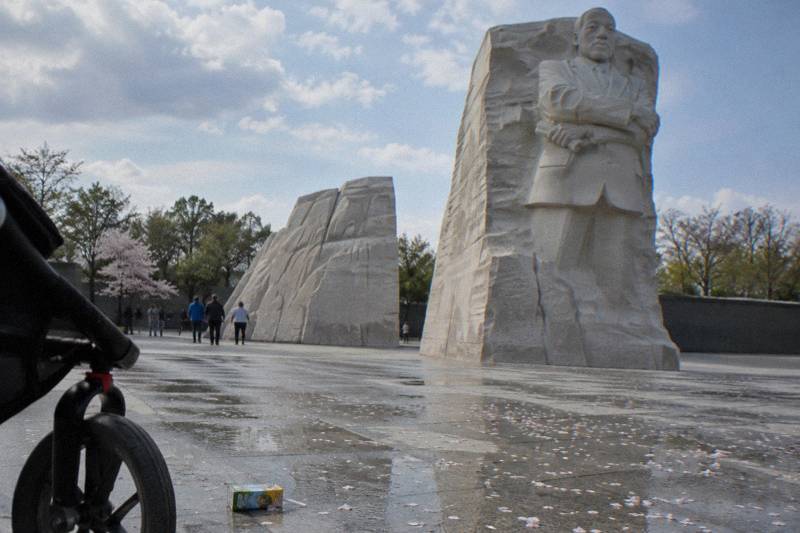
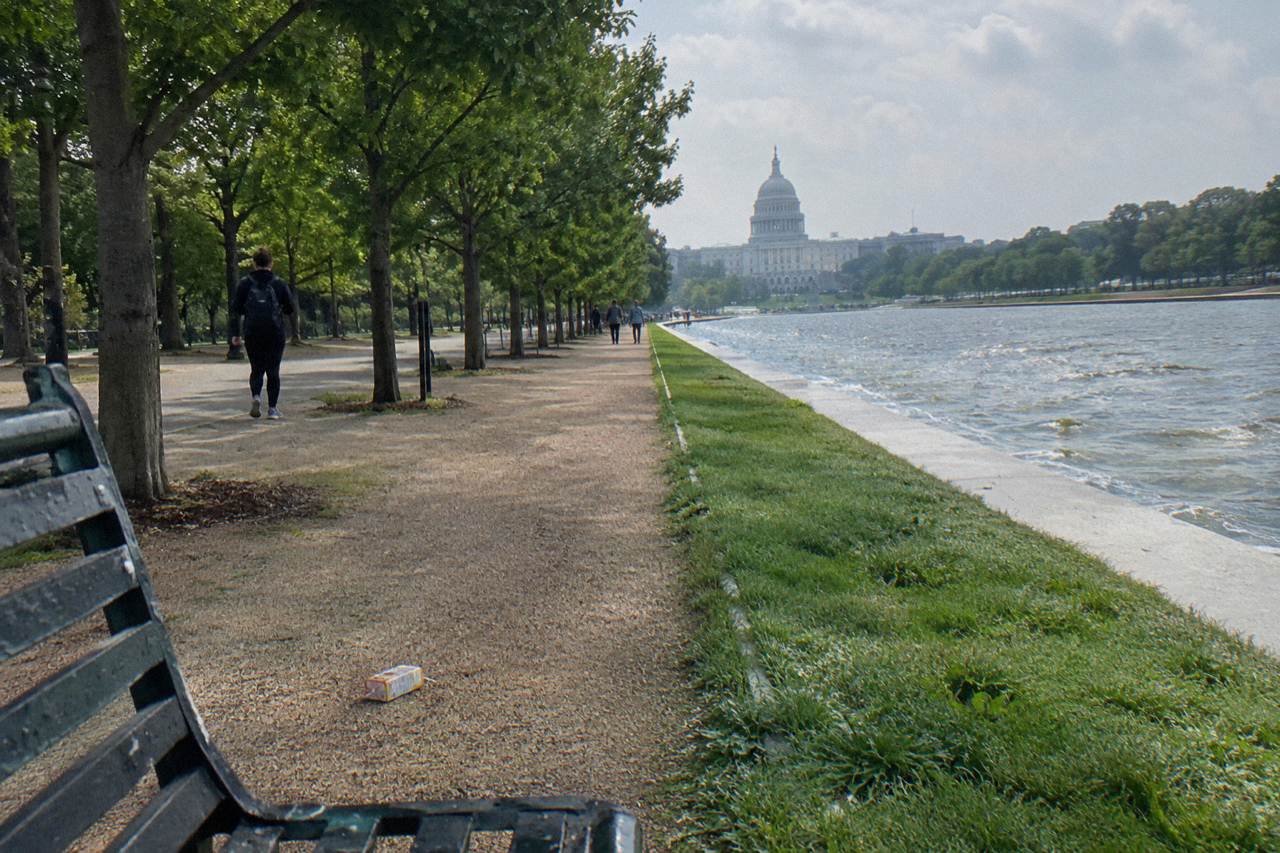
Yes, DC ranks among the easiest big American cities for cycling with children: the ground is flat, the paths between the Capitol and the Lincoln Memorial sit apart from car traffic, and the National Park Service explicitly welcomes bicycles in National Mall and Memorial Parks. The park is open 24 hours a day, and riding inside the memorials themselves is not permitted, so the rhythm is simple: pedal, park, walk in.
The single biggest reason families do well here is terrain. There are no hills of consequence between the Capitol and the Potomac, and the paths that connect the major memorials were built for strollers, wheelchairs and bikes as much as for pedestrians. That means a child who can ride a few blocks at home can, with breaks, cover real sightseeing ground here. The park's own bicycling guidance is worth reading before you go: bicycles are welcome throughout National Mall and Memorial Parks, bike parking is provided near the major memorials, and at the World War II and Franklin Delano Roosevelt memorials you walk the bike through rather than lock it outside, a detail that matters when you are herding children and a bike at the same time. When the Mall starts to feel familiar, the Memorial Bridge crossing to Arlington and the Potomac riverfront makes an easy next ride, with Roosevelt Island and the Georgetown waterfront waiting on the other side.
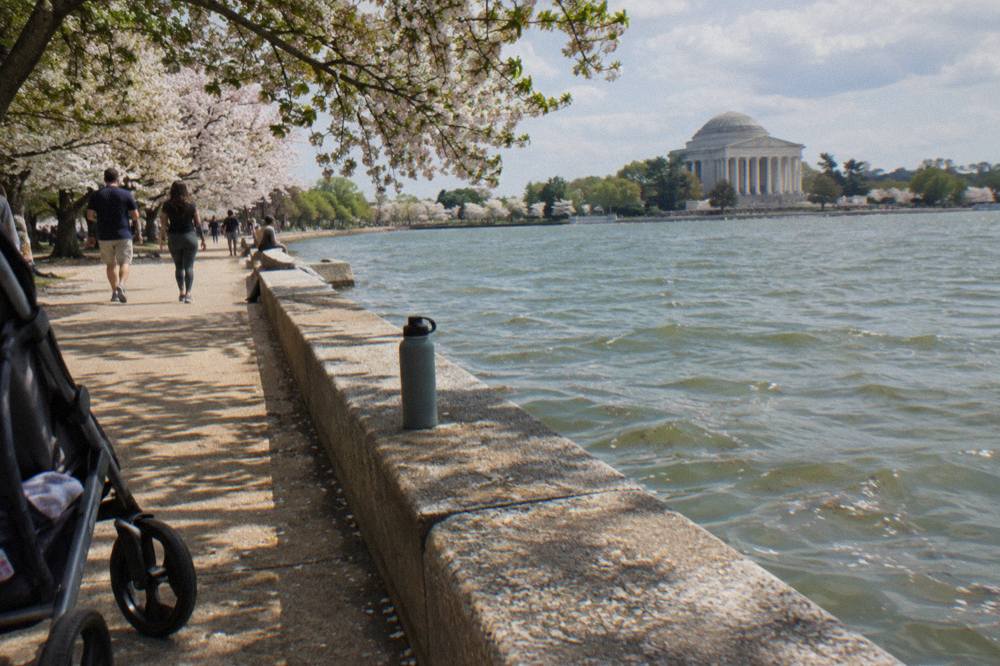
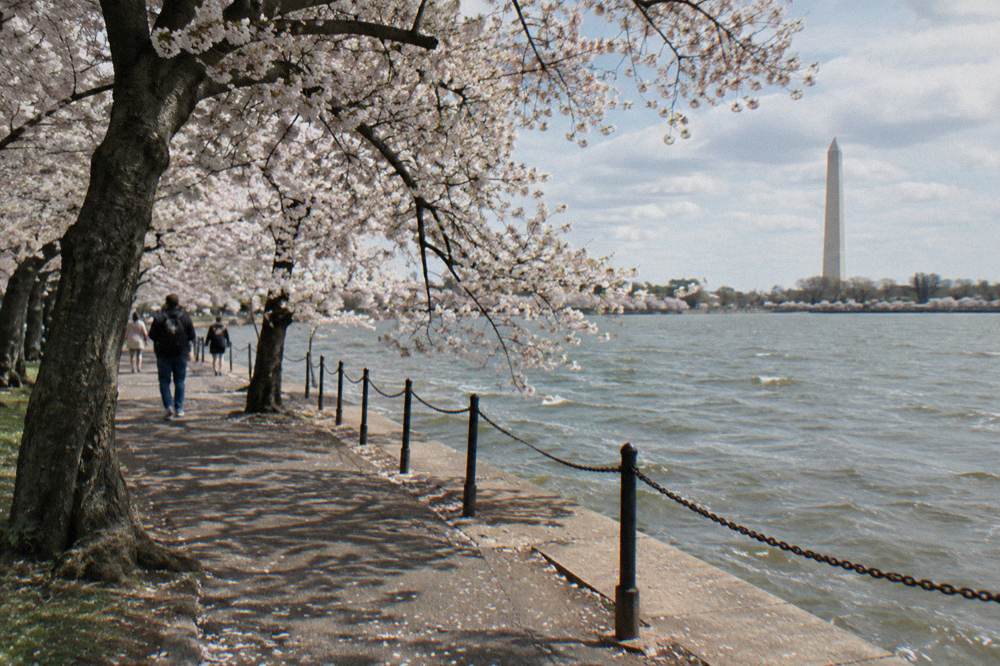
The second reason is the water. The Tidal Basin and the Potomac riverfront give the ride a natural shape: you are never more than a few minutes from a bench, a restroom block or an ice cream cart, which is the difference between a happy afternoon and a mutiny. Families planning around the spring bloom should read the companion piece on cherry blossom season riding around the Tidal Basin, since crowd levels there change what a ride with kids feels like.
The Mall doubles as the country's protest ground and event space, so closure fences and stage construction appear and disappear without much notice. Check the park's current notices the week you travel. For families the working rule is flexibility: keep a plan B loop along the riverfront ready in case the central Mall is fenced off.
Which Guided Bike Tours In DC Work For Families?
Only one guided ride here is designed around families: the private family-friendly tour of DC, a 3-hour private ride on classic bikes priced per group rather than per person. The other guided tours are shared-group adult rides that accept children only if they can hold a grown-up pace for the full duration, so ask yourself one question: can your child ride three hours with short stops?
Be direct about this when you read any tour page: a shared 3-hour monuments ride is designed around an adult sightseeing pace, not a six-year-old's. That does not rule it out, plenty of confident ten-year-olds finish these rides happily, but the listing descriptions and the minimum-age details are on the booking page, and operators answer age questions fast when you message before reserving. Never assume a shared tour includes a child seat, a trailer or a tag-along bike unless the listing says so.
The comparison worth making as a parent is private versus shared, and it comes down to control. The private family-friendly ride gives you the guide alone, which means the pace is your children's pace, the snack stop happens when your children need it, and the guide can reroute around a nap or a meltdown. The shorter shared options, like the 2-hour Capitol Hill highlights ride, trade that control for a lower price and fixed departure times; two hours is a realistic ceiling for many elementary-age riders on a first guided tour, which is why it appears in the band above as the format contrast.
| Ride | Duration | Bike type | Format | Family fit |
|---|---|---|---|---|
| Private Family-Friendly Bike Tour of DC | 3 hours | Classic | Private | Built for kids; pace and stops set by your group |
| Easy Bike Tour of Capitol Hill Highlights | 2 hours | Classic | Shared | Shortest shared option; best first guided ride for older kids |
| Monuments and Memorials Bike Tour | 3 hours | Classic | Shared | Full adult-paced circuit; suits confident young teens |
| Monuments and Memorials Bike & E-Bike Tour | 3 hours | E-bike option | Shared | Same circuit with e-bike choice; check age rules for e-bikes |
| Private Washington DC Bike Tour | 2 hours | Classic | Private | Short private option for younger kids |
Prices for these rides are stated per person on the shared tours and per group on the private ones, so compare the bases before judging cost: a per-group price for a family of four can undercut four per-person tickets, or not, depending on the current figure on the booking page. The inclusions, meeting point and any child-equipment options are all on the tour's own page, and if a listing does not name a minimum age, that detail is a question for the operator before you book, not something to guess at the meeting point.
What Are The Helmet And Age Rules For Kids Biking In DC?
DC law requires anyone under 16 to wear a securely fastened helmet whenever they operate or ride as a passenger on a bicycle on a public roadway, public bicycle path or other right-of-way, and parents may not knowingly let a child ride without one. That law covers every path on the National Mall, so a helmet is not optional for your kids on any ride here, guided or self-guided.
The rule sits in the DC Code, and it applies to passengers as well as riders, which matters for child seats and trailers: a toddler in a trailer on a public path is covered by the same helmet requirement as a twelve-year-old on their own bike. Guided tour operators enforce this at check-in, and most supply helmets for children as part of the ride, but the safe assumption on equipment is to confirm on the booking page or in a message that a child-size helmet and a child seat, trailer or tag-along will be there when you arrive.
For age minimums and equipment, the honest answer is that tour listings do not publish a single standard: each operator sets its own minimum age for its own rides, and the private family tour is the one product designed around those variables rather than despite them. E-bikes add a further wrinkle, since a DC motorized bicycle is defined as having pedals and a motor that cannot propel it faster than 20 mph on level ground, and operators apply their own age and size policies to that equipment. A parent deciding between a classic bike and an e-bike for a teenager will find the deeper comparison in e-bike or regular bike for seeing DC, and the practical summary is simple: for children, classic bikes, trailers and tag-alongs are the well-trodden path, and the age questions are answered per listing.
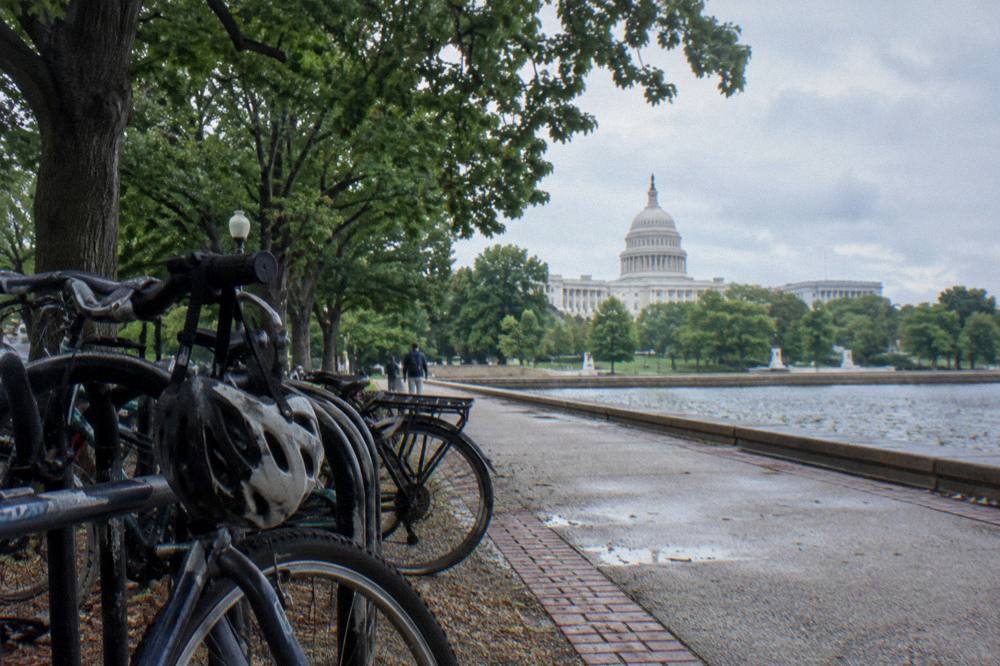
Beyond the law, two habits keep family rides smooth here. First, walk the bike through the World War II and FDR memorials rather than riding, as the park requires, and lock up before entering the others. Second, plan the ride around memorial parking rather than leaning bikes against rails, since bike racks sit near each major memorial and a locked bike removes the "wait for me" chaos at every stop.
How Far Can Kids Actually Ride Around The National Mall?
Most school-age children who bike regularly at home can handle a 2 to 3 hour guided ride at an adult touring pace with breaks, which is exactly why the shortest shared tour runs 2 hours and the family private ride runs 3. Younger children between roughly 4 and 8 do better as passengers in a trailer or child seat, and children under 4 are, on most listings, a question for the operator rather than a bookable rider.
Distance is the wrong measuring stick on the Mall, because what tires children out is stops, sun and stimulation rather than miles. The park does not publish a tidy end-to-end mileage figure for the Mall on its current pages, so treat the standard sightseeing circuit as "a few hours of easy pedaling with many stops" rather than a number, and let the tour duration be your guide: a 2-hour listing is a modest loop, a 3-hour listing covers the major memorials properly, and a 6.5-hour listing like the Mount Vernon day trip is an undertaking for teens, not small kids. Everything else covered here is indexed on Bike Tours Washington DC.
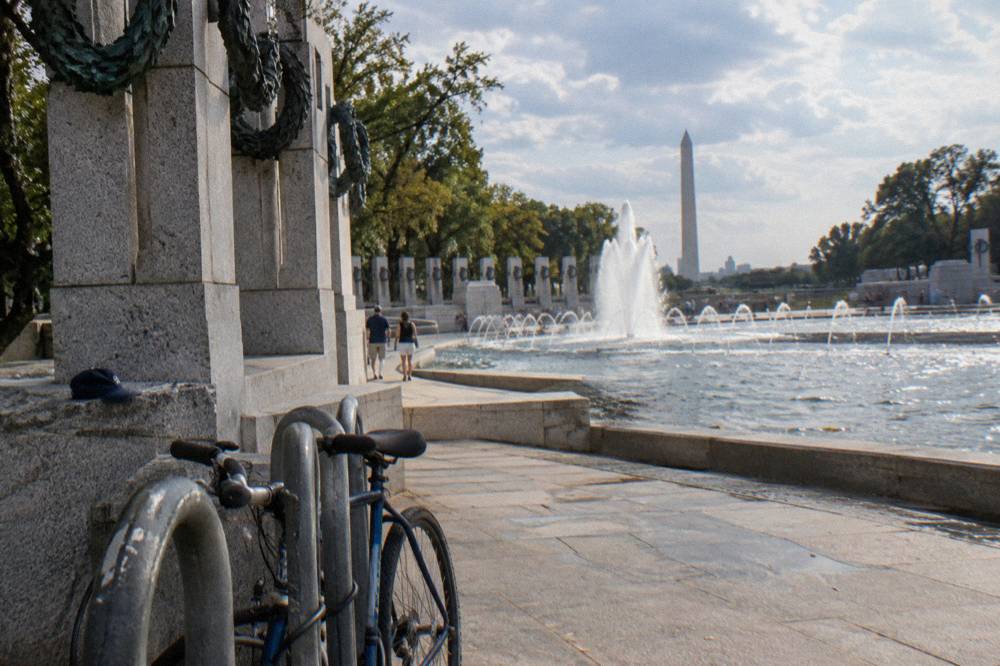
The pacing pattern that works, according to families who ride here repeatedly, is memorial-loop-snack: ride two or three stops, dismount, walk the memorial, refill water, ride on. The flat stretches between the Capitol and the Lincoln Memorial lend themselves to this because the next stop is always visible, which is a powerful motivator for a tired eight-year-old. For route planning in detail, including which paths carry bike traffic and where the car-free stretches are, see the National Mall monuments bike route and stops guide.
Two practical limits deserve early attention. First, breaks are part of the tour design, not a failure: the private family ride builds them in precisely because a rigid schedule is what breaks a family day. Second, self-guided riding with kids is genuinely viable here, and Capital Bikeshare is the equipment route many visiting families take, with a day pass at $10 per 24 hours covering unlimited 45-minute classic-bike rides, then $0.05 per minute past 45 minutes, and e-bikes at $0.15 per minute on the same pass. Note that a day pass is a paid product, not a free one, and the trade-offs between Bikeshare and a guided ride with supplied kids' equipment are laid out in Capital Bikeshare or a guided ride.
| Child situation | Realistic ride format | What to confirm on the booking page |
|---|---|---|
| Under 4 years old | Passenger in a child seat or trailer, private ride preferred | Whether the operator supplies seats or trailers, and its minimum age |
| 4 to 8 years old | Trailer, tag-along or own bike on a private ride | Child equipment sizes; number of stops; bathroom breaks |
| 8 to 12 years old | Short shared ride (2 hours) or any private ride | Minimum-age policy; whether the child's own bike can be brought |
| Confident teens | Any 3-hour shared or e-bike-option ride | E-bike age and size policy, where relevant |
The table is a planning frame, not a rulebook: the binding policies are always the operator's own, stated per listing, and the ones that refuse small children do so for insurance and pace reasons worth respecting.
When Is The Best Season For A Family Bike Ride In DC?
For families, the best riding windows in DC are late March through early May and late September through early November, when normal daily highs sit mostly in the sixties and low seventies Fahrenheit and rain averages around three inches a month. Peak cherry blossom season, typically the last week of March into the first week of April, is gorgeous and the most crowded, so families wanting blooms without the crush should aim for early April weekdays.
The climate record for Washington, based on NOAA's 1991 to 2020 normals measured at Reagan National Airport, tells the family story plainly: July and August average highs of 89.6 and 87.8 degrees, which is punishing for a midday ride with children, while April, May, October and November bring normal highs ranging from 58.2 to 76.5 degrees with five to seven rainy days a month. Summer families should flip the day, ride early or consider the evening monuments tours, a topic covered in biking DC in summer heat, and winter families will find highs in the mid 40s, cold but rideable with the right layers, as discussed in what to wear for a DC bike ride.
| Month | Normal high F | Normal low F | Rain days | Family riding verdict |
|---|---|---|---|---|
| March | 56.5 | 38.6 | 6.5 | Late March can catch early blooms; chilly mornings |
| April | 68.0 | 48.4 | 6.4 | Prime family season; book early for blossom weeks |
| May | 76.5 | 58.0 | 7.3 | Warm and green; watch for event closures |
| June | 85.1 | 67.5 | 6.5 | Ride early morning with kids |
| July | 89.6 | 72.4 | 6.7 | Heat is the constraint; evening rides instead |
| August | 87.8 | 71.0 | 5.6 | Same as July; hydrate and shorten the loop |
| September | 80.7 | 64.1 | 5.8 | Improving through the month |
| October | 69.4 | 52.2 | 4.9 | Excellent; driest riding month of the autumn |
| November | 58.2 | 41.6 | 5.0 | Good early in the month; layer up |
These are climate normals, not forecasts, and any given week can sit well above or below them; check the forecast a few days out and plan children's clothing accordingly.

Blossom season deserves one careful note for families. The 2026 peak bloom arrived on March 26, and the 2027 National Cherry Blossom Festival runs March 20 to April 11, but no peak-bloom forecast for 2027 has been published yet, forecasts typically appear in late February or early March. Families should never book a ride around a promised bloom date, and the detail on timing lives in cherry blossom peak bloom dates and timing.
What Is Closed Around The Memorials Right Now?
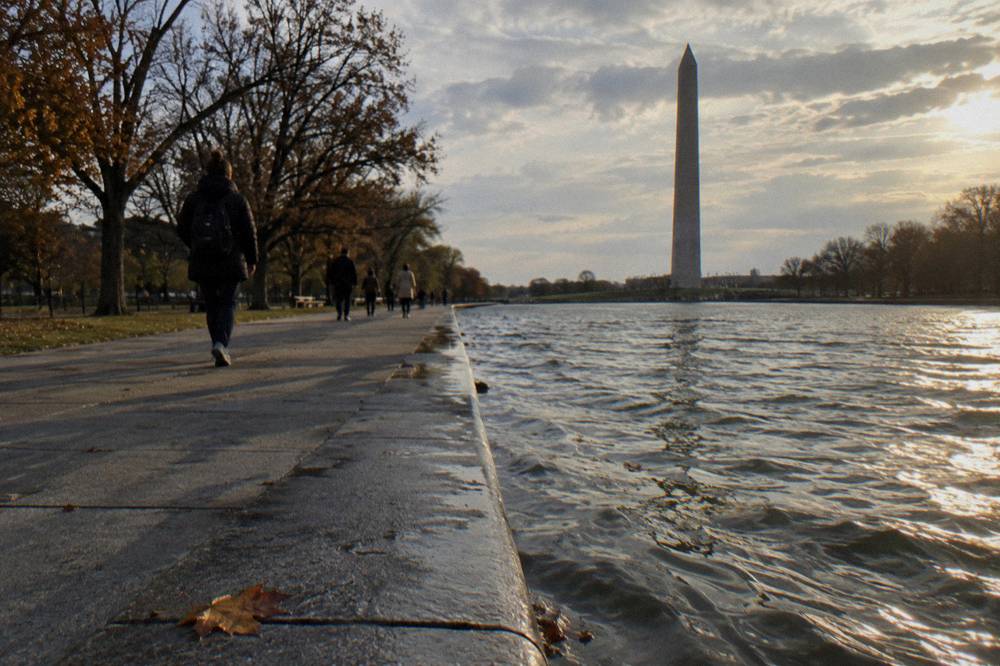
Two closures in force affect family rides as of late 2026: the Lincoln Memorial Reflecting Pool, its walkways and grass medians are closed until November 20, 2026 at 11:59 p.m., and the west side of the Washington Monument grounds is closed through January 23, 2027 for turf restoration. Neither closes the Mall's bike paths outright, but both reshape the classic monuments loop, so check the National Park Service notices before you ride with kids.
For a family, the reflecting pool closure is the more disruptive of the two, because the pool is the natural midpoint rest stop and photo spot between the World War II Memorial and the Lincoln Memorial steps. Fenced construction zones are also a stroller-and-trailer obstacle, so parents towing little ones should expect to route around the work area rather than through it. The National Park Service posts its closure notices online, and the reflecting pool notice and the Washington Monument grounds notice are the two to read the week you travel.
| Closure | Area affected | In force until | Family impact |
|---|---|---|---|
| Reflecting Pool restoration | Pool, adjacent walkways, grass medians at the Lincoln Memorial | November 20, 2026, 11:59 p.m. | No mid-loop rest stop; detour around fencing with trailers |
| Turf restoration, west side | Washington Monument grounds, west side | January 23, 2027 | Partial Monument grounds access; approach from other sides |
Event closures are the second layer: the Mall hosts parades, fireworks setups and races that temporarily close roads and paths, as the summer 2026 Fourth of July and late-summer event closures showed. These never appear in tour marketing copy, so the habit worth building is a five-minute scan of park notices the day before your ride. Guided tours reroute around closures as a matter of course, which is one quiet argument for a guided family ride over a self-planned loop on busy weeks: the guide already knows where the fences are.
The final seasonal note for evening-minded families: sunset in late October falls around 6 p.m., and the monuments are lit after dark, so an early-evening family ride is a real option in spring and summer but not by November. Families weighing that option will find the planning detail in night riding past the monuments after dark.
How Do You Plan The Day Around A Family Bike Ride?
Plan the ride for the middle of the day, not the start: visit a museum or zoo in the morning, then cycle after lunch when legs want moving, with a backpack carrying snacks and more water than seems reasonable. Book the tour for your second or third day rather than your arrival day, since a tired child off a flight makes a poor cycling companion, and a private ride lets the guide adjust the plan when the day goes sideways.
Meeting points and inclusions are listed on each tour's booking page, so the practical checklist is short: confirm the meeting location against where you are staying, confirm child equipment in writing, and confirm the cancellation terms so a sick child costs you nothing. Dress children in layers for the season's normals, put the under-16 riders in helmets as the law requires, and set expectations before departure, the ride includes walking the bikes through some memorials, which most kids treat as a feature rather than a chore.
Families who want the full picture of getting to the meeting points, by Metro and on foot with bikes, will find it in getting around DC: Metro, walking and bikes, and the meeting-point specifics for Mall-area rides are collected in where to meet for a bike ride near the National Mall. Between those two pages and the booking page for your chosen ride, there is very little about a family bike day in DC that stays unknown.
Common Questions About Family Bike Rides In DC With Kids
Do Kids Have To Wear Helmets On DC Bike Paths?
Yes. DC law requires anyone under 16 to wear a securely fastened helmet on any public roadway, public bicycle path or other right-of-way, and the requirement covers child passengers in seats and trailers too. The rule is confirmed in the DC Code and applies to every path in National Mall and Memorial Parks.
What Is The Minimum Age For A DC Bike Tour With Kids?
There is no single citywide minimum. Each operator sets its own age policy per ride, and the listings do not publish one standard figure, so the answer is on the booking page or a quick message to the operator. The private family-friendly tour is the one ride designed around children rather than adapted for them.
Can You Bring A Child Seat Or Trailer On A Guided Tour?
Some operators supply child seats and tag-alongs, but equipment varies by tour and is not guaranteed on shared rides. Confirm in writing before booking that a child seat, trailer or kids' bike will be at the meeting point, and remember the helmet law covers passengers as well as riders.
How Long A Bike Ride Can A Child Handle In DC?
As a planning range, regularly riding school-age children usually manage a 2 to 3 hour guided ride with breaks, which is why the shortest shared tour runs 2 hours. Younger children do better as passengers, and the private family ride sets the pace around your group rather than a fixed schedule.
Is The National Mall Flat Enough For Kids To Bike?
Yes. The ground between the Capitol and the Lincoln Memorial is essentially flat, the memorial paths are separate from car traffic, and bicycles are explicitly welcome throughout National Mall and Memorial Parks. Riding inside the memorials themselves is not permitted, so the rhythm is pedal, park and walk in.
Is Capital Bikeshare Good For Families?
It can be, with caveats. A day pass costs $10 per 24 hours with unlimited 45-minute classic-bike rides, then $0.05 per minute past 45 minutes, and e-bikes cost $0.15 per minute on the pass. It is a paid system, not a free one, and it does not supply child seats or trailers, so it suits families whose kids ride their own bikes.