Cherry Blossom Season By Bike: Tidal Basin And Beyond
Cherry blossom season compresses Washington DC's biggest spectacle into roughly ten days, and the crowds on foot are enormous. A bicycle covers the Tidal Basin, the Mall and the memorial loop faster than any walker can, and two guided rides built for the bloom do the planning for you.
Short answer
Peak bloom for 2026 was reached March 26, and the typical window runs the last week of March to the first week of April. Two dedicated cherry blossom rides, one classic and one with an e-bike option, each run about 2 hours and pair the Tidal Basin with memorial stops; check the booking page for current prices.
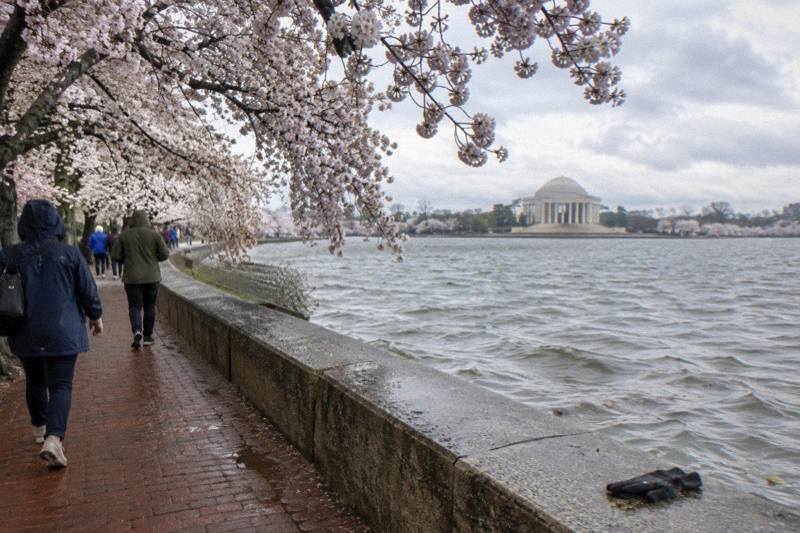
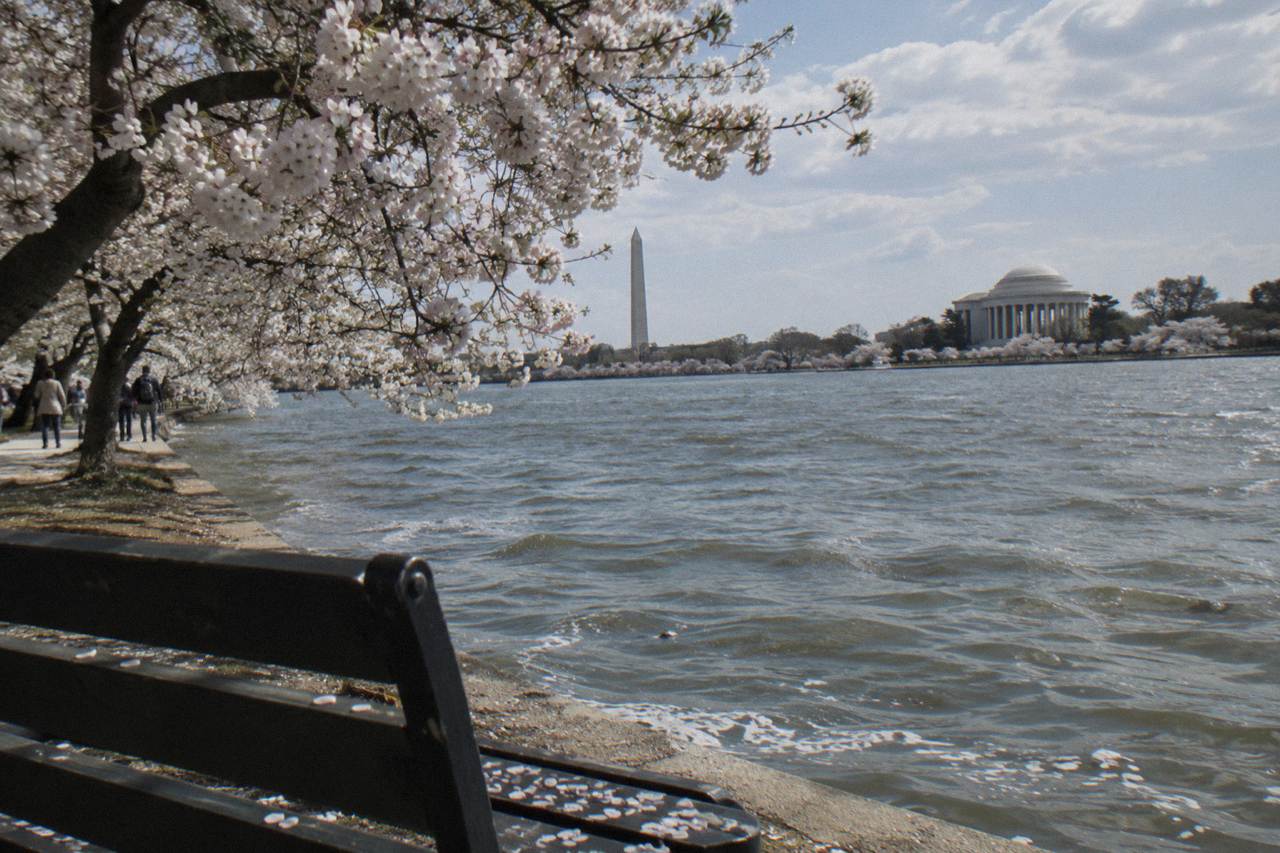
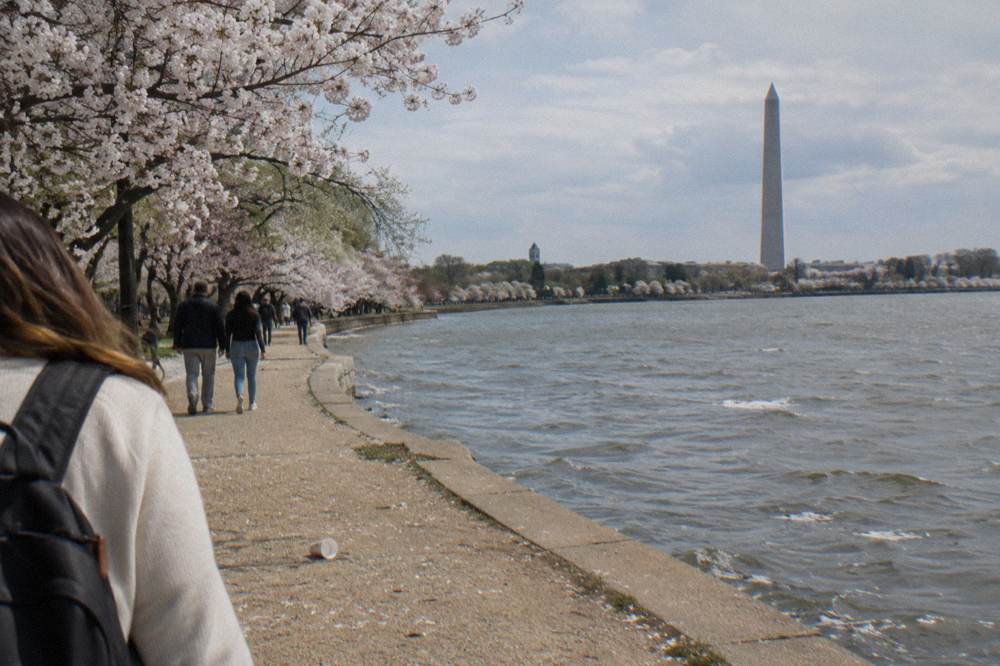
Cherry blossom season turns the Tidal Basin into the single most crowded two miles in Washington DC. On a peak weekend in late March, the footpaths around the water move at shuffle speed from mid-morning until dusk, and the surrounding roads, which cyclists share, slow with tour buses and ride-share traffic. The people moving fastest and calmest are almost always on bikes: the loop from the Washington Monument past the Tidal Basin, along the Potomac and back through the memorial cluster is flat, mostly car-free where it matters, and short enough that a modest pace covers it comfortably in a morning. Once the basin crowds start to wear on you, that same bike can carry you to the quieter corners of Washington that most visitors never find.
The National Park Service confirmed peak bloom for 2026 on March 26, when 70 percent of the Yoshino trees around the Tidal Basin were open. The typical window is the last week of March into the first week of April, and the blossoms usually hold for 7 to 10 days once peak arrives, weather permitting. Nothing about a bloom is guaranteed on a date; forecasts from the Park Service generally begin in late February or early March, and no 2027 peak-bloom forecast had been published as of the end of October 2026. What is fixed is the festival around the flowers: the 2027 National Cherry Blossom Festival runs March 20 to April 11.
This guide covers how to ride the bloom: where the bike-friendly paths are, when the crowds are thinnest, what the current construction situation around the Tidal Basin means, and what the guided cherry blossom rides actually give you beyond a rental bike.
When Is Cherry Blossom Season In Washington DC?
Peak bloom in 2026 was reached on March 26, with 70 percent of the Yoshino cherries around the Tidal Basin open, and the reliable historical window runs from the last week of March into the first week of April. Once peak arrives, blossoms typically last 7 to 10 days. The 2027 National Cherry Blossom Festival is set for March 20 to April 11, and no 2027 peak-bloom forecast had been published as of the end of October 2026.
The National Park Service tracks bloom stages on its Bloom Watch page, moving from green buds through florets, peduncle elongation, puffy white and finally peak, defined as the point when 70 percent of the Yoshino trees are open. The initial 2026 forecast, issued in early March, called for peak between March 29 and April 1; the blossoms arrived a few days ahead of that. That slip is normal. A warm February can pull the peak into mid-March, a cold one can push it deep into April, and the forecast is revised repeatedly as the date approaches.
For a cyclist planning a trip, the practical read is this: book lodging and any tours for the festival window, then treat the exact peak days as a moving target until the Park Service forecast lands in late February or early March. The festival itself runs about three weeks, so even a visit that misses absolute peak by a week usually catches trees in some stage of bloom, and the later-flowering Kwanzan cherries around Potomac Park and elsewhere in the city often peak a week or two after the Yoshinos at the Tidal Basin, extending the season for anyone flexible.
| Season Marker | What It Is | When It Applies |
|---|---|---|
| 2026 peak bloom | 70 percent of Yoshino trees open | Confirmed March 26, 2026 |
| Initial 2026 forecast | Early Park Service projection | March 29 to April 1, 2026 |
| Typical bloom window | Historical norm | Last week of March to first week of April |
| Blossom duration after peak | How long trees hold flowers | 7 to 10 days, weather dependent |
| 2027 festival | Fixed event dates | March 20 to April 11, 2027 |
| 2027 peak-bloom forecast | Park Service projection | Not yet published as of end of October 2026 |
Weather in the window is a roll of the dice, but the averages are kind. March normals for Washington run a high of 56.5 and a low of 38.6 with about 3.5 inches of rain over roughly 6.5 rainy days; April warms to a high of 68 with about the same rain. Our guide to the best time of year to bike in Washington works through the full calendar, and the rain and cold riding weather guide covers what to do when a spring front rolls through on your one free morning.
Where Can You Ride When The Blossoms Are Out?
Bicycles are welcome throughout National Mall and Memorial Parks, with bike parking near each major memorial, but riding inside the memorials themselves is not permitted; at the World War II and Franklin Delano Roosevelt memorials you walk the bike through. The Tidal Basin loop, the Mall length and the Potomac riverfront paths are all rideable, and the park is open 24 hours a day, so early-morning and evening rides are fully legal options.
The core blossom circuit is simple. From the Washington Monument grounds, ride south and west to the Tidal Basin, loop the basin's perimeter path past the Jefferson Memorial, Martin Luther King Jr. Memorial and Franklin Delano Roosevelt Memorial, then continue along the Potomac riverfront toward East Potomac Park, where more cherry trees line the roads and the crowds thin dramatically. Riders with more time continue across the Arlington Memorial Bridge to the Virginia side, though no current construction status for that bridge was verifiable in 2026 sources.
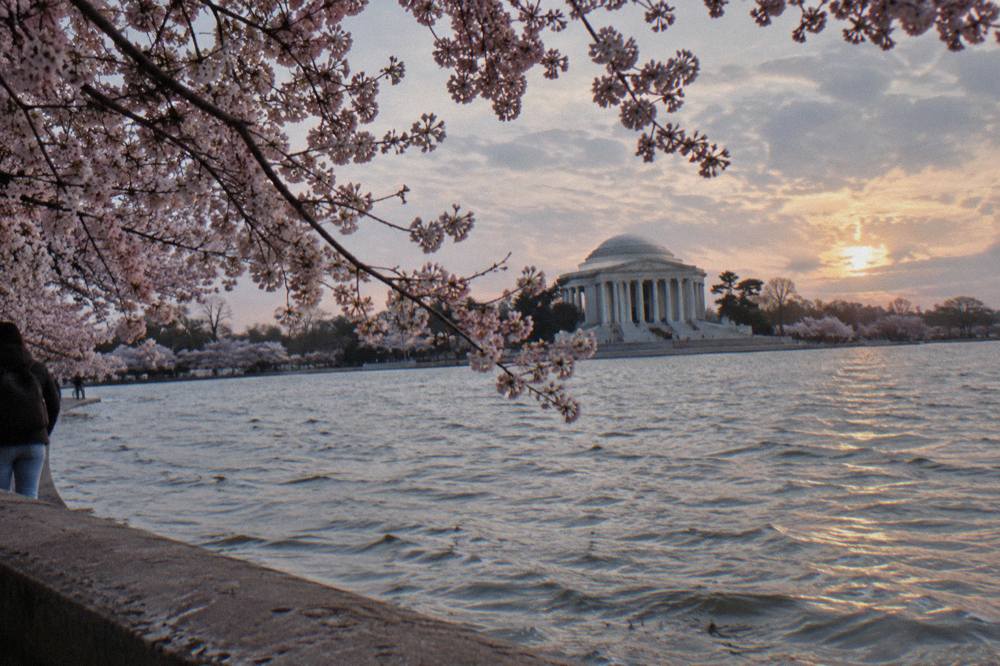
Two caveats matter for 2026 and 2027 planning. First, the Tidal Basin seawall reconstruction: the first phase finished early and under budget, and the project area, including paths, stayed closed through the 2026 festival for landscape stabilization and new tree planting, with reopening expected shortly after. No official update on current path status followed, so check the Park Service Tidal Basin pages before riding the perimeter loop. Second, the Lincoln Memorial Reflecting Pool, its adjacent walkways and grass medians were closed until November 20, 2026, and the Washington Monument grounds' west side was closed through January 23, 2027. None of that closes the blossom trees, but it reshapes the western end of any memorial loop, and the Park Service notices are updated as work progresses.
The full route logic, stop by stop, lives in our National Mall monuments route guide. For riders weighing pedal power versus a motor, the e-bike or regular bike comparison for DC is directly relevant here, because one of the two dedicated blossom tours offers an e-bike upgrade and the other does not.
If a guided ride fits your trip, these are the two blossom-season options, plus one e-bike route that works well when the trees are out:
All three are shared rides. The Budget Cherry Blossom Ride is the classic-bike option; the Cherry Blossom tour with e-bike option lets you pick; the Tidal Basin e-bike route is a 3-hour ride that spends its time on the water side of the Mall. Prices and meeting points for each are on the booking page, and both 2-hour blossom rides describe stops at the memorials around the basin.
How Bad Are The Crowds, Really?
On peak weekends, Tidal Basin footpaths are at their densest from about 10 a.m. to 4 p.m., while the roads and wider paths cyclists use stay passable through most of the day. Because the park is open 24 hours, dawn rides before 8 a.m. and evening rides after sunset see a fraction of the foot traffic, and lit memorials after dark are a genuine second viewing of the season.
No official crowding measures for the bloom were verifiable in 2026 sources, so this is reading the terrain rather than citing a number: the basin's perimeter path is narrow in sections, and the pinch points are the stretches between the Jefferson and Martin Luther King Jr. memorials where photographers set up tripods and tour groups cluster. A cyclist who stays on the wider roadside loop rather than ducking onto the footpath keeps moving while walkers queue.
The bike's structural advantage is distance. A walker doing the Tidal Basin, the Mall monuments and the riverfront in one morning is looking at a long, slow day; a rider does it in a couple of hours with pauses. Our piece on the best way to see all the monuments gets into that trade directly.
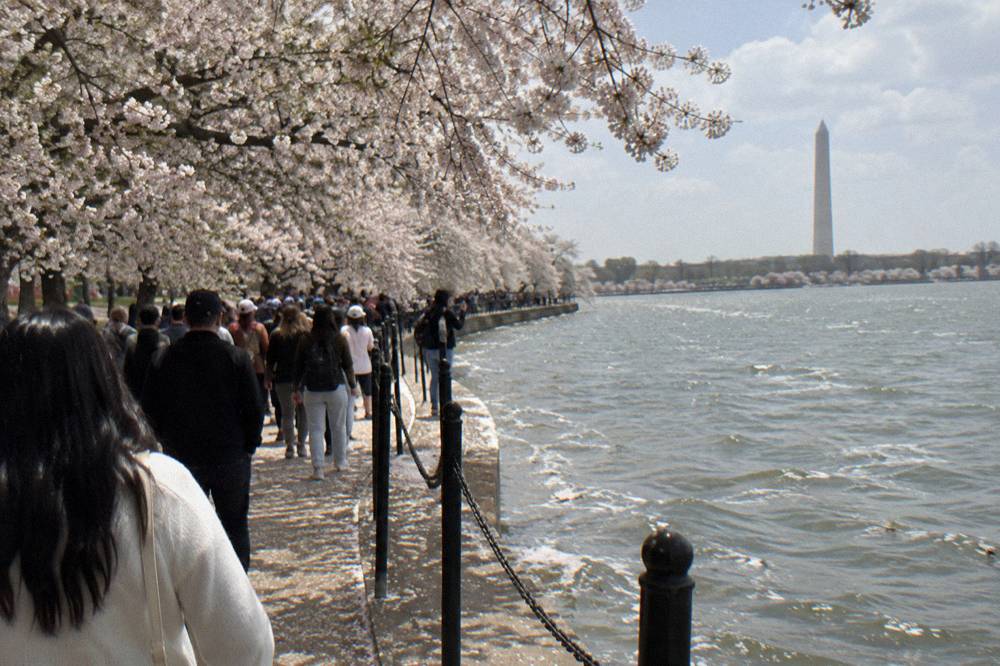
Early April weather also argues for off-peak hours. A high near 68 sounds pleasant, but April averages over three inches of rain, and midday sun on a windless spring afternoon can be warmer than it sounds when you are stopped among thousands of people. Dawn is cooler, quieter and photographically better, with low light on the blossoms and the Jefferson Memorial across the water.
What Do The Guided Cherry Blossom Rides Include?
Two shared rides are built for the bloom: a classic-bike cherry blossom tour of about 2 hours, and a cherry blossom tour of about 2 hours with an e-bike upgrade option. Both pair the Tidal Basin trees with memorial stops, and both include the bike; check the booking page for each ride's current price, meeting point and helmet policy before reserving.
| Ride | Length | Bike Type | Format |
|---|---|---|---|
| Budget Cherry Blossom Ride | 2 hours | Classic | Shared |
| Cherry Blossom, E-Bike Option | 2 hours | E-bike option | Shared |
| National Mall & Tidal Basin E-Bike Tour | 3 hours | E-bike | Shared |
The classic-bike option is the 2-hour Budget Cherry Blossom Ride, a shared tour that keeps the price down by staying on regular bikes and a tight route. The e-bike-option ride covers similar ground in the same 2-hour window and lets you pay for pedal assist if you would rather not work, which matters more than it sounds on a warm afternoon stop-and-go riding among pedestrians. The listing for each states what is included with the booking; where a detail like a child seat or a specific stop list is not named, ask the operator before booking.
The free-cancellation terms on the classic ride are worth using strategically: because bloom timing shifts, booking a refundable slot inside the festival window and adjusting once the Park Service forecast firms up costs nothing if the plan changes. That is the single best argument for the guided rides over a walk-up rental in blossom season, when rental shops near the Mall run short of bikes on peak days. The rest of the planning pages sit on Bike Tours Washington DC.
Is An E-Bike Worth It During Blossom Season?
An e-bike's advantage during the bloom is not hills, because there are essentially none, but pace control and range: motor assist lets you hold an easy speed through crowded sections and extend the ride to East Potomac Park or across the river without arriving tired. DC defines its motorized bicycles as pedal-equipped two- or three-wheelers whose motor cannot propel them faster than 20 mph on level ground.
The National Mall and Memorial Parks are flat, and the Tidal Basin loop adds nothing a casual rider would call a climb. What an e-bike buys is comfort at the margins: less sweat in an April afternoon, easier restarts in stop-and-go crowd sections, and the freedom to tack on the East Potomac Park cherry loop or a crossing to Arlington on the same charge. Against that, classic bikes are cheaper to rent or ride on a tour, and every rider is on the same paths at the same courteous pace.
| Choice | Best For | Trade-Off |
|---|---|---|
| Classic blossom tour, 2 hours | Lower price, simple decision | No assist on warm afternoons |
| Blossom tour with e-bike option, 2 hours | Riders who want the choice | Higher price for the upgrade |
| Tidal Basin e-bike tour, 3 hours | Covering the basin and riverfront in one ride | Longer commitment, higher price |
| Self-guided rental or Capital Bikeshare | Flexible timing, dawn rides | You plan the route and carry the risk of peak-day shortages |
For the do-it-yourself comparison, Capital Bikeshare's day pass is $10 per 24 hours with classic rides free for the first 45 minutes and $0.05 per minute after, e-bikes at $0.15 per minute; the system runs about 8,000 bikes from more than 800 stations. Our Capital Bikeshare versus guided ride guide works through when each wins, and the renting a bike in DC guide covers shop rentals.
One rule to plan around: DC requires a securely fastened helmet for anyone under 16 riding on a public roadway or path. Tour operators state their own helmet policies for adults on the booking page, so check rather than assume.
Where Do You Go Beyond The Tidal Basin?
East Potomac Park holds rows of cherry trees along its roads with a fraction of the Tidal Basin's crowds, and the Potomac riverfront paths connect the bloom to a longer ride toward Hains Point and, across the Memorial Bridge, Arlington. The 3-hour e-bike tour of the National Mall and Tidal Basin is the guided option that spends real time on this water side rather than circling back to the monuments. If you're mapping out the rest of your bloom ride, our guide to cherry blossom spots across DC lays out which trees justify the detour and how the paths between them connect.
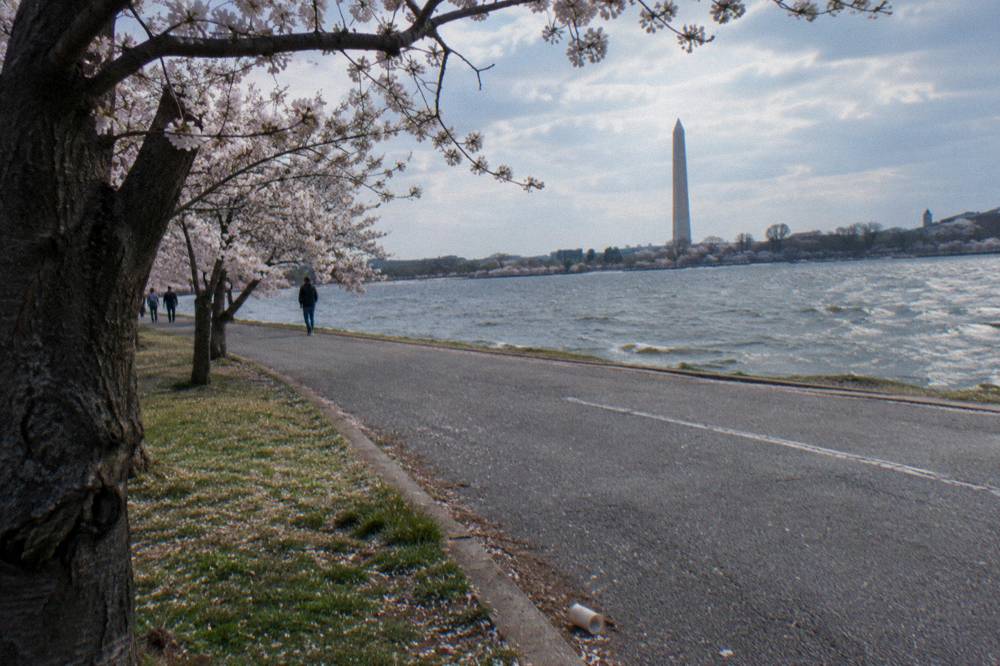
East Potomac Park is the insider's answer to basin fatigue. The trees there are easier to photograph, the roads carry park traffic rather than foot traffic, and the point itself looks back at the river and the aircraft coming into Reagan National. Continuing north along the riverfront path links the bloom to the Lincoln Memorial end of the Mall, with the caveat that the reflecting pool area's closure ran through November 20, 2026, so verify current status on the Park Service notice before routing through it.
Riders who catch the bloom bug can also carry the season out of the city. The Mount Vernon Trail from Alexandria rides the Virginia side of the river within sight of the blossom crowds across the water, and the Arlington riverfront guide covers the crossing options. None of those trees draw Tidal Basin numbers.
What Should You Wear And Bring For A Blossom Ride?
Late March and early April in Washington average highs from 56.5 to 68 and lows from 38.6 to 48.4, with rain on roughly 6 to 7 days a month, so layers and a packable rain shell are the right call, with comfortable closed shoes for walking the bike through the memorial interiors. Bring water; the rides run 2 to 3 hours and midday sun in early April can be warm.
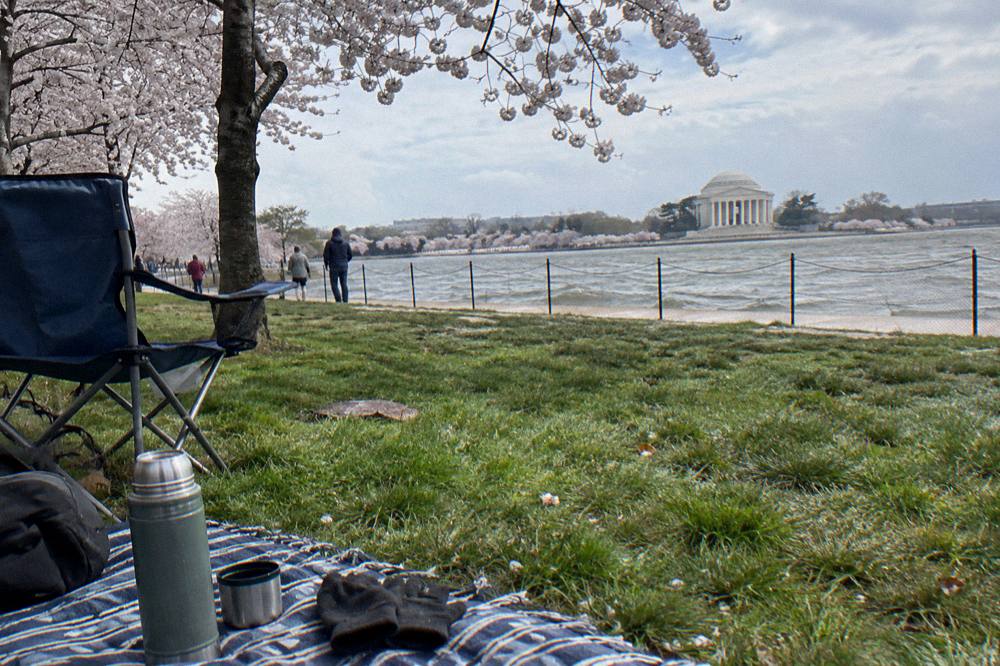
Morning rides start near 40 degrees and finish near 60, which is a wider swing than most visitors pack for. A base layer, a light midlayer and a wind shell cover all of it, and gloves matter more on a bike at 40 degrees than on a walk because of the wind on your hands. The full breakdown is in what to wear for a DC bike ride.

| Item | Why It Matters In Blossom Season |
|---|---|
| Packable rain shell | 3-plus inches of rain in both March and April |
| Layers, 38.6 to 68 degree range | Dawn starts cool, midday warms fast |
| Water bottle | 2 to 3 hour rides, limited fountains in the bloom zone |
| Bike lock | To leave the bike at memorial racks and enter on foot |
| Camera or charged phone | The entire point of the season |
Common Questions About Cherry Blossom Biking In Washington DC
When Is Cherry Blossom Season In Washington DC?
Peak bloom typically falls in the last week of March to the first week of April; in 2026 it was reached March 26. Blossoms usually last 7 to 10 days after peak. The 2027 festival runs March 20 to April 11, and no 2027 peak-bloom forecast had been published as of the end of October 2026.
Can You Bike Around The Tidal Basin During The Bloom?
Yes, bicycles are welcome in National Mall and Memorial Parks, but riding inside the memorials is not permitted, and the basin's narrow footpaths are extremely crowded at peak. The seawall project area was closed through the 2026 festival with reopening expected shortly after; check the Park Service page for current path status before riding.
Is A Guided Cherry Blossom Bike Tour Worth It?
The guided rides give you a bike, a route timed against crowds and a guide at the memorials in a roughly 2-hour window, with free cancellation available on the classic ride so you can adjust if the bloom forecast shifts. Check the booking page for current prices and inclusions before deciding.
Do The Cherry Blossom Tours Include An E-Bike Option?
One of the two blossom rides offers an e-bike upgrade on a 2-hour shared tour; the other is a classic-bike ride of the same length. A separate 3-hour e-bike tour covers the National Mall and Tidal Basin if you want a longer ride with assist.
What Is The Best Time Of Day To See The Blossoms By Bike?
Before 8 a.m. The park is open 24 hours, dawn light is better for photographs, and foot traffic builds from mid-morning. Evening rides after sunset are a quieter second option, with the memorials lit.
What Happens If It Rains During Blossom Season?
March and April each average over 3 inches of rain across 6 to 7 rainy days. A packable shell covers most showers; for colder, wetter conditions, our rain and cold riding guide covers the call on whether to ride, wait or rebook a free-cancellation tour.