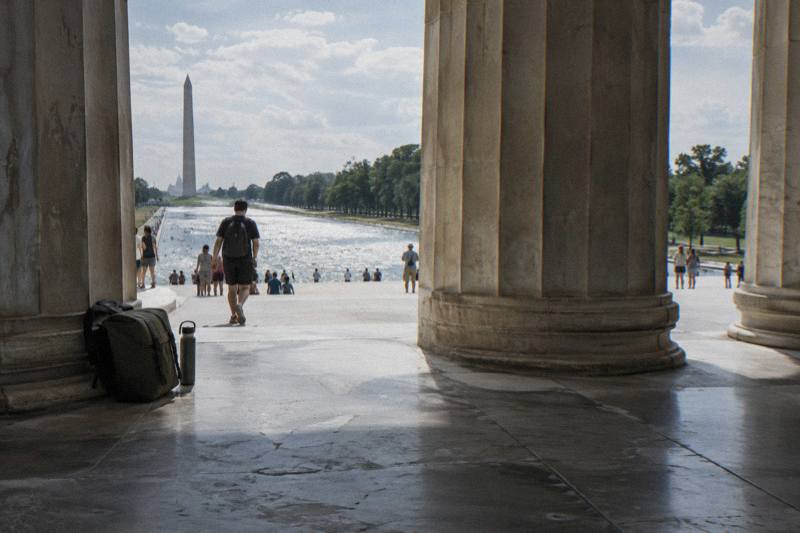
What Are Some Hidden Gems In DC?
Quiet corners of Washington DC most visitors miss, from the FDR Memorial to the Tidal Basin and the Capitol Hill side streets, with the bike rides that reach them.
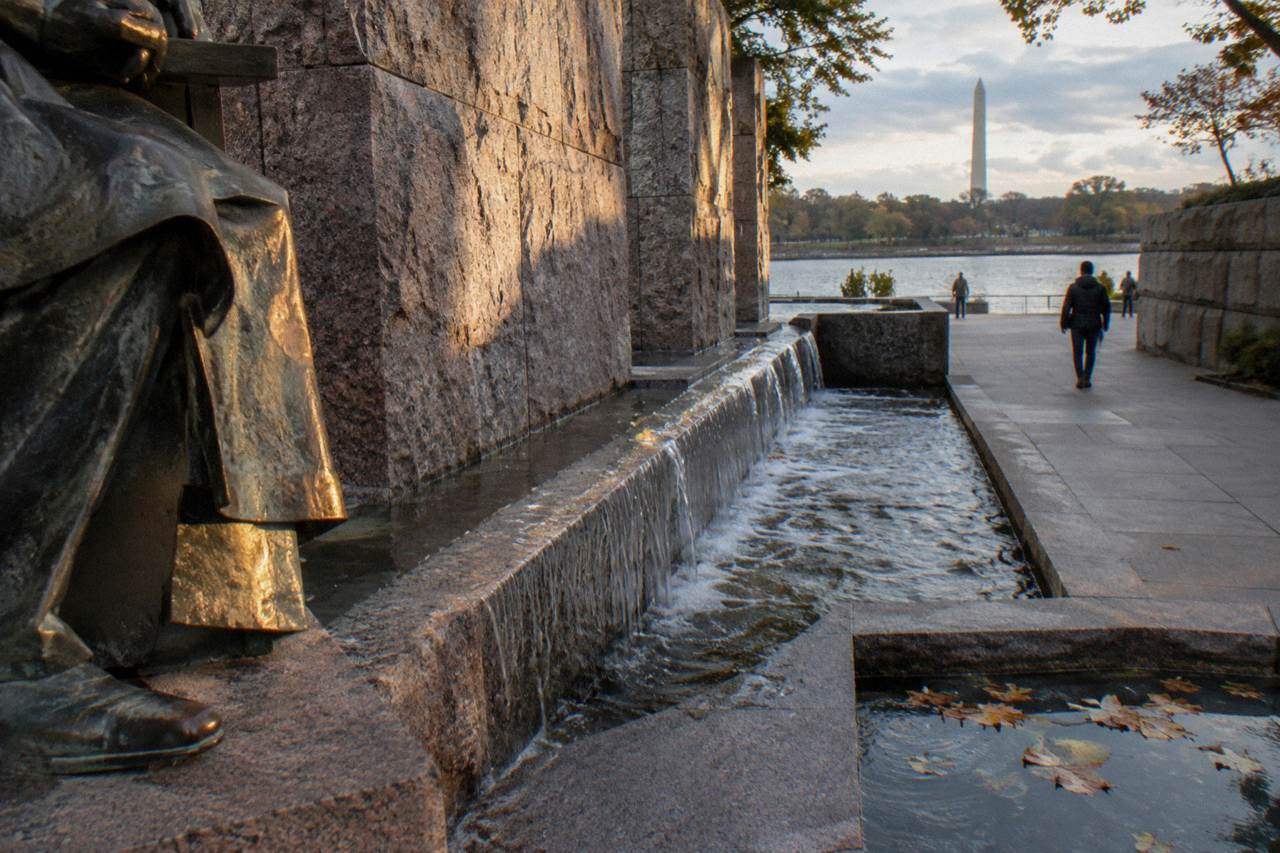
The hidden gems worth chasing in Washington DC are the Franklin Delano Roosevelt Memorial, where you walk your bike through stone rooms and water; the Tidal Basin shoreline, newly rebuilt and replanted after the seawall project; the residential blocks and library side of Capitol Hill; and the long Mount Vernon day ride out of Alexandria. None of them need a ticket, and all of them sit on routes a bicycle handles better than a car.
Most first visits collect the same four sights: the Lincoln Memorial, the Washington Monument, the Capitol and the White House. That loop is genuinely great, but it consumes a whole day and leaves a city of quieter rewards untouched. The gems below are not obscure in the sense of secret, they are simply off the standard walking loop, and several of them are awkward on foot precisely because DC clusters its famous things at the two ends of the Mall while tucking its best corners in between. If you would rather sort out the classics first, our guide to the most famous DC memorials and how to bike between them covers how they connect and what to check before you go.
A bicycle fixes that geometry. The National Park Service states plainly that bicycles are welcome in National Mall and Memorial Parks, with parking provided near each major memorial, and the park stays open 24 hours a day, so an early morning or late evening pass through a normally crowded site is entirely realistic. The one firm rule to remember: riding inside the memorials themselves is not permitted. You walk the bike through the World War II and Franklin Delano Roosevelt Memorials, or lock it up before entering any other one. That rule, oddly, is what makes the FDR Memorial work so well for cyclists, as the next section explains.
There is a second, less obvious reason the bike wins here. The hidden half of DC is spread out: the FDR Memorial sits at the Tidal Basin's western edge, the Hill's residential squares sit a long way east, and the river route to Mount Vernon leaves the city entirely. Walking connects none of these comfortably in a day, and tour buses stop at none of them, since buses only serve the headline buildings. A bike turns three disconnected quiet corners into one continuous line through the city.
If you want a guide rather than a self-planned loop, two tours in particular line up with the hidden-gem theme: the Capitol Hill rides, which spend their time well east of the standard monument loop, and the long Alexandria day trip out toward Mount Vernon.
Why The Franklin Delano Roosevelt Memorial Rewards A Slow Pass
The Franklin Delano Roosevelt Memorial is the Mall's best hidden gem because it is built as a sequence of outdoor rooms rather than a single viewpoint, it is one of only two memorials where the rules tell you to walk your bike through rather than lock up outside, and it sits far enough west of the Lincoln steps that most walking crowds never reach it. Plan ten unhurried minutes, not a photo stop.
The memorial unfolds in four granite rooms, one for each of Roosevelt's terms, connected by water and narrowing passages. The National Park Service's own cycling guidance names it directly: walk your bike through the World War II and FDR Memorials. That turns a logistical footnote into an experience. Instead of parking at a rack and circling back, you roll in, dismount, and move through the rooms at walking pace with the bike beside you, which is exactly the pace the design asks for.
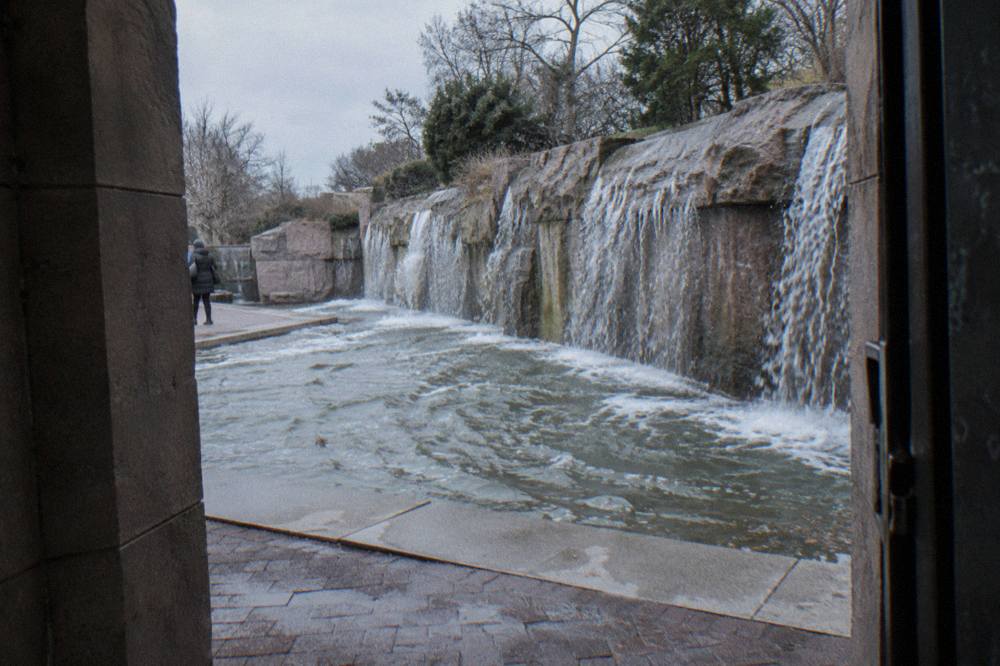
The water elements carry meaning that a quick glance misses: the single large drop represents the Great Depression, the chaotic jumble the turbulence of war. In the evening the rooms light up quietly, and because the memorial sits on the Tidal Basin's edge, it doubles as one of the better cherry blossom viewpoints in spring without the crush at the main basin crossings. There is a related piece of good news for the next year or two of visits: the Tidal Basin's failing seawall, which once flooded the paths at high tide, has been rebuilt, and the National Park Service reported the first reconstruction phase finished ahead of schedule. The trees replanted along the stabilized shoreline are young, which means the next decade of blossoms here will look different, and better, than the last.
One practical note before you plan a west-end loop: check the current National Park Service notices. The Lincoln Memorial Reflecting Pool, its adjacent walkways and grass medians are closed through 20 November 2026 for repair work, and the Washington Monument grounds' west side is closed through 23 January 2027 for turf restoration. Neither closure touches the FDR Memorial itself, but both reshape how a loop of the west end flows, and a rider who shows up expecting the classic reflecting pool photo will find scaffolding instead. The official bicycling information page at nps.gov is the page to check for bike-specific rules before you go.
Closures cut both ways for the hidden-gem hunter. With the west side of the Monument grounds fenced off for turf work through late January 2027, the pressure of the standard loop shifts, and the quieter eastern and southern edges of the park, the FDR rooms, the basin path, the stretch toward East Potomac Park, carry proportionally more of what makes the Mall worth a slow pass. A disruption designed for repairs ends up redistributing visitors toward exactly the corners this article exists to point out.
If a slow, guided pass through the quieter west end and the Hill sounds better than checking closure notices yourself, the related ride below is the natural pairing.
Capitol Hill: The Side Of The Hill Most Visitors Never Ride
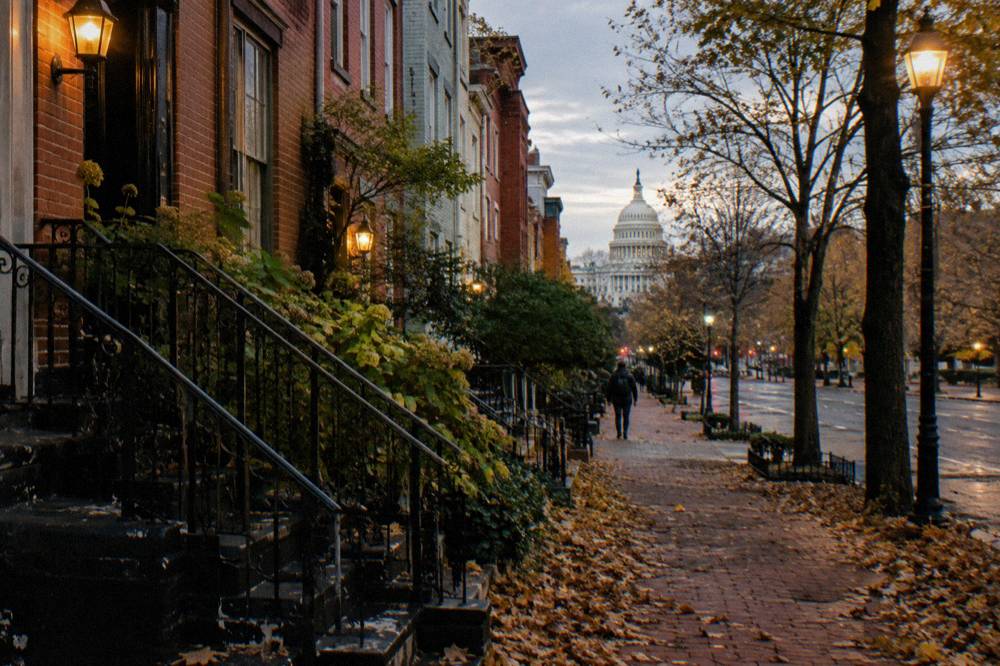
Capitol Hill hides its gems in plain sight because tour buses stop only at the Capitol itself and the Library of Congress, leaving entire blocks of rowhouses, the Supreme Court's quieter approaches, and the residential squares east of the building almost entirely to locals. Two guided bike rides, a 2-hour classic option and an easier 2-hour highlights option, spend their whole route exactly where the walking crowds are not.
The difference between the Hill on foot and the Hill by bike is distance. The cluster around the Capitol, the Library of Congress, the Supreme Court and the surrounding residential squares spreads across a neighborhood that rewards covering ground quickly, then stopping where something catches your eye. A classic bike covers that geometry in a way a bus cannot, since the buses only stop at the headline buildings.
The featured ride for this question is the 2-Hour Capitol Hill Ride, a shared classic-bike tour built around exactly this territory. Its listing states a 3-hour sibling exists for the monument core, but this one stays on the Hill, which is the point. For price, current rating and the exact meeting point, check the booking page, since those details sit on the operator's listing rather than in a fixed brochure. An easier-paced alternative covering similar ground is the Easy Capitol Hill Highlights ride:
Between the two, the honest difference is pace and framing rather than territory: both run 2 hours on classic bikes with a shared guide, so the choice mostly comes down to which operator's style, meeting point and price suit your day. The deeper dive on the whole question of who should pick which is in the site's guide to private and small group rides in Washington DC.
It is worth being honest about what "hidden" means on the Hill. These blocks are not empty, they are working residential streets where staffers, families and librarians live around the corner from the Capitol, and that is precisely the texture a monument loop cannot offer. A morning ride here passes school walks and coffee queues rather than security lines. The gems are architectural and atmospheric rather than ticketed: a façade that has watched two centuries of inaugurations, a square that turns gold in late October, a view of the Capitol dome framed by ordinary rooftops instead of scaffolding. Two hours is enough to absorb all of it at riding pace.
A self-guided note if you go alone: DC law requires a securely fastened helmet for anyone under 16 riding on a public roadway, path or other right-of-way, per the DC Code. Operators on guided rides supply helmets as part of their inclusions, which is one quiet argument for the guided version when kids are in the group.
The Tidal Basin's New Shoreline And The Details At Its Edges
The Tidal Basin itself is famous, but the hidden gem is its rebuilt edge: the seawall reconstruction that closed sections through the 2026 festival season has left stabilized paths and newly planted young trees, so the next few springs will show a shoreline that no guidebook photograph has captured yet. Around that edge sit smaller details, from the 555 feet 5 1/8 inches of the Washington Monument to the quiet lighting upgrades at the World War II Memorial.
Visitors who last came a few years ago remember flooded paths and leaning trees at high tide. That version is gone. The National Park Service announced the first phase of seawall reconstruction finished early and under budget, with the project area closed through the 2026 National Cherry Blossom Festival for landscape stabilization and replanting, and reopening expected shortly after. For anyone tracking the bloom, 2026's peak arrived on 26 March, with the typical window running the last week of March into the first week of April, and the 2027 festival scheduled for 20 March to 11 April. No peak bloom forecast for 2027 exists yet; forecasts usually appear in late February or early March on the official bloom watch page.
Beyond the shoreline, small facts hide in plain sight. The Washington Monument stands 555 feet 5 1/8 inches tall and 55 feet wide at its base, numbers most people never learn even after photographing it from five angles. The World War II Memorial received new in-fountain and exterior lighting under a seawall reconstruction project, which quietly improved the after-dark pass through the west end. And the whole park never closes: National Mall and Memorial Parks is open 24 hours, so the basin at sunrise, before the tour buses, is a genuinely different place from the basin at noon.
The young trees deserve a moment of explanation, because they change what a repeat visitor should expect. The replanting along the stabilized seawall means the basin's famous canopy is in transition for the first time in decades. Older photographs show dense, mature Yoshinos leaning over the water; the next several springs will show slimmer trees with room to grow, framed by paths that no longer flood. For photographers and repeat visitors, that is not a downgrade but a closing and opening window at once: the postcard version is gone, and a version nobody has photographed yet is arriving.
For riders weighing the two-wheeled options for this loop, the site's comparison of Capital Bikeshare or a guided ride works through the tradeoffs, including the verified day-pass pricing of $10 per 24 hours with classic rides free for the first 45 minutes, then $0.05 per minute beyond that, with e-bikes at $0.15 per minute. A day of hopping between the FDR rooms, the basin edge and the Hill adds up differently on a pass than on a guided tour, and that page does the arithmetic honestly.
The Mount Vernon Trail Day: DC's Biggest Hidden-Gem Ride
The single biggest hidden gem reachable from DC is not in DC at all: the Mount Vernon day ride out of Alexandria, a 6.5-hour guided bike-and-boat combination that traces the Potomac riverfront south to George Washington's estate and returns by river. It is the longest offering on this site's pages and the only one pairing a bike with a boat, which makes it less a tour than a full day plan someone else handles.
Where the Capitol Hill rides compress their gems into 2 hours, this one spreads a day across river, trail and estate. The classic-bike guided version runs 6.5 hours from Alexandria, with a sibling operator version running 4 to 7 hours depending on options; check each booking page for the current price, inclusions and whether the river cruise leg is included or optional on the day you pick. Neither listing invents a mileage figure, and neither will this article: the distance is what the listing and the day's route make of it, and the trail surface and river views are the reason people repeat the ride.
What makes it a hidden gem rather than just a long ride is the contrast. The first half of any DC trip is marble and crowds; this is water, trees and a working riverfront, ending at an estate most visitors reach by highway bus. The bike-and-boat structure also solves the classic long-ride problem, since you ride one direction and float back. For riders curious about the route in detail before committing a full day, the site's guide to the Mount Vernon trail from Alexandria covers it end to end.
Think of it as the hidden gem with a deadline attached. A 6.5-hour day only fits comfortably in months with long daylight and moderate temperatures, which in practice means the April to June and September to October windows, and it needs a full free day, not a leftover afternoon. That is exactly why so many visitors skip it: it is the one thing on this list that demands planning. The payoff is that it is also the only item here where the journey genuinely competes with the destination, and where the return leg, by boat, with the river opening up after a day in the saddle, is the part riders describe first.
When To Chase These Gems: Weather And Timing
Plan this hidden-gem itinerary for April, May, late September, or October, when NOAA's 1991 to 2020 normals for Washington Reagan National Airport show spring highs of 68.0 to 76.5 degrees and early fall readings sliding from 80.7 to 69.4, with rain on just 6.4 to 7.3 days a month. Avoid July and August afternoons, which hit 89.6 and 87.8 degrees, unless an evening ride is the goal.
The table below reads the normals directly, and the riding logic follows from it: spring and fall own the day rides, summer belongs to the early morning and the lit monuments after dark, and winter, with January highs still averaging 44.8 degrees, is honestly fine for the short Capitol Hill loop with layers. These are 30-year averages, not forecasts, so treat them as planning ranges and check the real forecast before locking a day.
| Month | Avg High | Avg Low | Rain Days | Riding Verdict |
|---|---|---|---|---|
| March | 56.5 | 38.6 | 6.5 | Blossom season, crowd-heavy, book ahead |
| April | 68.0 | 48.4 | 6.4 | Prime month for every ride here |
| May | 76.5 | 58.0 | 7.3 | Prime, warming |
| July | 89.6 | 72.4 | 6.7 | Morning or night rides only |
| August | 87.8 | 71.0 | 5.6 | Morning or night rides only |
| September | 80.7 | 64.1 | 5.8 | Good by mid-month |
| October | 69.4 | 52.2 | 4.9 | Driest good-weather month, ideal |
| January | 44.8 | 30.1 | 5.7 | Layers, short Hill loop |
Notice what the normals quietly recommend: October. It is the driest of the good-weather months at 4.9 rain days, its average high of 69.4 degrees sits close to ideal riding temperature, and the Hill's street trees turn color around the same time. September's average of 5.8 rain days and 80.7-degree highs make it a strong runner-up once mid-month arrives. May matches October almost exactly for rain but runs warmer, which matters more for the 6.5-hour river day than for a 2-hour Hill loop.
Sunset timing matters for the evening half of this itinerary: in late October the sun sets in DC around 6 p.m. and the shift toward a 5 p.m. sunset accelerates through November, so a "lit memorials" plan needs either an early start or acceptance of riding out in daylight and back in the dark, with lights on the bike. The site's night riding guide covers what that looks like in practice for anyone extending the gem hunt past dusk.
How To String The Gems Into One Trip
A visitor with two days can take all four gems: day one pairs the Capitol Hill 2-hour ride with a self-guided Tidal Basin and FDR loop, day two gives the full 6.5 hours to the Mount Vernon bike-and-boat trip. In blossom season, flip the order and put the basin first, since the peak bloom window lasts roughly a week and the Hill keeps.
The sequencing logic is simple. The two short guided rides are weather-tolerant and closure-tolerant, so they fill the flexible slots; the river day is the fixed point around which everything else schedules. Anyone booking a spring trip should also remember that festival weeks crowd the basin badly at midday, which pushes the shoreline pass toward early morning, exactly when the 24-hour park is at its emptiest and the light is at its best.
For riders building the whole thing themselves rather than booking, one link ties it together: Bike Tours Washington DC keeps a full set of route guides, comparisons and tour pages, including the best time of year to bike in Washington DC, which expands on the timing table above. Whatever the plan, the underlying advice of this whole article holds: the famous DC is worth seeing once, and the memorable DC, the rooms of the FDR Memorial, the young trees on a rebuilt shoreline, the quiet Hill squares, the river home from Mount Vernon, is what a bike actually reaches.
Planning a full DC bike trip around these stops, rather than a single ride, changes what is worth booking. The three tours below are the ones this site would shortlist for exactly that trip: a Hill ride, an easier Hill alternative, and the long river day.
Common Questions About Hidden Gems In DC
What Are Some Hidden Gems In Dc?
The Franklin Delano Roosevelt Memorial, the rebuilt Tidal Basin shoreline, the residential side of Capitol Hill, and the full Mount Vernon bike-and-boat day out of Alexandria. All four sit off the standard walking loop, and every one of them is easier by bike than on foot or by bus.
Can I Ride My Bike Through The Memorials?
Not ride, no. Riding inside any memorial is not permitted, but the National Park Service directs cyclists to walk their bikes through the World War II and Franklin Delano Roosevelt Memorials, and to lock up at the provided parking before entering any other memorial.
Is The Tidal Basin Open After The Seawall Work?
The first reconstruction phase finished ahead of schedule, with the project area closed through the 2026 festival for replanting and reopening expected shortly after. Check the current NPS notice before you go, since event and construction closures around the basin change month to month.
Which Guided Ride Covers The Hidden-Gem Side Of Capitol Hill?
The Best of Capitol Hill Bike Tour, a 2-hour shared classic-bike ride, and its easier-paced alternative, the Easy Capitol Hill Highlights tour, both spend their route east of the monument core. Check each booking page for price, rating and meeting point.
When Is The Best Time Of Year For These Rides?
April, May, late September and October, when average highs run from 68.0 to 76.5 degrees in spring and 69.4 to 80.7 degrees in early fall, with rain days under eight per month. July and August afternoons average 89.6 and 87.8 degrees, so summer visits favor morning rides and the lit monuments after dark.