Where To See Cherry Blossoms In DC?
The honest answer on where to see cherry blossoms in DC: the Tidal Basin, the trees along the National Mall, and the bike tours that connect them, with verified bloom timing and cycling rules.
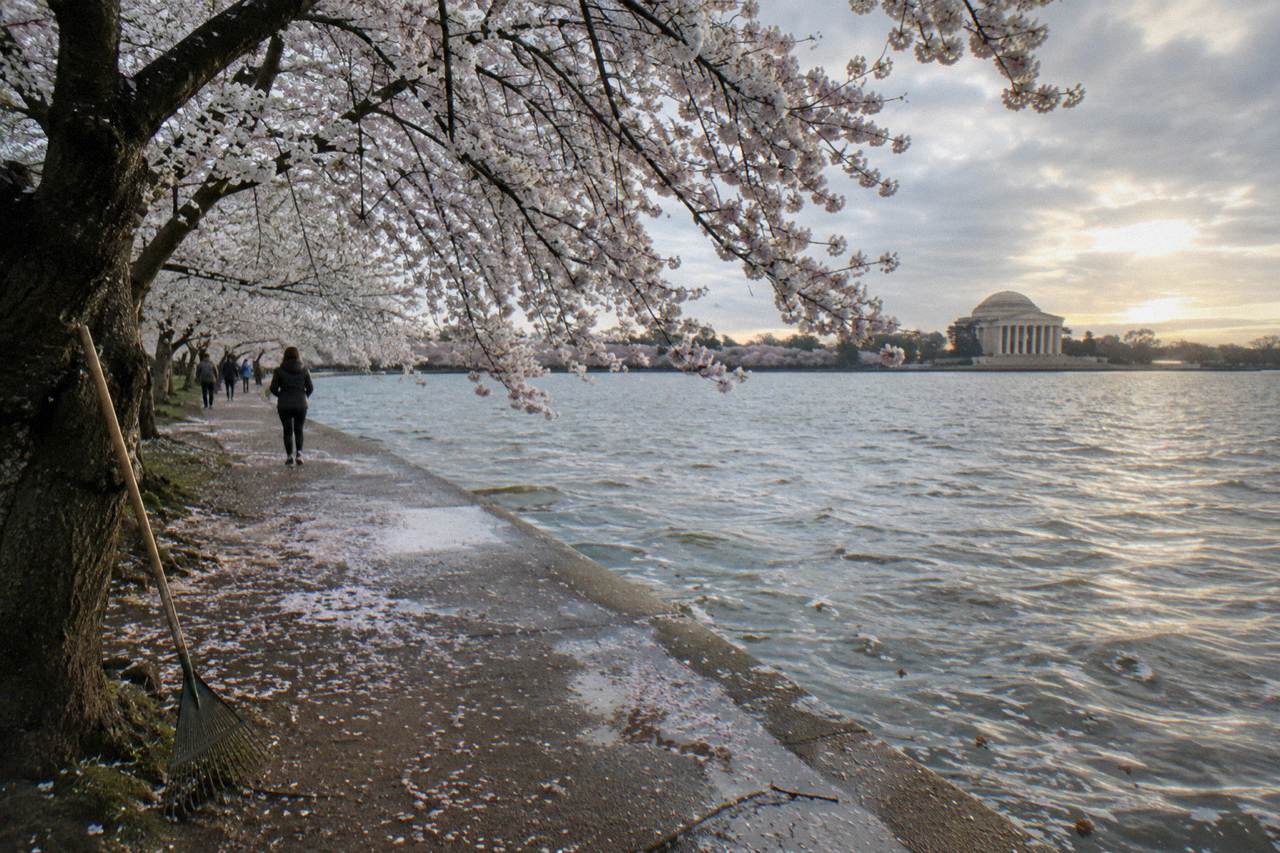
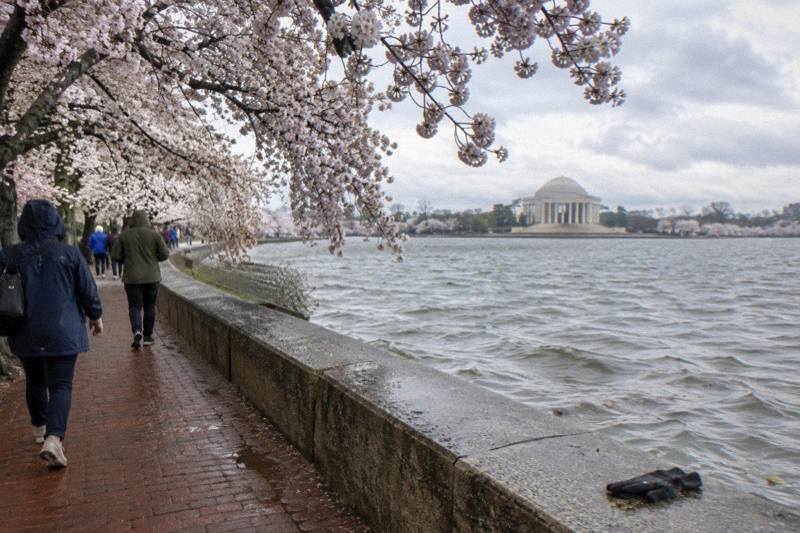
The cherry blossoms in DC concentrate around the Tidal Basin, where the Yoshino trees ring the water beside the Jefferson Memorial and the Franklin Delano Roosevelt Memorial. More flowering trees line the National Mall itself, stretching from near the Washington Monument toward the Capitol. The National Park Service confirmed the 2026 peak bloom on March 26, 2026, and a typical window runs the last week of March into the first week of April. Cruising between the basin and the Mall is far easier on two wheels, and our guide to biking from the monuments out to Mount Vernon lays out the routes, seasons, and closure notes.
That is the short answer, and it is true every year even as the dates shift. The long answer is about geometry and crowds. The Tidal Basin is a loop of water southwest of the Washington Monument, and in bloom season its edges turn into a dense white and pink ring that photographs the way people expect DC to photograph. The trees stand close together there, the water doubles the color, and the Jefferson Memorial sits at the far southern end like a centerpiece. There is nowhere else in the city with that combination.
The catch is that everyone knows it. On a peak weekend afternoon the Tidal Basin path becomes a slow-moving crowd, and moving between memorials on foot takes far longer than the map suggests. A bicycle solves part of this. The National Park Service states plainly that bicycles are welcome in National Mall and Memorial Parks, that bicycle parking sits near each major memorial, and that the park is open 24 hours a day. Riding inside the memorials themselves is not permitted; at the World War II and Franklin Delano Roosevelt Memorials you walk the bike through, and elsewhere you lock it up before entering. For a fuller plan that pairs the Metro with short walks and a bike, see our guide to getting around DC by Metro, on foot and by bike.
That combination, a compact ring of famous trees plus flat, bike-friendly ground around it, is why blossom season is one of the best weeks of the year to see DC on two wheels.
If you would rather plan the trip yourself, the two questions that matter are where the trees actually are and when they open. The rest of this article walks through both, plus the cycling rules and seasonal crowds that shape a blossom visit. For a deeper dive on the trees, the seawall work and the routes around the water, our cherry blossom season riding guide covers the same ground in more detail.
The Tidal Basin: The Postcard Views
The Tidal Basin is DC's cherry blossom heart, a man-made reservoir ringed by Yoshino cherry trees with the Jefferson Memorial on its southern edge and the Franklin Delano Roosevelt Memorial along its western side. The National Park Service counted 70 percent of Yoshino blossoms open there on March 26, 2026, the day 2026 peak bloom was reached. In a normal year the trees flower between the last week of March and the first week of April.
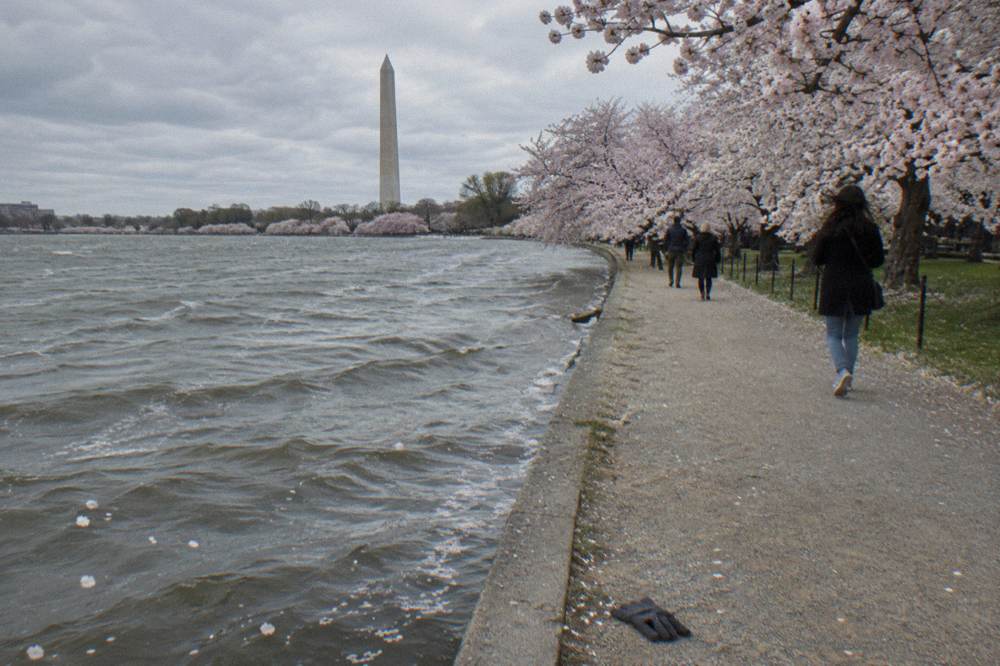
The basin is small enough to walk and famous enough that walking it slowly is the default experience. The path loops the water, and the classic photographs come from its northwest corner, where the trees frame the Washington Monument across the water, and from the south, where the Jefferson Memorial rises directly out of the blossom line. The Martin Luther King, Jr. Memorial also sits on the basin's northwest edge, so a single slow loop passes three of the city's major memorials inside a compact stretch of shoreline.
One thing worth knowing before you go: this shoreline has been under reconstruction. The National Park Service completed the first phase of the Tidal Basin seawall rebuild early and under budget, and the project area, including paths, stayed closed through the 2026 National Cherry Blossom Festival for landscape stabilization and new tree planting, with reopening expected shortly afterward. No major ongoing construction closures were reported in 2026 sources after that. Before a 2027 visit, check the park's current notices; the blossom trees have not moved, but the path configuration around them may have.
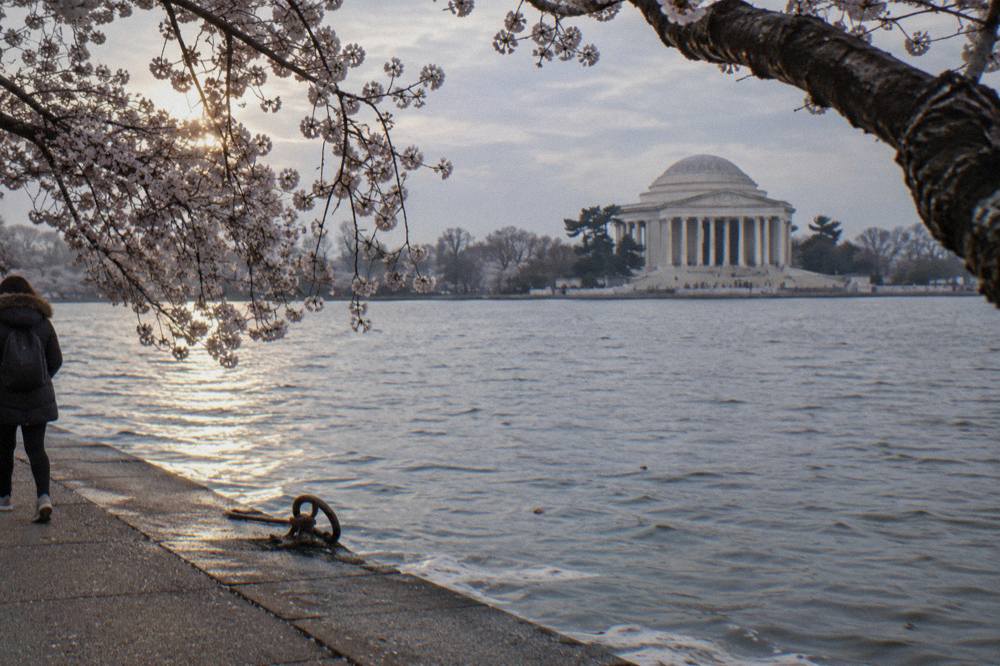
Timing within the day matters almost as much as timing within the week. The basin faces west and south, so early morning light hits the Jefferson Memorial across the water, and the park's 24-hour access means a sunrise visit is legal and uncrowded. Late afternoon reverses the light onto the northwest trees. Midday gives the flattest photographs and the thickest crowds. None of this is promised; bloom intensity, weather and crowd size vary year to year, and the National Park Service's Bloom Watch page is the official record of how the season is actually progressing.
Cherry Trees Beyond The Basin On The National Mall
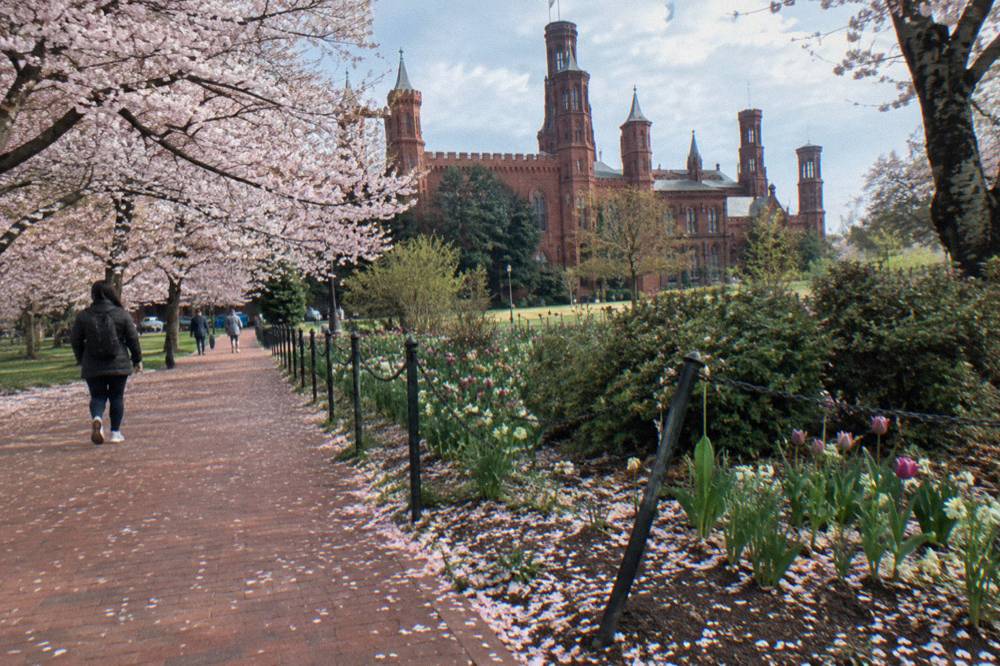
The National Mall itself carries the second act of DC's cherry blossom season: flowering trees scattered along the greensward between the Washington Monument and the Capitol grounds, plus clusters near the Smithsonian museums. The Mall adds space, and in bloom season space is the scarce resource. The park's flat, car-free-friendly layout makes it the natural cycling complement to a crowded Tidal Basin loop.
This is the part of blossom season most visitors underuse. The Tidal Basin gets the postcard, but the long open stretch of the Mall lets you see cherry trees against a completely different backdrop: museum facades, the Castle, the monument grounds. The Washington Monument stands 555 feet 5 1/8 inches tall at the Mall's western anchor, and the blossom trees scattered across the surrounding greens give the wide shots the basin cannot. It is a different photographic mood, looser and less crowded.
Getting between the two by bike is simple, and that ease is exactly why an e-bike ride that treats the Tidal Basin as one stop inside a full National Mall loop works so well in April. The National Mall & Tidal Basin E-Bike Tour runs 3 hours on electric bikes, shared format, and its whole design idea is this pairing: the basin's dense trees plus the Mall's scattered ones, connected without foot traffic.
For riders weighing whether electric assist matters on ground this flat, our comparison of e-bikes versus regular bikes for seeing DC works through the trade-offs. The short version for blossom week: the terrain is easy either way, and the real argument for an e-bike is covering more of the Mall between flower stops before the afternoon crowds build.
Is a guided blossom ride worth booking for a season you could explore alone?
A guided ride earns its price in blossom season mainly through timing and routing: a local operator rides the trees at the right hour, skips the choked segments and moves the group between the basin and the Mall efficiently. Both dedicated cherry blossom rides on this site run about 2 hours with a guide, which leaves most of your day free. Prices and meeting points are on each booking page, since blossom-season pricing moves with demand.
Riding To The Blossoms: The Guided Options
Two dedicated cherry blossom bike tours operate in DC each spring: a 2-hour classic-bike Cherry Blossoms by Bike Tour and a 2-hour Cherry Blossom Bike & E-Bike Tour that offers an electric upgrade. Both are shared rides with a guide. They exist only in season, they sell around peak bloom weeks, and the booking page for each states the current price, meeting point and what is included.
The classic ride, the Cherry Blossoms by Bike Tour, is the straightforward version: a 2-hour guided loop on regular bikes aimed at the flowering trees. The Cherry Blossoms by Bike Tour suits riders who want the seasonal highlight without committing half a day, and its short length pairs well with a museum afternoon. What the day looks like is consistent across guided blossom rides: meet the guide at the listed point, get fitted on the bike, ride to the trees with stops for photos and history, and finish back near the start. Check the booking page for the exact meeting point and inclusions.
The e-bike option covers the same seasonal idea with an upgrade path. The Cherry Blossom Bike & E-Bike Tour also runs 2 hours, shared, and its listing offers the electric version for riders who want the assist. On flat Mall ground the assist is a comfort rather than a necessity, but in blossom season the crowd-dodging matters more than the pedaling, and an easier bike makes a long morning feel shorter. The rest of the planning pages sit on Bike Tours Washington DC.
One honest note on expectations: no operator can promise what the trees will be doing on your date. Blossoms typically hold about a week to ten days once open, and a storm or a heat spike can end the display early. The National Park Service initially forecast 2026 peak bloom for March 29 to April 1, then confirmed it on March 26, a reminder that even the official forecast moves with the weather. Book the ride for your trip dates, and treat whatever the trees give you that week as the show.
When The Blossoms Open: Weather And Timing
Cherry blossoms in DC typically peak between the last week of March and the first week of April; 2026 peaked on March 26. The 2027 National Cherry Blossom Festival runs March 20 to April 11, 2027, and no 2027 peak bloom forecast existed as of the end of October 2026, since forecasts normally appear in late February or early March. March and April normals in DC average highs of 56.5 and 68.0 degrees.
The timing question has its own full treatment in our guide to cherry blossom peak bloom dates and timing, which owns the forecasting side of the topic. What belongs here is how the weather shapes the place choices. March in DC is cool and damp, with normals showing an average high of 56.5 degrees, an average low of 38.6, and about 6.5 days with rain. April warms to an average high of 68.0 with a low of 48.4, and rain on roughly 6.4 days. Both months are rideable, but layers matter more in March.
| Month | Avg high (F) | Avg low (F) | Precip (in) | Days with rain |
|---|---|---|---|---|
| March | 56.5 | 38.6 | 3.5 | 6.5 |
| April | 68.0 | 48.4 | 3.21 | 6.4 |
| May | 76.5 | 58.0 | 3.94 | 7.3 |
These are 1991 to 2020 climate normals from NOAA for Washington Reagan National Airport, not a forecast for any specific week. They tell you what a late-March blossom morning usually feels like: jacket weather at 8 a.m., pleasant by noon, a real chance of rain somewhere in the week. For clothing specifics, our piece on what to wear for a DC bike ride has the layering logic.
The festival frame matters too. The National Cherry Blossom Festival's 2027 edition runs March 20 to April 11, 2027, per the festival's own FAQ page, and its marquee events, the opening ceremony, the kite festival, the fireworks and the parade, each pull extra visitors to the Mall on their specific days. The trees do not follow the festival calendar; they follow the weather. A visit in the festival's first week can catch pre-peak buds, and a visit after the parade can still land inside the bloom window. The festival's official FAQ page lists the confirmed dates and events.
Rules Of The Road When Biking The Blossoms
Cycling among the cherry blossoms follows the same rules as cycling the National Mall year-round: bicycles are welcome throughout National Mall and Memorial Parks, bike parking sits near each major memorial, riding inside the memorials themselves is not allowed, and anyone under 16 must wear a helmet on a public roadway or path under DC law. The park is open 24 hours a day.
The specifics come straight from the National Park Service's bicycling information page for the National Mall. The two memorials on the Tidal Basin loop where you walk the bike through are the World War II Memorial and the Franklin Delano Roosevelt Memorial; at the others, lock up at the provided parking before entering. This matters most in bloom season, when the basin path is crowded enough that pushing a bike through the thickest sections is often the courteous and practical choice anyway.
For families, the helmet law is the one rule to plan around: DC requires a securely fastened helmet for anyone under 16 operating or riding as a passenger on a bicycle on a public roadway, path or other right-of-way, and parents can be held responsible for letting a child ride without one. Guided tour operators supply helmets with their bikes, but confirming child gear sizes on the booking page before a blossom-week reservation is wise, since small frames and child seats book out first in the season's busiest weeks. Our guide to family bike rides in DC with kids covers the rest of the logistics.
Crowds, Closures And A Realistic Plan
Bloom season brings DC's densest park crowds of the year, concentrated on Tidal Basin paths on peak weekends, and spring 2026 showed how construction and events compound them: the seawall project area closed through the festival, and the Washington Monument grounds' west side remains closed into 2027. A realistic plan rides early, checks National Park Service notices the week of the visit, and treats the Mall's scattered trees as genuine bloom viewing rather than a consolation prize.
The pattern repeats every year and still surprises people. The weekend nearest peak bloom turns the basin's loop path into a queue; weekday mornings are a different world entirely. Because the park never closes, the earliest riders get the light, the empty paths and the photographs. Anyone arriving by Capital Bikeshare for a self-guided loop should know the verified pricing: a day pass costs $10 per 24 hours with classic rides free for the first 45 minutes, then 5 cents per minute, and e-bikes at 15 cents per minute, with single rides at $1 to unlock plus 15 cents per minute on a classic bike.
Closures deserve a check the week you travel. Beyond the blossom-specific seawall history, the National Park Service ran a steady drumbeat of Mall closures through 2026, from Independence Day security perimeters to marathon-weekend road restrictions to nighttime Long Bridge work on Maine Avenue and Ohio Drive. Spring 2027 will have its own set. None of these typically close the cherry trees themselves, but they can move the best riding line around the basin, and the park's public notices page is the primary source.
If the season leaves you flexible on dates, the honest strategy is to book the ride and the hotel for the statistically likely week, the last week of March into the first days of April, then watch the Bloom Watch page as the forecast firms up in late winter. Riders who cannot travel in that window still see cherry trees; later-blooming varieties and the city's other flowering trees extend color deeper into April. But the Yoshino peak at the Tidal Basin is a narrow, famous, two-week event, and planning around it is the difference between the postcard and the promise of one.
Common Questions About Cherry Blossoms In DC
Where To See Cherry Blossoms In DC?
The Tidal Basin, ringed by Yoshino trees beside the Jefferson Memorial and the Franklin Delano Roosevelt Memorial, is the famous view, with more flowering trees scattered along the National Mall toward the Capitol. A bike connects both areas in a single morning.
Where To See Cherry Blossoms In 2026?
Peak bloom in 2026 was reached on March 26, 2026, when the National Park Service recorded 70 percent of Yoshino blossoms open at the Tidal Basin. The best spots that season were the Tidal Basin loop and the cherry trees along the National Mall.
When Do The Cherry Blossoms Usually Bloom In DC?
The typical window runs from the last week of March to the first week of April. The 2027 National Cherry Blossom Festival is set for March 20 to April 11, 2027, and no 2027 peak bloom forecast had been published as of the end of October 2026.
Can You Bike Around The Cherry Blossoms?
Yes. Bicycles are welcome in National Mall and Memorial Parks, with bike parking near each major memorial, though riding inside the memorials themselves is not permitted. At the World War II and Franklin Delano Roosevelt Memorials you walk the bike through.
Do Cherry Blossom Bike Tours Include The Bike And Helmet?
The booking page for each tour states the exact inclusions. The dedicated blossom rides run about 2 hours with a guide; check the operator's page for the current price, meeting point and whether child equipment is available for your dates.
Is The Tidal Basin Path Open For The 2027 Season?
The seawall project area, including paths, stayed closed through the 2026 festival for landscape stabilization and new tree planting, with reopening expected shortly after, and no major ongoing construction closures were reported in later 2026 sources. Check the National Park Service notices before a 2027 visit.