Where To Go Biking In DC?
Where to go biking in DC: the National Mall monuments, the Tidal Basin, and the Alexandria to Mount Vernon trail day, with seasons, costs and closure notes.
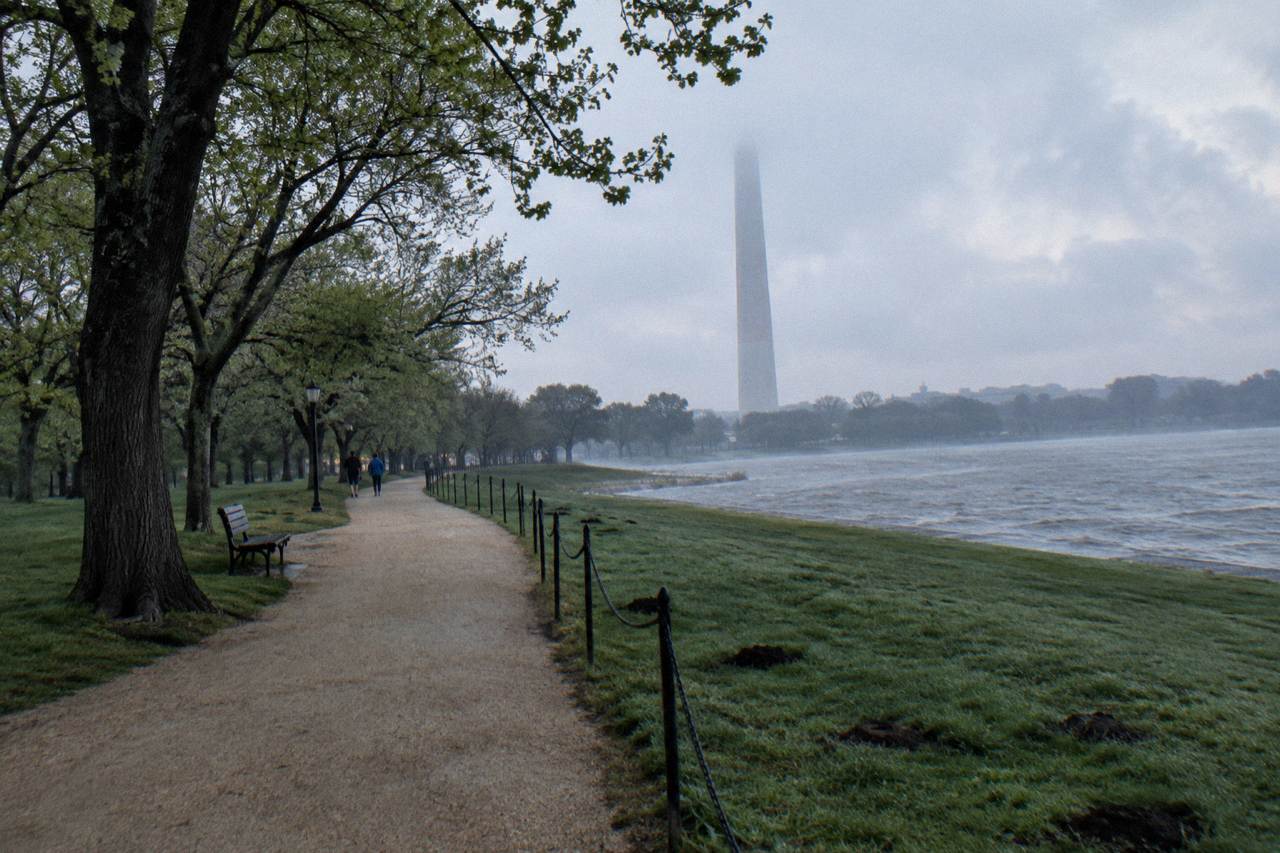
The three places to bike in DC are the National Mall monument loop, the Tidal Basin and Potomac riverfront, and the Mount Vernon Trail day out of Alexandria. The Mall concentrates the major memorials; the Tidal Basin side adds water views and cherry blossoms; the Alexandria ride trades monuments for a riverside trail ending at Mount Vernon. A 3-hour guided monuments ride covers the first two, and a self-ride bike and boat day covers the third, with bike, helmet, estate ticket and boat leg included and no guide leading the way.
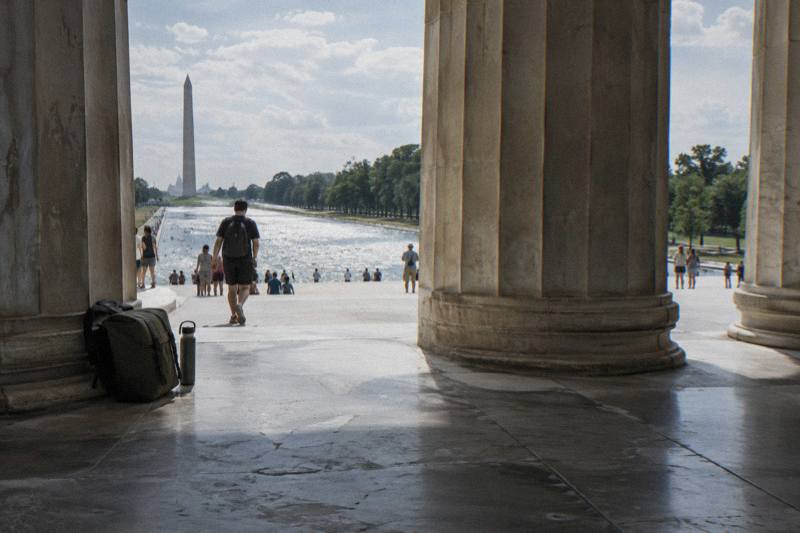
Start with the geography, because it explains everything else. The National Mall is the spine of Washington: museum-lined greens, the Capitol at one end, the Lincoln Memorial at the other, and the Washington Monument standing 555 feet 5 1/8 inches tall in the middle. Every major memorial cluster on a first visit sits on or beside that spine. The Tidal Basin loops off the southwest edge, ringed with Yoshino cherry trees, and the Potomac riverfront trails run south from there toward Alexandria. You can ride all of it on car-free or nearly car-free paths, which is unusual for a capital city and the reason biking is genuinely the fastest way to see the monuments.
The practical question is how much you want to plan yourself. The Mall loop works fine as a self-guided ride with a rented or Bikeshare bike, and we cover that route below. The Mount Vernon day is a different animal: it is a long commitment, and the self-ride bike and boat packages bundle the bike, helmet, estate ticket and boat leg, leaving you to pedal at your own pace. And if you want the monuments explained rather than just seen, a guided ride does that in about three hours. For a fuller rundown of the options, the guide to the best DC tour overall compares the formats side by side.
Here are the three rides this site would point most visitors toward first, one for the monuments, one for the full day out, and one e-bike option that flattens the distance.
The National Mall Monument Loop
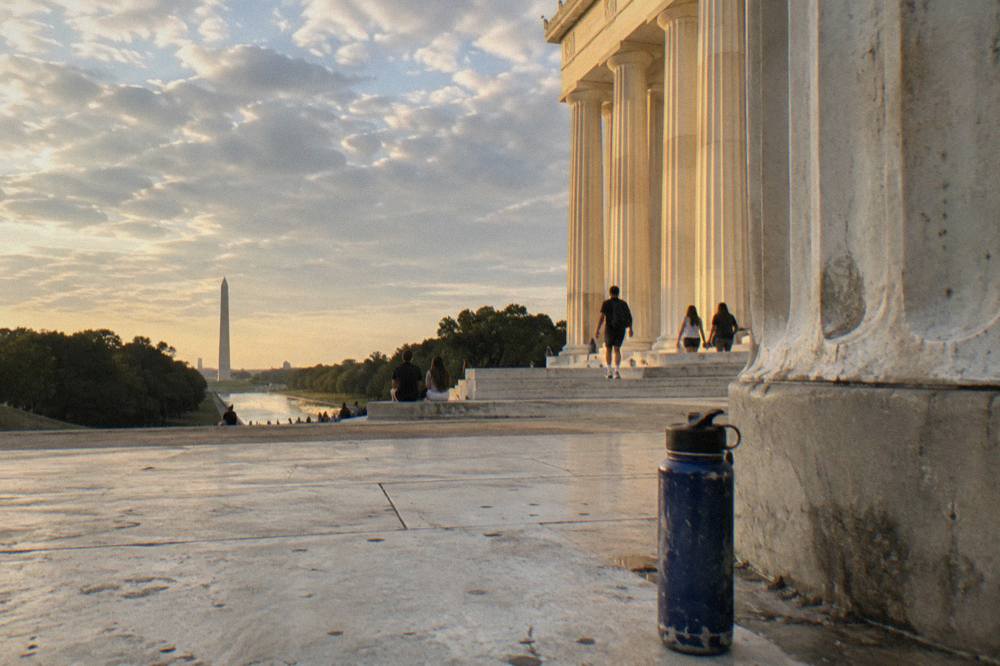
The Mall loop is the classic DC bike ride: Capitol, Washington Monument, the war memorials, Lincoln Memorial and back, all on paths where bicycles are explicitly welcome. The National Park Service confirms bikes are permitted throughout National Mall and Memorial Parks, with bike parking near each major memorial. Riding inside the memorials themselves is not allowed, so walk the bike through the World War II and FDR memorials or lock it before entering.
The rule set matters here and it is simple. Bicycles are welcome on the Mall paths, parking racks sit near the major memorials, and the park itself is open 24 hours a day. The one hard line: you do not ride inside the memorials. The World War II and Franklin Delano Roosevelt memorials are designed as walk-through spaces, and the park service asks cyclists to walk bikes through them. Everywhere else, lock up at the racks and walk in. Anyone under 16 needs a helmet by DC law on any public roadway or path, and that applies on NPS land too.
One closure in force as of late 2026 changes the loop slightly. The Lincoln Memorial Reflecting Pool, its adjacent walkways and the grass medians are closed for repairs until Friday 20 November 2026 at 11:59 p.m., and the Washington Monument Grounds west side is closed through 23 January 2027 for turf restoration. Neither closes the Mall itself; you can still ride to and past both memorials. But the pool view from the Lincoln steps is unavailable until late November, so check the NPS public notices before you go if that view is on your list. The route itself is unchanged, and the detailed Mall route and stops guide walks through every stop in order.
Guided vs self-guided is the real decision on this loop. A shared guided ride such as the 3-hour Monuments and Memorials Bike Tour from Unlimited Biking covers the memorial cluster with a guide who explains each stop, a classic bike included, in a single morning or afternoon. The equivalent 3-hour ride with an e-bike upgrade exists for riders who want the assist. Self-guided works well too: with a Capital Bikeshare day pass at $10 per 24 hours you can hop between memorials, docking at each cluster, with classic rides free for the first 45 minutes each and e-bikes at $0.15 per minute. The trade is straightforward, guidance and a named bike versus flexibility and a low price.
| Ride option | Format | Time | Bike type | What it covers |
|---|---|---|---|---|
| Monuments and Memorials Bike Tour | Shared guided ride | 3 hours | Classic | The Mall's major memorials with a guide |
| Monuments Ride, E-Bike Upgrade | Shared guided ride | 3 hours | E-bike option | Same monument cluster with pedal assist |
| Capital Bikeshare day pass | Self-guided | Your own pace | Classic or e-bike | Unlimited 45-minute classic rides per 24 hours |
| Night Monuments Ride | Shared guided ride | 3 hours | Classic | The lit memorials after dark |
Prices for the guided rides vary by season and start time, so check the operator's booking page for the current figure rather than assuming; the list above is about format and coverage, which stay stable even when prices move. One reassurance worth having: most of these shared rides come with free cancellation, so booking ahead costs you nothing if the forecast turns. That matters more than people expect in a city where October often brings steady rain.
When you are ready to compare the guided options directly, the operator's live listing for the classic monuments ride is the place to start:
The Tidal Basin And The River Side
The Tidal Basin is the second ride: a waterside loop past the Jefferson Memorial, ringed by Yoshino cherry trees, connecting into the Potomac riverfront paths toward Ohio Drive and the memorials along it. It is where the cherry blossom crowds go in spring and where the quieter river rides go the rest of the year. The e-bike version covers both the Mall and the basin side in a 3-hour guided ride.
The Tidal Basin rewards timing more than any other ride in the city. The cherry trees typically reach peak bloom in the last week of March or the first week of April; in 2026 the National Park Service confirmed peak bloom on March 26, when 70 percent of Yoshino blossoms were open, and the blossoms usually hold for about a week to ten days after that. Outside that window the basin is a calm water loop with the Jefferson Memorial reflected in it, and frankly the better riding: same paths, a fraction of the people. The 2027 National Cherry Blossom Festival runs March 20 to April 11, and no peak bloom forecast is published yet, so watch the park service bloom watch page in late winter rather than trusting a date now.
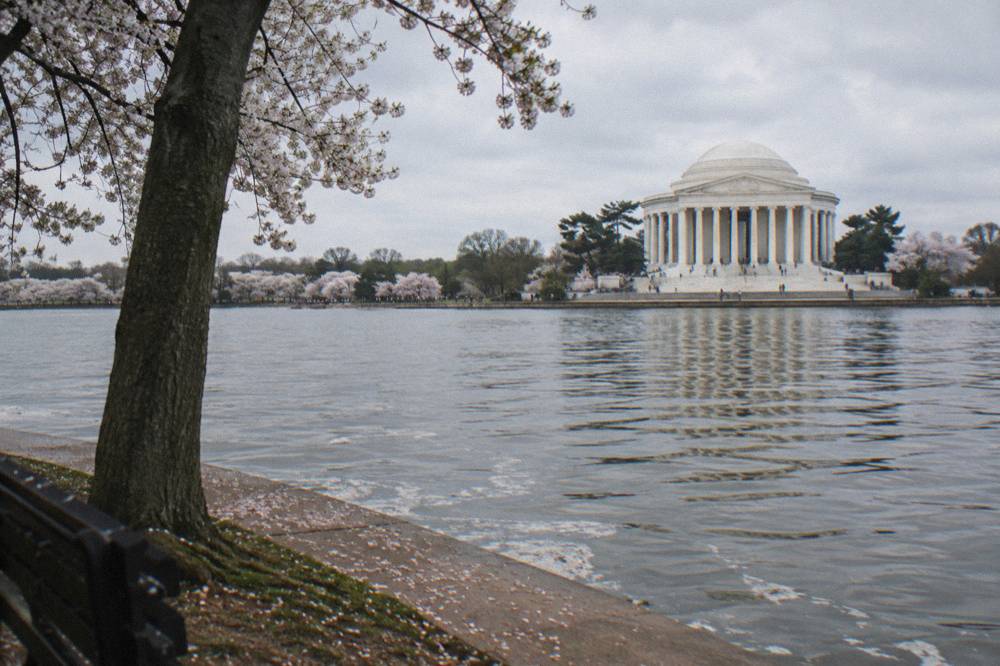
The seawall work that reshaped this area is worth knowing. The first phase of the Tidal Basin seawall reconstruction finished early and under budget, and the project area including some paths stayed closed through the 2026 festival for landscape stabilization and new tree planting, with reopening expected shortly afterward. No major construction closures are reported in the current sources, but the basin's path configuration has changed shape over the past two years, so treat any older map with mild suspicion and follow the on-site signage. For blossom strategy specifically, the peak bloom timing guide goes deeper on forecast mechanics.
For riders who want the basin and the Mall in one outing without working hard, the e-bike tour pairing is the natural fit. DC law defines the local "motorized bicycle" category as a pedal bike whose motor cannot propel it faster than 20 mph on level ground, which is what the tour e-bikes are, and the assist flattens the distance between monument clusters that tires people out on a hot afternoon. The trade against the classic 3-hour monuments ride is small in price and large in comfort on humid days.
If your timing lands in spring, the dedicated blossom ride is the sharper pick: a 2-hour guided classic ride timed to the trees, with an e-bike option on the other listing.
The Alexandria To Mount Vernon Day
The third ride is the big one: a day out of Alexandria down the Mount Vernon Trail to Mount Vernon, George Washington's estate on the Potomac. Guided versions bundle the ride with a boat leg, either a river cruise or a return by water, and run 4 to 7 hours depending on the option. This is the ride for a second or third day in the city, after the monuments are done.
What the day looks like depends on which listing you book, so read the inclusions carefully. The 6.5-hour Alexandria Mount Vernon Bike and Boat Tour is the full version: ride the trail, tour the estate, and return by boat. The alternate listing describes a 4 to 7 hour window with an optional river cruise, which lets a shorter day skip the water leg. Both are shared classic-bike rides. What they share is the trail itself, a riverside corridor that keeps the Potomac in view for most of the way south, and an endpoint that is genuinely worth the trip: the estate, the grounds and the view over the river from Washington's porch. More of these guides are collected on Bike Tours Washington DC.
The trail's official mileage is hard to pin down, so treat any figure you see with caution and confirm with the park service or your tour operator before planning around a set distance. Call it a half-day-plus effort and plan accordingly. If you want the flavor of the ride before committing, how long the Alexandria to Mount Vernon ride takes covers the pacing question, and where to park for the Mount Vernon Trail handles the practical starting logistics.
The self-guided version is entirely doable with a rental from Old Town Alexandria, and many riders do exactly that. What the guided day adds is logistics: the bike is provided, the estate visit is coordinated with the riding schedule, and the boat leg is booked for you. On a warm Saturday in spring, when the trail fills with local riders and the estate parking fills before noon, having someone else own the timing is worth real money. Check the booking page for what your specific date includes, since the cruise component is optional on one listing and standard on the other.
When To Ride: Seasons And Weather
The best biking months in DC are April, May, late September and October, when normal highs run from the upper 60s to mid 70s Fahrenheit and rain days stay under eight per month. Summer normals hit 89.6 degrees in July with warm, humid nights; winter normals sit in the 40s with short days. Cherry blossom season is the most beautiful window and the most crowded.
These are 1991 to 2020 climate normals from NOAA, measured at Reagan National Airport, so they are averages, not forecasts. But they describe the riding year well. Spring warms from a March normal high of 56.5 degrees to 68 in April, with March carrying the most rain days of the shoulder season at 6.5. Summer is the hard season: July averages an 89.6-degree high with a 72.4-degree overnight low, which means paths that never cool down; June through August each average more than four inches of rain, much of it as afternoon thunderstorms. Fall is the prize, October especially: a 69.4-degree normal high, the lowest rain-day count of the year at 4.9, and stable air. Winter rides happen, but the 44.8-degree January normal high and 30.1-degree lows demand layers, covered in the rain and cold weather guide.
| Month | Avg high F | Avg low F | Rain days | What it means for riding |
|---|---|---|---|---|
| April | 68.0 | 48.4 | 6.4 | Blossom crowds, ideal temps |
| May | 76.5 | 58.0 | 7.3 | Green and warm, humid by late month |
| July | 89.6 | 72.4 | 6.7 | Ride early, hydrate, expect storms |
| October | 69.4 | 52.2 | 4.9 | The best riding month of the year |
| January | 44.8 | 30.1 | 5.7 | Quiet paths, full layers |
Free And Self-Guided Options
The monuments themselves cost nothing, the park is open 24 hours, and the paths are free to ride: the only mandatory cost is the bike. A Capital Bikeshare day pass at $10 per 24 hours is the cheapest structured option. Two genuinely free walking tours exist on the pay-what-you-want model, but they are walks, not rides, and they cannot cover the ground a bike does in the same time.
The free layer of the city is real. Every memorial on the Mall is free to enter, the park never closes, and NPS provides bike parking near each major memorial. If you already have a bike or a pass, a full monument circuit costs nothing beyond your legs. On the Bikeshare side, "free" does not apply: a day pass is $10, a single ride is a $1 unlock plus $0.15 per minute on a classic bike, and the comparison between Bikeshare and a guided ride is laid out in the dedicated breakdown.
For zero up-front cost, the two verified free tours are walking tours on GuruWalk, an independent platform, and "free" there means pay what you want: you tip the guide what the walk was worth at the end. The Walking Tour of DC Monuments runs about 2 hours with 9 stops, starting at the World War II Memorial information center at 5 Homefront Dr SW, and covers the Lincoln, MLK, FDR and Jefferson memorials plus the WWII, Vietnam and Korean War memorials; it holds a 4.41 rating from 335 reviews. See this free tour on GuruWalk. The evening version, DC Monuments by Moonlight, runs about 1 hour 30 minutes with 7 stops from the Albert Einstein Statue at 2101 Constitution Ave NW, rated 4.26 from 65 reviews. See the moonlight walk on GuruWalk.
Be clear about what those walks are: on foot, not on wheels. In roughly two hours a walking group covers one end of the memorial cluster; a guided bike ride in the same time covers more of the Mall and reaches the Tidal Basin side as well, with the bike and helmet included per the listing. Riders who only walk tend to leave the basin and the river memorials unseen for lack of time. If a bike ride fits your budget even once on the trip, the monuments day is the moment it earns its price, and you can compare formats in the guide to private and small group rides.
The final format worth naming is night riding. The memorials are lit after dark, the Mall paths stay open, and a dedicated guided night ride runs 3 hours through the illuminated monuments. Sunset in early November sits near 6 p.m., so the night option doubles your usable sightseeing day as the evenings lengthen.
Whether your answer is the three-hour monument loop, the e-bike basin tour, or the full Mount Vernon day, these are the three rides that define cycling in the capital, and the one decision left is which day of your trip each one gets:
Common Questions About Biking In DC
Where To Go Biking In DC?
Ride the National Mall monument loop first, then the Tidal Basin and Potomac riverfront, and save the Alexandria to Mount Vernon trail day for a second or third day. A 3-hour guided monuments ride covers the first two; a guided bike and boat tour covers the third.
Can You Bike On The National Mall?
Yes. The National Park Service confirms bicycles are welcome throughout National Mall and Memorial Parks, with bike parking near each major memorial. Riding inside the memorials is not permitted; walk the bike through the World War II and FDR memorials or lock it before entering.
Is The Mall Open At Night For Riding?
National Mall and Memorial Parks is open 24 hours a day, and the memorials are lit after dark. Guided night monuments rides run about 3 hours with seasonal start times; check the booking page for the current schedule.
Do I Need A Helmet In DC?
DC law requires a helmet for anyone under 16 riding on a public roadway, path or right-of-way. Adults are not required to wear one on city paths, and guided tours include helmets with the bike per the listings.
When Is Cherry Blossom Season For Biking?
The typical window is the last week of March to the first week of April; 2026 peak bloom was reached March 26. The 2027 festival runs March 20 to April 11, and no bloom forecast exists yet, so keep spring bookings flexible and watch the park service bloom watch page.