Arlington And The Potomac Riverfront By Bike
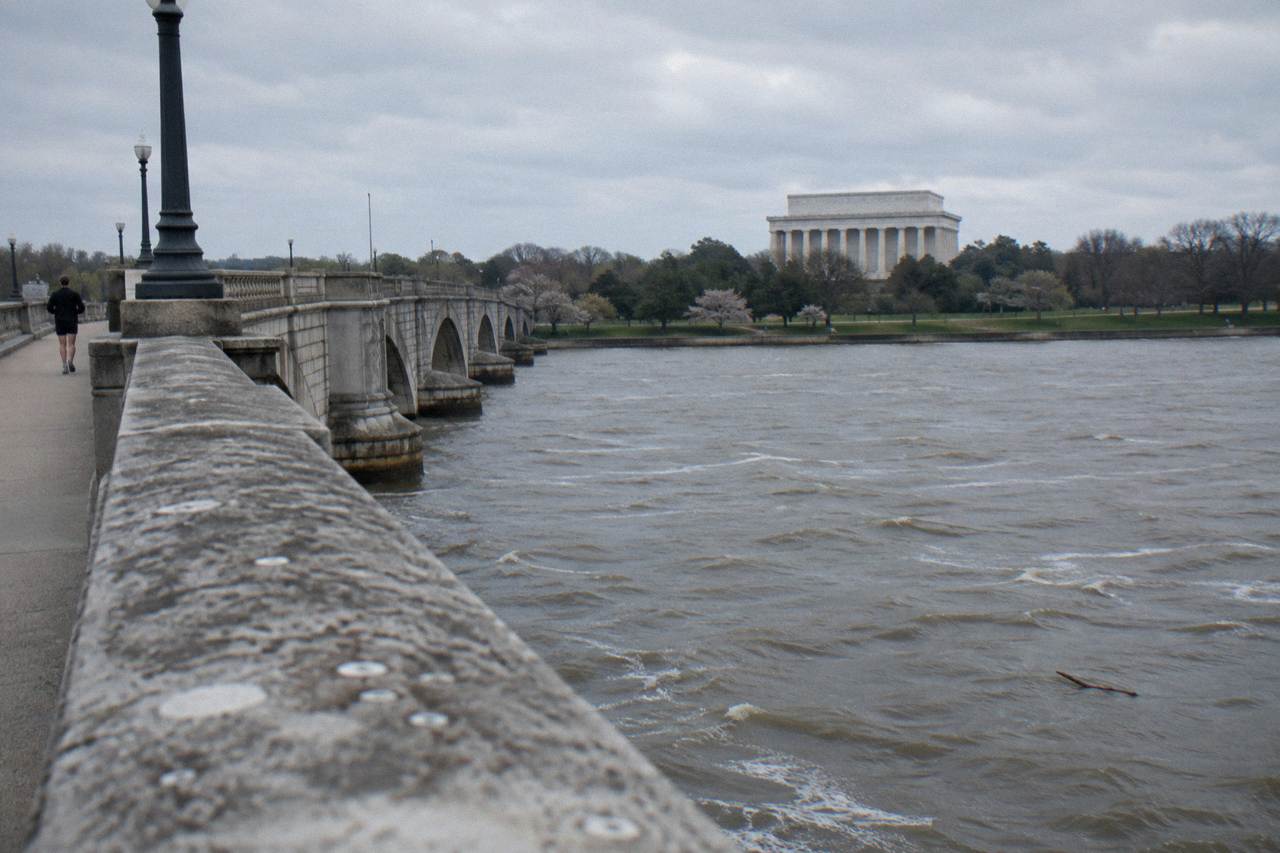
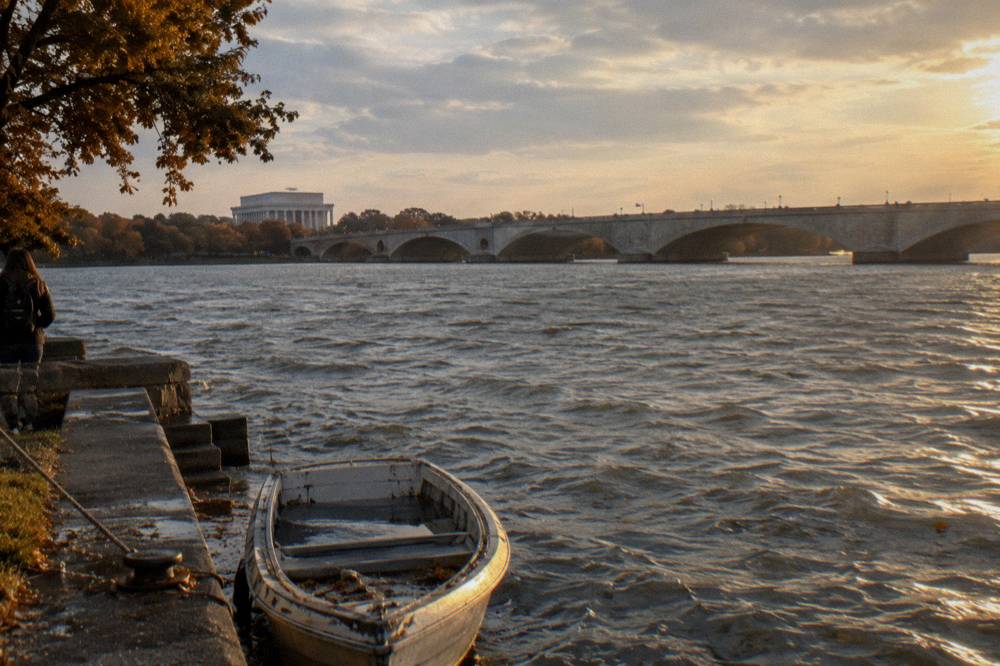
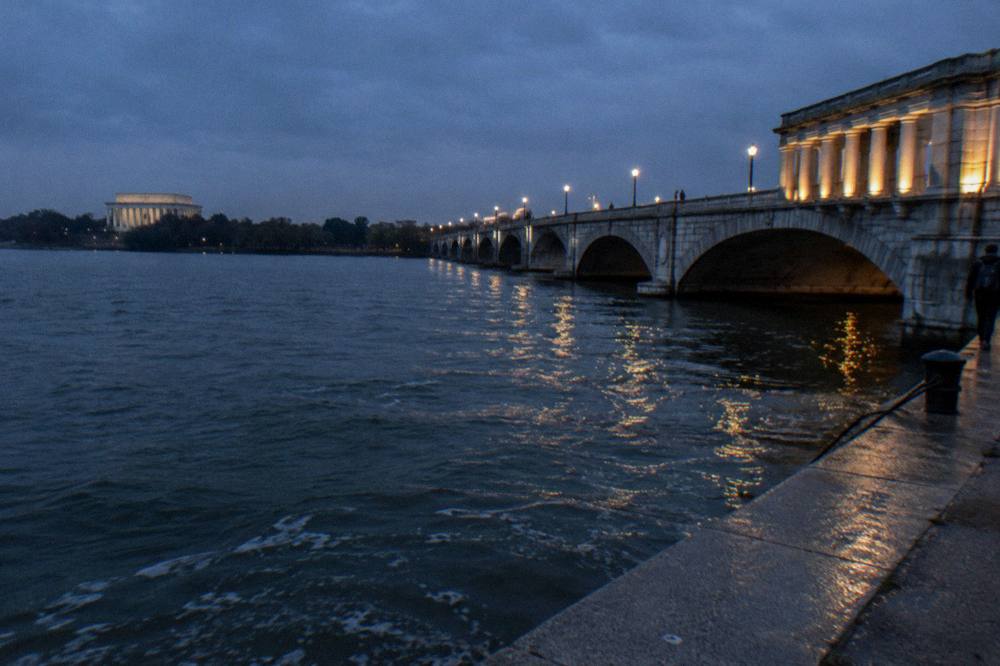
The Memorial Bridge is the classic crossing between the Lincoln Memorial and the Virginia shore, and the riverfront paths on both sides turn it into one of the region's most satisfying rides.
Short answer
Bicycles are welcome in National Mall and Memorial Parks, and the Memorial Bridge connects the Lincoln Memorial side to the Virginia shore paths near Arlington and Roosevelt Island. No guided ride on this site crosses to Arlington itself; the bookable guided options cover the Mall and Tidal Basin side, from 2 to 3 hours depending on the ride.
The Potomac riverfront is where Washington DC stops feeling like a grid of government buildings and starts feeling like a river city. On the DC side you have the Lincoln Memorial, the Georgetown waterfront and the tree-lined paths of the Mall's western edge. Across the water, the Virginia shore strings together Roosevelt Island, the Arlington riverbank and the trail that runs south toward Alexandria. The Memorial Bridge sits in the middle of all of it, a wide, low-slung crossing that was built for exactly the kind of slow, sightseeing ride this stretch rewards. If Georgetown ends up being your turnaround point, that same waterfront marks the start of the Capital Crescent Trail, and our guide to riding it from Georgetown toward Bethesda spells out what a casual rider can comfortably manage.
Here is how the pieces fit together: where the bridge connects, what the National Park Service does and does not allow on a bicycle, what is currently closed for repairs, and how the guided rides sold through Bike Tours Washington DC fit a riverfront plan. One thing to know up front, because it shapes everything below: none of the guided rides on this site crosses the bridge into Arlington itself. The bookable options cover the DC side, and a cross-river loop is a self-guided ride.
Where Does An Arlington Memorial Bridge Bike Ride Start?
Most riders start on the DC side at or near the Lincoln Memorial, because the bridge's eastern approach lands there, steps from the National Mall's bike parking and the paths along Constitution Avenue. Guided rides that touch this end of the river meet elsewhere; the operator's booking page names each meeting point exactly, so check it before you plan a self-guided start around a tour.
The National Park Service is explicit that bicycles are welcome in National Mall and Memorial Parks, with bicycle parking provided near each major memorial and along the Mall, per the official bicycling information page. That page also carries the one rule riders most often trip over: riding is not permitted inside the memorials themselves. You walk your bike through the World War II and Franklin Delano Roosevelt memorials, or lock it up before entering any other memorial.
The park is open 24 hours a day, which matters more here than almost anywhere else in the country. A riverfront loop at dawn, at sunset or after the monuments light up is not a rule-bending stunt; it is a normal, permitted use of the park. Late October and early November sunsets sit around 6 p.m., so an after-work or after-museum ride still gets you across the bridge and back in daylight.
Two things are currently closed, and both sit right where a Memorial Bridge ride begins. The Lincoln Memorial Reflecting Pool, its adjacent walkways and the grass medians are closed until Friday 20 November 2026 at 11:59 p.m. for repair work, per the NPS public notice. On the other side of the schedule, the Washington Monument grounds' west side is closed through 23 January 2027 for turf restoration, per the closure notice. Neither closes the bridge, but both reshape what the edges of your loop look like.
| Closure | Area affected | In force until | What it means for riders |
|---|---|---|---|
| Reflecting Pool repairs | Lincoln Memorial Reflecting Pool, walkways, grass medians | 20 Nov 2026, 11:59 p.m. | No pool-side photos on the approach; use other paths around the memorial |
| Turf restoration, west side | Washington Monument grounds, west | 23 Jan 2027 | Detour around the west flank; the monument itself is unaffected |
| Turf restoration, north and south | Washington Monument grounds | Ended 10 Sep 2026 | Reopened; no current impact |
What Do You See Crossing The Memorial Bridge By Bike?
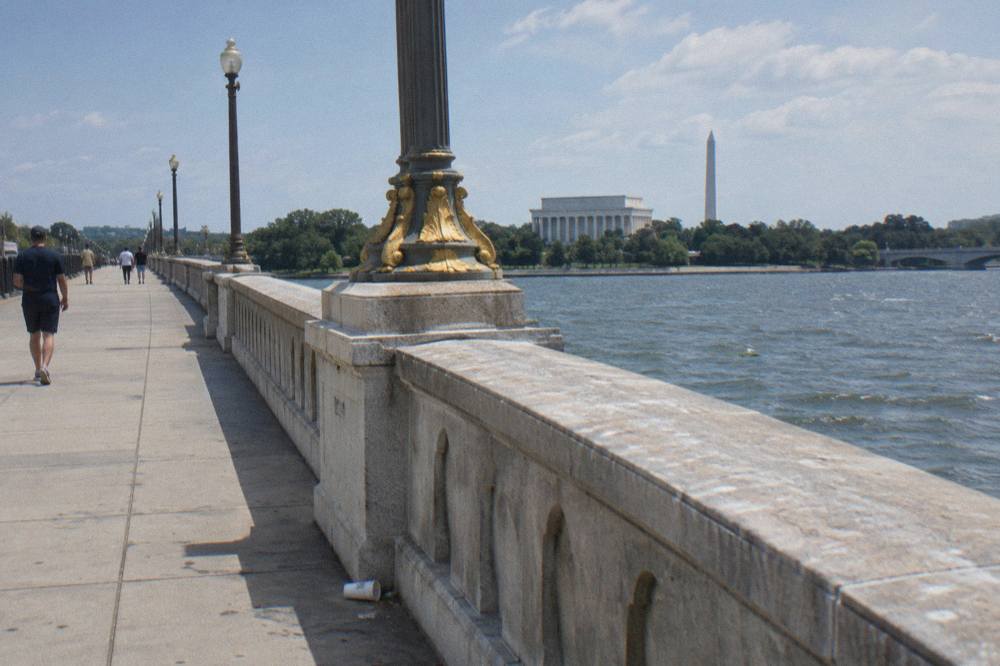
The bridge delivers a direct, elevated view line from the Lincoln Memorial's steps toward the Arlington hillside, with the river, the boat traffic and the Virginia shoreline in between; at a sightseeing pace it is the single best photo vantage on a DC riverfront loop. From the middle of the span you can see the Washington Monument behind you and the Arlington ridge ahead.
The bridge is a riding surface, not a destination, but it behaves like both. The roadway carries car traffic, so riders use the paths along its edges and keep a steady line rather than stopping mid-span. The reward for patience is the geometry: the Lincoln Memorial sits at the eastern end like a stage set, and from the western end the Arlington Memorial Avenue landscape opens toward the cemetery grounds. The Washington Monument, 555 feet 5 1/8 inches tall, anchors the view back over your shoulder.
No construction or closure on the Memorial Bridge itself was confirmed on any official source for 2026, despite the stretch of repair projects elsewhere on the Mall. The closures to plan around are the ones in the table above, plus event-driven shutdowns: 2026 brought temporary closures around Independence Day, the America 250 Grand Prix in August, and short nighttime closures of Maine Avenue SW and Ohio Drive in October for Long Bridge work. Event closures are announced, not predictable, so a quick check of the park's notices the day before a ride is cheap insurance.
For riders who want the sights without handling the route themselves, the guided options cover the DC end of this view. The three below are the rides that pair best with a riverfront plan.
Can You Bike From DC To Arlington Cemetery And Back?
Yes, as a self-guided ride: the bridge lands on Memorial Avenue, which runs toward the cemetery entrance, and bicycles are a normal way to arrive there. But none of the guided rides sold on this site crosses into Arlington, so if you want the cemetery side you ride it yourself, or you ask an operator directly whether a private route can include it.
The cemetery itself is walkable, not rideable: it is an active military cemetery with its own rules, and bicycles are not a touring mode inside it. The practical pattern riders use is to cross the bridge, follow the avenue to the entrance, lock up or walk, and treat the cemetery visit as a walking leg inside a riding day. What that crossing looks like, whether the avenue's paths suit your comfort level, and where the parking falls, are details to check on the Arlington and cemetery pages before you commit.
For families weighing this against the Mall-side rides, the trade is simple. A cross-river loop adds water, bridge and riverbank variety; a guided monuments ride adds a guide, a fixed route and equipment handled for you. Our family bike rides in DC guide breaks down which setup suits kids, and the e-bike or regular bike comparison helps if the Arlington hillside is in your plan, since the Virginia side rises away from the river.
If your reason for crossing is to keep riding south along the river rather than to visit the cemetery, you do not need the bridge at all for that plan: the Virginia-side trail connects toward Alexandria and Mount Vernon, and our Mount Vernon Trail guide covers that corridor in full.
Is Roosevelt Island Worth A Stop On A Potoman Riverfront Ride?
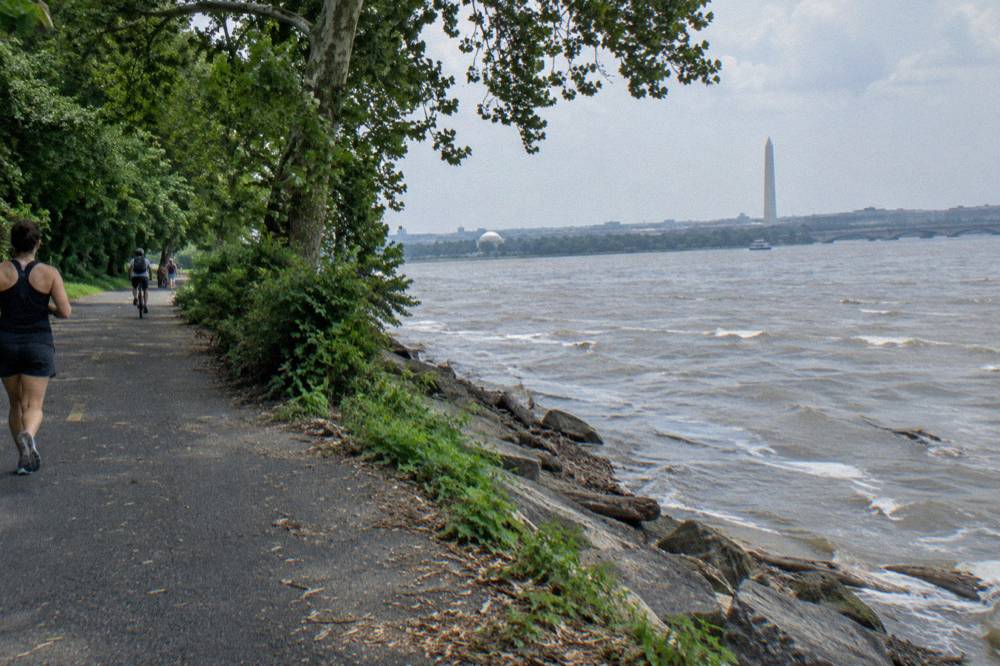
Roosevelt Island is the quietest stop on the riverfront loop: a wooded island in the Potomac with a memorial plaza at its center, reachable by a footbridge from the Virginia shore, and it breaks up a bridge-to-Georgetown ride with flat, shaded paths and a completely different atmosphere from the monumental Mall.
The island is a pedestrian space, so the bicycle routine is the same one the memorials demand: park or hold the bike at the edge and walk. That constraint is exactly why it works as a stop. Riders coming off the Memorial Bridge's Virginia end can loop downriver along the shore paths, cross the island's footbridge, walk the memorial plaza, and come back out onto the riverbank continuing south or doubling back. It is the part of the riverfront where the city noise drops away and the Potomac reads as an actual river, with water on both sides of you.
Timing the stop is a matter of light and season. Summer highs average 85.1 to 89.6 degrees Fahrenheit, per the NOAA 1991 to 2020 normals for Reagan National Airport, and the island's canopy makes it one of the few genuinely shaded respites on the riverfront. In late fall and winter, when the weather turns cold, the bare trees open views across the water that the summer foliage hides. For the trail's distance and surface, check the official trail pages before you go: it is a stop measured in minutes, not hours.
Riders who like the sound of a river-and-monuments mix but want it guided have one clean pairing: take the guided monuments ride for the DC side, then ride the Virginia bank yourself. The monuments ride is the most reviewed option that touches this end of the river.
How Does The Georgetown Waterfront Fit Into A Riverfront Loop?
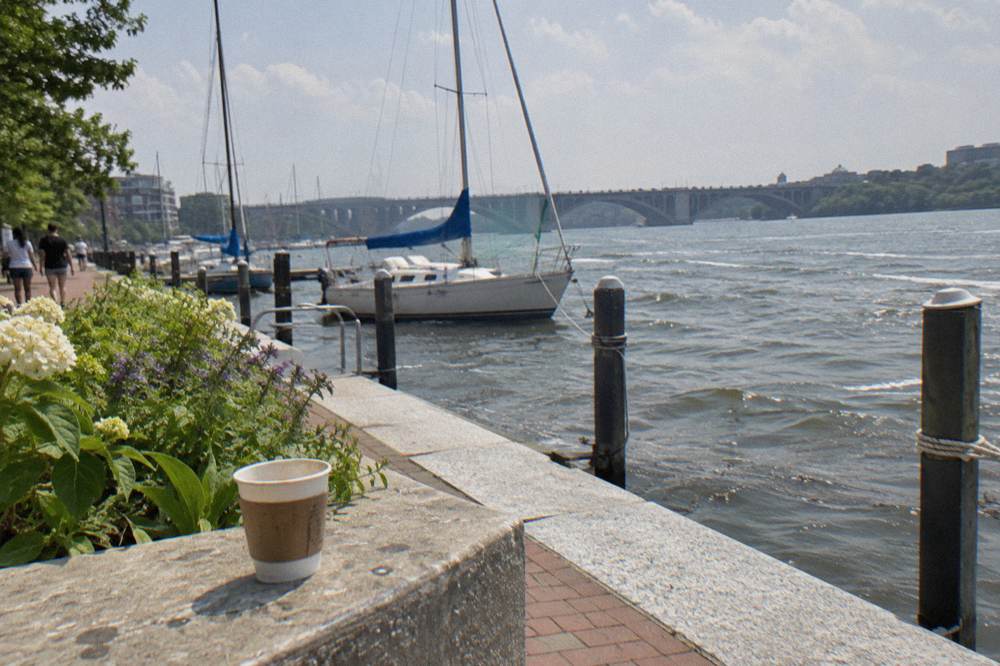
Georgetown is the natural DC-side turnaround for a cross-river loop: its waterfront park sits at the base of the river path below the Kennedy Center stretch, and its streets add food, coffee and restrooms to what is otherwise a monument-and-nature ride. You reach it from the Mall side by the riverside path, not by fighting traffic on the surface streets.
The waterfront park is the practical anchor. It puts you at water level with the river, opposite Rosslyn's towers, and it connects by path toward the Rock Creek and Potomac Parkway corridor that runs back toward the Memorial Bridge's eastern approach. Georgetown's commercial streets sit one block uphill, which is where the loop stops being sightseeing and becomes lunch. Locking up is part of the routine here; the neighborhood's racks fill on weekends, and the park itself draws crowds on any mild afternoon.
Upstream of Georgetown, the Potomac gorge takes over, and the corridor becomes the Capital Crescent Trail's territory. Our Capital Crescent Trail and Georgetown guide covers that upstream stretch, including how the towpath and the trail relate to each other. For a riverfront loop anchored on the Memorial Bridge, Georgetown is the upstream end; for a longer day, it is the hinge.
If the loop is more riding than you want, the region's bike-share system covers the DC side of it. Capital Bikeshare's day pass runs $10 per 24 hours with classic-bike rides free for the first 45 minutes and then $0.05 per minute, e-bikes at $0.15 per minute, on a system of roughly 8,000 bikes across more than 800 stations. A day pass is not free, but it is the cheapest way to do a one-way riverfront ride without returning to your start point. Our Capital Bikeshare or guided ride guide walks the comparison.
The e-bike Mall and Tidal Basin ride listed above is the guided option that most nearly mirrors a riverfront loop's DC half: it is a 3-hour shared ride on electric bikes, and its booking page carries the meeting point, inclusions and current price. For riders who want pedal assistance against the river wind or the return trip's gentle climbs, it removes the equipment question entirely.
What Guided Tours Cover The Potomac Side?
No guided ride on this site crosses the Memorial Bridge; the bookable options cover the DC side of the Potomac, the Tidal Basin and points south along the Virginia corridor toward Mount Vernon. For a riverfront plan, the practical pairing is a guided Mall-side ride plus a self-guided crossing, or the Alexandria and Mount Vernon ride for the river's southern stretch.
The three families of guided rides that touch this geography:
| Ride | Format | Length | What the listing covers |
|---|---|---|---|
| Monuments and Memorials Bike Tour | Classic bike, shared | 3 hours | The DC monuments side of the river; meeting point and inclusions on the booking page |
| National Mall & Tidal Basin E-Bike Tour | E-bike, shared | 3 hours | The Mall and Tidal Basin loop on electric bikes |
| Alexandria: Mount Vernon Bike and Boat Tour | Classic bike, shared | 4 to 7 hours | The Virginia river corridor south of the city, with a boat leg |
The Mount Vernon ride deserves a special mention for riverfront riders, because it is the one guided product that puts you on the Virginia shore for a sustained stretch, following the river corridor south from Alexandria with a boat leg in the mix. It is a full-day commitment at 4 to 7 hours as listed, and its price and inclusions are on the booking page. For riders whose real interest is the Potomac as a river rather than as a backdrop for monuments, it is the closer fit than any Mall ride.
Ratings deserve a closer look, because review counts run thin for some rides and pile up for others. A high score backed by plenty of reviews tells you something; the same score from only a few riders is a handful of opinions, not a verdict. Before a rating decides anything for you, read the review count beside it on the live booking page.
When Is The Best Season For A Potomac Riverfront Ride?
Spring and fall are the strongest seasons for this ride: April normals run a 68.0 degree Fahrenheit daytime high with about six rain days a month, and October runs 69.4 with the lowest rain-day count of the year at 4.9. Summer is rideable but hot, averaging 85.1 to 89.6 degree highs with afternoon thunderstorm risk; winter is quiet, cold and often the emptiest time on the bridge paths.
The NOAA 1991 to 2020 normals for Reagan National Airport give the honest monthly picture, and the riverfront, being open water on one side, runs a touch windier than the numbers suggest. Use them as planning ranges, not forecasts.
| Month | Avg high F | Avg low F | Rain days |
|---|---|---|---|
| March | 56.5 | 38.6 | 6.5 |
| April | 68.0 | 48.4 | 6.4 |
| May | 76.5 | 58.0 | 7.3 |
| June | 85.1 | 67.5 | 6.5 |
| July | 89.6 | 72.4 | 6.7 |
| August | 87.8 | 71.0 | 5.6 |
| September | 80.7 | 64.1 | 5.8 |
| October | 69.4 | 52.2 | 4.9 |
| November | 58.2 | 41.6 | 5.0 |
Spring has one overwhelming draw: the cherry blossoms. The 2026 peak bloom landed on March 26, with 70 percent of the Yoshino trees at the Tidal Basin open, and the typical window runs the last week of March into the first week of April. The 2027 National Cherry Blossom Festival is set for March 20 to April 11, and no 2027 peak-bloom forecast had been published as of the end of October 2026, forecasts generally arrive in late February or early March. A riverside bloom ride is the most crowded bike experience in the region, so if that is your season, plan around people. Our cherry blossom season by bike guide covers it in depth.
Fall is the connoisseur's pick: October's rain-day count is the lowest of the year, the light on the river comes in low and warm, and the Tidal Basin seawall reconstruction, whose first phase finished early and under budget, means the rebuilt paths around the basin are the newest riding surface downtown. For clothing and layering choices, our what to wear guide and the rain and cold weather guide do the thinking for both shoulder seasons.

What Should You Know Before Riding The Bridge And Riverfront?
Three things carry most of the risk: helmets are legally required in DC for anyone under 16 on a public roadway or path, bicycles must be walked rather than ridden inside the memorials, and current closures around the Lincoln Memorial and Washington Monument grounds reshape the loop's edges through late November 2026 and into January 2027. Everything else is routine urban riding.
The helmet law is DC's, on the books at D.C. Code 50-1605, and it applies to public roadways, bike paths and other rights of way; parents can be cited for knowingly letting an under-16 rider go without one. Guided rides on this site include helmets per their listings, which is one quiet argument for the guided option with kids. Our helmets and bike rules guide collects the full rule set.
E-bike riders should know DC's definition: a "motorized bicycle" in DC law has fully operative pedals and a motor incapable of propelling it faster than 20 mph on level ground. DC does not use the three-class system some states do, and no age limit for e-bikes is verifiable on official sources, so ask the operator about their own age policy when booking. Rental e-bikes from the bike-share system carry their own rules, posted on the operator's site.
Finally, the closures deserve one last plain statement, because they move. The reflecting pool area reopens after 20 November 2026; the Washington Monument grounds' west side stays closed into 2027. Event closures, from marathons to security movements, appear and disappear on short notice all year. The National Park Service posts current notices, and a two-minute check the evening before a ride is the difference between a detour and a disappointment.
Common Questions About Arlington And The Potomac Riverfront By Bike
Can You Ride A Bike Across The Arlington Memorial Bridge?
Yes. The bridge connects the Lincoln Memorial to the Virginia shore, and bicycles are a normal way across it. Riders use the path edges rather than the roadway, keep a steady line, and stop for photos off the span. No bridge construction or closure was confirmed on official sources for 2026.
Do Any Guided Bike Tours Cross Into Arlington?
No guided ride sold on this site crosses the bridge into Arlington. The bookable guided options cover the DC side: the Mall monuments rides and the National Mall and Tidal Basin e-bike ride. The Alexandria and Mount Vernon tour covers the Virginia shore south of the city on a separate corridor.
Can You Ride A Bike Inside The Memorials?
No. The National Park Service does not permit riding within the memorials themselves. You walk your bike through the World War II and Franklin Delano Roosevelt memorials, or lock it at the bicycle parking provided near each major memorial before entering.
What Is Closed On The Riverfront Right Now?
The Lincoln Memorial Reflecting Pool, its walkways and grass medians are closed until 20 November 2026 at 11:59 p.m., and the Washington Monument grounds' west side is closed through 23 January 2027 for turf restoration. Neither closure affects the Memorial Bridge itself. Check the park service notices the day before a ride for event closures.
What Does Capital Bikeshare Cost For A Riverfront Day?
A day pass is $10 per 24 hours, with classic-bike rides free for the first 45 minutes and $0.05 per minute after, and e-bikes at $0.15 per minute. Single rides without a pass cost $1 to unlock plus $0.15 per minute on a classic bike or $0.35 per minute on an e-bike. The system runs about 8,000 bikes across more than 800 stations.
When Is The Best Time Of Year For This Ride?
April and October, on the climate normals: April averages a 68.0 degree daytime high and October 69.4, with October the driest month of the year at 4.9 rain days. Cherry blossom season, typically the last week of March into the first week of April, adds blossoms but also the year's biggest crowds to the riverside paths.
If the DC side of the river is what you want handed to you, with a guide, a route and the equipment handled, the monuments ride and the Tidal Basin e-bike ride are the two that map onto this plan. If the Virginia shore is the draw, ride the bridge yourself and let the guides cover the rest.