Capital Crescent Trail And Georgetown By Bike
Georgetown and Bethesda sit at opposite ends of one of the region's best-loved cycling corridors, and the trail-curious rider has a real choice: go alone on the path, or let an e-bike and a guide do the work between the monuments.
Short answer
The Capital Crescent corridor links Georgetown with Bethesda and suits casual riders because the path is shared, car-free and popular with families. No official distance or surface figures are published for the trail, so check the trail's official pages before you plan a ride. A guided e-bike ride from Bethesda covers the National Mall in 4 hours.
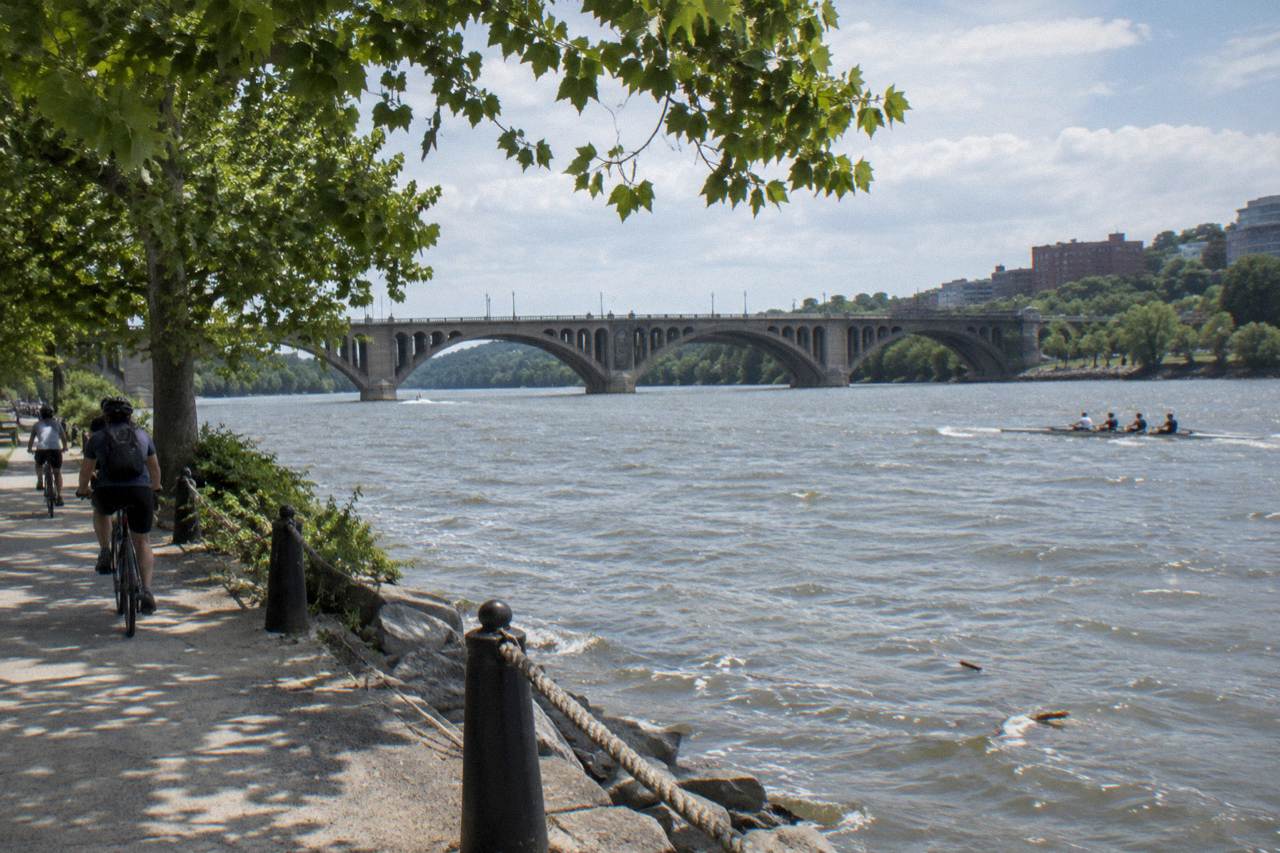
Georgetown is where Washington DC stops pretending it is a grid. The neighborhood's brick lanes, the old canal basin and the Potomac riverfront meet at the western edge of the city, and from there a well-known rail-trail corridor runs toward Bethesda, Maryland. Riders pick it up near the waterfront and pedal north out of the city. For the distance, the surface and current conditions, check the official trail pages before you set out. The corridor suits a casual pace, and a guided monuments ride pairs well on days when the trail is the warm-up rather than the whole day.
Distances, surfaces and towpath connections for the Capital Crescent Trail vary between maps, so check the official trail and park pages before you set a route. The live booking page for any tour lists its exact itinerary, duration and meeting point, which settles most planning questions. National Park Service rules, DC bicycle law, NOAA's climate normals and the operators' own listings hold the steadier facts: where you can ride, what the law asks of cyclists, and the weather each season brings.
Where Does The Capital Crescent Trail Begin And End?
The corridor connects Georgetown in Washington DC with Bethesda, Maryland, following a former rail line that has been repurposed as a shared-use path. Trail-curious riders typically start in Georgetown near the waterfront and ride northwest, or start in Bethesda and ride toward the river. For exact distances and surface details, check the official trail pages before setting out.
The Georgetown end matters as much as the trail itself. You are steps from the C&O Canal's historic towpath atmosphere, from the bars and bakeries of M Street, and from the Potomac riverfront paths that lead south toward the memorials. That concentration is why so many visitors encounter the corridor by accident: they rent or unlock a bike for the waterfront, ride north out of curiosity, and discover a green tunnel that feels nothing like the monumental core.
Bethesda, at the other end, is a genuine trail town by suburban standards. Coffee, lunch stops and Metro access sit close to the trail corridor, which makes a one-way ride with a return by rail a realistic plan for a casual cyclist. Riding one direction and taking the train back removes the pressure of saving legs for the return, and it turns a there-and-back slog into a small adventure.
What the corridor is not: a monuments ride. If your heart is set on the Lincoln Memorial, the Tidal Basin and the Capitol, the Crescent corridor runs away from all of that. Riders who want both usually pick one per day, or hand the monument half to a guided tour so the logistics of bikes, timing and parking disappear. The Bethesda-start e-bike tour pairs naturally with this thinking: it begins in Bethesda, spends 4 hours covering the National Mall's memorials, and includes the e-bike and a guide per its listing.
If you are weighing an electric bike against a regular one for a day that mixes trail and monuments, the e-bike or regular bike decision for DC walks through the trade-offs in detail.
How Hard Is The Ride From Georgetown Toward Bethesda?
A casual rider in ordinary health can complete the corridor in a relaxed morning or afternoon. The route is a shared-use rail-trail, largely separated from traffic. Check the official trail pages for distance, surface and current conditions, plan by time and comfort rather than mileage, and turn around whenever you have had enough.
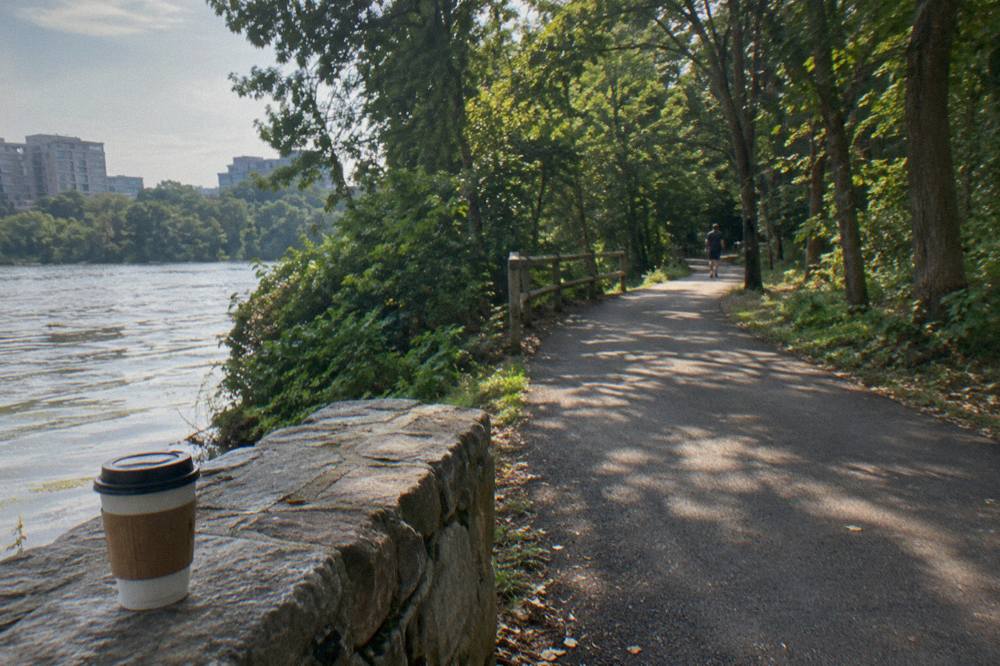
The honest answer about difficulty is that the corridor's reputation rests on being forgiving. Rail-trails generally avoid steep grades, since trains could not climb them either, and this former rail line is no exception. For the distance, surface and current conditions, check the official trail pages. Then the practical advice stays simple: ride out for as long as it feels good, note the time, and budget the same again to return. A café stop at either end is not cheating, it is the point.
Three rider types have different experiences. A confident adult on a hybrid or e-bike treats the corridor as an easy outing. A family with children goes slower, stops more, and should check the family bike rides in DC guide for the wider context of riding with kids in the district. A visitor whose real goal is sightseeing may find the corridor pleasant but beside the point, and those riders are better served by monument-focused options.
E-bikes change the calculation for older riders, anyone recovering from injury, or anyone pairing the trail with a long monument day. DC law defines a motorized bicycle as a two- or three-wheeled pedal bike whose motor cannot propel it faster than 20 mph on level ground, per the DC Code definition. Each listing states the bike type plainly, so you can check what you will ride before booking.
For riders going alone, Capital Bikeshare is the cheapest way onto a path. It is a public system, not free, and the current official pricing is worth knowing before you assume a day of riding costs nothing:
| Pass type | Price | What it includes |
|---|---|---|
| Single ride | $1 unlock plus $0.15 per minute (classic) | E-bike rides cost $0.35 per minute |
| Day pass | $10 per 24 hours | Classic rides free for the first 45 minutes each, then $0.05 per minute; e-bike $0.15 per minute |
| 30-day membership | $25 per month | Same 45-minute classic terms as the day pass |
| Annual membership | $120 per year | Same terms, with free unlocks |
Those figures come from the operator's own pricing page, and the 45-minute classic window is generous for a one-way corridor ride with a Metro return. The system runs about 8,000 bikes across more than 800 stations in 8 jurisdictions, and a station was reinstalled at Jefferson Drive and 12th Street SW near the National Mall in late October 2026, which helps anyone combining the Mall with a riverside spin.

What Does A Guided E-Bike Ride From Bethesda Actually Cover?
The 4-hour Bethesda-start e-bike tour rides from Bethesda to the National Mall's monuments with a guide and an electric bike included in the listing. It has no reviews on its booking page, so no rating claim can be made here. It is a monuments ride that happens to begin at one end of the Crescent corridor, not a trail tour.
That framing matters for trail-curious readers. If the path itself is your goal, no tour listed here rides it end to end, and going alone is the honest answer. But if you are staying in Bethesda or passing through it, the guided ride converts your location into a monument day without a car, without parking, and without studying a map of Mall closures before you set out. The listing states a 4-hour duration and the e-bike inclusion; meeting point details and any food or drink inclusions live on the booking page.
The comparison that helps most is against the other shared e-bike options on the Mall. The National Mall and Tidal Basin e-bike tour runs 3 hours and centers on the riverside loop where the cherry trees live, and the classic 3-hour monuments bike tour covers the same core on a pedal bike for riders who want the exercise. Neither begins in Bethesda, so both assume you can reach downtown DC on your own.
| Ride | Duration | Bike type | Format | Starts from |
|---|---|---|---|---|
| Bethesda National Monument E-Bike Tour | 4 hours | E-bike | Shared, guided | Bethesda |
| National Mall and Tidal Basin E-Bike Tour | 3 hours | E-bike | Shared, guided | Check booking page |
| Monuments and Memorials Bike Tour | 3 hours | Classic | Shared, guided | Check booking page |
| Monuments and Memorials Bike and E-Bike Tour | 3 hours | Bike or e-bike option | Shared, guided | Check booking page |
Prices for all four sit on the live booking pages, since tour pricing shifts with season and options. The choice itself is the stable part: Bethesda start and maximum monument coverage, Tidal Basin focus in less time, or a classic bike when the workout is part of the wish.
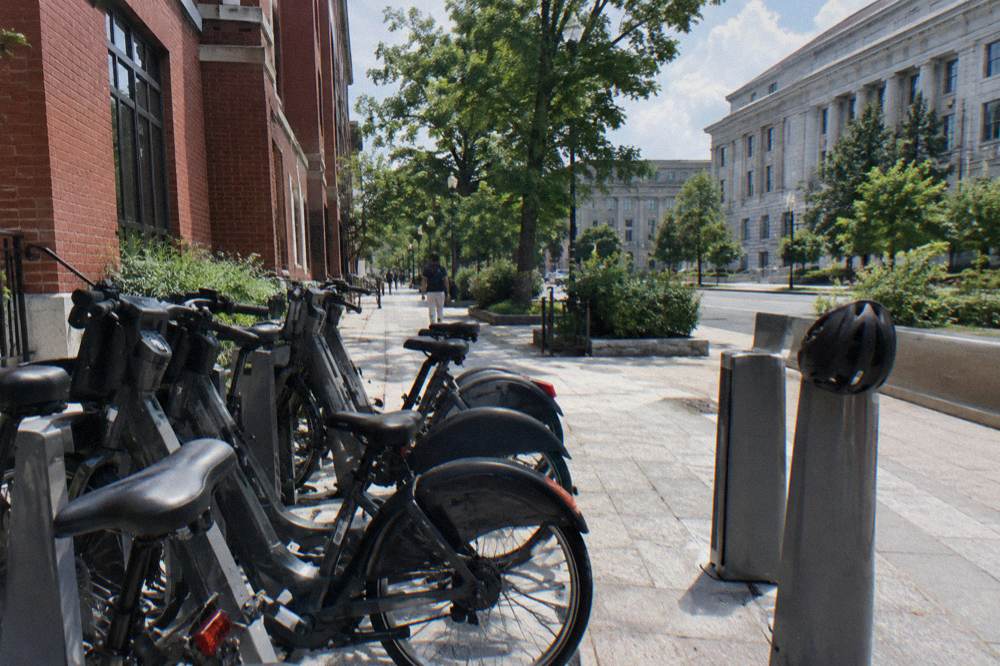
The Bethesda-start ride comes with no reviews attached, which makes it unproven rather than bad. Pedego Bethesda runs it as a four-hour e-bike outing on the National Mall, a full route in its own right. Riders who want a track record can open the booking page, glance at the review count there, and decide how much that certainty is worth to them before booking.
If the evening version of the monuments tempts you more than the daytime one, the night ride past the monuments after dark explains what changes when the sun goes down.
Can You Combine The Trail With The Monuments In One Day?
Yes, and the corridor's Georgetown end makes it easier than it looks, because Georgetown sits within an easy ride of the riverside paths that lead to the Lincoln Memorial and the Tidal Basin. The National Park Service confirms bicycles are welcome throughout National Mall and Memorial Parks, with bike parking near each major memorial and no riding inside the memorials themselves.
That Park Service rule set, published on the official bicycling information page, is the backbone of any combined day. You ride to a memorial, lock the bike at the nearby racks, and walk in. At the World War II and Franklin Delano Roosevelt memorials you walk the bike through rather than lock up outside, which is a small detail that saves confusion on arrival.
A realistic combined morning looks like this: ride the corridor out of Georgetown as far as feels good, turn back, and let the riverside paths carry you south past the Kennedy Center toward the Mall. Check the official trail pages for distance, surface and current conditions before you set out. From there the monuments string together almost of their own accord. The park stays open 24 hours a day, so there is no deadline pressure, and the Washington Monument, 555 feet 5 1/8 inches tall, makes an unmistakable navigation beacon all day.
One caution for families: DC law requires a securely fastened helmet for anyone under 16 riding on a public roadway, path or other right-of-way, per the helmet statute. Parents can be cited for knowingly allowing a child to ride without one, so pack the helmet even for a short towpath spin. Adults are free to choose, though every guided tour listed on this site provides helmets in its inclusions where stated.
For riders who would rather not choreograph all of this themselves, handing the monument half to a guided classic ride works well, and the 3-hour monuments bike tour is the natural candidate after a morning on the corridor.
When Is The Best Season To Ride The Corridor?
April, May, September and October are the strongest months, based on NOAA's 1991 to 2020 climate normals for Washington Reagan National Airport: April averages a 68 F high with 3.21 inches of rain, May 76.5 F, September 80.7 F and October 69.4 F with the year's lowest rain-day count at 4.9. Summer rides are possible but hot, with July normals at 89.6 F.
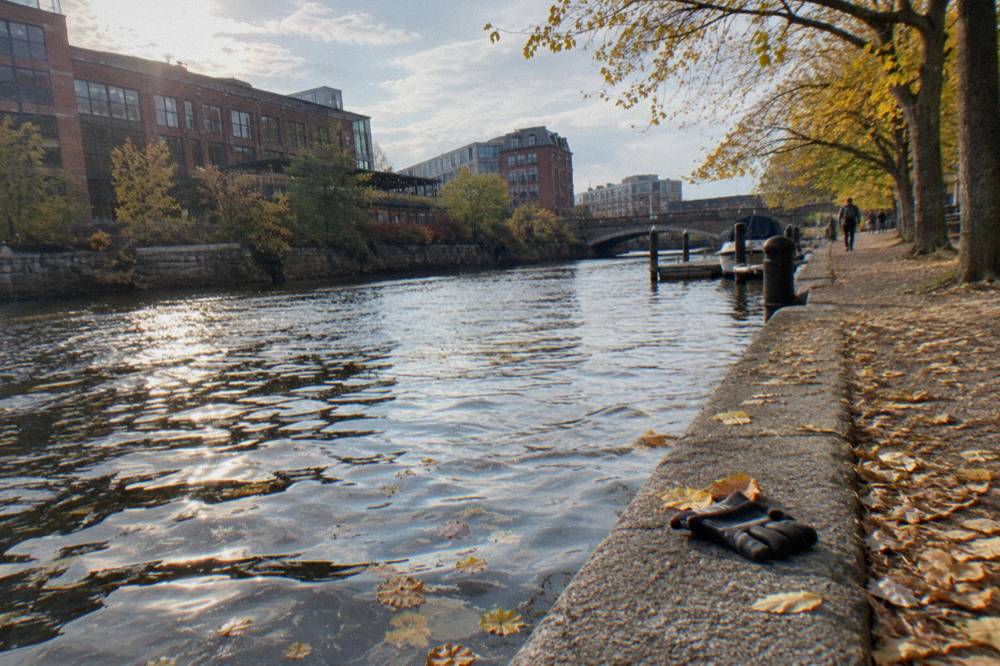
Those are normals, not forecasts, and they describe the airport station a few miles from Georgetown. Still, they map cleanly onto what riders feel. Spring brings the cherry blossom season, whose 2026 peak bloom arrived on March 26 with 70 percent of Yoshino trees open at the Tidal Basin, and whose 2027 festival runs March 20 to April 11. Official peak bloom forecasts for 2027 typically arrive in late February or early March, so treat any blossom date you read before then with care, and see the cherry blossom peak bloom timing guide for how the window usually behaves.
| Month | Avg high F | Avg low F | Precip inches | Rain days |
|---|---|---|---|---|
| March | 56.5 | 38.6 | 3.5 | 6.5 |
| April | 68.0 | 48.4 | 3.21 | 6.4 |
| May | 76.5 | 58.0 | 3.94 | 7.3 |
| June | 85.1 | 67.5 | 4.2 | 6.5 |
| July | 89.6 | 72.4 | 4.33 | 6.7 |
| September | 80.7 | 64.1 | 3.93 | 5.8 |
| October | 69.4 | 52.2 | 3.66 | 4.9 |
| November | 58.2 | 41.6 | 2.91 | 5.0 |
The corridor's tree cover earns its keep in the hotter months, but the smart summer pattern is an early start, a long lunch in Bethesda or Georgetown, and a second short ride in the evening when the monuments are lit. Sunset in late October 2026 fell around 6:08 p.m., and the evenings shorten quickly from there, so November riders should plan to finish before dark or bring lights.
Winter riding is quieter and entirely feasible on a dry day: January normals run 44.8 F for a high and 30.1 F for a low, cold but manageable with layers. The practical limit is ice and post-storm debris on the path rather than temperature, and the rain and cold weather riding guide covers the gear side of that equation.
What Closures Should You Check Before Riding In Late 2026?
Two National Park Service closures are currently in force: the Lincoln Memorial Reflecting Pool, its adjacent walkways and grass medians are closed until Friday, November 20, 2026 at 11:59 p.m., and the west side of the Washington Monument Grounds is closed through January 23, 2027 for turf restoration. Both affect riding on the Mall, not the Crescent corridor itself.
The Reflecting Pool closure, per the official Park Service notice, has been extended more than once during 2026, so check the notice again close to your visit rather than trusting any single date. The Washington Monument grounds work closed the north and south turf through September 10, 2026, and that portion has reopened; the west side remains off limits into the new year.
Event closures come and go on top of the construction ones. The Park Service documented temporary road and path restrictions around the Mall for the July 2026 Independence Day events, for the America 250 Grand Prix in August 2026, and for Marine Corps Marathon activity in October 2026, including nighttime closures of Maine Avenue SW and Ohio Drive for Long Bridge project work. None of these is permanent, but the pattern is clear: on big event weekends, check the park's public notices before committing to a route.
| Closure | Area affected | In force until | Relevance to riders |
|---|---|---|---|
| Reflecting Pool restoration | Pool, walkways, grass medians at the Lincoln Memorial | Nov 20, 2026, 11:59 p.m. | Reroute around the west end of the Mall |
| Turf restoration, west side | Washington Monument Grounds west | Jan 23, 2027 | Approach the monument from other sides |
| Long Bridge night work | Maine Ave SW, Ohio Drive, East Basin Dr SW | Intermittent dates | Evenings near the Tidal Basin |
No closure is listed for the Georgetown to Bethesda path itself. DDOT did close a section of the Metropolitan Branch Trail, a separate route elsewhere in the city, for resurfacing from October 5, 2026 into early November 2026. Trail work like that comes and goes, so a quick check of the official trail pages before you ride is wise.
Going Alone Or Booking A Ride: Which Fits You?
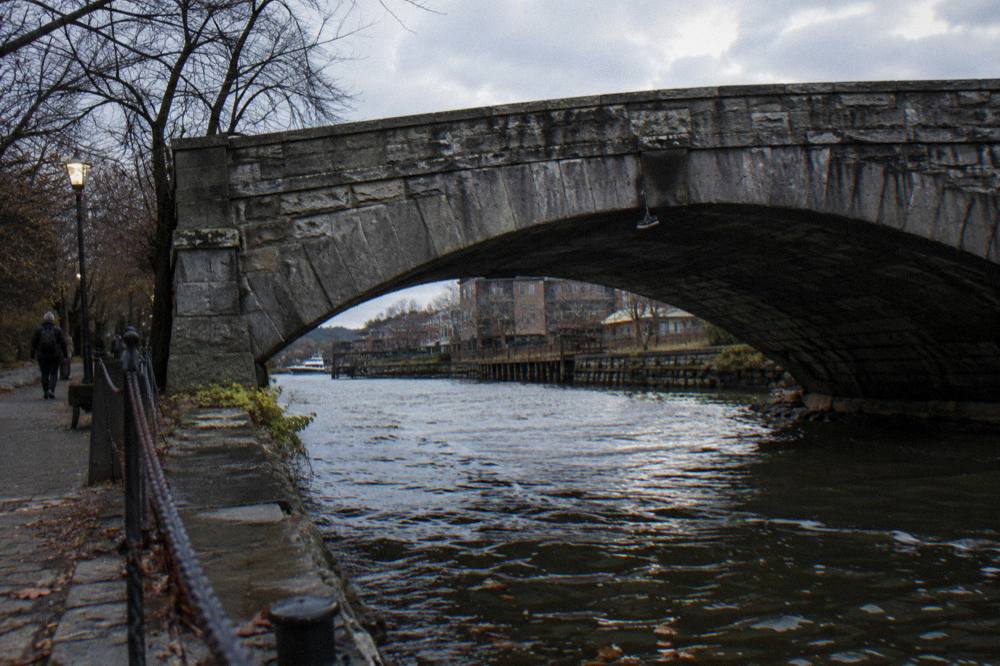
Go alone if the corridor itself is the goal, if you are comfortable choosing a turning point by feel, and if a $10 Capital Bikeshare day pass suits your budget. Book a guided ride if the monuments are the real prize, if you want an e-bike and helmet arranged for you, or if a Bethesda start saves you a downtown commute. Neither choice is wrong; they answer different questions.
The solo rider's kit is short: a bike, a helmet for anyone under 16, water, and a phone with the Park Service pages bookmarked for closures. The solo rider's risks are equally short: turning around too late, missing a closure notice, or spending the whole day on a pleasant path and never seeing a single monument. That last one is the quiet trap, and it is the reason this site exists. Riders who want the confidence of a checklist for the other side of the river can start with where to go biking in DC.
The guided rider trades a modest sum for logistics that vanish. Bikes arrive adjusted, a guide sets the pace and the narrative, and the route already accounts for which memorials are walk-through and which are lock-up. The trade is real too: you ride on the operator's schedule, in a group, on a route you did not choose. Riders who chafe at that should ride solo, full stop.
A middle path works for many visitors: ride the corridor alone on day one while legs are fresh, then hand day two's monument ambitions to a guided e-bike ride while energy is lower and the wish to see everything is higher. The rides on this site exist exactly for that second day.
Common Questions About The Capital Crescent Trail And Georgetown
Is The Capital Crescent Trail Good For Beginners?
Yes. It follows a shared-use rail-trail corridor separated from car traffic, so the riding stays relaxed. Check the official trail pages for the distance, surface and current conditions. Ride out by time and comfort, turn around when it stops feeling fun, and treat the return leg as the real limit.
Can You Ride From Georgetown To Bethesda And Take The Metro Back?
That is a common plan, and Bethesda's trail-adjacent amenities and rail access make it realistic. Check Metro's bicycle rules for your specific trip before counting on the ride back. The official trail pages are the best place to look for any construction or maintenance work that could affect your route.
Do Any Guided Tours Ride The Capital Crescent Trail Itself?
No tour listed here rides the corridor end to end. The closest natural pairing is the 4-hour Bethesda-start e-bike tour, which begins at one end of the corridor and spends its time covering the National Mall's monuments with a guide and an e-bike included.
Is Capital Bikeshare Free?
No. It is a public system with published pricing: a single ride is $1 to unlock plus $0.15 per minute on a classic bike, a day pass is $10 per 24 hours with classic rides free for the first 45 minutes each, and e-bike rides cost more per minute on every pass type.
Do Children Need Helmets On The Trail?
Yes, under DC law any person under 16 operating or riding as a passenger on a bicycle on a public roadway, path or other right-of-way must wear a securely fastened helmet, and parents can be cited for knowingly allowing otherwise.
Can You Combine The Trail With The Monuments In One Day?
Yes. Georgetown sits within an easy ride of the riverside paths leading to the Mall, bicycles are welcome throughout National Mall and Memorial Parks, and bike parking sits near each major memorial. Just walk, do not ride, inside the memorials themselves, and check Park Service closure notices before you go.