Bike Lanes And Trails In Washington DC: Where To Ride
Washington DC is one of the easiest capital cities in the United States to ride a bike in, and most of that ease comes down to two things: the car-free paths of the National Mall and a riverside trail network that stitches the monuments to the Potomac waterfront. Here is where the lanes and trails actually run, what the rules are, and where a guided ride makes sense.
Short answer
Bicycles are welcome throughout National Mall and Memorial Parks, which is open 24 hours a day, and riding is not permitted inside the memorials themselves: you walk the bike through the World War II and Franklin Delano Roosevelt memorials. The Mall paths plus the Potomac riverfront trails cover most of what visitors want, and a 3-hour guided monuments ride starts from the booking page's listed price.
Washington DC gives cyclists something most capital cities do not: a chain of monuments, memorials and open parkland connected by paths where cars are either absent or incidental. The National Mall and Memorial Parks are open 24 hours a day, bicycles are explicitly welcome, and from the Mall the trail network runs out along the Potomac to Alexandria and beyond. That is the skeleton of every good ride in this city. Riders planning their first loop often ask what tops most visitors' lists, and our guide to the attraction that defines a DC visit covers what to expect and when a guided bike ride makes sense.
This guide walks through the lanes and trails layer by layer: the Mall paths first, then the protected lanes on city streets, then the longer riverside routes, then the seasonal and closure questions that decide whether a given week is a good one to ride. If you would rather have the route decided for you, Bike Tours Washington DC covers the guided options in detail.
Where Can You Legally Ride Around The National Mall?
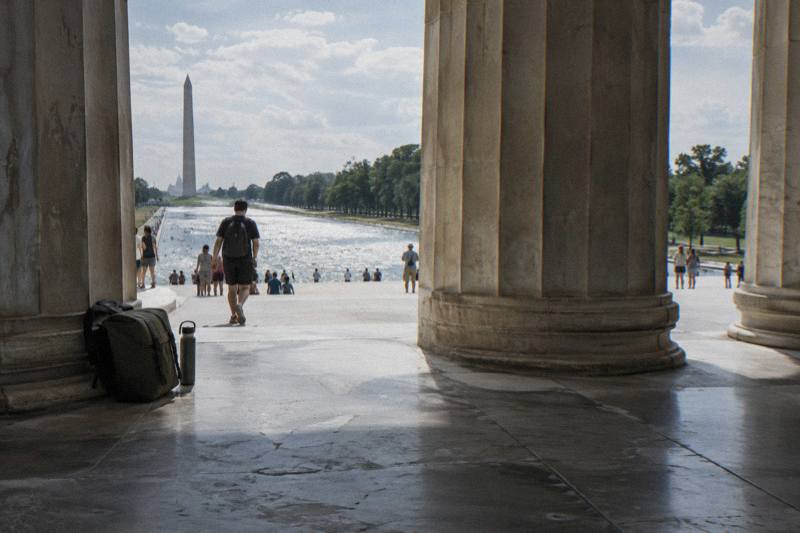
Bicycles are welcome everywhere in National Mall and Memorial Parks, on the paths and roadways, but riding inside the memorials themselves is not permitted: the park service asks riders to walk their bikes through the World War II and Franklin Delano Roosevelt memorials, and to lock up before entering any other memorial. Bicycle parking is provided near each major memorial and along the Mall, so you rarely have to improvise.
The rules come straight from the park service's bicycling information page, and they are refreshingly simple. Ride the paths, respect pedestrians, and treat the memorial interiors as walk-only zones. The two memorials where you walk the bike through, World War II and Franklin Delano Roosevelt, are designed as flowing landscape experiences rather than buildings, which is exactly why the rule exists: the paving is shared with people on foot, and the memorials read best at walking pace anyway.
Because the park never closes, the practical question is not opening hours but lighting and comfort. The memorials are lit after dark, and the operators of the Capital Bikeshare system point riders toward the car-free paths for evening visits. A ride that starts in late afternoon golden light and ends among floodlit granite is one of the quieter pleasures of this route network, and it costs nothing extra to plan. To stretch that idea into a full day, the guide to free things to do in Washington DC by bike covers the memorials, paths, and pay-what-you-want tours that cost nothing at all.
Helmets are a legal matter rather than a park matter: DC law requires anyone under 16 to wear a securely fastened helmet on any public roadway, path or right-of-way, per the district code. Operators of guided tours include helmets in their equipment, so families riding with children get that requirement handled for them, though it is worth confirming sizes for kids on the booking page before arrival.
| Rule | What it means for you |
|---|---|
| Bicycles welcome | Riding is allowed on Mall paths and park roadways |
| No riding inside memorials | Walk the bike through WWII and FDR; lock up at others |
| Bike parking | Provided near each major memorial and along the Mall |
| Park hours | Open 24 hours a day |
| Helmets | Required by DC law for riders under 16 |
For a deeper stop-by-stop routing of the Mall itself, see the National Mall monuments route guide. It pairs well with the meeting points near the Mall guide if you are still deciding where to start your ride.
A practical way to organize a visit is a ride-and-walk circuit. Pedal the paths between stops, then switch to foot at each destination: at World War II and Franklin Delano Roosevelt you simply walk the bike through, while at the other memorials you lock up at the racks nearby and explore on foot at whatever pace suits you. If you are riding a personal bike rather than a Capital Bikeshare rental, pack a lock of your own so you can take advantage of the parking provided at every stop.
One clarification that matters for families: the helmet requirement covers paths and rights-of-way, not just roadways, so riders under 16 need a helmet even on the Mall's car-free paths. Bring your own if you are riding independently with kids, since the included equipment is part of guided tour packages; traveling with a tour operator removes one more item from your checklist.
Which Trails Connect The Monuments To The Potomac?
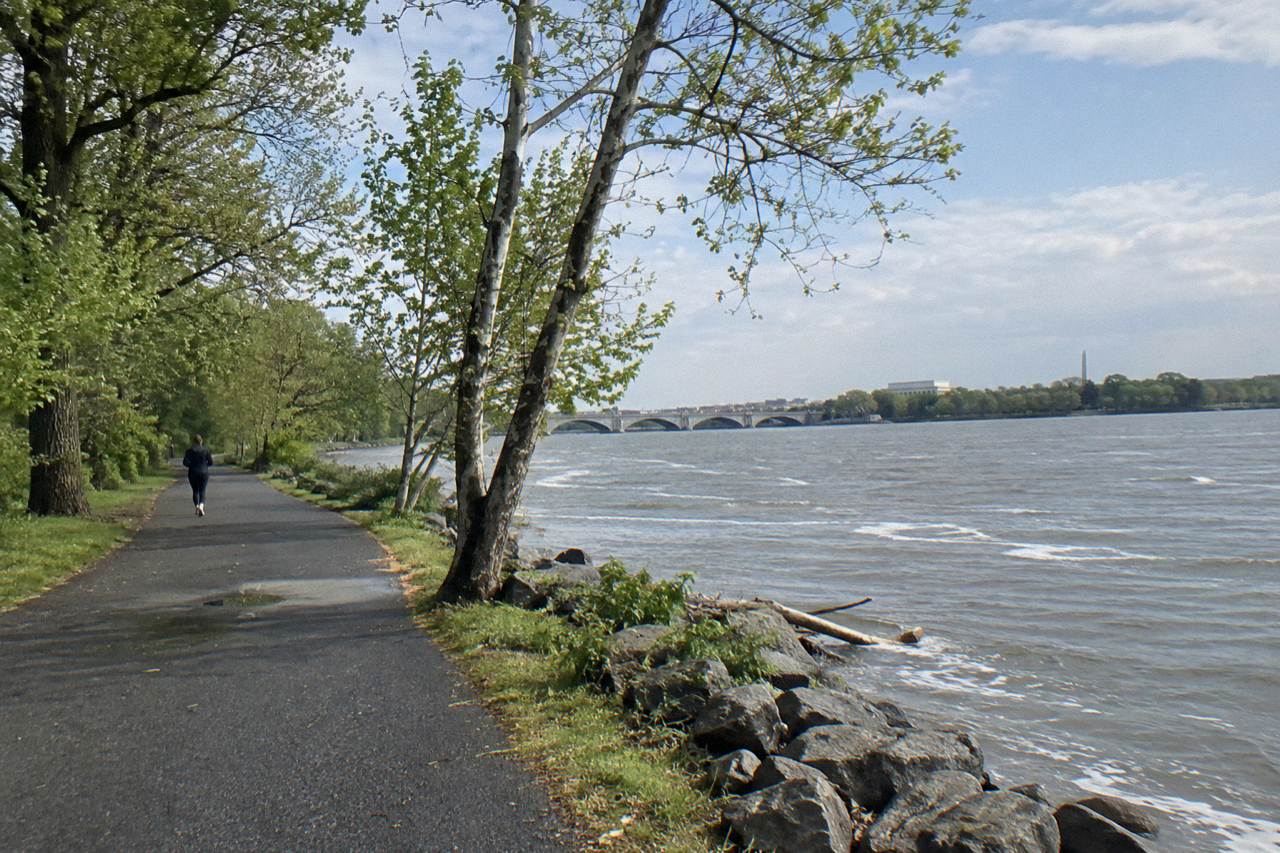
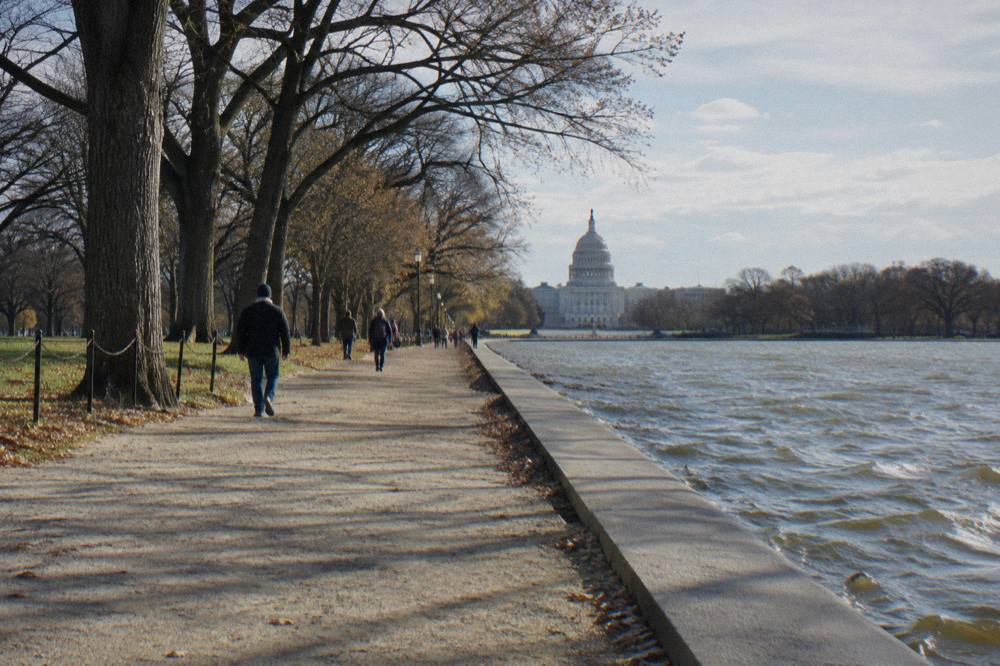
The Mall's east-west spine, the paths around the Tidal Basin, and the Potomac riverfront trails together form one continuous riding network: you can start at the Capitol end of the Mall, loop the Tidal Basin past the Jefferson Memorial, and continue down the Potomac toward Alexandria without ever joining car traffic at speed. That loop-plus-river structure is the core of every DC bike trail experience a visitor comes for.
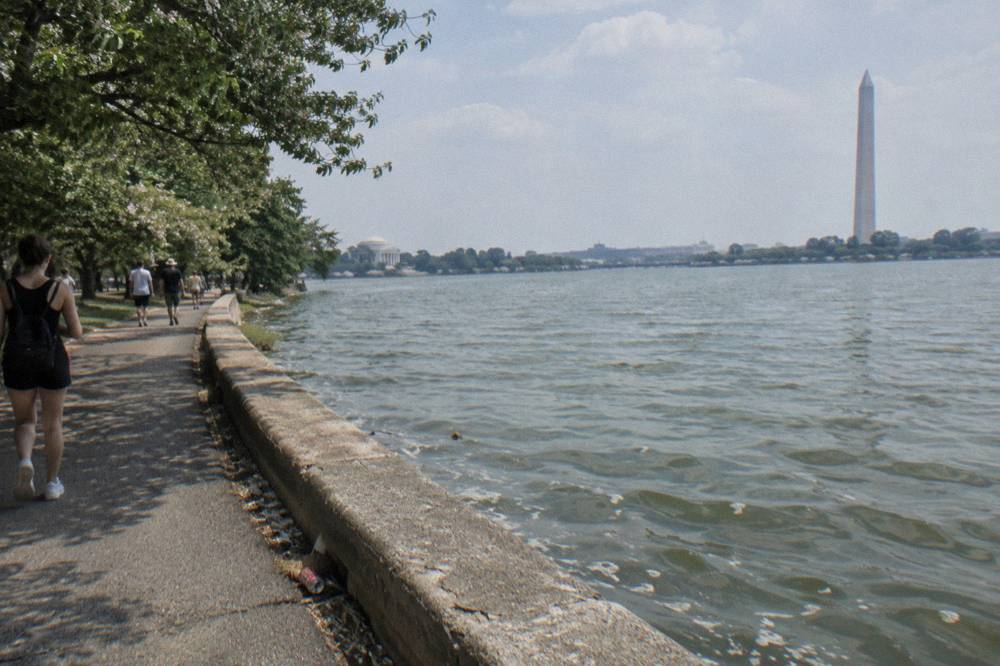
The Tidal Basin deserves special mention because it is both the prettiest section and the one with the most project activity in recent years. The seawall reconstruction there, whose first phase the park service reported finished early and under budget, kept the project area's paths closed through the 2026 National Cherry Blossom Festival for landscape stabilization and new tree planting, with reopening expected shortly afterward. Check current conditions before planning a full basin loop, especially in bloom season, when the newest plantings and paths may still be settling in.
Away from the river, the city's trail network is broader than most visitors expect. One notice worth knowing: the Metropolitan Branch Trail, which runs well northeast of the Mall, saw a section closed for resurfacing from early October 2026 into early November 2026 under a DDOT announcement. That work was ending as of late fall 2026, but it is a reminder that trail segments close for maintenance, and a quick check of the relevant notice saves a wasted trip.
| Trail area | Character | Best for |
|---|---|---|
| National Mall spine | Wide, flat, shared with pedestrians | Monument-to-monument sightseeing |
| Tidal Basin loop | Scenic ring around the water | Cherry blossoms, Jefferson Memorial |
| Potomac riverfront | Riverside, longer, fewer crowds | Riding toward Alexandria |
| Memorial Bridge crossings | River crossings linking DC and Virginia | Arlington loops |
If riding that network yourself sounds like route-planning work you would rather skip, the guided options cover it well.
What Are The Protected Bike Lanes In Washington DC Like?
DC has been building physically protected bike lanes on city streets for years, and they matter most on the stretches between trail segments: getting from a hotel near downtown to the Mall, or from the Mall up toward Capitol Hill, often uses a protected lane for part of the way. The lanes are real and expanding, but this guide will not quote a lane count or mileage figure, because no official total was verifiable at write time.
What can be said with confidence: the lanes exist, they are marked and physically separated on the busiest corridors, and the district's transportation agency governs bicycle use under its bicycle laws chapter, which also covers motorized bicycles. On the definition that matters to visitors, DC treats an e-bike as a "motorized bicycle": two or three wheels, working pedals, and a motor that cannot propel it faster than 20 mph on level ground. That definition, from the district code, is the one the rental fleets and guided-tour e-bikes are built to satisfy.
Sidewalk rules vary by part of the city, and the safest general advice is to treat sidewalks as a gray zone and check the transportation agency's bicycle laws page rather than assume. When in doubt, walk the bike on a crowded sidewalk and ride in the street or on a path. Around the Mall itself the question rarely arises, because the path network is dense enough that a sidewalk is almost never the best line anyway.
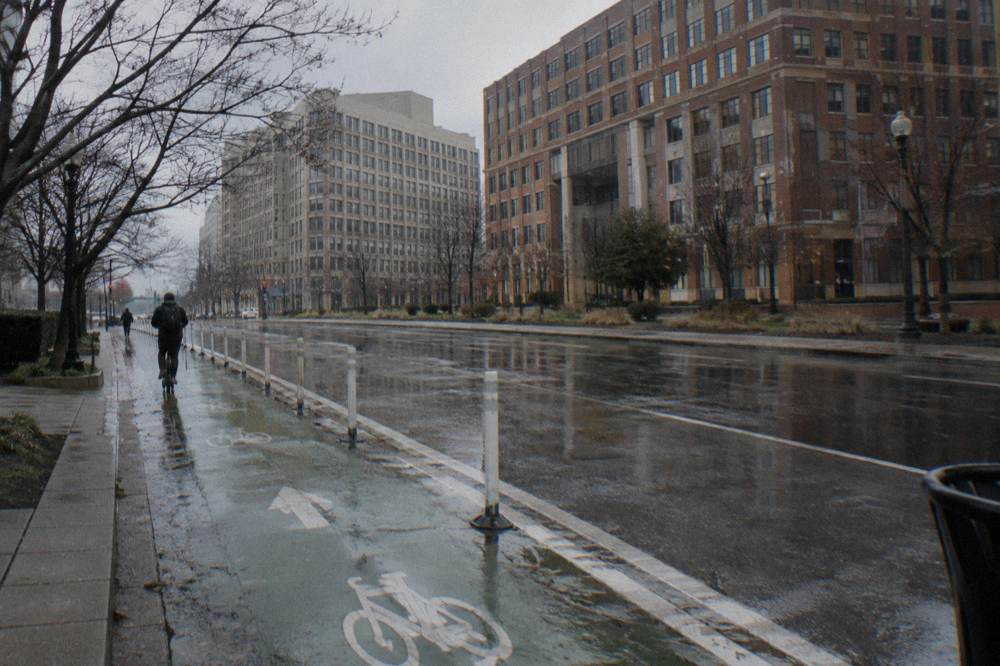
For visitors, the honest framing is this: you do not need to master the street network. The trail and Mall system handles almost every sightseeing need, and the protected lanes are the connective tissue locals rely on day to day. You will touch them mainly riding to and from your starting point, and a map app that shows bike infrastructure is enough for those short hops. The comparison between riding an e-bike and a regular bike on these routes is covered in the e-bike versus regular bike guide.
Should You Ride The Trails Yourself Or Take A Guided Tour?
Self-riding the Mall paths costs almost nothing beyond a bike rental or a Capital Bikeshare day pass at $10 per 24 hours, and it gives you total freedom. A guided tour, typically 3 hours for the monuments circuit, adds a route already designed, a guide's commentary, and equipment included per the listing. The right choice depends on how much context you want, not on difficulty: the terrain is flat either way.
The Bikeshare math is worth spelling out because it is the cheapest structured option in the city, with about 8,000 bikes spread across 800-plus stations in eight jurisdictions. Pricing is verified from the operator directly:
| Capital Bikeshare option | Price | What it includes |
|---|---|---|
| Single ride | $1 unlock plus $0.15/min classic, $0.35/min e-bike | Pay as you go |
| Day pass | $10 per 24 hours | Classic rides free for 45 min each, then $0.05/min; e-bike $0.15/min |
| 30-day membership | $25 per month | Same 45-minute terms as day pass |
| Annual membership | $120 per year | Same terms, free unlocks |
A day pass with a handful of 45-minute hops between memorials is genuinely cheap. What it does not include is interpretation: you will ride past the Franklin Delano Roosevelt Memorial knowing it exists, not why its rooms are arranged as they are, and you will circle the Tidal Basin without hearing why those particular trees stand there. Guided rides close that gap. The 3-hour Monuments Bike Ride covers the core circuit with a guide and equipment; see the 3-hour monuments bike ride page for the current price, meeting point and inclusions, or check availability if you already know the format suits you.
Which Trail Suits A Longer Ride Beyond The Mall?
For a half-day or full-day ride, the Potomac-side trails toward Alexandria and Mount Vernon are the standout option, and the Mount Vernon bike-and-boat combination is the structured version: ride the river trail south, visit the estate, and return by river. One operator's version runs about 6.5 hours; another lists 4 to 7 hours with an optional river cruise. Both are classic bikes, both shared groups.
The river corridor south of the city is the prettiest sustained riding in the immediate DC area: water on one side, mature trees overhead, and almost no car interaction. It is also the one ride where distance genuinely matters, which is why the guided versions bundle transport logistics and timing into a single booking rather than leaving you to reconcile a bike return deadline with an estate closing time. The Mount Vernon trail guide covers the self-ride version, and the Alexandria to Mount Vernon ride time post answers the pacing question directly. This guide will not print a trail mileage figure, since no official length was verifiable.
For something in between, the e-bike tour of the National Mall and Tidal Basin covers the core sights at electric assist, which matters more in summer heat than anywhere else. It runs 3 hours on e-bikes in a shared group, a format that suits riders who want the full circuit without arriving at each stop already tired. See the best time of year to ride discussion for how the seasons change that calculation.
When Is The Best Season To Ride DC Bike Trails?
Spring and fall are the best riding seasons in Washington DC: April averages a high of 68 degrees with about 6 rain days, and October averages a high of 69.4 with rain on fewer than 5 days in the month. July and August, averaging highs of 89.6 and 87.8, push rides toward morning or the lit evening hours. Winter is rideable, with January highs averaging 44.8, but daylight is short.
These are 1991 to 2020 climate normals from NOAA for Reagan National Airport, so they describe the typical year rather than any forecast. The practical reading for trail planning:
| Month | Avg high (F) | Avg low (F) | Rain days | Ride verdict |
|---|---|---|---|---|
| March | 56.5 | 38.6 | 6.5 | Blossom crowds, cool air |
| April | 68.0 | 48.4 | 6.4 | Prime season |
| May | 76.5 | 58.0 | 7.3 | Prime, busier |
| July | 89.6 | 72.4 | 6.7 | Ride early or after dark |
| October | 69.4 | 52.2 | 4.9 | The best month of all |
| January | 44.8 | 30.1 | 5.7 | Rideable, dress for it |

Cherry blossom season deserves its own caution. The 2026 peak bloom landed on March 26, and the typical window is the last week of March into the first week of April, but no forecast for 2027 had been published as of late October 2026. The 2027 festival runs March 20 to April 11. Never plan around a promised bloom date; the peak bloom timing guide explains why the forecasts move, and the Tidal Basin blossom guide covers where to ride once the trees turn.
What Closures Should You Check Before Riding?
Two closures were in force at the end of October 2026 that affect Mall riding: the Lincoln Memorial Reflecting Pool, its walkways and grass medians are closed until 20 November 2026 at 11:59 p.m., and the Washington Monument grounds' west side is closed through 23 January 2027 for turf restoration. Both leave workarounds, and the park service posts current notices before any ride.
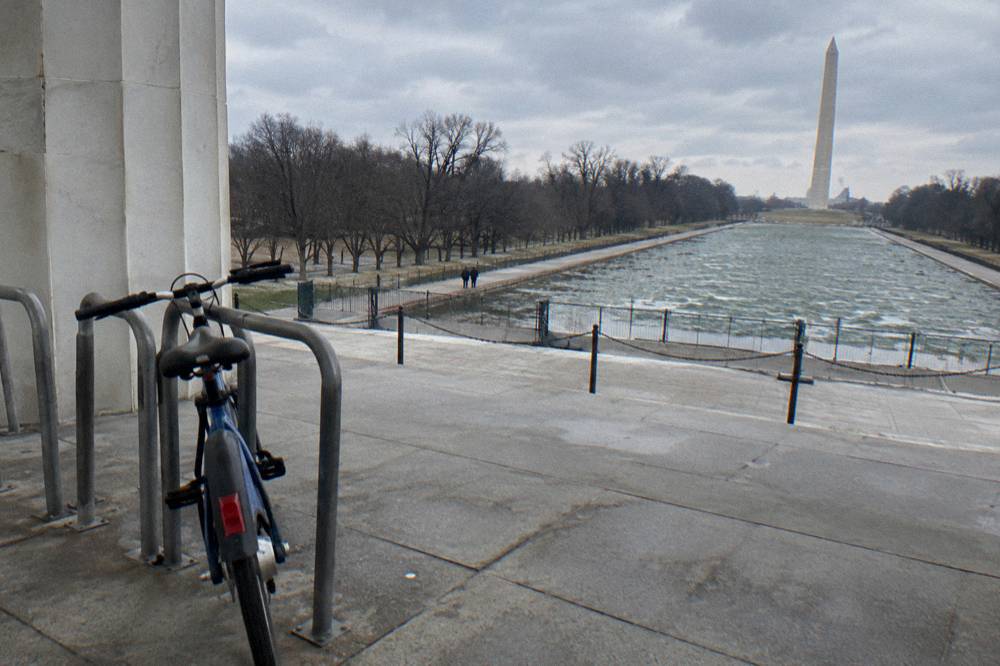
Event closures are the other moving target. The summer of 2026 saw extensive temporary closures around the Washington Monument grounds and Mall roads for Independence Day events and the America 250 Grand Prix in August, and October brought nighttime closures of Maine Ave SW and Ohio Drive for bridge work. None of this makes the Mall unrideable; it makes unplanned detours likely on event days. Check the park service notices for the dates of your visit.
| Closure | Status | Through |
|---|---|---|
| Lincoln Reflecting Pool and walkways | Closed | 20 November 2026, 11:59 p.m. |
| Washington Monument grounds, west side | Closed | 23 January 2027 |
| Tidal Basin seawall work area | Phase 1 complete, landscape reopening | Expected shortly after 2026 festival |
| Metropolitan Branch Trail section | Resurfacing | Early November 2026, ending |
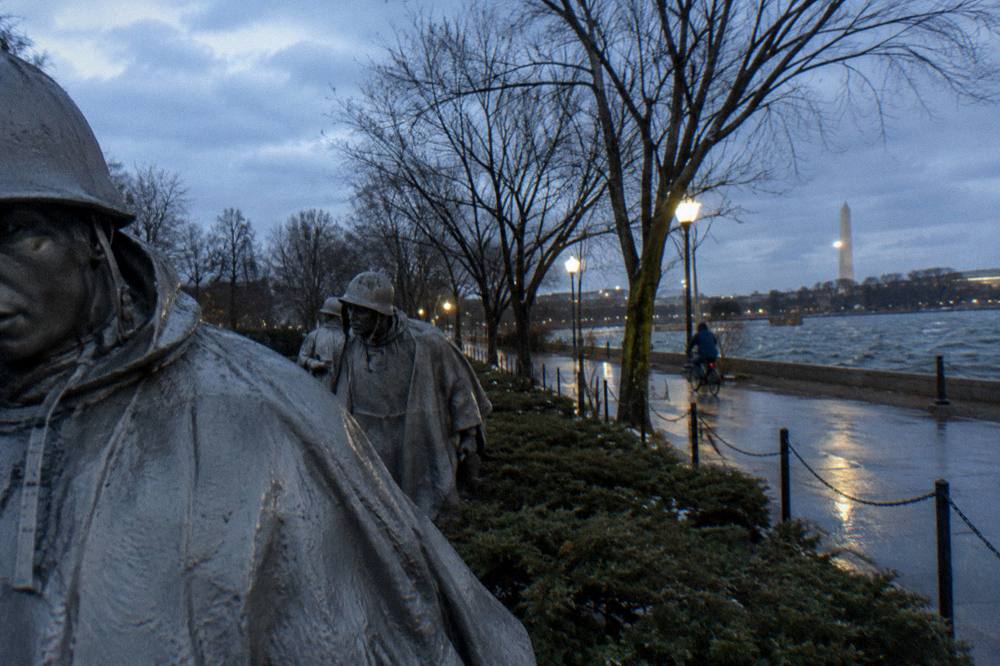
Guided rides absorb most of this risk automatically: operators reroute around active work, and the guide knows which approach is open this week. That is a quiet argument for the guided format on a short visit, and it applies to the evening circuit too, where the night monument ride guide covers the after-dark options.
Whether you ride the network yourself or let someone else hold the map, the structure is the same: flat paths, a river corridor, monuments you can park beside, and a season that is friendlier in April and October than in July. Pick the layer that matches your energy.
Common Questions About DC Bike Trails
Can You Ride A Bike On The National Mall In Washington DC?
Yes. Bicycles are welcome in National Mall and Memorial Parks, which is open 24 hours a day. Riding inside the memorials themselves is not permitted: walk the bike through the World War II and Franklin Delano Roosevelt memorials, and use the bike parking provided near each major memorial elsewhere.
Is Washington DC Bike Friendly For Visitors?
Yes, unusually so for a capital city. The core sightseeing area is linked by flat, largely car-free paths, bicycle parking sits near every major memorial, and a bike-share system with 800-plus stations covers the gaps. Protected lanes exist on city streets, though visitors rarely need them for sightseeing.
How Much Does Capital Bikeshare Cost Per Day?
A day pass is $10 per 24 hours: classic-bike rides are free for the first 45 minutes each, then $0.05 per minute, and e-bikes are $0.15 per minute. A single ride without a pass is $1 to unlock plus $0.15 per minute on a classic bike or $0.35 per minute on an e-bike.
Do You Have To Wear A Helmet On DC Bike Trails?
DC law requires a helmet for anyone under 16 riding on a public roadway, path or other right-of-way. For adults it is legal to ride without one, though guided tour operators typically include helmets and encourage their use; check the booking page for what a given tour provides.
Which Trail Should You Ride For A Longer Day Trip From DC?
The Potomac river corridor south toward Alexandria and Mount Vernon is the classic long ride, with riverside scenery and almost no car interaction. Guided versions combine the ride with a boat return: one operator lists about 6.5 hours, another 4 to 7 hours with an optional river cruise.