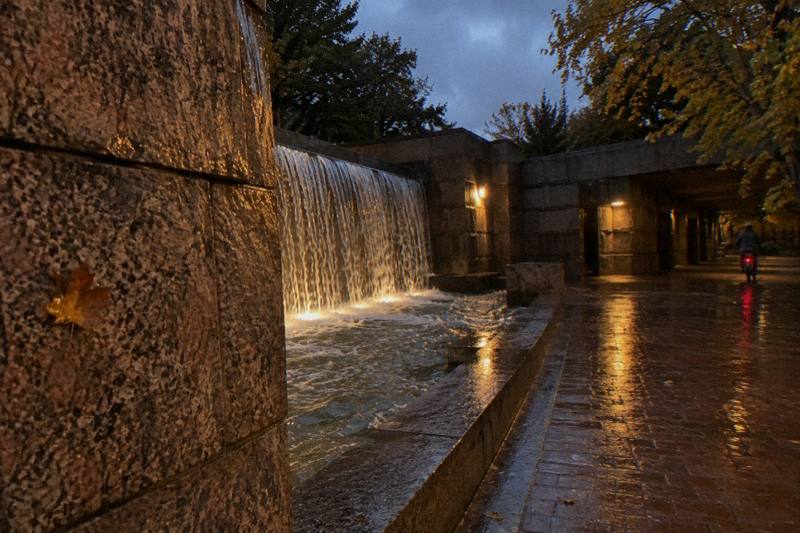
Biking DC In Summer Heat
July and August in Washington DC are the two warmest months of the year for cyclists, and the difference between a miserable ride and a great one usually comes down to the time of day you pick and the bike you choose.
Short answer
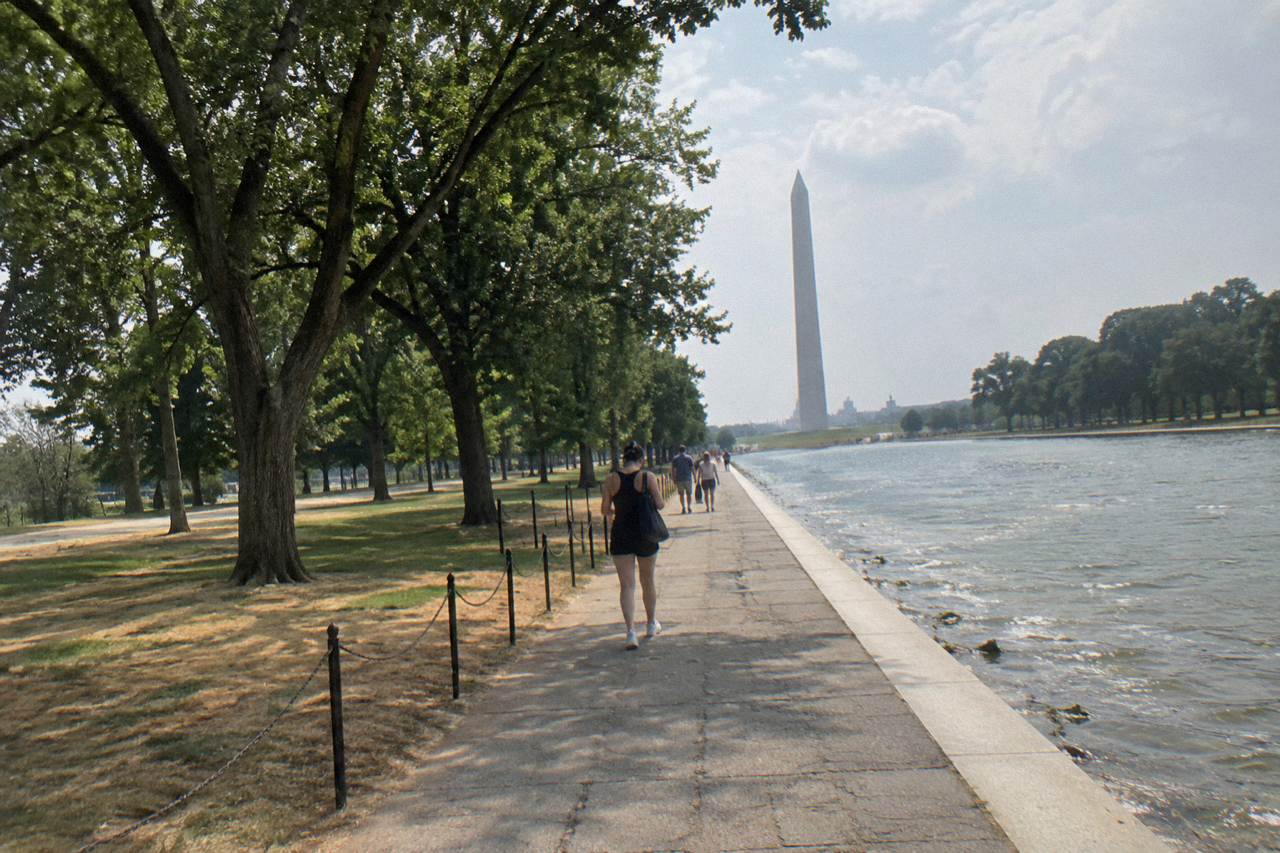
July averages a high of 89.6 F and August 87.8 F at Reagan National Airport, with overnight lows of 72.4 F and 71.0 F respectively, so the coolest riding windows are early morning and after sunset. Night monuments rides, e-bike tours, and short classic rides all work in summer if you start before the heat builds or after it breaks.
July and August are the months when Washington DC earns its reputation for humid summers, and they are also peak season for visitors who want to see the memorials by bike. The two facts are not incompatible. The city's rideable core is flat, mostly car-free, and open around the clock, which gives summer cyclists two escape hatches that most destinations lack: very early mornings and a park that never closes. This guide lays out what the climate data actually says, which slots of the day work, and how the tour formats on offer match up against the heat.
How Hot Does DC Actually Get In July And August?
July is the warmest month in the official climate record, with an average high of 89.6 F and an average low of 72.4 F, and August follows at 87.8 F and 71.0 F, measured at Washington Reagan National Airport. Those are 30-year averages, not forecasts, and they mean the temperature rarely drops below about 70 F even overnight. Rain falls on roughly 6.7 days in July and 5.6 days in August.
These figures come from the NOAA 1991 to 2020 climate normals for Reagan National Airport, the standard long-run baseline used for the District. The averages hide the day-to-day swings that matter to a cyclist: a mid-July afternoon can run well above that 89.6 F average, and late August cold fronts occasionally deliver mornings that feel like early autumn. Planning around the averages is the honest move, because no source can promise what any given week will do.
What the normals do establish is the shape of the summer day. With lows of 72.4 F in July and 71.0 F in August, the coolest hours sit between about 5 a.m. and 8 a.m., and the temperature climbs fastest through late morning. By mid-afternoon the combination of heat and humidity makes a three-hour outdoor effort a genuinely different proposition than the same ride at 7 a.m. That is not a reason to skip DC in summer, it is a reason to sequence the day.

The full summer picture from the same normals table, including June and September for readers with flexible dates:
| Month | Avg high F | Avg low F | Precip in | Days with rain |
|---|---|---|---|---|
| June | 85.1 | 67.5 | 4.20 | 6.5 |
| July | 89.6 | 72.4 | 4.33 | 6.7 |
| August | 87.8 | 71.0 | 3.25 | 5.6 |
| September | 80.7 | 64.1 | 3.93 | 5.8 |
June is only a few degrees cooler than July on average, while September drops the average high by nine degrees, which is why many riders treat early September as the sweet spot. If your dates are locked to the school holidays, though, July and August are what you have, and the rest of this guide is about making them work.
What Is The Best Time Of Day To Bike The National Mall In Summer?
The two best summer windows are early morning, roughly sunrise to 9 a.m., and evening after about 6 p.m., when the sun angle drops and the memorials begin to cool. Midday, roughly 11 a.m. to 4 p.m., combines the day's peak temperature with peak visitor traffic and the least shade on the open Mall. National Mall and Memorial Parks is open 24 hours a day, so both windows are legal and practical.
The 24-hour access is the structural advantage that separates DC from most park cities. The National Park Service confirms the park never closes, which means a 6:30 a.m. departure is not a workaround, it is a normal way to use the space. On 31 October 2026 the sun set in Washington at 6:08 p.m. and similar times carry into early November; in July the sunset runs much later, which stretches the evening window considerably. Either shoulder of the day gives you cooler air, softer light for photographs, and thinner crowds at the Lincoln Memorial steps.
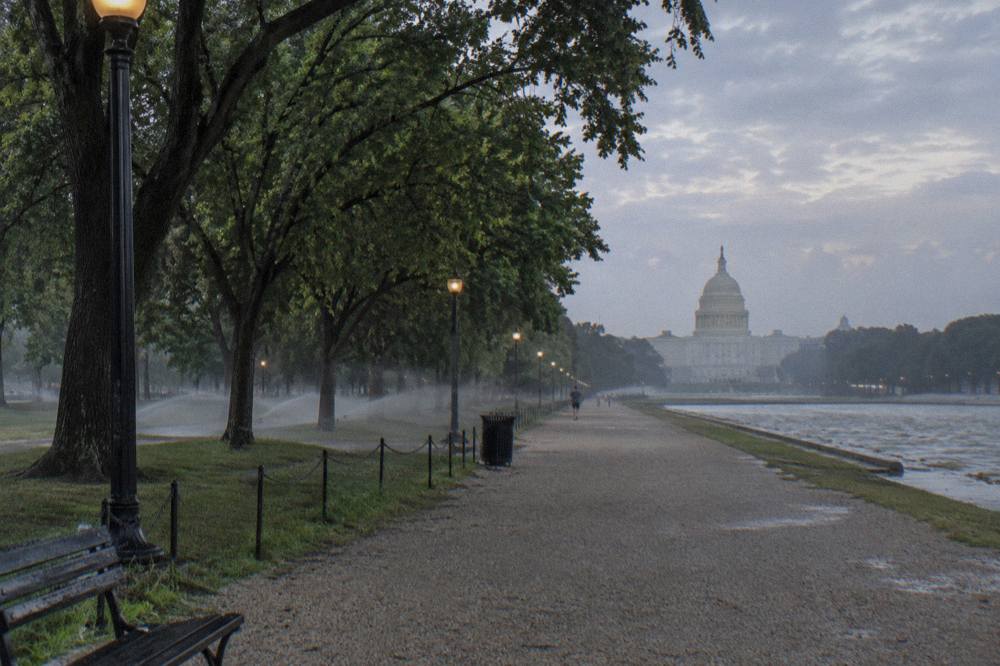
Shade is the hidden variable on the Mall itself. The open expanse between the Washington Monument and the Capitol has long stretches with no cover, while the paths fringing the Tidal Basin and the tree lines along Constitution Avenue and Independence Avenue offer real relief. Riders planning their own route in the middle hours should string shady segments together and treat the open stretches as short sprints between them. The National Park Service bicycling information page notes that bicycles are welcome throughout National Mall and Memorial Parks, with bike parking near each major memorial and no riding inside the memorials themselves.
A simple way to match the day's slots to a riding plan:
| Summer slot | Conditions | Best for | Watch out for |
|---|---|---|---|
| Sunrise to 9 a.m. | Coolest air of the day, calm paths | Long classic-bike rides, photo stops | Very limited coffee and food open early |
| 9 a.m. to 11 a.m. | Warming fast, still manageable | Guided morning departures | Sunscreen and water needed from the start |
| 11 a.m. to 4 p.m. | Peak heat, peak crowds | Indoor museums instead | Least shade on the open Mall |
| After 6 p.m. | Cooling air, long light in July | Night monuments rides, relaxed loops | Some memorial areas dimmer than others |
For readers comparing the two shoulder options in more depth, the site's Bike Tours Washington DC home page collects the full set of ride formats, and the evening option is covered in detail in the guide to a night ride past the DC monuments after dark.
If you already know you want a guided ride rather than a self-planned loop, these three formats each handle summer heat differently:
The Monumental E-Bike Ride takes the effort out of a 3-hour loop, the night monuments ride shifts the whole itinerary into the cool half of the day, and the classic 3-hour monuments ride is the pick for early-morning departures when a regular bike is perfectly comfortable.
Do E-Bikes Make Summer Riding In DC Easier?
Yes, and in summer the benefit is mostly about heat management rather than speed. A pedal-assist bike lets you cover the National Mall, the Tidal Basin side, and the riverfront in one outing while keeping your output low, which means less sweat, a lower core temperature, and more energy left for walking through the memorials where bikes are not allowed. DC defines a motorized bicycle as one whose motor cannot propel it faster than 20 mph on level ground.
That legal definition matters because it shapes what rental e-bikes in the District actually are: pedal-assist city bikes, not throttle motorcycles. On flat terrain like the Mall, the assist mainly cancels out headwind, the drag of a hot-day pace, and the small rises around the Capitol and the river bridges. The physical difference between a classic bike and an e-bike over three hours in 88-degree air is the difference between arriving at the Jefferson Memorial ready to walk it and arriving ready to sit down.
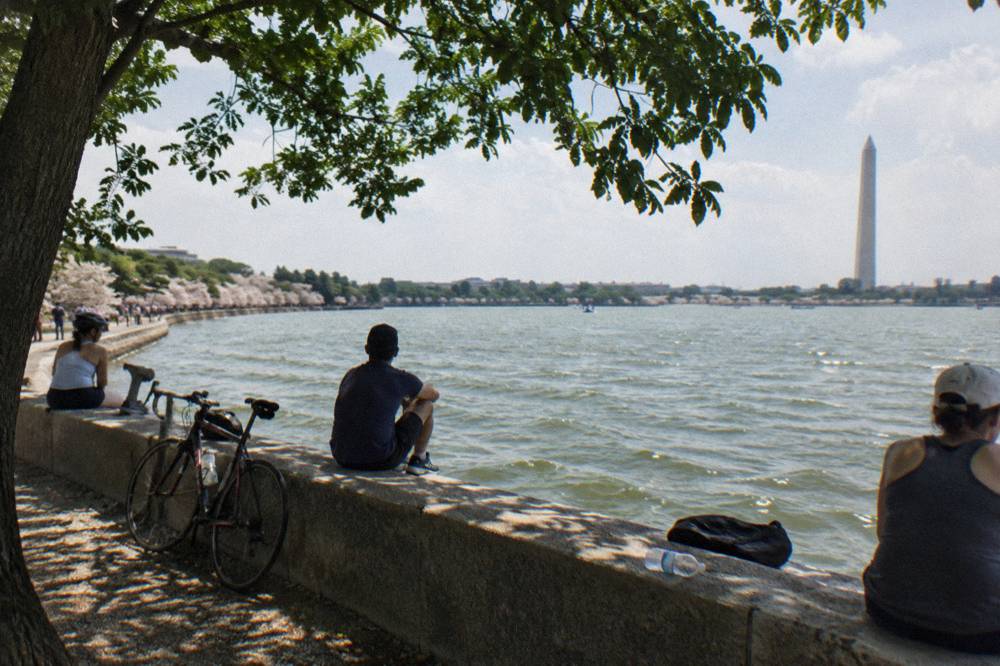
The related tour on this page, the Monumental Electric Bike Ride, is a 3-hour shared e-bike tour built around exactly this use case: the full monument core at low physical cost. The listing states 3 hours with an e-bike; check the booking page for the current price, start times, and what is included, since those details vary by season. The site's broader comparison of e-bike or regular bike for seeing DC works through the same trade-off for riders who are undecided.
A second e-bike option worth knowing about is the National Mall and Tidal Basin e-bike tour, which points the same pedal-assist advantage at the waterfront loop:
The Tidal Basin side is the shadier, breezier half of the monument core in summer, with water on two sides of the loop, so an e-bike there pairs the easiest bike with the most comfortable terrain.
One caution for families: DC law requires a securely fastened helmet for anyone under 16 riding on a public roadway, path, or other right-of-way, and the statute places the duty on parents and guardians as well. E-bike age suitability varies by operator, so ask when booking rather than assuming.
Is A Night Monuments Ride The Smartest Summer Choice?
For many summer visitors, yes: a night ride moves the entire three-hour itinerary into the coolest part of the day and adds lit memorials that many travelers never see. Operator pages for the Monuments at Night format describe roughly 3-hour guided rides with seasonal start times, about 6:30 p.m. from April to October and about 4:30 p.m. from November to March, so midsummer departures begin right as the heat breaks.
The seasonal start times are the detail worth pausing on. A 6:30 p.m. departure in July catches the tail of the daylight, rides through sunset, and finishes in full dark among the illuminated monuments. The same tour in January starts at 4:30 p.m. for the same reason: the operators move the ride to wherever the light and the temperature are. Summer visitors get the long end of that arrangement.
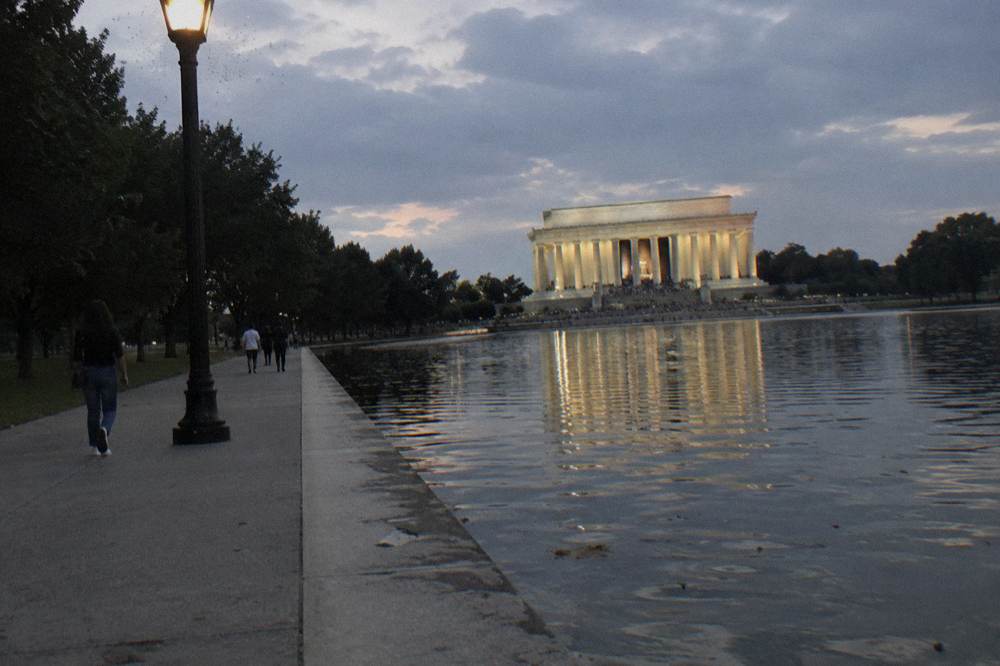
Capital Bikeshare, which runs the public bike-share system, notes on its own National Mall page that the monuments are lit at night and that the car-free paths make for comfortable evening visits. Two guided night options exist on this site's pages: a 3-hour classic-bike night monuments ride, and a private night version for groups that want the itinerary to themselves.
Both night rides are classic-bike formats, which is worth knowing in advance: the assist question mostly disappears once the sun is down and the pace is a relaxed roll between lit stops. Readers weighing night against day more broadly can compare formats in the guide to the best time of year to bike in Washington DC.
What Should You Carry And Wear For A Hot DC Ride?
Plan on roughly one liter of water per hour of riding in July and August heat, sunscreen applied before departure, a brimmed hat for off-bike stretches, and light-colored breathable clothing. Drinking fountains exist on the Mall but their summer reliability varies by location and maintenance, so treat any fountain you find as a bonus rather than a plan. Bike parking sits near each major memorial, so a lock lets you walk the unrideable parts empty-handed.
The clothing advice is the same physics your grandmother used: light colors reflect, dark colors absorb, and loose weaves let air move. Closed shoes beat sandals for the pedal side of the day, and a change of shirt in a pannier or backpack transforms a museum visit afterward. The site's detailed piece on what to wear for a DC bike ride covers layers and footwear season by season.
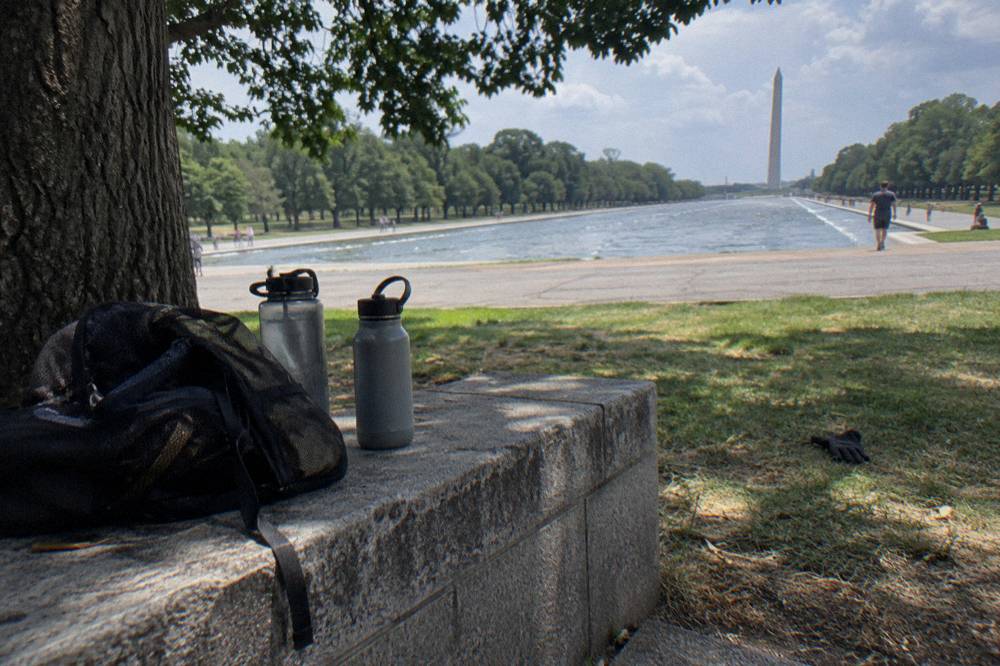
Guided tours change the packing math in your favor. Most guided rides in the city include the bike and a helmet per their listings, and several include water or a refill stop; the specifics sit on each booking page, so read the inclusions line before you assume. A guided ride also fixes the duration, which in summer heat is a genuine safety feature: three hours with a set endpoint is easier to pace than an open-ended loop you keep extending.
A compact checklist for a hot-day ride:
| Item | Why it matters in July and August |
|---|---|
| Water, about 1 liter per hour | Sweat losses in 88 F heat are high and fountains are unreliable |
| Sunscreen, applied pre-ride | The open Mall has long unshaded stretches |
| Brimmed hat | For walking the memorials where helmets come off |
| Light-colored, breathable clothing | Reflects sun and aids evaporation |
| Lock | Bike parking near each major memorial enables walking segments |
| Snack with salt | Replaces electrolytes on 3-hour rides |
Which Summer Rules And Closures Affect Cyclists On The Mall?
Two closures were in force at the end of October 2026: the Lincoln Memorial Reflecting Pool, its walkways and grass medians are closed until 20 November 2026, and the west side of the Washington Monument grounds is closed through 23 January 2027 for turf restoration. Cyclists must also remember that riding inside the memorials themselves is not permitted, and helmets are required by DC law for riders under 16.
The reflecting pool closure is the one most likely to reshape a summer-shoulder or late-fall ride, because the pool area is normally a signature stop between the Lincoln Memorial and the World War II Memorial. The Park Service notice runs through 20 November 2026 at 11:59 p.m., after which the area is expected to reopen; check the NPS notice before you go, since this closure has been extended multiple times during 2026. The Washington Monument grounds work is a longer project, with the west side closed through 23 January 2027, though the monument itself and the surrounding paths remain usable.
Two standing rules shape any Mall ride in any season. First, the National Park Service asks cyclists to walk their bikes through the World War II and Franklin Delano Roosevelt Memorials and to lock up before entering others; riding inside the memorials is not permitted. Second, DC's helmet statute applies to riders under 16 on any public roadway, path, or right-of-way. Both are simple to comply with and both are enforced expectations rather than suggestions.
For riders weighing the public bike-share option against a guided tour, the comparison of Capital Bikeshare and a guided ride runs the numbers both ways. In deep summer the case for guided is partly a heat case: fixed duration, included equipment, and a guide who has already picked the shady side of the loop.
How Do You Choose Between The Summer Ride Formats?
Match the format to the time of day you can commit to: a classic 3-hour monuments ride suits an early-morning start, e-bike formats cover more ground comfortably in any shoulder slot, and night rides move everything into the cool half of the day. Private formats add a flexible pace, which matters for families pacing around heat rather than distance. Durations and bike types below come from each tour's listing.
The comparison that matters in July and August is effort per hour of heat exposure:
| Ride format | Duration | Bike type | Heat profile |
|---|---|---|---|
| Monuments and memorials guided ride | 3 hours | Classic | Best as a morning departure |
| Monumental e-bike ride | 3 hours | E-bike | Low effort, works midday better than classic |
| Monuments at night ride | 3 hours | Classic | Whole ride sits in the cool half of the day |
| National Mall and Tidal Basin e-bike tour | 3 hours | E-bike | Shadier loop plus pedal assist |
| Private customized ride | 3 hours | Classic | Pace and stops set by your group |
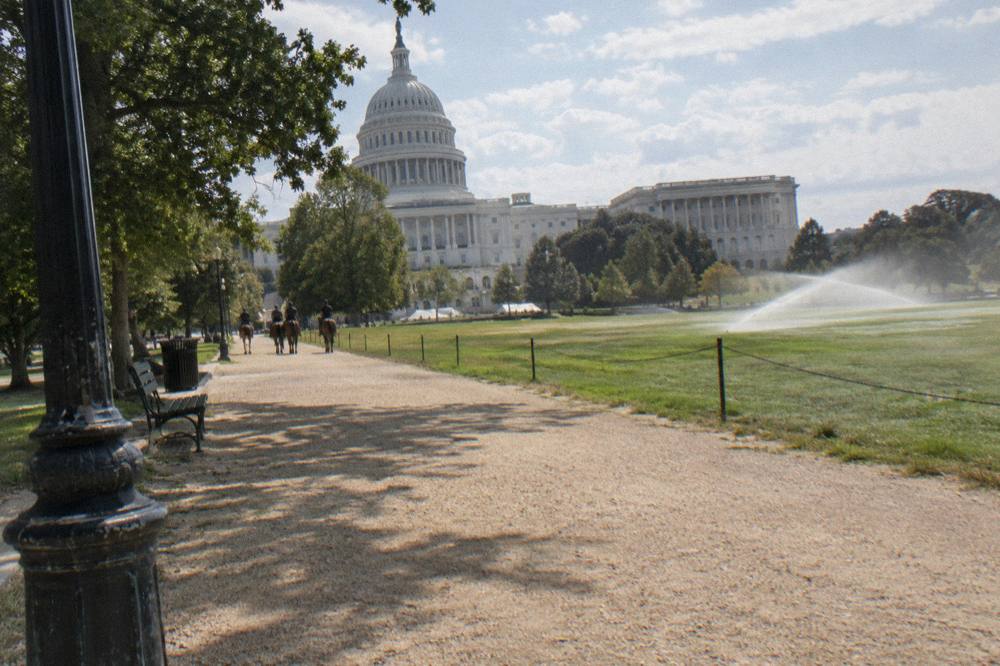
The classic 3-hour monuments ride remains the workhorse option, and summer does not eliminate it; it just relocates it to the morning. Early departures catch the memorials in the best light of the day anyway, and the same itinerary that feels punishing at 1 p.m. feels pleasant at 8 a.m.
Prices, ratings, and the current season's start times for any of these rides sit on the individual booking pages rather than in fixed print here, because operators adjust both. What does not change is the underlying logic: in a city whose park never closes, with average July and August lows of 72.4 F and 71.0 F, the heat is a scheduling problem, and scheduling problems have solutions.
To recap the full summer field in one place, these are the three formats this guide would shortlist for a July or August visit.
Common Questions About Biking DC In Summer Heat
How Hot Is Too Hot For A Bike Ride In DC?
There is no single cutoff, but July's average high of 89.6 F makes midday rides the hardest slot, and heat advisories some days make them inadvisable. Shift to before 9 a.m. or after 6 p.m., shorten the ride, or choose an e-bike or night format to cut your physical output.
Is The National Mall Open Early Enough For A Sunrise Bike Ride?
Yes. National Mall and Memorial Parks is open 24 hours a day, so a sunrise departure is fully legal and is the coolest window of the summer day. Bring your own water, since nearby businesses open later.
Are E-Bike Tours Better Than Regular Bike Tours In Summer?
E-bikes reduce physical effort, which reduces heat stress on the same route. A classic bike in the early morning can be just as comfortable as an e-bike at midday, so the format choice and the time-of-day choice work together.
What Should I Drink On A Summer Bike Ride In DC?
Plan on roughly one liter of water per hour of riding in July and August heat, plus a salty snack on longer rides. Drinking fountains exist on the Mall but vary in reliability, so carry what you need and treat fountains as a refill bonus.
Do Any Closures Affect Summer Bike Routes On The Mall?
The Lincoln Memorial Reflecting Pool area is closed until 20 November 2026 and the Washington Monument grounds west side through 23 January 2027. Check the Park Service notices before your ride, and remember bikes must be walked through the World War II and FDR Memorials.
Are Helmets Required For Biking In DC?
DC law requires a securely fastened helmet for anyone under 16 riding on a public roadway, path, or right-of-way, and guided tours include helmets in their equipment. Adults are not legally required to wear one, though tour operators provide them.