What To Wear For A DC Bike Ride
What you wear on a DC bike ride matters more than most visitors expect: the Mall is flat and open, the wind off the Potomac is real, and summer and winter demand opposite wardrobes. Here is a month-by-month clothing guide built on official climate normals, the park's own rules and what guided rides actually include.
Short answer
Wear layers you can shed, closed-toe shoes and sun protection from April through October, and wind-blocking layers with gloves from November through March. Helmets are required by DC law for riders under 16, and the major guided rides include a helmet with the bike. Rain gear is worth packing in every season: DC averages rain on five to seven days a month, all year.
What Should You Wear Biking In Washington DC?
Wear comfortable, breathable layers with closed-toe shoes, add sun protection from spring through fall, and carry a wind or rain layer in every month of the year. The National Mall is flat and car-light, so you will not overheat from climbing, but you will generate your own breeze and then stand still for long stretches at the memorials, which makes removable layers the single most useful clothing choice for a DC ride.
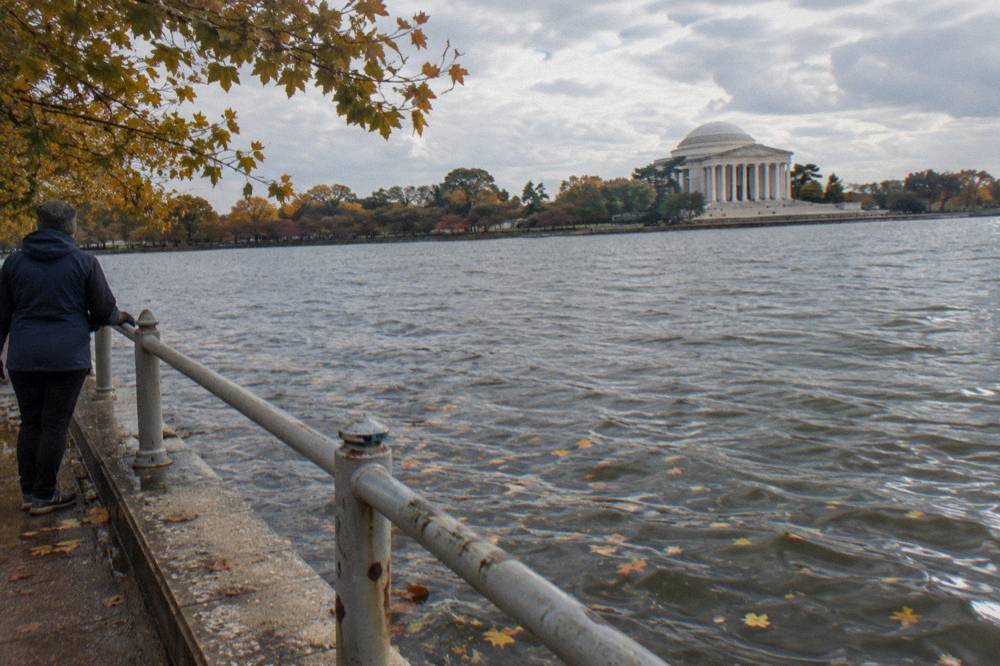
That stop-start rhythm is the thing most first-time riders underestimate. A three-hour monuments ride splits its time between pedaling along the Mall's paths and standing at the Lincoln Memorial, the World War II Memorial or the Tidal Basin while a guide talks. Clothes that feel right at touring pace can feel cold after ten minutes of standing in shade, especially near the water. The wind coming off the Potomac and across the Tidal Basin is a real factor from October through April, and the summer humidity works the opposite way, soaking anything that does not breathe.
This guide is organized around the decisions you actually make the night before a ride: the month you are visiting, the shoes you pack, the sun and rain kit, the helmet, and the bag. The weather figures come from the official NOAA climate normals for Washington Reagan National Airport, which describe the long-run averages rather than any forecast, and the helmet rules come from DC law and the National Park Service. Bike Tours Washington DC publishes this site as a planning resource, and everything below comes from the live tour listings rather than guesswork.
How Does DC Weather Change What To Wear Month By Month?
DC summers run hot and humid, with July averaging a high of 89.6 degrees Fahrenheit and a low of 72.4, while January averages a high of 44.8 and a low of 30.1. Rain falls on five to seven days in every month of the year, so a packable rain layer belongs on the list year-round. Dress for the month, then add one layer for the wind off the Potomac.
The official 1991 to 2020 climate normals give the cleanest picture of what each month usually delivers. These are 30-year averages, not a promise about your week, but they divide the year into clear clothing seasons: a genuine summer from June through August, a mild spring and fall that flank it, and a cool winter that rarely turns brutal.
| Month | Avg high F | Avg low F | Rain days | What that means for clothing |
|---|---|---|---|---|
| January | 44.8 | 30.1 | 5.7 | Winter layers, gloves, warm headwear under the helmet |
| February | 48.3 | 31.8 | 5.4 | Same as January, slightly milder afternoons |
| March | 56.5 | 38.6 | 6.5 | Transition month: layers, wind shell, full sun protection |
| April | 68.0 | 48.4 | 6.4 | Light layers, morning chill, afternoon sun |
| May | 76.5 | 58.0 | 7.3 | Summer-weight clothing starts, sun hat and sunscreen |
| June | 85.1 | 67.5 | 6.5 | Hot and humid: breathable fabrics, extra water |
| July | 89.6 | 72.4 | 6.7 | Peak heat: light colors, minimal but sun-safe clothing |
| August | 87.8 | 71.0 | 5.6 | Hot, marginally drier: same summer kit as July |
| September | 80.7 | 64.1 | 5.8 | Warm days, cooling evenings: bring a light layer |
| October | 69.4 | 52.2 | 4.9 | The driest month: layers and a wind shell |
| November | 58.2 | 41.6 | 5.0 | Cool: warm layers, gloves in the morning |
| December | 48.8 | 34.5 | 6.4 | Winter kit returns, rain layer in the bag |
The twelve months collapse into five clothing seasons once you plan for the daily range rather than the average alone. The gap between a month's high and low is what drives the layering advice: pack for both numbers, because a monuments ride that starts at midday often ends near the evening low.
| Clothing season | Months | Typical daily range | Wardrobe core |
|---|---|---|---|
| Deep summer | June to August | Lows 67.5 to 72.4, highs 85.1 to 89.6 | Light, breathable, sun hat, sunglasses, extra water |
| Warm shoulder | May, September | Lows 58.0 to 64.1, highs 76.5 to 80.7 | Summer kit plus one removable layer for stops |
| True layering | April, October | Lows 48.4 to 52.2, highs 68.0 to 69.4 | Base layer, warm mid layer, wind shell |
| Cool transition | March, November | Lows 38.6 to 41.6, highs 56.5 to 58.2 | Warm layers, gloves, thin hat under helmet, rain shell |
| Winter | December to February | Lows 30.1 to 34.5, highs 44.8 to 48.8 | Full winter kit, insulated gloves, waterproof option |
For a deeper look at how those seasons change the ride itself, see the best time of year to bike in Washington. If your trip falls in the colder, wetter half of the year, the rain and cold weather riding guide goes deeper on waterproof layers than this page does.
Two practical notes sit on top of the averages. First, memorials and paths stay open and rides run through winter, so a December ride is a normal thing to do in DC, not an extreme one; you simply dress for it. Second, closures currently in force can shape where a ride goes: the Lincoln Memorial Reflecting Pool and its adjacent walkways are closed until 20 November 2026, and the west side of the Washington Monument grounds is closed through 23 January 2027, per National Park Service notices. Check the park service alerts before your date if there is a specific sight you cannot miss.
Once you have picked the month and the tour, the clothing logic follows from the tables above. The classic 3-hour monuments ride runs in daylight through every season, the night version shifts the temperature question toward the cool end, and the e-bike option removes almost all of the effort-based warming, which means e-bike riders should plan for one more layer than pedal riders on the same date.
Which Shoes Work Best For A Monuments Ride?
Wear closed-toe, flat-soled shoes with a firm sole: sneakers, light trail shoes or casual cycling shoes all work. Avoid flip-flops, heels, and brand-new leather shoes that have never flexed. You will be pedaling for two to three hours, walking the bike through the World War II and Franklin Delano Roosevelt Memorials where riding is not permitted, and standing on stone and gravel surfaces at every stop.
The walking-the-bike detail comes straight from the park service: bicycles are welcome in National Mall and Memorial Parks, parking is provided near each major memorial, but riding inside the memorials themselves is not allowed, and at the World War II and FDR Memorials you walk the bike through per the park's bicycling information page. Gravel, flagstone and polished granite do the same thing to thin soles that they do on any walking tour of the Mall, multiplied by pedal time.
Sandals deserve a specific word. Strapped sport sandals are tolerable in July heat, but loose flip-flops have caused enough scraped ankles on pedal cages and kickstands that most guided-ride operators simply discourage them. If you want maximum ventilation, a mesh running shoe with a thin sock does nearly the same job with none of the risk. Winter riders should add one caveat: a waterproof shoe or a cheap overshoe keeps slush and puddle spray from ending a December ride early.
What you do not need is cycling-specific footwear. None of the shared rides on the Mall use clipless pedals; every bike in the guided fleet takes a regular shoe. If you own stiff-soled bike shoes, wear them, but buying gear for one monuments ride is not necessary. The same logic applies to padded shorts: on a flat three-hour route at touring pace, any comfortable athletic or casual bottom works. The same keep-it-simple approach works for lodging, and the where-to-stay guide covers which neighborhoods put you within an easy pedal of the monuments.
| Footwear choice | Verdict for a Mall ride | Why |
|---|---|---|
| Sneakers or running shoes | Best all-round choice | Firm sole, flexes at the toe, handles pedals, gravel and walking stops |
| Light trail shoes | Excellent | Grip on wet stone, sturdy for walking the bike through memorials |
| Strapped sport sandals | Tolerable in July and August | Ventilation, but exposed toes near pedals and hot marble |
| Flip-flops | Avoid | No retention, no sole protection, slips off pedals and paths |
| Leather dress shoes | Avoid | Stiff soles, untested flex points, ruined by an unexpected shower |
| Waterproof winter shoes | Best December to February | Blocks slush and puddle spray on cooler-weather rides |
For families, the shoe question doubles as a readiness check: a child who can walk an hour in their sneakers can ride the same route in them. The family-friendly private rides adjust pace and distance, and their listings describe what is included, so check the booking page for age and equipment specifics before you decide everyone needs new shoes.
What Sun And Rain Gear Do You Need On The National Mall?
From April through October, bring sunscreen, sunglasses and a brimmed hat that fits under a helmet or a cap plus neck coverage; the Mall offers long stretches with no shade. In every month, carry a packable rain jacket, because DC averages 4.9 to 7.3 rain days a month year-round and there is no consistent dry season to count on.
Shade on the National Mall is scattered: the elm allées give relief in places, but the long open runs between the Capitol and the Lincoln Memorial, and the whole Tidal Basin loop, are exposed for long stretches. UV reflection off the Reflecting Pool and the marble terraces adds to it. Sunscreen belongs on before the ride and again at the midpoint stop, and the back of the neck is the spot riders most often miss, since you are bent slightly forward on a bike for hours.
Rain strategy is a layering problem, not a wardrobe problem. A packable shell that folds to the size of a fist handles DC's typical showers; full rain pants matter mainly for winter riders and anyone booked on a longer route like the Mount Vernon day. The cherry blossom season deserves a note here: late March and early April average 3.5 and 3.21 inches of rain respectively on 6.5 and 6.4 rain days, so blossom-week visitors should treat the rain jacket as core kit, not optional. If your dates are flexible around weather, the site's guide to cherry blossom peak bloom dates and timing explains what the season window actually looks like.
Heat changes the answer more than rain does. July and August highs near 90 degrees with lows above 70 mean the usual city strategy applies: light-colored, loose, breathable clothing, more water than feels reasonable, and a wet bandana for the neck. Guides plan water stops, and the rides that include water or a snack say so on their booking pages, but carrying your own bottle remains the safer plan in summer. For the full heat playbook, read biking DC in summer heat.
How Should A Bike Helmet Fit, And When Is One Required In DC?
DC law requires a securely fastened helmet for anyone under 16 riding a bicycle on a public roadway, path or other right-of-way, and parents may not knowingly let a child ride without one. For adults, helmets are legal to skip but included with the major guided rides, so the practical answer is that your tour likely hands you one; the fit check is on you.
The under-16 rule is written into the DC Code, and the text of the helmet section is short enough to quote plainly: it is unlawful to operate or ride as a passenger on a bicycle on a public roadway or path without a protective helmet. The Mall's paths count. Guided tours of the Mall comply by including helmets for children and offering them to adults.
A correct fit takes thirty seconds. The helmet sits level, one or two finger-widths above the eyebrows, not tipped back. The side straps form a V under each ear, and the chin strap is snug enough that the helmet moves when you yawn but not when you shake your head. If the helmet rocks more than half an inch in any direction, resize the rear dial or internal pads before you ride. A helmet that fits badly protects badly, and a badly fitted helmet is the most common thing guides correct at the starting line.

Hat-plus-helmet combinations work if the hat is thin: a cycling cap or a close-fitting beanie fits under most guided-tour helmets, but a structured sun hat does not. In strong sun, the better play is sunscreen plus a helmet with decent vents, or a thin neck gaiter pulled up at the stops. In winter, a thin beanie or headband under the helmet keeps ears functional without wrecking the fit; thick beanies usually require loosening the dial, which is fine if you refit it properly.
What Should Go In Your Bag For A Day On The Mall?
Pack light and pack for the gaps: water, sunscreen, the rain shell, a phone battery, identification and one extra layer top the list. Almost everything else is either included with a guided ride or available on the Mall. Bags that work are small backpacks or crossbody bags that zip shut, since open totes bounce and spill on the Mall's brick and gravel sections.
Guided rides change the bag math considerably. The standard shared tours include the bike and a helmet, and each booking page lists the full inclusions, so check it before you duplicate gear you are already being handed. What no tour hands you is sunscreen already applied, water in the moment you want it, or a charged phone for the photos you came to take. Those three items earn their space in any bag.
The bag itself is a real clothing decision. On a bike, a small backpack with both straps tightened rides well; a single-strap tote does not. Crossbody bags work if the strap is short enough not to swing into the handlebar area. If you are riding with kids, put the whole family's layers in one adult's pack rather than loading each child, and keep it light so it does not become the thing everyone remembers about the ride. Locks, bells and racks are bike questions rather than clothing questions, and the booking page states what each operator provides.
| Item | Why it earns its space | Season |
|---|---|---|
| Water bottle | No tour hands you water the moment you want it | All year, doubled June to August |
| Sunscreen | Long unshaded runs on the Mall and Tidal Basin loop | April to October, strongest June to August |
| Packable rain shell | 4.9 to 7.3 rain days a month, every month | All year |
| One removable layer | The ride that starts at the high ends near the low | March to May, September to November |
| Thin gloves | Wind off the Potomac at standing stops | October to April |
| Phone battery | Photos and maps outlast most charges on a long day | All year |
| Identification | Standard city practice for any guided activity | All year |
One packing rule specific to this park: the Mall has no bag problem, but the memorials have a walking problem. You will dismount and walk the bike at several stops, so anything you pack, you also carry at a slow pace in whatever temperature the day serves. The lighter the bag, the longer the stops feel pleasant rather than like luggage duty. Where to meet for a bike ride near the National Mall covers the start-point logistics that determine whether you even need a bag all day or can leave layers at the hotel.
What Should Families And Kids Wear For A DC Ride?
Dress children in the same layered, closed-toe kit as adults, with the helmet treated as non-negotiable because DC law requires it under 16. Kids feel temperature swings faster than adults, run hot while pedaling and cold while standing, so give each child one removable layer per shoulder season and plan a bathroom-and-water stop into every hour of riding.
The under-16 helmet law makes the family helmet conversation simple: it is not a preference in DC, it is a legal requirement, and guided rides include children's helmets as standard practice. Beyond that, kids' clothing follows the seasonal table above with two adjustments. Children's gloves matter earlier in the season than adults' because small hands on metal handlebars get cold quickly from October onward, and a spare shirt for a child who sweats through a climb-free but sunny ride prevents the shiver that follows.
The family-specific private rides exist precisely because pace and stops flex around kids, and their listings describe ages, equipment and inclusions; details vary, so check the booking page for the version you are considering. A useful test before booking any family ride: if the child comfortably handles a long playground afternoon in the same shoes and clothes, they will handle a two-to-three-hour Mall ride in them. If not, fix the shoes first, since footwear drives comfort more than any other single item for small riders.
Sun protection for kids mirrors the adult advice with one addition: children's necks and ears burn on bikes because they sit lower and look around more. A thin neck gaiter solves both without a fight. In summer, a damp bandana in a zip bag does double duty as a cooling device and a face wipe, which tends to be the difference between a last hour of smiles and a last hour of complaining.
What To Wear For A Night Ride Past The Memorials?
Wear what the month's evening low suggests plus one warm layer, because night rides trade the sun's heat for floodlit marble and river wind, and you generate less warmth when the route slows to walk the memorials. Bring gloves from October through April, and keep the rain shell packed: the monuments are lit, not sheltered.
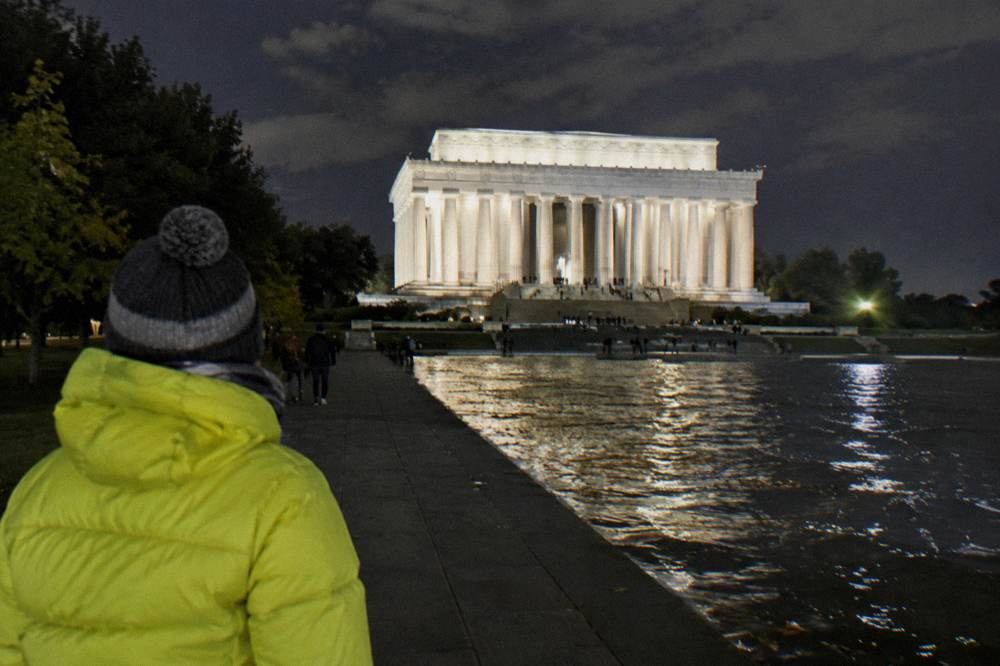
Night changes the temperature math in two directions. The air cools toward the daily low, and the ride itself involves more standing at lit memorials and less continuous pedaling than the daytime version. A September evening with a low near 64.1 degrees can still want a light jacket on the water side of the Mall; a November evening near 41.6 degrees wants a real jacket, gloves and a hat under the helmet. The site's guide to the night ride past the DC monuments after dark covers the route and the lighting; this page only adds the wardrobe half.
Reflective and light-colored clothing earns its place after dark, and DC law expects bicycles ridden at night to be equipped with lights; guided night tours supply properly lit bikes, which is one of the quieter arguments for taking a guided evening ride rather than a self-guided one. Your clothing contribution is simply to be visible: white or bright outer layers beat all-black kit on an evening ride shared with pedestrians who are also looking up at the monuments instead of at the path.
Does An E-Bike Change What You Should Wear?
Yes, slightly: e-bike riders warm up less than pedal riders, so plan one extra layer in the cool months and treat gloves as standard from October through April rather than November through March. In summer the difference nearly disappears, except that the sustained higher speeds make sunglasses and a secure wind layer more useful.
DC defines its e-bike category, the motorized bicycle, by a motor incapable of propelling the bike faster than 20 miles per hour on level ground, with operative pedals. That speed ceiling means e-bike riders sit in more consistent airflow than pedal riders who vary their effort, which is why the wind-chill effect on an e-bike feels steadier. The Monumental E-Bike Ride and the e-bike options on other tours all include the e-bike and helmet; check each booking page for the remaining inclusions.
The clothing translation is simple. Take the monthly table above and subtract one layer of warmth generated by you: where a pedal rider is comfortable in a long-sleeve shirt and vest in October, an e-bike rider wants the vest plus light gloves. In July, dress the same for both, with the caveat that an e-bike's steadier pace makes loose flapping layers more annoying, so fitted breathable clothing rides better.
| Ride format | Listed length | Bike type | Wardrobe adjustment |
|---|---|---|---|
| 3-Hour Monuments Bike Ride | 3 hours | Classic | Baseline: dress for the monthly table as written |
| 3-Hour Night Monuments Ride | 3 hours | Classic | Add one warm layer over the day plan, plus visible colors |
| Monumental E-Bike Ride | 3 hours | E-bike | Add one layer in cool months, gloves from October |
| Easy Capitol Hill Highlights | 2 hours | Classic | Shorter exposure, lighter bag |
| Private Family-Friendly Ride | 3 hours | Classic | Pack kids' spare layer in the adult bag |
| Half-Day Private Guided Ride | 4 to 5 hours | Classic | Full day kit: food, water, all-weather layers |
Common Questions About What To Wear For A DC Bike Ride
What Should You Wear Biking In Washington DC?
Comfortable athletic layers, closed-toe shoes and sun protection from April through October, plus a wind or rain shell in any month. From November through March add warm layers, gloves and something thin under the helmet. DC averages rain on five to seven days a month year-round, so the rain layer is always worth packing.
How Does DC Weather Change What To Wear Month By Month?
July averages a high of 89.6 and January a high of 44.8 degrees Fahrenheit, with lows of 72.4 and 30.1 respectively. Summer wants breathable, light-colored clothing and extra water; winter wants insulating layers and gloves; the shoulder months of March, April, October and November are the true layering seasons where removable layers matter most.
Which Shoes Work Best For A Monuments Ride?
Closed-toe, flat-soled shoes such as sneakers. You will pedal for two to three hours, walk the bike through the World War II and FDR Memorials where riding is not permitted, and stand on stone and gravel at every stop. Flip-flops and heels fail on all three counts; cycling-specific shoes are unnecessary because guided bikes take regular shoes.
Is A Helmet Required For A Bike Ride In DC?
Yes for anyone under 16, on any public roadway, path or right-of-way, with a securely fastened helmet; adults are not legally required to wear one. Guided rides include helmets for children as standard and offer them to adults, so on a tour the helmet is handed to you and only the fit check is yours.
What Should Go In Your Bag For A Day On The Mall?
Water, sunscreen, the packable rain shell, a phone battery, identification and one extra layer. Use a small backpack or a short-strap crossbody bag that zips shut; anything you pack you will also carry while walking the bike through the memorials, so keep it light.
Does An E-Bike Change What To Wear?
Slightly. E-bike riders generate less body heat, so add one layer and start gloves a month earlier, from October rather than November. In summer the difference largely disappears, though steadier speeds make sunglasses and fitted layers more comfortable.