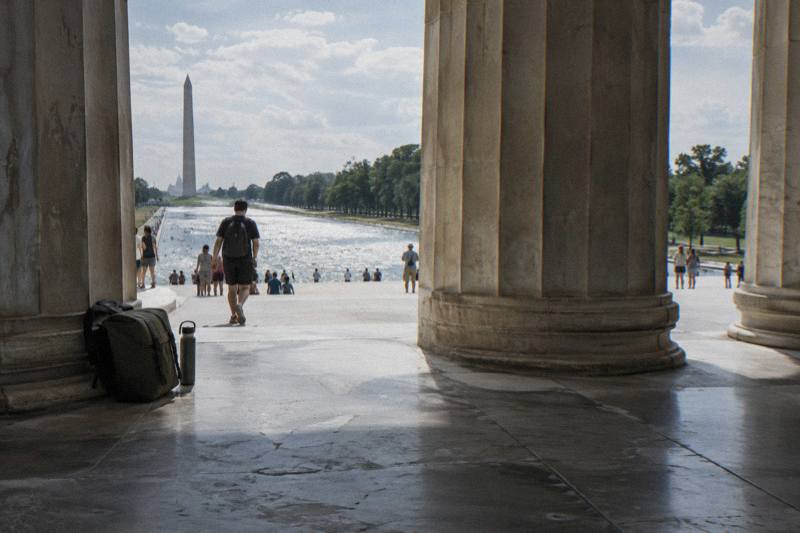
What To Skip In DC?
A plain answer to what to skip in DC: the car, the queue-only viewpoints, and the closed sections, plus what a guided bike ride replaces in a single three-hour loop.
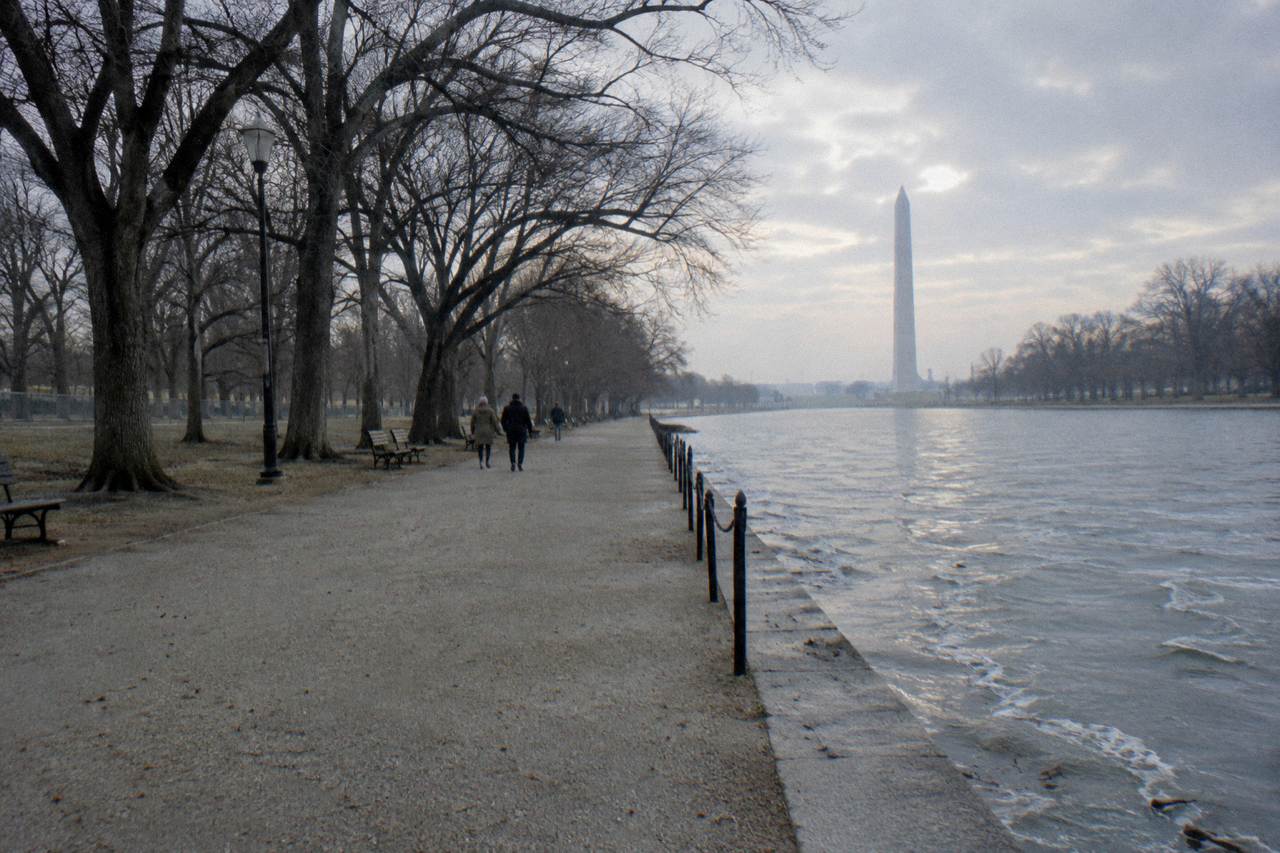
The honest answer: skip the car, skip queue-heavy add-ons like monument elevator tickets when the line defeats the purpose, and skip any itinerary that walks the full Mall and the Tidal Basin in one day on foot. A three-hour guided ride such as the Monuments Bike Ride covers the memorial core that walking burns a whole day on, so what you skip is exhaustion, not the city. Two closures also reshape a late-2026 visit: the Lincoln Memorial Reflecting Pool and its walkways stay closed until 20 November 2026, and the Washington Monument Grounds west side is closed through 23 January 2027. Skip plans that depend on those, and check the park service notice before you go.
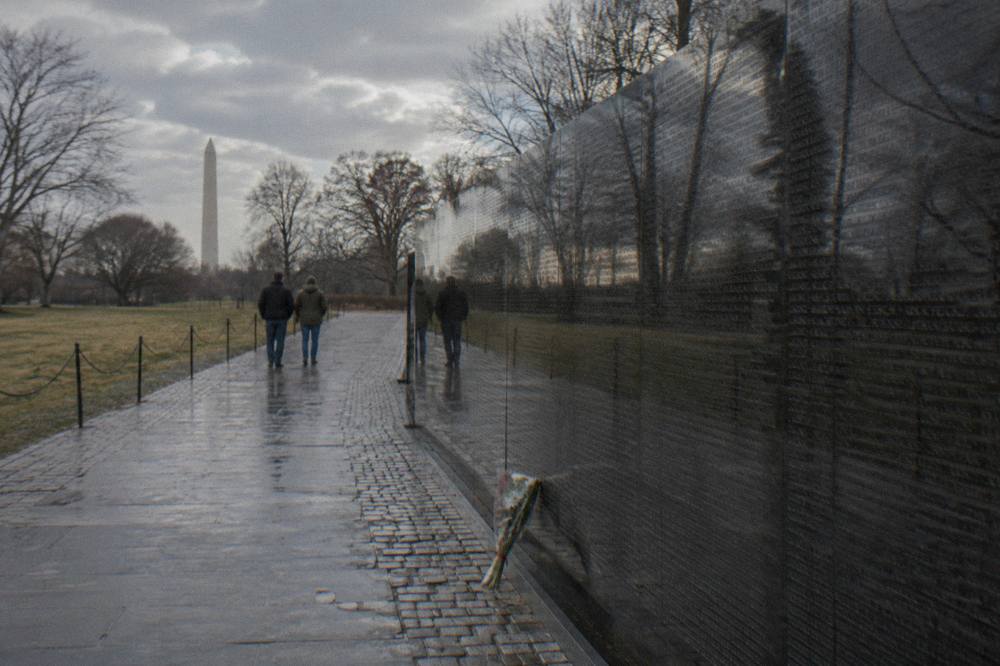
That is the short version. The longer version is about how DC punishes greed. The city's core sights are free, open long hours, and close together, which fools visitors into treating the National Mall like a checklist to sprint rather than a park to move through. The park itself never closes: National Mall and Memorial Parks is open 24 hours a day, and bicycles are welcome throughout it, with bike parking near each major memorial. The one firm rule is that riding inside the memorials themselves is not permitted, and at the World War II and Franklin Delano Roosevelt memorials you walk the bike through. That combination, a park that never closes plus a bike-friendly layout, is exactly why so much standard advice can be skipped.
The trick is knowing which omissions cost you nothing. Skipping a car costs you nothing. Skipping the queue at a single viewpoint sight costs you little. Skipping the Tidal Basin side because your feet gave out at the Lincoln Memorial, that one costs you the best scenery in the city. This article sorts those into a short, honest list, and pairs the "keep" column with the rides that make it keepable. If you want the fuller case for two wheels over Shank's pony, the companion piece on the best way to see all the monuments walks through the arithmetic.
Why The Car Is The First Thing To Skip
A car in the monumental core is a liability: parking near the Mall is scarce and event closures wipe it out entirely, several Mall roads and lots shut for marathons, fireworks and construction work on specific dates, and everything worth seeing sits inside a compact, flat, bike-friendly park. The park service's own guidance for cyclists treats the Mall as a destination you ride, with parking provided at the memorials. Renting a car to move between the Lincoln Memorial and the Capitol is paying money to move two miles slowly.
The closure record for 2026 makes the point on its own. In October alone, the park service documented nighttime closures of Maine Avenue SW, Ohio Drive and East Basin Drive SW plus Tidal Basin parking for Long Bridge Project work on multiple dates, additional road and sidewalk restrictions for the Marine Corps Marathon and dedication events, and earlier in the year the Salute to America fireworks and the America 250 Grand Prix brought extensive temporary closures of Mall roads from late June through late August. A driver arriving on any of those days finds the map they planned on simply does not exist. A cyclist reroutes.
Bikes fit the park's design in a way cars and even feet do not. The distances that feel trivial on a map, Capitol to Lincoln, Lincoln to Jefferson, are exactly the distances that hollow out a walking day. On a bike they are minutes. And unlike a car, a bike can be parked at the memorial you are actually visiting: the park service provides bicycle parking near each major memorial and along the Mall, per its bicycling information page. The only thing to skip at the memorial itself is riding through it, walk the bike, lock it, then enter.
If you arrive without a bike of your own, the choices are Capital Bikeshare or a guided ride with equipment included. Bikeshare is a real public system, roughly 8,000 bikes across more than 800 stations in eight jurisdictions, and it is not free: a day pass is $10 per 24 hours, with classic rides free for the first 45 minutes and $0.05 per minute after, e-bikes $0.15 per minute, per the operator's pricing page. That is cheap, but it is a self-guided tool: no route narrative, no guide, no one telling you which inscription to read. A guided ride bundles the bike, the helmet and the commentary; check the booking page for each tour's exact inclusions and current price.
Queue-Only Sights You Can Honestly Walk Past
Two categories deserve the skip: sights where the queue is the experience, and sights whose interior adds less than their exterior. The Washington Monument elevator line is the classic queue trap; the monument is 555 feet 5 1/8 inches tall and the grounds' west side is closed through 23 January 2027 anyway, while the exterior view from the Mall costs nothing and no wait. Equally skippable: paying for any vantage you can get free from the memorial core itself.
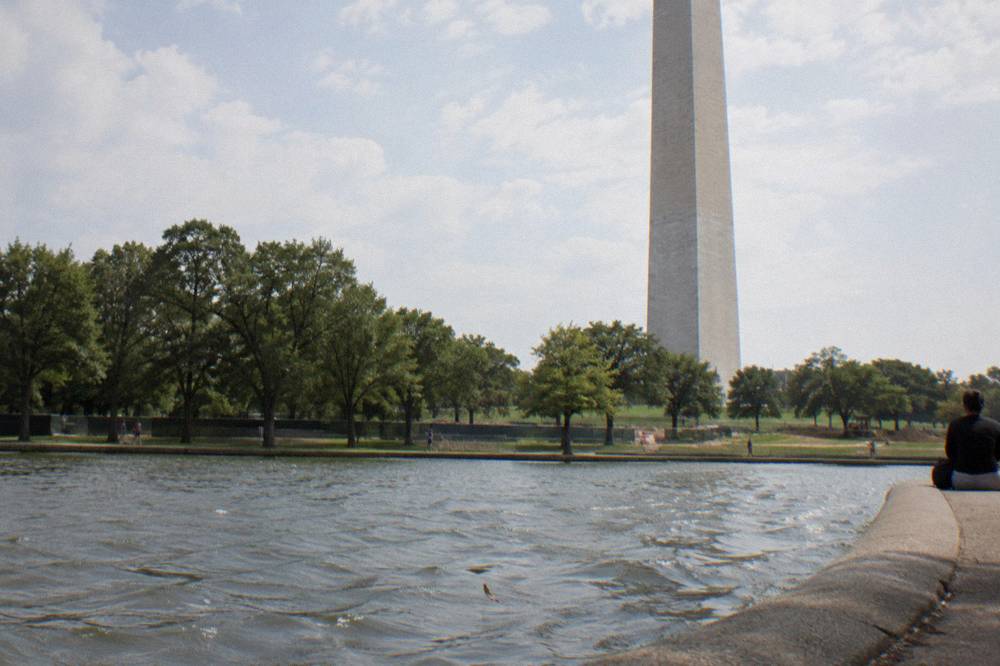
Be precise about what is being skipped here. The Washington Monument is magnificent, and nothing in this article argues otherwise. The argument is about the elevator ticket and the wait. Seen from the ground, from the west end of the Mall or from across the Tidal Basin, the obelisk is the skyline. The grounds closure sharpens the case: the park service has the west side of the Washington Monument Grounds closed through 23 January 2027 for turf rehabilitation, with the north and south turf areas having already reopened after their 10 September 2026 end date. Approaching from the west, the plan changes whether you like it or not. Check the park service notice before you go.
The second category is subtler: interior experiences whose queue exceeds their payoff on a short visit. Every visitor center line, every timed entry that eats an hour of a one-day itinerary, is an hour not spent at the memorials, which are free, unqueued, open around the clock, and, in the honest opinion of most repeat visitors, the reason people remember DC. A day built around the memorial core at a human pace beats a day built around four lines.
What the queue-skipping frees up is exactly what a ride spends best. The 3-Hour Monuments Bike Ride, this site's featured tour for this piece, exists to solve the distance problem: a guided loop on classic bikes that moves between the major memorials while a guide supplies the context that plaques do not. The price and current availability sit on the booking page rather than in this article, but the structure is the point. Three hours, one loop, the core of the city, no lines. For riders weighing the flat tiredness factor, the guide on how fit you need to be for a DC bike ride covers the honest answer, which is: not very.
The evening version deserves its own mention. When the sun sets, the memorials are lit, the crowds thin, and the temperature drops; sunset in DC in early November falls close to 6 p.m., so a night ride starts feeling reasonable earlier than summer visitors expect. Capital Bikeshare's own operator notes recommend the Mall's lit monuments and car-free paths for evening visits. A guided night option covers that same ground with a group and a guide.
What A Guided Ride Replaces Entirely
A good guided ride replaces three things at once: the rental transaction, the navigation decisions, and the guidebook. Bikes and helmets come with the tour per the listing, the route is decided by someone who rides it weekly, and the commentary arrives at the memorial instead of from a phone screen. What it does not replace is the memorials themselves, which you still walk into, slowly, after locking the bike.
That last sentence matters because the "skip" logic has a limit. A bike tour is not a ride past the sights at speed; the format is ride, dismount, walk the memorial, regroup. The value is what happens between stops. A walker spends those between-minutes on asphalt, accumulating fatigue. A rider spends them covering ground, arriving at each memorial with the attention left to actually read it. The night-ride variant of this format is popular enough to have its own dedicated tours; the guide on a night ride past the DC monuments after dark breaks down what changes after sunset.
| What you might book separately | What the guided ride covers | Net effect |
|---|---|---|
| Bike rental for the day | Bike and helmet per the tour listing | One transaction instead of two |
| Guidebook or audio app | Live guide commentary at each stop | Context without the screen |
| Navigation and route planning | A set route between the major memorials | No map decisions mid-ride |
| A second day to "finish the Mall" | The core loop in one listed ride | One day, not two |
The comparison above is structural, not a price claim; rental-shop rates vary and the tours' prices sit on their booking pages. The honest trade is time and friction. Two riders with a full day each can do all of this alone at lower cash cost, and the article on Capital Bikeshare or a guided ride works through that arithmetic properly. For a visitor with one day and a list of must-sees, the guided version buys back hours.
There is also the e-bike question, and this is a skip decision too. The Monumental Electric Bike Ride runs three hours on e-bikes over the same kind of ground. Riders who would enjoy the pedal version sometimes skip the upgrade; riders who would otherwise skip the whole idea of biking find the e-bike version reopens it. DC law treats these machines gently: a DC "motorized bicycle" has pedals and a motor incapable of propelling it faster than 20 mph on level ground, and helmets are required by law for anyone under 16 riding on a public roadway or path. The e-bike-or-regular-bike decision has its own full treatment in e-bike or regular bike for seeing DC.
Closures And Detours To Skip Around Right Now
Two closures in force reshape a late-2026 visit: the Lincoln Memorial Reflecting Pool, its walkways and its grass medians are closed until 20 November 2026 at 11:59 p.m., and the Washington Monument Grounds west side is closed through 23 January 2027. Neither closes the memorials themselves, but both change the approach on foot and by bike. The skip here is not the sights, it is any route plan that threads through the closed sections.
The reflecting pool closure has been extended multiple times during 2026, which is a lesson in itself: closure end dates move, and the park service's notice page is the only source that tracks them. The current notice runs through 20 November 2026. Riders planning the classic west-end loop, Lincoln to Korean War to Vietnam Veterans, still reach the memorials; the pool itself and its immediate walkways are off-limits for restoration work. The official notice carries the exact boundaries.
The seawall story is the counterexample, a closure that ended and left things better. Phase one of the Tidal Basin seawall reconstruction finished early and under budget, and the project area, including paths, stayed closed through the 2026 National Cherry Blossom Festival for landscape stabilization and new tree planting, with reopening expected shortly after. The flooding-prone stretch of the Tidal Basin loop that riders used to dodge has been rebuilt. If an older itinerary warns you off that path, skip the warning, not the path.
Event closures deserve their own skip rule: check the date, not just the season. The Independence Day period and the America 250 Grand Prix in August 2026 both brought sweeping temporary closures of Mall roads, Constitution Gardens and surrounding sidewalks, and October added marathon and construction closures on Maine Avenue and Ohio Drive. None of these are secrets; all are published by the park service in advance. A ride booked on an event weekend hits detours a Tuesday rider never sees.
Seasons, Crowds, And When To Skip The Mall Itself
Skip the Mall at its worst hours, not the Mall itself. The two peaks to plan around are late March to early April, when the cherry blossoms draw their biggest crowds, and the summer midday heat; instead, go early in the morning, come back in the evening, or time your trip for the shoulder months. Peak bloom 2026 was reached on 26 March with 70 percent of Yoshino blossoms open, and the typical window runs the last week of March to the first week of April. If you are not specifically here for the blossoms, that week is the one to skip.
The numbers behind that advice are stable. The NOAA 1991 to 2020 climate normals for Washington Reagan National Airport put July's average high at 89.6°F with August at 87.8°F and June at 85.1°F, while April averages a 68.0°F high and October 69.4°F with the lowest rain-day counts of the warm half of the year, 6.4 and 4.9 days respectively. December through February trade crowds for cold, with January's average high at 44.8°F. These are normals, not forecasts, but they describe the year reliably: summer punishes midday exertion, and the memorials are least crowded when the temperature is least pleasant.
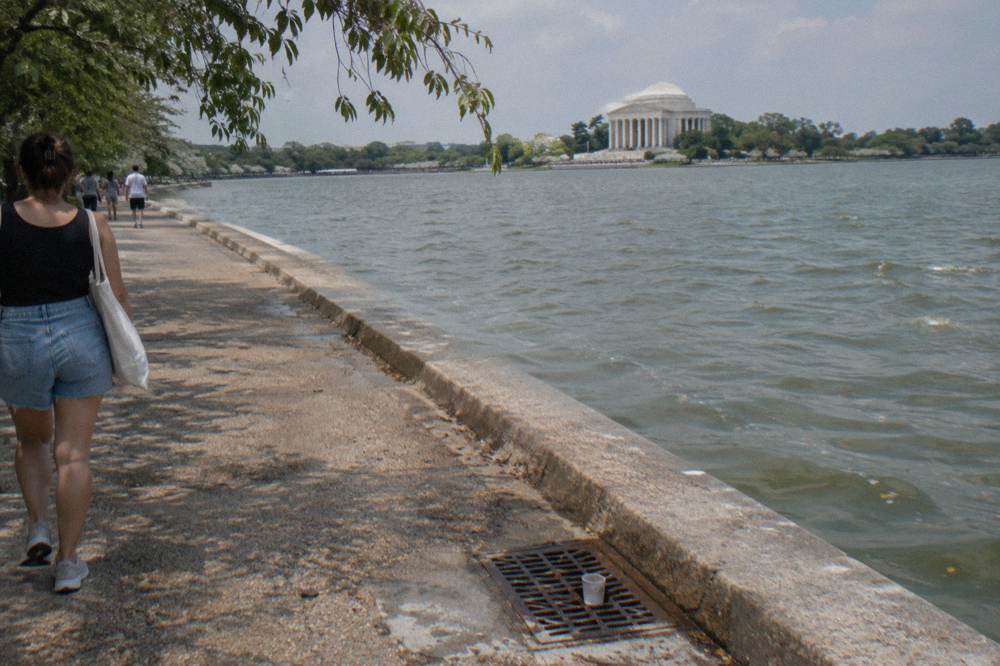
Blossom season deserves the nuance. The bloom is genuinely worth seeing and the Tidal Basin at peak is the single best scene in the city, but the crowd density that week is the year's worst, and the festival, running 20 March to 11 April in 2027, layers events on top. The skip decision splits cleanly: if blossoms are the point, book the blossom rides early and accept the crowds, and the guide on cherry blossom season by bike handles the timing. If blossoms are not the point, take the week off the Mall entirely and come in late April or October.
The morning-evening rule holds year-round, and the park's 24-hour schedule makes it free to exploit. The Lincoln Memorial at 7 a.m. versus the Lincoln Memorial at 2 p.m. are different experiences sharing a name. Evening adds the lighting: the memorials are lit at night, and a guided night ride turns that into the whole itinerary rather than a bonus.
Pairing The Ride With What Remains
Pair one guided ride with two walkable anchors and call it a complete day: the ride covers the memorial core in a listed three hours, then walk one or two favorites slowly, ideally the ones the ride stopped at when the light was best. The skip is the second ride, the second queue, and the fourth memorial after fatigue sets in. What remains, a slow return to one or two memorials on foot, is the part people remember.
Concretely, a sample day: morning free, the monuments ride in the middle of the day or the night version after sunset, and one unhurried on-foot visit either side. Visitors with only a sliver of time have a dedicated answer in what to do with 3 hours in DC, where the ride-first logic is even stronger. The Capitol Hill end of the Mall is the common omission on walking itineraries and the easiest to fix by bike; a short guided option covers the hill's highlights on classic bikes in a listed two hours.
The final skip is the hardest one for planners: skip the ambition of everything. DC rewards the visitor who treats it as a park with monuments in it rather than a list with a park around it. Move through it on wheels, stop where it pulls you, and leave the rest for the next visit. The city is not going anywhere, and unlike most capital cities, almost none of it charges admission. The full spread of ride options, from e-bike loops to private custom routes, is laid out across this site, and Bike Tours Washington DC keeps the whole comparison in one place.
Common Questions About Skipping Things In DC
What To Skip In Dc?
Skip the car, the Washington Monument elevator queue, any timed-entry line that eats an hour of a one-day visit, and any plan to walk the entire Mall and Tidal Basin on foot in a day. Replace the walking portion with a three-hour guided ride, which covers the memorial core with a bike and guide included, and keep the closures in mind: the reflecting pool walkways are closed until 20 November 2026 and the Washington Monument Grounds west side through 23 January 2027.
Is The Washington Monument Worth The Queue?
The monument itself is spectacular, standing 555 feet 5 1/8 inches tall, but the elevator queue can consume a large share of a short visit, and the grounds' west side is closed through 23 January 2027 for turf restoration. Many riders skip the ascent, view the obelisk from the Mall and the Tidal Basin, and spend the saved time at the memorials, which have no queues and are open around the clock.
Can You See The DC Monuments Without Walking All Day?
Yes, and that is the core case for a bike. The park service welcomes bicycles in National Mall and Memorial Parks, provides bike parking near each major memorial, and keeps the park open 24 hours. A guided ride such as the 3-Hour Monuments Bike Ride moves between the major memorials on classic bikes with a guide, then you walk only the memorials themselves, where riding is not permitted.
Is Anything In DC Currently Closed That Visitors Should Know About?
Two closures are in force: the Lincoln Memorial Reflecting Pool, adjacent walkways and grass medians are closed until 20 November 2026 at 11:59 p.m., and the Washington Monument Grounds west side is closed through 23 January 2027. Event weekends also bring temporary road and sidewalk closures around the Mall. Check the park service notices before you go, since closure dates have been extended during the year.
When Should You Avoid The National Mall?
Avoid cherry blossom peak week, typically the last week of March to the first week of April, unless the blossoms are the point of your trip, and avoid summer midday, when July's average high is 89.6°F per the NOAA 1991 to 2020 normals. Early morning and evening are quieter and cooler year-round, and the park never closes, so the off-peak hours cost nothing to use.
Is Capital Bikeshare Free?
No. A day pass costs $10 per 24 hours, with classic-bike rides free for the first 45 minutes and $0.05 per minute after, and e-bikes at $0.15 per minute. A single ride is a $1 unlock plus $0.15 per minute on a classic bike or $0.35 per minute on an e-bike. It is inexpensive, but it is a self-guided option with no route or commentary, which is why many visitors book a guided ride instead.