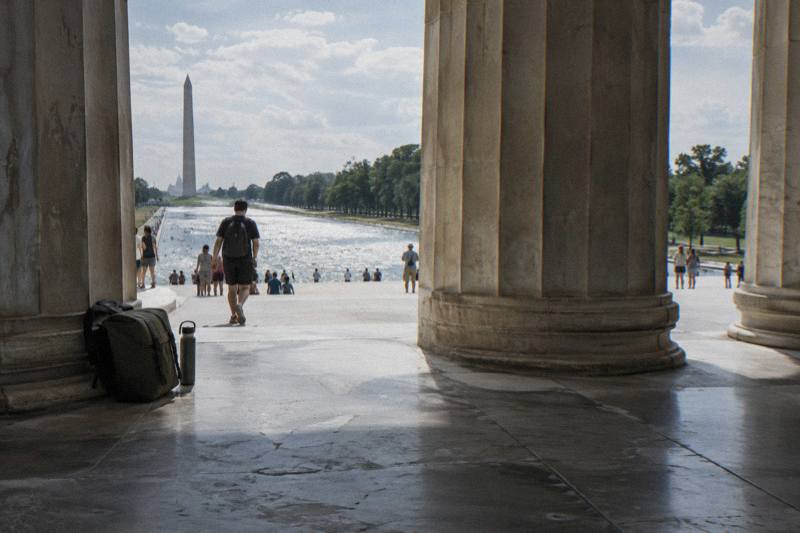
Is DC Walkable For Tourists?
Is DC walkable for tourists? A practical answer covering the National Mall on foot, where walking stops being enough, and how Capital Bikeshare or a guided bike ride fills the gap.
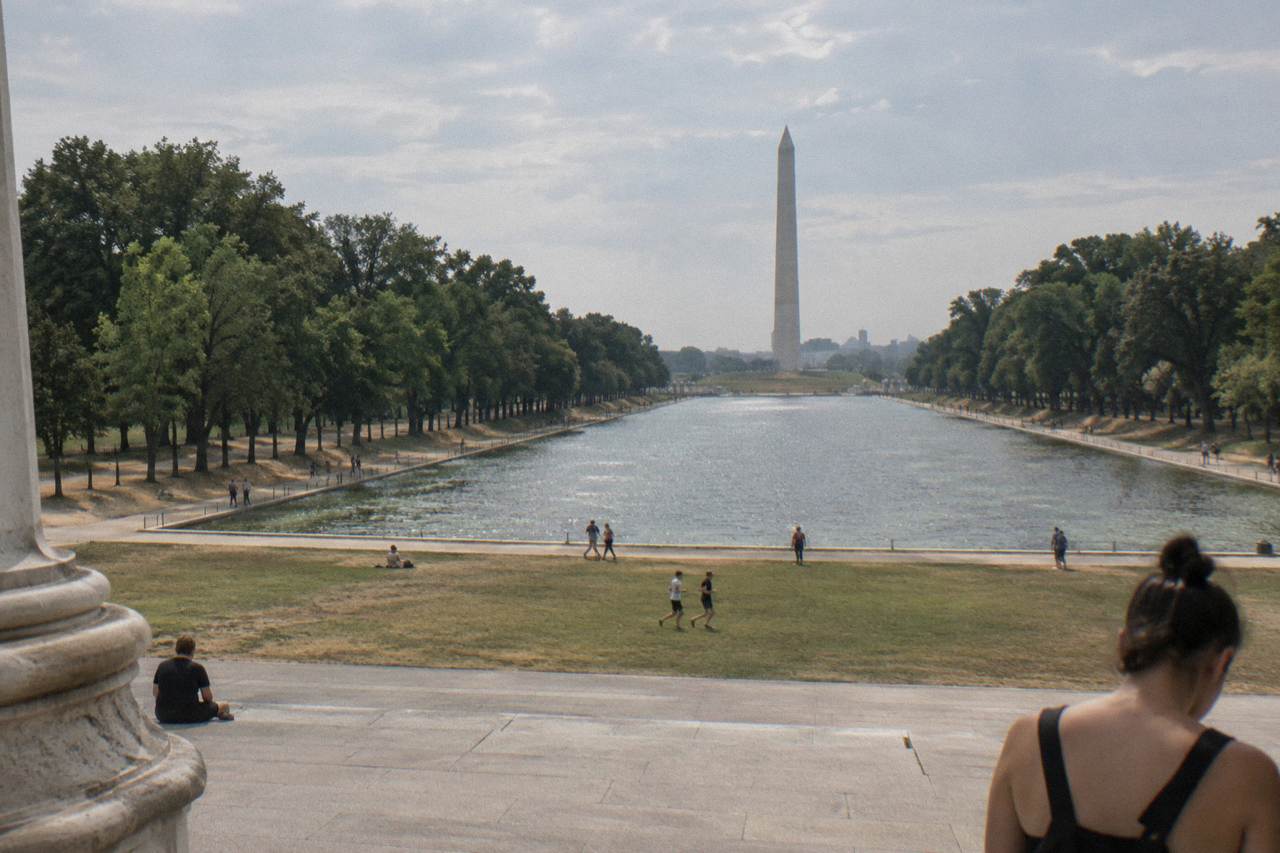
Yes, DC is genuinely walkable for tourists, and the National Mall is one of the easiest strolling zones in any American city: the park is open 24 hours a day, sidewalks and paths connect every major memorial, and the core sights cluster together. The catch is scale. The gap between the Capitol and the Lincoln Memorial is long enough that most visitors end the day on sore feet, which is why so many switch to two wheels partway through.
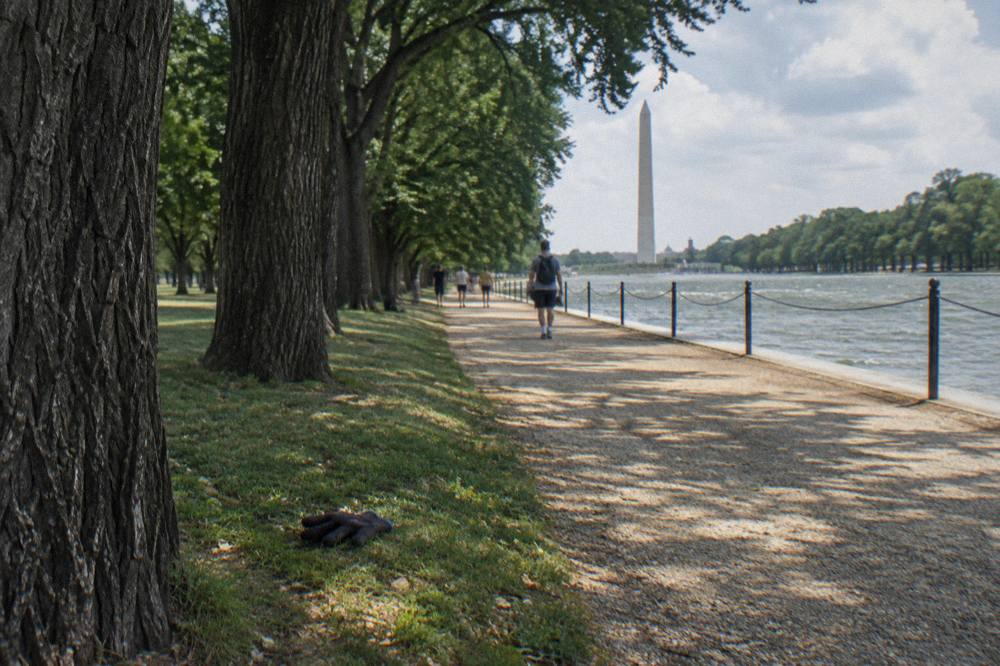
The question comes up constantly in travel planning, and the answer deserves more than a yes. Walkability in DC is really two different questions. The first is whether the monument core works on foot, and it does, superbly. The second is whether walking alone lets you see enough of the city in a short visit, and there the answer gets more complicated, because the sights people most want are spread along a single long axis with a river at one end.
The National Park Service is explicit that the National Mall and Memorial Parks is open 24 hours a day, which shapes the whole experience. You are not racing a closing time. Bicycles are welcome throughout the park, bicycle parking sits near each major memorial, and riding inside the memorials themselves is not permitted, so riders walk their bikes through the World War II and Franklin Delano Roosevelt Memorials. Those rules matter for anyone deciding between feet and wheels, and they point to a simple truth: this is a park built for both.
What walking cannot solve is cumulative distance. Nobody prints an official "length of the Mall" figure anymore, and we will not invent one, but anyone who has done the round trip from the Capitol grounds to the Lincoln Memorial and back, with the Jefferson and the Tidal Basin added, knows the arithmetic. Comfortable shoes carry you for the first two hours. The last hour is where people start looking at the Bikeshare system's own National Mall route guide with new interest.
For visitors who want the flagship sights without the fatigue math, a guided ride is the direct answer. The 3-Hour Monuments Bike Ride covers the monument core with a guide in about 3 hours, with a bike and helmet included in the booking, and the price basis is listed on the booking page. It pairs naturally with a walking morning: walk the two or three memorials you care most about slowly, then let the wheels handle the rest.
How Walkable Is The National Mall On Foot?
Very walkable, with clear limits. Paths run continuously between the Capitol, the Washington Monument and the Lincoln Memorial, and every major memorial has pedestrian access with no ticket needed for the grounds. What walks do not offer is coverage: by mid-afternoon most on-foot visitors have seen three or four memorials well and run out of energy for the outliers.
The core sequence is the classic first-day walk. Visitors typically start at the Capitol end or the Lincoln end and work along the axis, picking up the Washington Monument, the World War II Memorial, the Vietnam Veterans Memorial and the Korean War Veterans Memorial in one line. The monument itself is 555 feet 5 1/8 inches tall, and its grounds are currently part-closed for turf restoration, more on that below. The memorials cost nothing to enter, which is why so many "free DC" itineraries are, at heart, Mall walking itineraries.
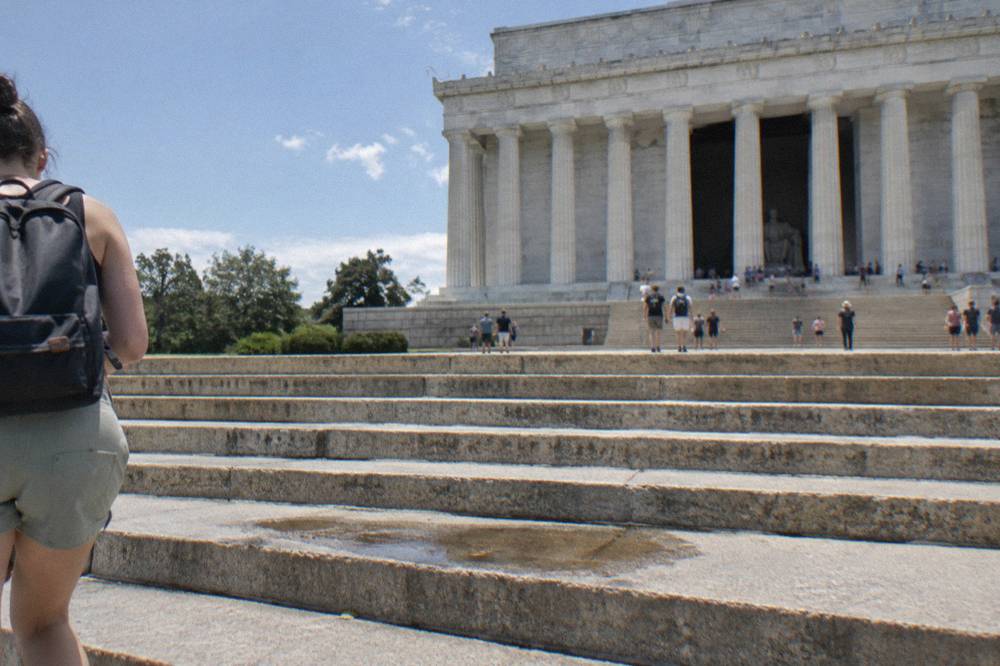
The experience of walking the Mall is at its best in the shoulder hours. Sunrise brings joggers and near-empty granite; the memorials are lit at night and the park never closes, so an evening visit is entirely legal and often magical. By late morning in summer the same paths are crowded and hot, and that is the moment the walkability question flips: not "can I walk here" but "do I still want to."
The practical breakdown between walking and other modes looks like this. Prices below are the verified Capital Bikeshare public pricing; guided ride pricing varies by tour and is stated on each booking page.
| Mode | What you get | Where it struggles | Cost basis |
|---|---|---|---|
| Walking | Total freedom, every memorial grounds free, works at any hour | Cumulative fatigue; the far sights get skipped | Free |
| Capital Bikeshare day pass | Unlimited 45-minute classic-bike rides for 24 hours, docks across the city | Finding a dock near crowded spots at peak times; e-bikes bill per minute | $10 per 24 hours, e-bikes $0.15 per minute extra |
| Guided classic-bike ride | A guide, a route, a bike and helmet included, roughly 3 hours for the flagship version | Fixed schedule; you follow the tour's route | Per-person price on the booking page |
| Guided e-bike ride | Same coverage with pedal assistance, less sweat in summer | Slightly higher per-person price on the booking page | Per-person price on the booking page |
One more walking note: the rules about bikes inside memorials apply to everyone. Even cyclists end up walking stretches, which is why the guided rides build in dismounted time. The park's bicycling information page spells out where to walk the bike and where to lock up, and it is worth a read before any visit that mixes modes.
When Does Walking Stop Being Enough?
Walking stops being enough when your list outgrows the central axis. If your day is the Lincoln, the Vietnam Wall and the Washington Monument, feet are perfect. Add the Jefferson and the Tidal Basin, the White House view, Capitol Hill and Georgetown, and you have a multi-hour project that walking turns into a two-day one. That is the point where a bike, shared or guided, earns its cost.
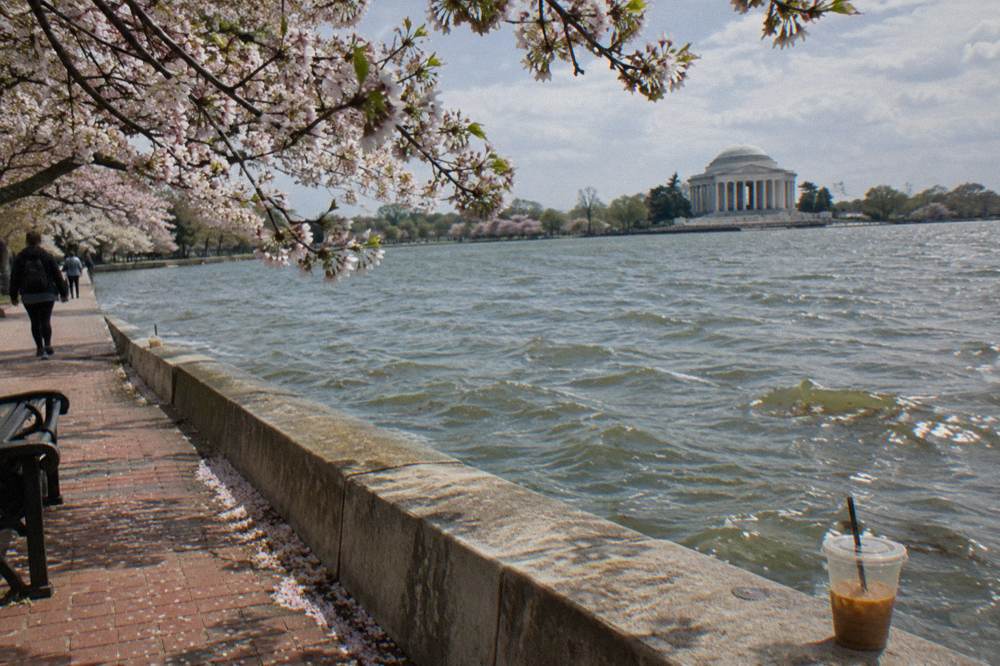
Consider what a tourist's realistic day list looks like. The monument cluster sits at one end. The Tidal Basin loop and the Jefferson sit southwest of it. The White House sits north. Capitol Hill sits the opposite end of the axis. Each of these walks between neighbors is pleasant. Chained together, they become a march, and March through July heat turns the march into an ordeal; the NOAA normals put July's average high at 89.6 degrees Fahrenheit with June and August close behind.
A short list of two or three central memorials is a walker's game, no contest, and wheels would be unnecessary. Stretch that to the full monument axis in one day and walking still works, but it pays to split the outing into a morning and an evening session, or to let a guided 3-hour classic ride or a day-pass loop absorb the distance. Add the Tidal Basin and the Jefferson and the case for any bike becomes strong, since that loop plus the axis is a lot of ground. Add Capitol Hill or Georgetown as well and one walking day stops being realistic; that combined list calls for an e-bike or two separate outings. In cherry blossom season, when Tidal Basin crowds slow every pace, the sensible pattern is a guided ride plus walking hours on either side of it. For anyone still trimming the plan, which DC sights and habits to skip explains why the car, the long lines, and the closed sections can all come off your list.
This is the exact gap a guided ride fills, and it is worth being precise about what you are buying. A guided ride is not just transportation. The flagship monuments ride includes a guide's commentary, a route that strings the memorials in a sensible order, a bike and a helmet in the booking, and a stop rhythm that lets you dismount and actually stand in each space. Visitors comparing that with walking should compare outcomes, not just speed: the question is whether you want to reach eight memorials in one afternoon with context, or four under your own steam.
Our companion piece on seeing all the monuments in DC breaks the full-monuments question down further, including how riders split the day. For anyone who finds the walking-versus-biking decision hard, the short version is: walk what you love, ride what you would otherwise skip.
The other version of the same question is the evening one. The memorials are lit at night, sunset in late October sits around 6 p.m., and the park never closes, so a night walk is lovely but long. A guided night ride compresses the same loop into a guided window, with lights and a guide. Either way, the answer to "is walking enough at night" depends entirely on how many memorials you insist on.
What Does Capital Bikeshare Cost Compared To Walking?
Walking is free and Capital Bikeshare is not, but the gap is small: a day pass costs $10 for 24 hours with unlimited 45-minute classic-bike rides, after which classic time bills at $0.05 per minute and e-bikes at $0.15 per minute. Single rides start at a $1 unlock plus $0.15 per minute on a classic bike. For a full sightseeing day, the day pass is the better basis.
The verified public pricing, straight from the operator: single ride $1 unlock plus $0.15 per minute classic or $0.35 per minute e-bike; day pass $10 per 24 hours, classic rides free for the first 45 minutes then $0.05 per minute, e-bikes $0.15 per minute; a 30-day membership at $25 and an annual at $120 carry the same ride terms. The system runs about 8,000 bikes across more than 800 stations in 8 jurisdictions, and a station serving the Smithsonian and the National Mall at Jefferson Dr and 12th St SW was reinstalled in late October 2026, which matters for exactly the visitor asking this question. Since every one of those rides has to end at a dock, the guide to where you can actually leave a Capital Bikeshare bike explains how docking near the National Mall works and what to do if the nearest station is full.
| Capital Bikeshare option | Upfront cost | Classic-bike time | E-bike time |
|---|---|---|---|
| Single ride | $1 unlock | $0.15 per minute | $0.35 per minute |
| Day pass (24 hours) | $10 | Free first 45 minutes, then $0.05 per minute | $0.15 per minute |
| 30-day membership | $25 per month | Free first 45 minutes, then $0.05 per minute | $0.15 per minute |
| Annual membership | $120 per year | Free first 45 minutes, then $0.05 per minute | $0.15 per minute |
The catch with Bikeshare for monument-hopping is the 45-minute window. Dock-to-dock riding rewards planning: ride one stretch, dock, walk a memorial, unlock again. Riders who treat the bike like a rental for a continuous three-hour loop will pay overage minutes and would likely be happier on a guided ride or a conventional rental. We compare the two approaches in detail in Capital Bikeshare or a guided ride, but the one-line version is: Bikeshare suits short hops between walking sessions, guided rides suit the full-loop ambition.
There is also the law to respect. DC requires a helmet for anyone under 16 riding on a public roadway or path, parents' responsibility as much as the child's. Guided tours include helmets in the booking; Bikeshare does not hand you one, so families with younger kids should plan for that before choosing the dock option.
What Closures Affect A Walking Or Riding Visit Right Now?
Two closures in the monument core matter for visitors this season: the Lincoln Memorial Reflecting Pool, its adjacent walkways and grass medians are closed until 20 November 2026 at 11:59 p.m., and the Washington Monument Grounds west side is closed through 23 January 2027 for turf restoration. Both affect walkers and riders equally, and both are reasons to check the park service notice the day before you go.
The reflecting pool closure is the one most likely to reshape a first visit, because the pool is the visual spine of the classic Lincoln-facing walk. The memorial itself remains the destination; the approach just changes. The Washington Monument grounds work is phase two of a turf project whose north and south sections finished in September 2026, leaving the west side fenced into the new year.
| Closure | Area affected | In force through | Who it hits |
|---|---|---|---|
| Reflecting Pool restoration | Pool, adjacent walkways, grass medians at the Lincoln Memorial | 20 November 2026, 11:59 p.m. | Walkers on the classic approach; riders detour around |
| Turf restoration, phase 2 | Washington Monument Grounds, west side | 23 January 2027 | Anyone looping the monument grounds |
| Turf restoration, phases done | North and south monument grounds | Ended 10 September 2026 | No longer an issue |
None of this closes the park. The Mall remains open around the clock, the memorials remain free to enter on foot, and the official closure notice is the place to confirm status before travel, since these dates have been extended more than once during 2026.
Which Months Make Walking DC Pleasant?
The comfortable walking window runs April, May, late September and October, when average highs sit between 68 and 80 degrees Fahrenheit and rain days stay under eight a month. July and August average highs of 89.6 and 87.8 degrees with humidity, which pushes smart visitors toward early mornings, evenings or bikes. Winter walking is viable, with January highs averaging 44.8 degrees, if you dress for it.
The NOAA 1991 to 2020 normals for Reagan National Airport, used here as long-run averages rather than any forecast, tell the story plainly. Spring and autumn are the gifts. Summer is the season that converts walkers into riders, not because walking becomes impossible but because the heat tax on a full monument day is real. April carries a bonus beyond the numbers: cherry blossom season, with the typical peak window in the last week of March to the first week of April and the 2027 festival running March 20 to April 11. The 2026 peak arrived March 26. No bloom date is ever promised in advance, and no 2027 forecast had been published as of the end of October 2026.
| Month | Avg high (F) | Avg low (F) | Rain days | Walking verdict |
|---|---|---|---|---|
| January | 44.8 | 30.1 | 5.7 | Fine with layers; quiet memorials |
| April | 68.0 | 48.4 | 6.4 | Prime, plus blossom crowds |
| May | 76.5 | 58.0 | 7.3 | Prime, warming |
| July | 89.6 | 72.4 | 6.7 | Walk early, ride midday |
| October | 69.4 | 52.2 | 4.9 | Prime; the driest walking month |
| December | 48.8 | 34.5 | 6.4 | Cold but workable; quiet |
For heat-season tactics, our piece on biking DC in summer heat applies almost as well to walkers: shift the monument block before 10 a.m. or after 6 p.m., hydrate, and treat midday as museum hours. Sunset near 6 p.m. in late October still leaves a lit-evening window for the memorials, and the park's 24-hour access means nobody is chasing you out.
Where Does Walking Work Beyond The Monument Core?
Beyond the Mall, walkability is uneven by neighborhood. Georgetown, the Penn Quarter and the Wharf are genuinely pleasant on foot, while cross-town distances between Georgetown, Capitol Hill and the Anacostia riverfront are long enough that locals use transit or bikes for them. Tourists who assume the whole city walks like the Mall are the ones who end up surprised.
The pattern is simple: DC's walkable pearls are real, and the strings between them are long. A visitor can spend a perfect car-free day in any single one of these neighborhoods, and a frustrating one trying to stitch three together on foot. Bikes shrink those strings. The Mount Vernon Trail from Alexandria, the Potomac riverfront and the C&O-adjacent Georgetown stretch are all better as riding territory, and a guided ride that starts on the Mall covers ground a walker would need another full day for. Riders wanting that longer reach can look at private and small-group ride options, which let a family or couple set their own route and pace.
The night version deserves its own mention. Walking the Mall at night is safe-feeling, free and beautiful, with the memorials lit and the crowds thinned, but it stretches the same distances in the dark. A guided night monuments ride covers the lit loop with a group and a guide; solo visitors and families often prefer that structure after dark. Check the booking page for the current start times, since evening departures shift with the seasons.
The bottom line on the original question: DC rewards walkers in the core and rewards riders everywhere else, and the best visits use both. Walk slowly where the granite matters most to you, and let wheels carry the logistics. Bike Tours Washington DC exists precisely for that second half of the plan.
Common Questions About Walking In DC
Is Dc Walkable For Tourists?
Yes, especially the National Mall and its memorials, which are free, connected by paths and open 24 hours a day. The limits are distance and summer heat rather than access, so many visitors walk the core and use a bike, Bikeshare or a guided ride for everything beyond it.
How Long Does It Take To Walk The National Mall?
There is no official length figure for the Mall and we will not invent one, but a round trip along the full monument axis with memorial stops is a substantial outing that fills most of a day at a relaxed pace. Guided bike rides cover the same core in about 3 hours.
Is The National Mall Open At Night?
Yes. National Mall and Memorial Parks is open 24 hours a day, and the memorials are lit after dark, which makes evening one of the best times to visit on foot or by bike.
Are The Memorials Free To Enter?
Yes, the memorial grounds on the Mall cost nothing to visit. Bicycles are welcome in the park but riding inside the memorials is not permitted; walk the bike through the World War II and FDR Memorials or lock it at the parking provided near each major memorial.
Do Kids Need Helmets On Bikes In DC?
Yes. DC law requires anyone under 16 riding a bicycle on a public roadway, path or right-of-way to wear a securely fastened helmet. Guided tours include helmets in the booking; check the booking page for child-bike details.
Is Capital Bikeshare Worth It For Sightseeing?
For short hops between walking sessions, yes: the $10 day pass covers unlimited 45-minute classic-bike rides for 24 hours. For one continuous multi-hour monument loop, a guided ride or a conventional rental usually fits better.