Where To Park For The Mount Vernon Trail?
A planning answer to where to park for the Mount Vernon Trail: what to check, what the self-ride packages include, and how a bike and boat day works.
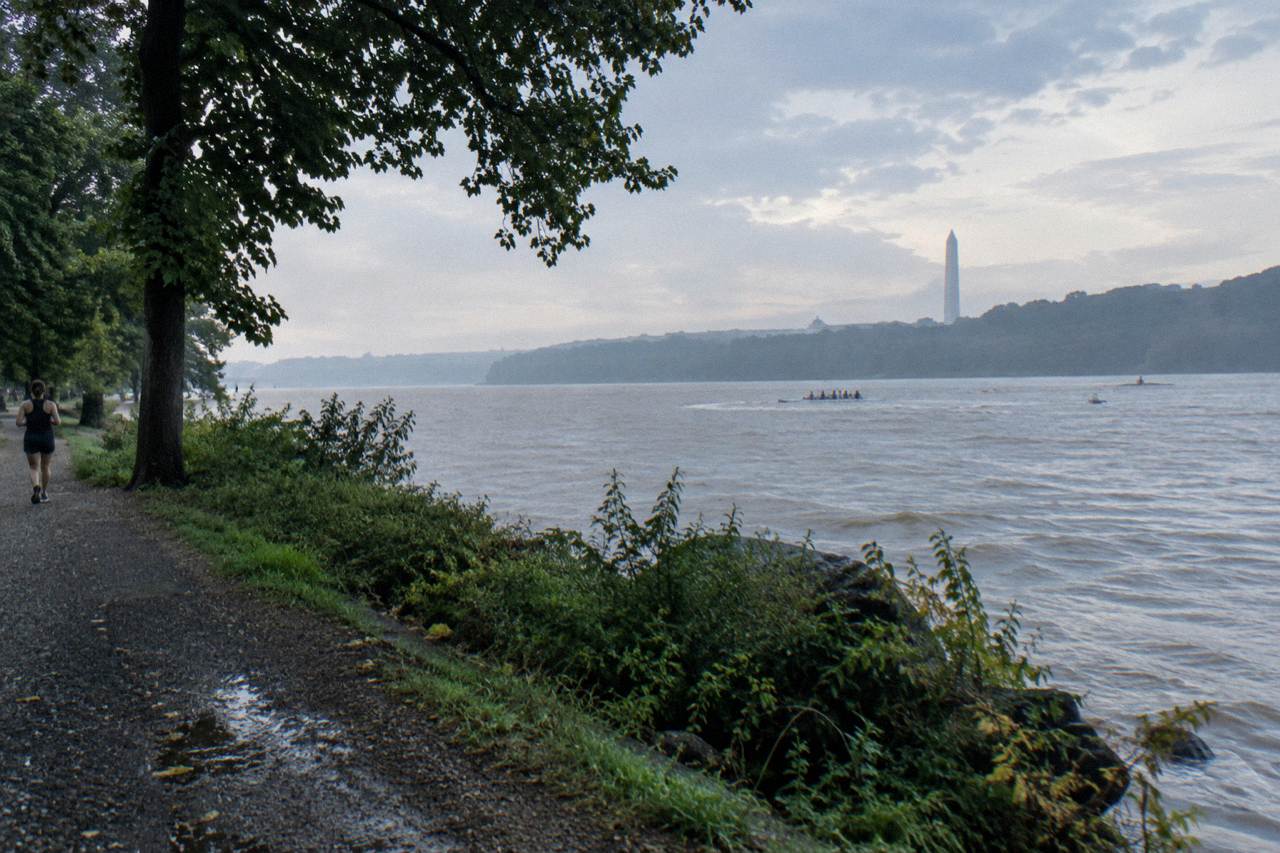
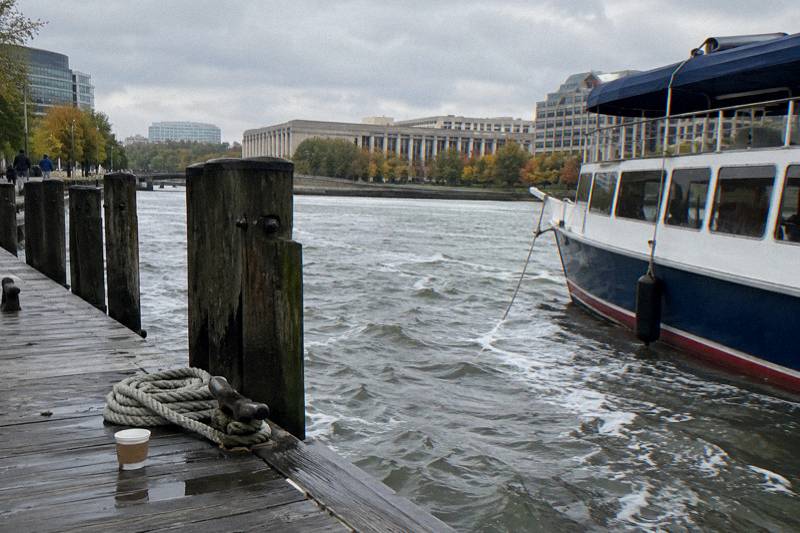
The honest answer is that no parking lot, fee or rule for the Mount Vernon Trail can be stated with confidence here, because none of it is stable: lots fill, event closures close roads, and the National Park Service adjusts access through the year. Check the NPS page for the trail before you drive. If a lot near Alexandria works, arrive early on weekends.
That is a deliberately cautious opening, and it deserves an explanation. Most pages that rank for this question list specific lots with prices and hours. The problem is that parking along the Potomac riverfront changes with construction projects, marina agreements and park events, and a stale lot listing sends you circling Old Town on a Saturday morning. The National Park Service has been running repair and rehabilitation work around the riverfront parks through 2026, including closures of roads such as Ohio Drive and East Basin Drive SW for the Long Bridge Project on set nights in October 2026, and similar notices appear regularly for events like the Marine Corps Marathon. Any of these can block a lot or an approach road that was open the month before.
So the practical method is three checks in order. First, the park service notice pages for the George Washington Memorial Parkway and National Mall and Memorial Parks, which post closure notices with dates. Second, the trail's own park service page for the Mount Vernon Trail, which describes access points and current conditions. Third, if you are riding with an operator, the meeting point printed on the booking page, because guided rides start where the operator says, not where a general parking article guesses.
There is also a cleaner way around the whole question, and it is the one this site naturally points to. The Alexandria: Mount Vernon Bike and Boat Tour packages the bike, helmet and estate ticket with a boat leg, and you ride the trail at your own pace, which removes the park-and-ride decision entirely. If you would rather not build your day around a parking spot, that is the shortcut.
What Should You Check Before Driving To The Trail?
Before you drive, check three things: the park service closure notices, since roads and grounds around the riverfront have been closing for repair work into 2027; the weather, since the trail floods and gets windy near the river; and the start time and meeting point of any ride you booked. Each check takes minutes and each one prevents a wasted trip. Nothing else about trail parking is worth trusting in advance.
The closure picture matters more than most visitors expect. In late 2026 the park service had the Lincoln Memorial Reflecting Pool and its adjacent walkways closed until 20 November 2026, and the west side of the Washington Monument Grounds closed through 23 January 2027 for turf restoration. Those closures sit north of the Mount Vernon stretch, but the same notice system governs the George Washington Memorial Parkway corridor the trail runs along, and nighttime closures of Maine Ave SW, Ohio Drive and East Basin Drive SW for the Long Bridge Project in October 2026 show how regularly access changes. The notices are published at nps.gov and the park's broader list of public notices.
Weather is the second check. The trail hugs the Potomac for most of its length, and river winds, summer heat and winter ice all change what the ride feels like. The NOAA 1991 to 2020 normals for Washington Reagan National Airport, the closest long-run station, give a fair picture of what each month usually brings.
| Month | Avg high F | Avg low F | Days with rain |
|---|---|---|---|
| March | 56.5 | 38.6 | 6.5 |
| April | 68.0 | 48.4 | 6.4 |
| May | 76.5 | 58.0 | 7.3 |
| June | 85.1 | 67.5 | 6.5 |
| July | 89.6 | 72.4 | 6.7 |
| August | 87.8 | 71.0 | 5.6 |
| September | 80.7 | 64.1 | 5.8 |
| October | 69.4 | 52.2 | 4.9 |
October stands out as the driest riding month in that table, with under five rain days on average and highs near 70, which is one reason fall weekends are also when parking is hardest. July and August pay for their warmth with average highs in the high 80s by the Fahrenheit scale, something our piece on biking DC in summer heat covers in detail. The third check, the meeting point on your booking page, applies only if you booked a ride, but it is the one people most often skip, and it is the one that saves the day.
Where Do Guided Rides Along The Trail Start?
Self-ride packages along the Mount Vernon corridor start where the operator's booking page says they start, and the two bike and boat tours both begin from Alexandria rather than from a drive-in lot at the Mount Vernon end. You set your own pace here; no guide rides along or leads a group. The listing states 4 hours to 7 hours for one and 6.5 hours for the other. Confirm the exact address on the booking page before you leave; operators occasionally shift meeting points with the season.
Two operators run the Alexandria to Mount Vernon bike and boat format, and both frame the day around Alexandria as the gateway. The ride featured across this site, the Alexandria: Mount Vernon Bike and Boat Tour, lists a duration of 4 hours to 7 hours, uses classic bikes, and includes an optional river cruise as the return leg. The sister version, from the same family of operators, lists 6.5 hours. The gap between those two figures is mostly the time spent at Mount Vernon itself and the pace of the return, so read the itinerary on the booking page before assuming which experience you are buying.
Why does this matter for a parking question? Because Alexandria answers it. The guided format parks you once, near the meeting point in a walkable town with garages and street options, and then the operator owns the rest of the logistics: the bikes come with the tour, the guide sets the route, and the boat or the ride back closes the loop. You are not hunting for a spot at a trailhead and you are not riding back uphill against the wind if you would rather sail. It is the difference between planning a ride and buying a day. This is also why Bike Tours Washington DC leans toward guided formats for the river corridor in particular.
The alternative, of course, is self-guiding the trail with your own bike or a rental, which our Mount Vernon Trail by bike guide covers start to finish. That guide, like this article, no specific lot price is published either, for the same reason: no official page lists one, and a guessed fee is worse than none.
What Does A Bike And Boat Day Actually Look Like?
The shape of the day is simple: meet in Alexandria, ride the trail south beside the Potomac to Mount Vernon, spend time on the estate grounds, then return either by boat along the river or back on the bike. The listing describes 4 hours to 7 hours end to end depending on the version and your pace. What you see of the estate depends on your ticketing and the season, so treat the stops as described rather than guaranteed. If you want a fuller picture of the route before committing, the guide to riding the Mount Vernon Trail covers what to expect from the riverside path.
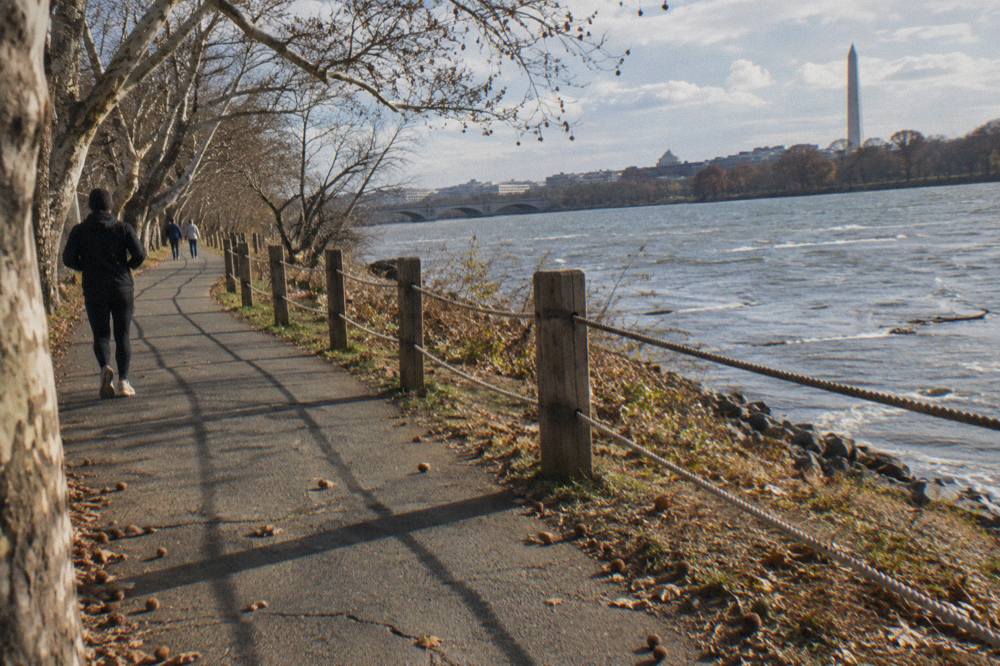
The ride south is the part cyclists remember. The trail stays close to the river, passing through wooded stretches and open river views, with the water on one side for most of the way. Because the format is a guided shared ride, the group sets a social pace rather than a training pace, which suits the mixed crowds these tours draw: families, couples and older riders who want the scenery without route-finding stress. A guide also carries the local knowledge that a map cannot, from which stretch gets tight on weekends to where the river views open up.
At Mount Vernon the day pauses. How long you get on the estate grounds and what you can enter varies with ticketing, events and season, and the operators' listings describe the stop without promising a fixed interior itinerary. The honest framing is the one the booking page itself uses: the estate visit is part of the day, the depth of it is not a guarantee.
The return is where the two versions of the tour earn their different durations. The boat leg, where offered and running, turns the day into a loop: south under your own power, north on the water, with the riverbank sliding past instead of under your wheels. If the boat is not operating on your date, or you pick the version without it, you ride back the way you came, and the wind that was at your back going south becomes the day's last challenge. Riders who want to know what that return leg demands can read how long it takes to bike from Alexandria to Mount Vernon.
Do You Even Need A Car For This Ride?
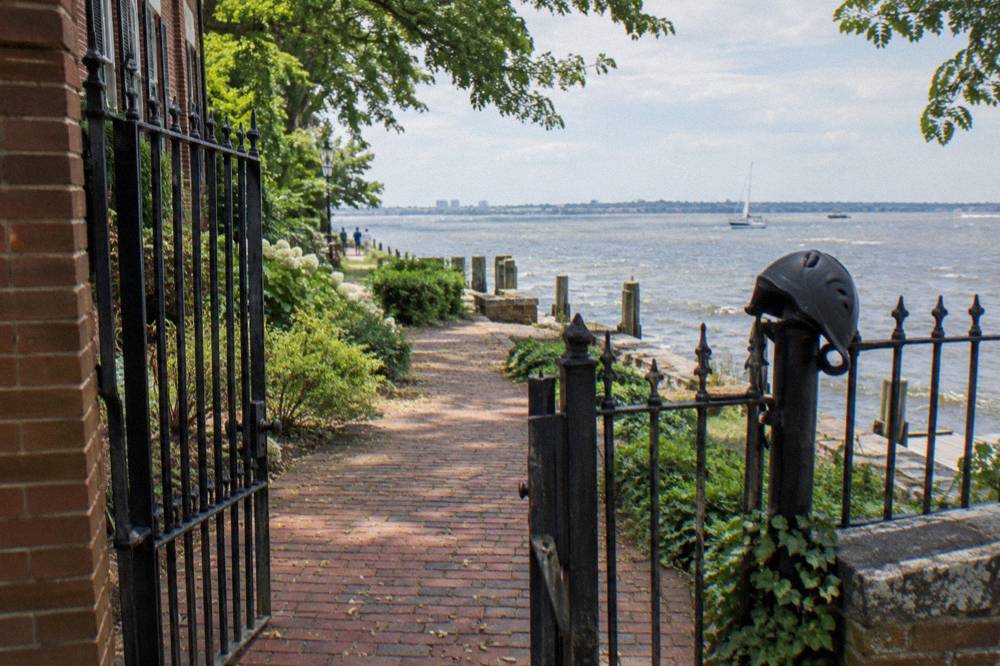
Possibly not. If you are staying in DC or Arlington, the guided rides start from Alexandria, which the region's transit and the Capital Bikeshare system both reach, and the bike itself comes with the tour. A car only earns its parking problem if you are carrying small children, gear or a long drive home. For most visitors the car is optional and the parking question dissolves.
This is the reframe worth sitting with. The parking question assumes a car, but the ride starts in a town designed to be reached without one. Alexandria sits inside the same regional network as the rest of the DC area, and the tour supplies the bike, so the only machine you need to park is yourself. Visitors already comparing options often land on this after reading capital Bikeshare or a guided ride, which works through the same trade-off for the Mall.
If you do want wheels of your own for part of the trip, Capital Bikeshare's verified pricing is worth knowing: a day pass is $10 per 24 hours with classic rides free for the first 45 minutes and then $0.05 per minute, e-bikes $0.15 per minute, single rides $1 to unlock plus $0.15 per minute classic or $0.35 per minute e-bike, and the system runs about 8,000 bikes across more than 800 stations in 8 jurisdictions. The operator's pricing page at capitalbikeshare.com carries the current numbers. Dock coverage at specific trail points in Alexandria is not published, so check with the operator before riding., so check the operator's map for a dock near where you actually want to start, and remember a 45 minute cap fits a downtown spin far better than a Mount Vernon day.
For families the calculus differs. Kids' bikes, seats and helmets travel badly on transit, and the private and family rides from the DC core, covered in private and small group rides in Washington DC, are the format that absorbs that problem. A car plus a family plus a trail is a legitimate combination; it is just one where the parking check from the first section of this article stops being optional.
What If The Trail Day Falls Through?
If closures, weather or a full lot kills the trail plan, the fallback that keeps the day alive is a monuments ride from the DC core: the 3 hour Monuments and Memorials Bike Tour runs shared groups on classic bikes and covers the Mall circuit. It starts where transit and Bikeshare already reach, needs no car, and books the same way on the operator's page.
The swap is not a consolation prize. The monuments ride is the region's most flexible format: three hours, a classic bike, a shared group and a route that stitches the Lincoln Memorial, the Washington Monument area and the Capitol side into one loop. Because it starts in the core, the parking question that sank your trail morning mostly disappears, and the same park service that closes a riverfront road for one weekend usually leaves the Mall open, with the memorials lit and the park itself open 24 hours a day. If the swap happens late in the day, an evening version exists too, and our night ride past the monuments explains what changes after dark.
Two rules from the park service matter for either plan. Bicycles are welcome throughout National Mall and Memorial Parks, with parking racks near the major memorials, but riding inside the memorials themselves is not permitted, and you walk the bike through the World War II and Franklin Delano Roosevelt memorials or lock it before entering. And DC law requires a helmet for anyone under 16 riding on a public roadway or path, which guided operators handle for children but self-guided families must remember themselves. The park's own cycling page at nps.gov/mall states both plainly.
The deeper point is resilience. A day built around one trailhead and one lot is fragile; a day built around an operator with a meeting point and a bike with your name on it bends instead of breaking. Weather moves, notices post, boats cancel, and the riders who enjoy this region are the ones holding a plan B that is genuinely a plan and not a shrug.
How Do You Choose Between The Two Mount Vernon Tours?
Compare the two Alexandria bike and boat rides on duration and format first: one lists 4 hours to 7 hours, the other 6.5 hours, both on classic bikes in shared groups from Alexandria. Then compare what the booking page includes, since bike, guide and the boat option carry the real value. Each booking page shows the live price for its tour, so check both before deciding.
Both rides sell the same core idea, so the decision comes down to time and texture. The 6.5 hour version is a full-day commitment, with the room that implies for the estate visit and an unhurried ride. The 4 to 7 hour version brackets the same ground, which suits visitors stacking a second activity into the afternoon or traveling with riders whose enthusiasm has a shelf life. Riders comparing fitness demands can check how fit you need to be for a DC bike ride; the honest summary is that this is a flat riverside corridor, and time in the saddle matters more than terrain.
| Ride | Duration | Bike | Format | Start |
|---|---|---|---|---|
| Alexandria: Mount Vernon Bike and Boat Tour (river cruise option) | 4 hours to 7 hours | Classic | Shared | Alexandria, per the booking page |
| Alexandria: Mount Vernon Bike and Boat Tour (6.5 hour day) | 6.5 hours | Classic | Shared | Alexandria, per the booking page |
| Monuments and Memorials Bike Tour (fallback) | 3 hours | Classic | Shared | DC core, per the booking page |
One more planning note that no first page of search results will hand you: the Tidal Basin seawall reconstruction, the project that closed stretches of the riverfront path through the 2026 cherry blossom season, was completed early and under budget, with the landscape work reopening expected shortly after the festival. That matters here because it is the template for how riverfront access on this corridor actually behaves: long projects, shifting fences, and an official notice page that tells the truth when a parking article will not. If a ride or a lot near the water seems off-limits on arrival, it is rarely a mystery; it is usually a dated notice nobody read.
Common Questions About Parking For The Mount Vernon Trail
Where To Park For The Mount Vernon Trail?
No specific lot, fee or rule can be stated with confidence, because none of it is officially published and all of it shifts with events and repair work. Check the National Park Service pages for the trail and the George Washington Memorial Parkway before driving, arrive early on weekends, or skip the question entirely by booking a guided ride from Alexandria, where the operator sets the meeting point.
Where Do The Mount Vernon Bike And Boat Tours Meet?
Both bike and boat versions start from Alexandria, with the exact meeting point printed on each booking page. Operators occasionally adjust start points with the season, so confirm the address the day before rather than relying on an older description.
How Long Is The Mount Vernon Bike And Boat Day?
The listing states 4 hours to 7 hours for one version and 6.5 hours for the other, both on classic bikes in shared groups. The difference is mostly time at the Mount Vernon estate and the pace of the return leg.
Is The Mount Vernon Trail Good For Casual Riders?
It is a riverside corridor on flat terrain, and the guided rides set a social, shared-group pace. Time in the saddle matters more than climbing, and the longer versions simply spread the same effort across more hours.
Can You Do The Ride Without A Car?
Yes. The tours start in Alexandria, which the region's transit network reaches, and the bike is included with the tour. A car is mainly worth it for families hauling kids' equipment, and even then the parking checks in this article apply.
What Is The Fallback If The Trail Day Falls Through?
A 3 hour Monuments and Memorials Bike Tour from the DC core covers the Mall circuit on classic bikes, starts where transit reaches, and needs no parking plan. The National Mall and Memorial Parks stay open 24 hours, and bikes are welcome throughout with racks near the major memorials.